Key takeaways
- Four specialties require the 2027 Program Signal Explanation: Anesthesiology, Plastic Surgery–Integrated, PM&R, and Radiation Oncology.
- Each program-specific explanation is limited to 300 characters.
- Use a verified feature, an applicant connection, and a forward-fit statement.
- Do not include ranking preferences or intentions.
- The signal will not save without the explanation, and removing the signal removes the text.
- Audit every program name, feature, track, and source before applying.
Fast answer
The 2027 ERAS Program Signal Explanation is a required, program-specific field of no more than 300 characters for signals in Anesthesiology, Plastic Surgery–Integrated, Physical Medicine and Rehabilitation, and Radiation Oncology.
A strong explanation names one verified program feature, connects that feature to documented experience or a credible goal, and states the resulting fit. It does not promise a rank position or rely on generic praise.
AAMC says a signal in one of these specialties will not save without the explanation. Removing the signal also removes its explanation.
Write one source-backed draft per program and run a name-and-feature audit before applying. The most damaging error is often not weak prose; it is a confident paragraph about the wrong institution.
Who needs the field in 2027
These are four of the 29 residency specialties listed in AAMC's current 2027 signaling table. Signal counts belong to the specialty, while the explanation belongs to the individual program receiving the signal.
Program participation remains optional. MyERAS prevents applicants from signaling a program that is not participating, and AAMC says the individual program list will be available in August 2026.
Use the live portal when it opens rather than assuming that every program in one of the four specialties will accept a signal.
| Specialty | 2027 signals | Explanation |
|---|---|---|
| Anesthesiology | 5 gold + 10 silver | Up to 300 characters per signal |
| Plastic Surgery–Integrated | 20 single-tier | Up to 300 characters per signal |
| Physical Medicine and Rehabilitation | 20 single-tier | Up to 300 characters per signal |
| Radiation Oncology | 4 single-tier | Up to 300 characters per signal |
What the field asks
AAMC describes the field as a structured way to communicate interest and alignment and asks why the signal is being assigned to that program.
The explanation is not an application summary. Scores, publications, citizenship, and the full CV are already available elsewhere. Use this field to make the connection between applicant and program legible.
The signal itself communicates interest; the explanation should communicate the reason.
| Question | Answer in the explanation |
|---|---|
| Why this signal? | The specific alignment that makes the signal deliberate |
| Why this program? | A verified feature, population, pathway, curriculum, or setting |
| Why you? | A real experience, goal, tie, or contribution connected to that feature |
| What not to include? | Rank promises, generic prestige, unsupported claims, or copied names |
The 300-character framework
A useful structure is: verified feature → personal evidence → forward fit.
Example formula: “Your [specific curriculum/population/model] aligns with my [documented work/tie/goal]. I hope to [develop or contribute in a concrete way].”
The formula is scaffolding, not final copy. Vary the syntax so fifteen Anesthesiology explanations do not sound mechanically generated.
Aim below 300 rather than filling every character. Complete and accurate beats maximum length.
| Component | Character target | Function |
|---|---|---|
| Verified feature | 70–100 | Shows program research |
| Applicant evidence or tie | 90–120 | Shows why the feature matters |
| Forward fit | 50–80 | Shows development or contribution |
| Buffer | 10–30 | Protects against counter and edit surprises |
Research before writing
Open the program's own site first. Search for curriculum, clinical sites, patient populations, special pathways, research infrastructure, community partnerships, and graduate outcomes.
Then verify that the feature is current and available to residents in the track being considered. A fellowship, medical student elective, or institution-wide initiative is not automatically part of residency training.
Keep the source URL beside the draft. This makes the final copy audit faster and lets an advisor verify the claim.
| Source | Use | Reliability caution |
|---|---|---|
| Current program website | Curriculum, sites, tracks, populations, mission | Check page date and current residents/faculty |
| MyERAS program entry | Participation, tracks, requirements, signals | Portal controls application mechanics |
| Residency Explorer | Program and prior applicant context | Historical data does not promise eligibility |
| FREIDA | Accreditation and program characteristics | Confirm decisive details on program site |
| ACGME specialty page | Accreditation resources and specialty standards | Not a substitute for program-specific facts |
| Social media | Recent activities and culture clues | Verify important claims on an official page |
Build a signal explanation worksheet
Do not draft directly from memory in the signal drop-down. A worksheet separates research from character compression.
For dual-specialty applicants, include the specialty in every row. Two departments at the same institution can have different curricula, sites, and missions.
Freeze the final list only after verifying hard eligibility. A strong explanation cannot overcome a program's visa, graduation-year, exam, or licensure screen.
| Field | Entry |
|---|---|
| Program and institution | Exact MyERAS display name |
| Specialty and track | Categorical, integrated, or other exact track |
| Signal tier | Gold, silver, or standard |
| Verified feature 1 | Specific feature plus source URL |
| Verified feature 2 | Backup feature plus source URL |
| Applicant connection | Experience, goal, tie, or contribution |
| Draft | Plain-text response |
| Character count | Below 300 in MyERAS |
| Final name/feature audit | Reviewer initials and date |
| Signal status | Saved, applied, or changed |
What counts as program-specific
Specificity is not the number of proper nouns. It is the precision of the connection.
A curriculum can be specific if the program genuinely distinguishes it. A patient population can be specific if tied to the applicant's service history. Geography can be specific when the tie is concrete and truthful.
Avoid naming a faculty member unless that person's current role and resident accessibility are verified. Faculty move; durable program structures are often safer.
| Level | Example | Assessment |
|---|---|---|
| Generic | Excellent training and supportive faculty | Fits nearly every program |
| Named but shallow | Your simulation center is impressive | Feature named; connection absent |
| Connected | Simulation curriculum aligns with prior crisis-resource training | Program plus applicant evidence |
| Forward | Simulation curriculum aligns with prior training and goal to teach perioperative teamwork | Program, evidence, and intended development |
| Overfitted | Lists three faculty names and four website phrases | Fragile, crowded, and may look copied |
Anesthesiology explanation examples
Anesthesiology has tiered signals, but the gold or silver designation is already visible to the program. The explanation does not need to announce the tier.
Credible anchors include perioperative medicine, critical care, pain, simulation, quality and safety, teaching, research, community sites, and patient population—only when the exact program supports them.
Anesthesiology also has three separate 500-character specialty questions in 2027. Do not use the explanation to repeat adversity, decision, or career-vision answers unless the overlap is necessary for program fit.
| Alignment | Illustrative explanation |
|---|---|
| Simulation and education | Your longitudinal simulation curriculum aligns with my crisis-resource teaching experience. I hope to sharpen perioperative decision-making while contributing as a deliberate peer educator. |
| Safety and systems | Your perioperative quality pathway fits my work analyzing delayed surgical starts and handoff gaps. I hope to develop practical improvement skills while caring for medically complex patients. |
| Community and access | Your safety-net clinical sites align with my service in multilingual clinics and commitment to equitable perioperative care. Training across high-acuity settings would advance that goal. |
Plastic Surgery–Integrated explanation examples
Plastic Surgery–Integrated has 20 single-tier signals. Every explanation still needs program-specific evidence.
Avoid generic references to artistry, precision, or competitiveness. Connect a real program structure to documented surgical, research, design, service, or longitudinal patient-care evidence.
The specialty also has three 500-character applicant questions and a 2027 specialty-specific standardized letter. All three workflows are separate.
| Alignment | Illustrative explanation |
|---|---|
| Reconstruction and outcomes | Your longitudinal reconstructive outcomes curriculum aligns with my wound-healing research. I hope to connect rigorous outcomes work with technically thoughtful, patient-centered reconstruction. |
| Global or underserved care | Your resident-led reconstructive outreach aligns with my sustained work improving follow-up for underserved surgical patients. I hope to contribute that systems perspective while growing clinically. |
| Innovation and collaboration | Your cross-disciplinary microsurgery training fits my experience coordinating engineering and surgical research teams. I hope to deepen technical judgment while advancing collaborative innovation. |
PM&R explanation examples
Physical Medicine and Rehabilitation offers 20 single-tier signals in 2027.
Strong program features may include inpatient rehabilitation, outpatient musculoskeletal care, spinal cord injury, brain injury, adaptive sports, electrodiagnostics, prosthetics, pain, rehabilitation technology, and continuity models.
Keep the focus on function, participation, and patient goals only when those themes genuinely connect the applicant's record to the verified program.
| Alignment | Illustrative explanation |
|---|---|
| Adaptive sports | Your adaptive-sports clinic aligns with my two years coordinating mobility-focused community programs. I hope to build rigorous functional assessment skills while continuing disability-access advocacy. |
| Continuum of care | Your integrated inpatient-to-outpatient rehabilitation model fits my interest in recovery across transitions. My care-coordination work taught me how follow-up determines whether functional goals endure. |
| Technology and function | Your rehabilitation technology pathway aligns with my research on low-cost mobility tools. I hope to learn how to evaluate innovation by function, access, and the goals patients define. |
Radiation Oncology explanation examples
Radiation Oncology has four single-tier signals, so each slot and explanation has high opportunity cost.
Possible anchors include disease-site training, treatment technology, radiation safety, clinical trials, translational research, multidisciplinary conferences, mentorship, and regional access.
Do not claim access to a technology or research program merely because the institution advertises it. Verify that residents train there.
| Alignment | Illustrative explanation |
|---|---|
| Clinical trials | Your resident-accessible clinical trials curriculum aligns with my prospective oncology research. I hope to strengthen trial design skills while keeping patient goals central to treatment decisions. |
| Technology and safety | Your image-guided therapy and safety curriculum fits my work auditing treatment-plan handoffs. I hope to pair technical precision with systems that make complex cancer care reliable. |
| Access and continuity | Your regional outreach network aligns with my work helping rural patients navigate oncology follow-up. I hope to study how coordinated radiation care can reduce travel and treatment barriers. |
Character check for the examples
The examples deliberately leave substantial space. A concise explanation can be program-specific without reaching 299 characters.
Counts can differ if smart punctuation is replaced, extra spaces appear, or text is edited. The live MyERAS counter is controlling.
Never add filler merely to approach the maximum.
| Specialty | Example character range | 2027 maximum |
|---|---|---|
| Anesthesiology | 186–191 | 300 |
| Plastic Surgery–Integrated | 194–198 | 300 |
| PM&R | 185–203 | 300 |
| Radiation Oncology | 182–198 | 300 |
Geographic ties can be legitimate evidence
Geography can explain a signal when the connection is genuine, concrete, and professionally relevant. It does not need to be dramatic.
Keep the explanation consistent with the MyERAS geographic-preference section. If the application states no division preference, a real city-specific family tie can still exist, but the applicant should be able to explain the distinction.
Do not fabricate family, partner, residence, or community ties.
| Stronger | Weaker |
|---|---|
| Immediate family support needed for training sustainability | I love the city |
| Prior residence and service in the region | I visited once |
| Partner's established employment with long-term plan | My partner might move |
| Commitment to a patient population previously served | The location is convenient |
| Concrete rural or regional career goal | Nice weather and low cost |
Mission alignment needs evidence
Repeating a mission statement is not alignment. The explanation should connect it to something the applicant has already done or is credibly preparing to do.
Aspirational fit is acceptable when stated honestly: “I hope to develop” is different from claiming established expertise.
Use the program's language sparingly. A sentence assembled from website slogans can sound less researched than one precise connection.
| Program claim | Applicant evidence | Forward fit |
|---|---|---|
| Serving an underserved region | Longitudinal service with a similar population | Continue service while learning the region's system |
| Training physician-scientists | Sustained research with defined role | Develop a specific method or question |
| Resident-as-teacher curriculum | Peer teaching with feedback | Build formal teaching and assessment skill |
| Quality and safety focus | Audit or improvement work | Learn implementation and measurement |
| Interprofessional model | Real collaborative work | Strengthen team-based decision practice |
Research alignment without name-dropping
Research can be a strong signal reason when the program offers the method, mentorship structure, patient population, or protected pathway relevant to the applicant's work.
Name the research area or structure before an individual faculty member. “Resident-accessible outcomes mentorship” is more durable than a professor's name if that mentor's role has not been confirmed.
If naming faculty is essential, verify the current appointment, department, active research, and resident mentoring role from official sources. Do not imply prior contact unless it occurred.
The explanation should not become a mini-publication list. Connect one relevant thread in the applicant's record to one credible training opportunity.
Gold versus silver explanations
Tier carries its own interest information. Let the explanation answer why the program fits.
A silver signal is still a deliberate signal. Avoid phrases such as “although not my top choice” or “I would rank you highly.”
Allocate the five gold and ten silver signals as one portfolio, then write a defensible explanation for every selected program.
| Question | Guidance |
|---|---|
| Should the text say gold? | Usually unnecessary; the program sees the tier |
| Should gold prose be more flattering? | No; both need specific, accurate alignment |
| Can the same framework be used? | Yes, with program-specific evidence |
| Should a silver explanation apologize? | No |
| Can ranking language distinguish gold? | No; ranking intentions do not belong here |
Home and away programs
AAMC advises applicants to signal their most interested programs regardless of whether they are home or away rotation sites. The guidance applies to MD, DO, and IMG applicants.
A rotation does not substitute automatically for a signal, and a signal does not erase a poor fit discovered during the rotation.
The explanation can cite a direct experience when truthful: a curriculum observed, a patient population served, or a team culture experienced. Do not describe confidential patient information or imply a commitment from the program.
If the rotation itself provides the connection, name what was learned and why it matters for training rather than writing that the faculty already know the applicant.
What not to write
| Pattern | Why it is weak or risky |
|---|---|
| You are my number one and I will rank you first | AAMC excludes ranking preferences and intentions |
| Prestigious, world-class, excellent, renowned | Praise without alignment |
| Your program has everything I want | No verifiable reason |
| I deserve an interview | Entitlement; signal is not a guarantee |
| I am competitive because of my score | Duplicates the file and does not answer why program |
| Faculty X promised to support me | Potentially inaccurate or inappropriate claim |
| Copy of another program's explanation | Wrong-name and wrong-feature risk |
| Unverified fellowship or technology | May not be accessible to residents |
| Private patient story | Privacy risk and no need in this field |
| Long biography | Crowds out the program connection |
| Gold/silver apology or comparison | Tier is already visible |
| Weather, nightlife, or prestige alone | Weak training connection |
Weak-to-strong revisions
Revision should increase evidence, not adjectives.
If the explanation remains valid after replacing the institution's name with ten competitors, it is not specific enough.
If it requires six website details to feel specific, it is too crowded. Find the most meaningful connection.
| Weak | Stronger direction |
|---|---|
| Your excellent program is my top choice | Name one verified curriculum and applicant connection |
| I have always wanted to live in this city | State a concrete regional tie and training purpose |
| Your research is a perfect fit | Name the method or topic and prior evidence |
| I want diverse cases | Name the relevant patient population or clinical model |
| I value teamwork | Connect a resident team structure to documented collaborative work |
| I want to learn from leaders | Name the mentorship or teaching structure, not status |
| I will contribute greatly | Name one realistic contribution or perspective |
| This program matches all my goals | Select the one or two goals most distinctive here |
Keep the explanation consistent with the application
A signal explanation is small, but it becomes part of the application narrative. Reviewers may compare it with the personal statement, experiences, scholarly work, and interview answers.
A new interest is not dishonest simply because it lacks a long history. Use future-oriented language when the program offers an area the applicant wants to explore.
Do not manufacture a past to make a future goal sound established.
| Signal claim | Check against |
|---|---|
| Research interest | Scholarly Work, experiences, statement, interview plan |
| Teaching commitment | Experience entry or credible future language |
| Geographic tie | Hometown, geographic preference, address, statement |
| Patient-population commitment | Service or clinical evidence |
| Subspecialty goal | Personal statement and letters |
| Quality-improvement interest | Experience role and actual contribution |
| Faculty connection | Real communication and current faculty role |
Separate the signal explanation from specialty questions
Anesthesiology and Plastic Surgery–Integrated applicants complete both workflows. PM&R and Radiation Oncology use the Program Signal Explanation but do not appear in AAMC's 2027 specialty-question list. Neurological Surgery has specialty questions but not the Program Signal Explanation.
Create separate tracker columns so completion of one is never mistaken for completion of the other.
| Field | Program Signal Explanation | Specialty questions |
|---|---|---|
| Audience | One specific signaled program | All programs in that specialty |
| Length | 300 characters | 500 or 1,000 characters |
| Purpose | Why this signal to this program | Behavioral and career evidence |
| Specialties | Anesthesiology, Plastic Surgery, PM&R, Radiation Oncology | Anesthesiology, Neurological Surgery, Plastic Surgery |
| Number | One per signal | Three per participating specialty |
| Ranking language | Explicitly excluded | Not responsive to behavioral prompts |
Edit and timing rules
AAMC's current guide permits signal updates to already applied September-cycle programs before the September 23 opening at 9 a.m. Eastern. After that moment, applied-program signals lock.
Because the explanation is attached to the signal, verify its current display whenever changing a signal. Do not assume a draft remains saved after removing and reassigning.
Aim to finish correctly before paying. A narrow edit window is a safety net, not a writing schedule.
| State | What AAMC says | Practical action |
|---|---|---|
| Saved program | Assigned signals can be edited or reassigned before application | Review explanation and slot together |
| Applied before program opening | Program signal can be updated before September 23, 2026 at 9 a.m. ET | Verify live interface and final explanation |
| At/after program opening | Applied-program signals can no longer be edited | Treat explanation as final |
| Signal removed before sending | Explanation is removed too | Preserve draft if reconsidering |
| Withdraw after sending | Signal is not returned for reassignment | Do not use withdrawal as correction strategy |
The copy-error prevention pass
Read the program name aloud, then open the source link and read the explanation. Do this after sorting or filtering the spreadsheet; row shifts create silent mismatches.
Search the final file for every institution name and for placeholders such as brackets, XX, Program A, or Faculty Name.
If using a formula, compare adjacent rows specifically. Similar sentences are where wrong features survive proofreading.
| Check | Question |
|---|---|
| Name | Does the exact institution/program name match the selected MyERAS row? |
| Feature | Does the current official source prove this feature exists here? |
| Access | Is the feature available to residents in this track? |
| Connection | Does the applicant's claimed experience or tie appear accurately elsewhere? |
Troubleshooting
| Problem | Likely cause | Next step |
|---|---|---|
| Signal will not save | Explanation blank, over limit, or program not participating | Check live counter and participation |
| Explanation vanished | Signal was removed | Reassign and paste the verified draft |
| Program has no signal option | Program opted out or list not final | Verify live MyERAS status |
| Wrong feature after applying | Copy error | If before opening, inspect update option; otherwise contact AAMC support |
| Counter differs from worksheet | Whitespace or punctuation | Edit in plain text and obey live counter |
| No distinctive program feature | Research incomplete or programs genuinely similar | Use verified population, training model, or tie |
| Only reason is prestige | List may not reflect authentic preference | Reassess signal allocation |
| Explanation conflicts with geography | Narrative not reconciled | Clarify truthful connection or choose another evidence |
| Faculty page is outdated | Unstable source | Use current department page or durable program structure |
| Explanation contains rank promise | Wrong field purpose | Replace with program-specific alignment |
Final checklist
- My specialty is one of the four 2027 Program Signal Explanation participants.
- The program accepts signals in the live MyERAS portal.
- I meet the program's hard eligibility and visa requirements.
- I chose the signal as part of a complete specialty portfolio.
- The program and track name are exact.
- I verified at least one meaningful feature on a current official source.
- The feature is available to residents in my track.
- I connected the feature to a truthful experience, goal, tie, or contribution.
- The explanation answers why this program receives my signal.
- I did not repeat scores or generic qualifications.
- I did not use ranking preferences or intentions.
- I did not claim a faculty relationship or opportunity that is unverified.
- The language remains consistent with my application.
- I drafted in plain text.
- The live MyERAS counter shows 300 characters or fewer.
- I left a small character buffer.
- I checked program name, feature, access, and applicant connection.
- A second person performed a row-by-row copy-error audit.
- I saved the final text and its source URL.
- I reviewed the signal and explanation again before payment.
- I understand the September 23, 2026 signal-lock timing.
- I completed specialty questions and letters separately where required.
Bottom line
A high-quality 2027 Program Signal Explanation is a compact evidence chain: verified program feature, real applicant connection, and credible forward fit.
The field is required to save signals in Anesthesiology, Plastic Surgery–Integrated, PM&R, and Radiation Oncology and cannot exceed 300 characters.
Do not use rank promises, prestige language, or copied program details. Research first, write second, and run a name-and-feature audit before applying.
This guide reflects official information available July 19, 2026. The live MyERAS signal interface, AAMC 2027 signaling page, program website, and current Applicant User Guide control if anything changes.
Books & equipment
Get ready for residency
Step 3 preparation, ward references, and clinical essentials selected for doctors working toward the Match and the start of residency.

Step 3
Master the Boards USMLE Step 3
Conrad Fischer
8th edition · 2026Work through management decisions alongside your Step 3 question bank and CCS practice.

Ward reference
Pocket Medicine
Marc S. Sabatine
9th edition · 2025A compact internal medicine reference for pre-round reading, clinical differentials, and reviewing the day’s cases.
Ward reference
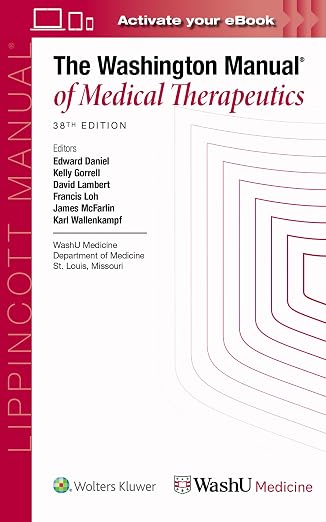
The Washington Manual of Medical Therapeutics
Washington University
38th edition · 2026A more detailed ward companion for admissions, common inpatient problems, and the transition into intern year.

Clinical equipment
Littmann Classic III Stethoscope
Littmann
Model 5620 · Black · 27-inchAn everyday bedside examination tool to consider for rotations and residency if you need to replace your current stethoscope.

Clinical equipment
The Physicians Folding Clipboard
Fellow Medical
Trifold · Letter-size paper · BlackA folding clipboard for organizing paper notes on rounds. Follow your hospital’s policies for patient information.

Scrubs
COZYFIT Women’s Scrub Set
COZYFIT
Women’s fit · Select size and color on AmazonA V-neck top and jogger set for clinical days. Check your hospital’s required color and whether it supplies scrubs.
Check current prices, editions, sizes, and seller details on Amazon.
Official resources
Common questions
What is the 2027 ERAS Program Signal Explanation?
The Program Signal Explanation is a program-specific MyERAS field that asks why an applicant is assigning a signal to that program. For 2027 it is used in Anesthesiology, Plastic Surgery–Integrated, Physical Medicine and Rehabilitation, and Radiation Oncology.
How long can an ERAS signal explanation be?
AAMC limits each Program Signal Explanation to 300 characters. Use the live MyERAS counter as controlling and leave a small buffer for pasted spaces, punctuation, and formatting.
Is the Program Signal Explanation required?
In a participating specialty, AAMC says the explanation must be provided for the program signal to save. Removing the signal removes the explanation.
Which specialties require Program Signal Explanations in 2027?
AAMC lists Anesthesiology, Plastic Surgery–Integrated, Physical Medicine and Rehabilitation, and Radiation Oncology. Other signaling specialties do not use this field unless AAMC updates the current season guidance.
Can I say a program is my number one choice?
Do not use the explanation to communicate rank-list preferences or ranking intentions. AAMC explicitly says the field should not be used for that purpose. Explain verified program alignment instead.
Does every program see my signal explanation?
No. The explanation belongs to the specific participating program that the applicant signals and applies to. Other programs do not receive that program's explanation.
Can I use the same explanation for every program?
A repeated framework is fine, but a repeated final paragraph defeats the program-specific purpose and creates copy errors. Verify at least one meaningful program feature and connect it to a truthful goal, experience, or geographic commitment.
Is a Program Signal Explanation the same as an ERAS specialty question?
No. Anesthesiology and Plastic Surgery–Integrated also have three specialty-level questions shared with every program in that specialty. The Program Signal Explanation is a separate 300-character response written for each individual signaled program.