Key takeaways
- Applicants may submit 2027 MyERAS applications beginning September 2, 2026; programs may begin review on September 23 at 9:00 a.m. ET.
- ECFMG released IMG Tokens on June 24, 2026, for a nonrefundable $185 fee and recommends MSPE/transcript submission by September 11.
- The 2027 application introduces Scholarly Work, the AAMC Letter Writer Portal, evolving specialty documents, and FSMB processing for all USMLE transcripts.
- USMLE transcript delivery now requires a $70 FSMB order plus a separate retrieval and assignment workflow in MyERAS.
- Certifying the standardized MyERAS application is irreversible; program, document, statement, signal, and track assignments require a separate final audit.
The fast answer
The 2027 ERAS application for IMGs is a coordinated document-delivery project, not a single online form. A strong application requires five systems to agree: MyIntealth and ECFMG for the Token and IMG documents; MyERAS and AAMC for the application and program assignments; FSMB for the USMLE transcript; NRMP R3 for Match registration and ranking; and each residency program for its own eligibility rules.
The official 2027 sequence is straightforward. The ERAS season opened June 4, 2026. ECFMG released IMG Tokens June 24. Applicants may submit beginning September 2 at 9:00 a.m. Eastern Time. Programs may begin reviewing applications and MSPEs September 23 at 9:00 a.m. ET. NRMP registration opens September 15. The ERAS season ends May 31, 2027.
Your practical deadline is earlier than the official opening. ECFMG recommends that IMGs submit their MSPE and medical school transcript no later than September 11 so the documents can be available when programs open. Letters, school documents, score retrieval, personal-statement assignments, signals, and program eligibility research should be complete before you pay and apply.
This guide covers MyERAS residency applications for positions beginning in 2027. Some specialties and programs use another application service, including ResidencyCAS. Confirm the required application service before buying a nonrefundable Token or paying a program fee.
ERAS, ECFMG, FSMB, and NRMP are separate systems
Many IMG application errors begin with a correct task performed in the wrong system. MyERAS delivers applications. ECFMG acts as the Designated Dean's Office for IMGs and processes designated supporting documents. FSMB now produces the USMLE transcript for ERAS. NRMP operates the Match. Residency programs decide whom they will consider.
Registration in one system does not register you in another. An ERAS Token does not create an NRMP account. A USMLE transcript order does not initiate retrieval inside MyERAS. MyERAS submission does not establish ECFMG Certification. ECFMG Certification does not override a program's year-of-graduation, attempt, score, visa, or document policy.
Build one master tracker with a separate status column for each organization. A portal that says complete may refer only to the step owned by that organization.
| System | Primary job | Critical applicant action |
|---|---|---|
| MyIntealth / ECFMG | Issues the IMG Token and processes IMG-designated documents, including the MSPE, medical school transcript, photo, and ECFMG Status Report. | Purchase the correct-season Token, submit eligible documents, and track ECFMG processing. |
| MyERAS / AAMC | Collects the standardized application, program list, signals, personal statements, LoRs, and document assignments. | Register with the Token, certify and submit, assign correctly, pay, and apply. |
| FSMB | Produces USMLE transcripts for all 2027 ERAS applicants. | Order and pay in the FSMB portal, then initiate score retrieval in MyERAS. |
| NRMP R3 | Manages Match registration, ranking, the matching algorithm, results, and SOAP status. | Register separately, enter identifiers accurately, monitor ECFMG verification, and certify the rank list. |
| Residency program | Sets application requirements and decides review, interview, ranking, visa support, and selection policy. | Verify the current program website and contact the program when a requirement is unclear. |
The official 2027 timeline and a safer working timeline
Official dates tell you when a portal opens or closes. They do not tell you when to ask a physician for a letter, request a school document, proofread 10 experiences, or resolve an identifier mismatch. The safer timeline below separates the controlling date from the date an organized applicant should target.
Applications submitted from September 2 through the September 23 opening are not placed in a first-come, first-reviewed queue. AAMC makes those applications available when programs open. That means accuracy is more valuable than submitting in the first minute on September 2, but completing the process well before September 23 still protects against technical and payment problems.
Program deadlines remain independent. A program can set a deadline earlier than the ERAS season close and may decline to review a late or incomplete file. ERAS does not refund fees because a program chooses not to consider an application.
| Date | Official event | Recommended applicant target |
|---|---|---|
| June 4, 2026, 9:00 a.m. ET | The 2027 ERAS season begins. | Download the 2027 worksheet and build the source document for every application field. |
| June 24, 2026 | ECFMG 2027 residency Tokens become available in MyIntealth. | Buy the Token only after confirming at least one target program uses ERAS; register it promptly. |
| June–July 2026 | Applicants build MyERAS; 2027 program and signaling information continues to populate. | Confirm identity data, draft experiences, initiate LoRs, research eligibility, and order the USMLE transcript. |
| August 2026 | Programs finalize many public requirements and signaling participation details. | Freeze a researched program list, finalize statements and signals, and audit every assignment. |
| September 2, 2026, 9:00 a.m. ET | Residency applicants may begin submitting applications. | Certify only after a line-by-line PDF review; apply when application and assignments are ready. |
| September 11, 2026 | ECFMG's recommended latest date for IMG MSPE and transcript submission. | Treat this as a backstop, not a goal. Submit earlier if the school or ECFMG controls the upload. |
| September 15, 2026, noon ET | NRMP 2027 Main Residency Match registration opens. | Register promptly and confirm the AAMC ID, USMLE ID, and ECFMG-linked information. |
| September 23, 2026, 9:00 a.m. ET | Programs may begin reviewing applications and MSPEs. | Have the application, signals, statements, LoRs, scores, photo, MSPE, and transcript visible or correctly pending. |
| January 29, 2027, 11:59 p.m. ET | Standard NRMP registration closes; a late fee applies afterward. | Do not leave Match registration until interview or ranking season. |
| March 3, 2027, 9:00 p.m. ET | Rank lists close and the IMG ECFMG verification requirement is due. | Confirm Verified status well in advance and certify the final rank list. |
| March 15–19, 2027 | Match Week and SOAP; Match Day is March 19. | Prepare SOAP documents, contacts, and availability before status release. |
| May 31, 2027, 5:00 p.m. ET | The 2027 ERAS season ends. | Download records and ensure any application you want available for future import was certified and submitted. |
Before buying the ECFMG ERAS Token
The Token is a one-time code that connects your ECFMG identity to a new MyERAS residency application. For the 2027 season, ECFMG charges a nonrefundable $185 fee. One residency Token can be used to apply to multiple specialties and programs and to both PGY-1 positions beginning in 2027 and advanced PGY-2 positions beginning in 2028.
Confirm three things before purchase. First, you have a MyIntealth ID and a USMLE ID and the biographical information is consistent. Second, at least one target program uses ERAS. Third, this is the correct application season. Tokens do not transfer between seasons, and requesting duplicate Tokens creates avoidable support work.
ECFMG allows applicants to obtain a Token and apply before completing the examinations required for certification. That flexibility is not a recommendation to submit an uncompetitive or ineligible file. Check whether each target program requires Step 2 CK, ECFMG Certification, a specific Pathway status, or a completed graduation credential at application or before ranking.
After registration, verify that your MyERAS account shows the correct name, identifiers, email, and Designated Dean's Office. Do not create parallel AAMC accounts to solve a mismatch; contact the responsible support organization.
- Use a personal email address that will remain active through residency onboarding.
- Use your legal name consistently with passport, MyIntealth, FSMB, and school records.
- Store the Token and purchase receipt securely; do not share the code.
- Do not buy a Token only because a specialty usually used ERAS in a prior year.
- Do not confuse the $185 ERAS Token with an ERAS application fee, USMLE transcript fee, or NRMP fee.
What changed for the 2027 ERAS season
A 2027 guide should not copy the 2026 workflow. The application has a redesigned Scholarly Work section, a new universal letter portal, new or evolving specialty documents, and a different USMLE transcript process.
The Publications section is now Scholarly Work. Applicants categorize journal articles, peer-reviewed book chapters, peer-reviewed journal abstracts, oral presentations, and poster presentations; may group related entries into named scholarly collections; and may identify up to three most meaningful works. Prior-season Publications data will not import into the new section, so repeat applicants must rebuild it.
All LoRs now enter through the AAMC Letter Writer Portal. AAMC also is working with selected specialties on structured or specialty-specific standard evaluation letters. The exact required letter depends on the specialty and program; a generic LoR workflow is not sufficient when a specialty requires a specific form.
FSMB now processes all USMLE transcript requests. Paying ECFMG or AAMC does not order the transcript. The applicant must pay FSMB and authorize release there, then return to MyERAS to initiate retrieval using the correct USMLE ID.
Program Signal Explanations and specialty-specific essay questions continue for selected specialties. Do not assume they apply to all specialties, and do not assume a prior-season prompt or signal count remains current.
| Change | What applicants must do | Common failure |
|---|---|---|
| Scholarly Work replaces Publications | Re-enter eligible work, use the new types, group related outputs when useful, and choose up to three meaningful works. | Assuming prior Publications entries will import. |
| AAMC Letter Writer Portal | Create and confirm the correct author entry, generate the request form, and have the author or designee upload. | Sending a letter to ECFMG or uploading it personally. |
| Specialty-specific standard letters | Check the 2027 specialty and every program for the exact evaluation format. | Assigning a general letter where a structured document is required. |
| USMLE requests move to FSMB | Order and pay in FSMB, then initiate retrieval and get scores in MyERAS. | Completing only one half of the two-system workflow. |
| Signals and specialty questions evolve | Use the live 2027 program participation and specialty pages before applying. | Using old signal counts, old prompts, or a prior-year program list. |
Build a source-of-truth application before typing in MyERAS
MyERAS is the delivery system, not the best drafting environment. Create a plain-text master document or spreadsheet containing every date, organization name, location, author list, response, source record, character count, and assignment decision. Drafting outside the portal makes revision, version control, and independent proofreading easier.
Use plain text for narrative fields. Rich formatting copied from word processors can introduce invisible characters or unexpected line breaks. MyERAS does not provide a spell or grammar checker, and program reviewers will see exactly what survives the portal's rendering.
For every factual item, preserve evidence. A diploma establishes a graduation date; an appointment letter establishes employment dates; PubMed or the journal establishes citation details; the conference program establishes a presentation; and the program's own site establishes application requirements. Estimating is sometimes allowed, but inventing precision is not.
Complete a cross-application consistency check. Dates and roles should agree across the MyERAS application, CV, personal statement, MSPE, LoRs, LinkedIn profile if public, and interview answers. A harmless naming difference can be explained; unexplained contradictions can damage credibility.
- Application field and final text.
- Character count after plain-text conversion.
- Source document or URL supporting the entry.
- Reviewer name and review date.
- Specialty version, when applicable.
- Program assignment, signal, and document requirements.
- Portal status and screenshot or receipt.
Complete the standardized application field by field
Every program receives the same locked standardized MyERAS application. You may tailor assigned documents such as personal statements and LoRs, but you do not create a different core application for each specialty. This makes the core application a shared factual record that must work across all specialties to which you apply.
Start with Personal Information and Biographical Information because identifiers control document matching and programs use contact and work-authorization data. Then complete Education, Experiences, Impactful Experiences if applicable, Additional Questions, Licenses and Certifications, Scholarly Work, and any specialty questions.
Answer required legal, licensing, malpractice, misdemeanor, felony, and disciplinary questions accurately. If a question is ambiguous in your circumstances, obtain appropriate school, legal, licensing, or application-service guidance. Do not use an article to reinterpret a disclosure obligation.
Use the application PDF and CV preview repeatedly. A saved portal field may look different in the program-facing document. Check capitalization, date order, blank fields, spacing, truncated text, and whether a label creates an unintended meaning.
| Section | Primary purpose | Quality-control question |
|---|---|---|
| Personal Information | Identity, contact, work authorization, Match identifiers, and communication. | Will every identifier match the record held by ECFMG, FSMB, and NRMP? |
| Biographical Information | Background, language, military, and self-identification fields. | Did I answer the exact question rather than infer why it was asked? |
| Education | Medical and other education, interruptions, and training history. | Do dates and explanations agree with my MSPE and transcript? |
| Experiences | Up to 10 selected experiences and three meaningful reflections. | Does the set show my actual contribution, progression, and specialty fit? |
| Impactful Experiences | Optional context for challenges or hardships that shaped the journey. | Does this apply to me, and does it add context not already repeated elsewhere? |
| Licenses and Certifications | State licenses, board certifications, other health credentials, and required disclosures. | Are status, jurisdiction, number, and expiration details current and truthful? |
| Scholarly Work | Structured record of qualifying peer-reviewed work and selected presentations. | Can every authorship, status, venue, date, and link be verified? |
| Specialty Questions | Specialty-visible responses required for selected fields. | Did I use the current prompt and submit before applying to that specialty? |
How to use the 10 experiences strategically and honestly
The 2027 application permits up to 10 selected experiences. Each entry contains structured data and a 750-character context, roles, and responsibilities description. You may designate up to three as most meaningful and add a 300-character reflection for each. Hobbies and interests has its own 300-character field.
The limit is a maximum, not a demand to manufacture 10 entries. The set should make your professional story legible: clinical preparation, service, research, teaching, leadership, employment, and sustained interests. For IMGs, the experience set also can clarify what you did during time that may otherwise look like a gap.
A strong 750-character entry usually answers four questions: What was the setting? What did you personally do? What changed because of the work, when a result can be stated honestly? What context helps a reviewer interpret the scope? Avoid repeating the position title, listing vague virtues, or describing an institution's mission without your contribution.
The 300-character meaningful response is reflective, not a second job description. AAMC specifically tells applicants to explain why the experience mattered and how it influenced them. The program sees it beside the main description, so spending the reflection on duplicate duties wastes limited space.
Clinical experiences must be labeled accurately. An observership is not a hands-on clerkship. A simulated encounter is not direct patient care. Research data abstraction is not clinical management. Precise labels protect credibility and allow a strong letter to reinforce rather than contradict the application.
- Use a verb that names your own action, not the team's general activity.
- Quantify only when the number is supportable and meaningful.
- Distinguish observation, supervised participation, and independent responsibility.
- Show progression or a decision when it adds insight.
- Use present tense for current responsibilities and past tense for completed work.
- Avoid identical lessons across multiple meaningful reflections.
- Keep specialty relevance natural; do not force every experience into the same theme.
Use Impactful Experiences only when the question fits
The Impactful Experiences section is intended for applicants who have faced challenges or hardships that influenced the journey to residency. AAMC gives examples involving family or financial background, community setting, educational opportunity, caregiving, and other life circumstances. Programs do not expect every applicant to answer.
This is not a general adversity essay, a required proof of resilience, or the place to repackage a disappointing score. Use it when context helps a reviewer fairly understand the opportunities, constraints, or responsibilities that shaped your path.
Describe the relevant circumstance, its effect on the journey, and the response without disclosing more than you are comfortable discussing in an interview. Avoid blaming individuals, diagnosing other people, or including protected details about patients. Do not repeat the same story word for word in the personal statement.
If the section does not apply, leaving it blank is consistent with AAMC's guidance. An invented hardship is an integrity problem; an ordinary challenge forced into the field can weaken an otherwise mature application.
Build the new Scholarly Work section correctly
The 2027 Scholarly Work section is more structured than a free-form publications list. Its available types are peer-reviewed journal articles, peer-reviewed book chapters, peer-reviewed journal abstracts, oral presentations, and poster presentations. If you have none, the application provides a None selection.
Publication status controls which fields appear. The official guide distinguishes Submitted, Accepted/In-Press, and Published. Do not label an unpublished manuscript as accepted, a local teaching talk as an oral presentation, or a journal-club assignment as a selected conference presentation. AAMC states that oral and poster presentations should involve a submission and selection process and excludes required coursework and local rotation presentations such as journal club, morbidity and mortality, or noon conference.
Authors must appear in the publication's order, and your own name is identified in the application. Use the exact title, venue, status, date, volume, issue, pages, PMID, and URL where applicable. When a work changes status before certification, update it and preserve evidence.
Scholarly collections allow related outputs to be grouped under a title of up to 100 characters. One research project might lead to an abstract, poster, and article; grouping can show the relationship without falsely presenting them as unrelated projects. The entries remain individually verifiable.
You may identify up to three most meaningful scholarly works. Choose work that you can explain deeply: the question, your role, methods, obstacle, result, limitation, and clinical or scientific significance. Prestige without genuine contribution is difficult to defend in an interview.
Repeat applicants must rebuild this section. The 2027 worksheet explicitly states that prior-season Publications data will not import into Scholarly Work.
| Type | Include when | Do not misclassify |
|---|---|---|
| Journal article, peer reviewed | The article is submitted to, accepted by, in press at, or published by a peer-reviewed journal. | An unsubmitted draft, pre-writing idea, or non-peer-reviewed web article. |
| Book chapter, peer reviewed | The chapter underwent formal peer review and has the required publication details. | An informal handbook contribution or non-reviewed educational note. |
| Journal abstract, peer reviewed | A peer-reviewed abstract has a valid submission or publication status. | The full article again when no separately published abstract exists. |
| Oral presentation | A presentation was selected through a submission process; multiple events may be linked. | A required class, journal club, noon conference, or local rotation presentation. |
| Poster presentation | A research-based poster was selected and presented; multiple presentation events may be linked. | A project display without the qualifying selection and presentation context. |
Personal statements: create, title, assign, and audit
MyERAS allows more than one personal statement. The internal title is visible only to you; programs see the content of the statement assigned to them. There is no stated limit on the number you can create, and the technical content limit is 28,000 characters, but a technically permitted length is not an instruction to write an unusually long essay.
Create a clear naming system that prevents assignment errors: specialty, program version if truly customized, and final date. Never use a title that could embarrass you if accidentally exposed in a screenshot or shared during review.
A specialty statement should connect evidence from your path to the work and values of that field. A program-specific version should contain accurate reasons that could not be pasted into any program. Do not merely replace a program name while leaving a sentence that describes another institution.
Personal statements remain editable after the standardized application is certified. They also can be reassigned, but programs may already have downloaded or reviewed the earlier version. Treat post-application changes as uncertain corrections, not as a normal drafting strategy.
Preview the program-facing rendering. Check page count, paragraph breaks, unsupported formatting, hyperlinks, special characters, and whether copying from a word processor created hidden formatting. AAMC warns that suspected plagiarism can be investigated and substantiated findings may be reported to programs in current and future seasons.
- Keep a master specialty statement and a controlled list of genuine program-specific variants.
- Use an assignment table; do not rely on memory.
- Read each final statement aloud and review it as plain text.
- Confirm every institution, city, pathway, and track name.
- Avoid patient identifiers and unverifiable claims.
- Never assign a statement for one specialty to another specialty.
Letters of recommendation: the 2027 workflow
For 2027, LoRs are uploaded through the AAMC Letter Writer Portal. The applicant creates the author entry in MyERAS, confirms it for upload, and generates a Letter Request Form containing the unique Letter ID. For a waived confidential letter, the author or authorized designee uses that information to upload it. AAMC's detailed instructions permit an applicant to upload only an entry for which the applicant did not waive the right to view.
Choose the waiver option deliberately. Waiving the right to view communicates that the letter is confidential; if you do not waive, programs can see that choice. The viewing-right selection and confirmed author information have consequences, and imported letter entry information retains the original viewing rights.
Ask early and provide the writer with a concise packet: CV, statement draft, specialty, relevant cases or work, requested submission date, Letter Request Form, and any specialty-specific format. A request date is not an upload date. Track the portal status and send a professional reminder before your internal deadline.
A letter cannot be assigned until it has been uploaded. Assignment is program-specific, and applicants should verify the maximum and required types for each program. Do not assume four general LoRs are better than the exact three a program requests.
If a specialty uses a standardized evaluation or recommendation form, follow the live 2027 instructions. Dermatology, plastic surgery-integrated, and urology are among the specialties involved in AAMC's 2027 specialty-specific letter work, but program requirements control.
ECFMG cannot give an applicant a copy of a confidential LoR. To preserve letters for a future season, the application must meet AAMC's import conditions, including certification and submission before season close.
| Task | Responsible party | Applicant verification |
|---|---|---|
| Create author entry and Letter ID | Applicant in MyERAS | Correct author, title, specialty context, and waiver choice. |
| Upload letter | Author or authorized designee through the AAMC Letter Writer Portal for a waived letter; the applicant may upload only a nonwaived entry under AAMC's rules. | Portal shows the intended letter as uploaded and available, with the expected waiver status. |
| Process and display | AAMC/ERAS workflow | Allow processing time and monitor status; do not wait until program opening. |
| Assign to program | Applicant | Correct letter set for every program and specialty. |
| Evaluate requirement | Residency program | Program site confirms number, specialty, chair or standardized-letter rules. |
The IMG document matrix: who uploads and who assigns
Documents do not all follow the same path. Some are uploaded by the applicant through MyIntealth, some by the medical school, some by a letter author, and one is generated by ECFMG. Some are automatically assigned to every program; others require a deliberate program assignment.
ECFMG evaluates IMG-submitted MSPE and transcript files for image clarity and placement in the correct document slot. A document uploaded in MyIntealth can take up to five business days to process. That estimate is not a guarantee that a deficient document will be accepted without further action.
Use MyERAS's Assignments Checklist and program-level document tracking. An uploaded document that is not assigned when assignment is required may be invisible to the program. Conversely, automatic documents do not need a separate program-by-program assignment.
| Document | Who submits or authorizes it | Assignment rule |
|---|---|---|
| MyERAS application | Applicant certifies and submits. | Sent to every program to which the applicant pays and applies. |
| Personal statement | Applicant creates in MyERAS. | Applicant assigns; version can vary by program. |
| Letter of recommendation | Author or designee uploads a waived letter through the AAMC Letter Writer Portal after the applicant creates the entry; AAMC permits applicant upload only for a nonwaived entry. | Applicant assigns the uploaded letter to selected programs. |
| MSPE | Applicant or participating medical school submits through the ECFMG process. | Automatically assigned to applied programs. |
| Medical school transcript | Applicant or participating medical school submits through the ECFMG process. | Automatically assigned to applied programs. |
| ECFMG Status Report | ECFMG generates and updates it. | Automatically assigned to applied programs. |
| Photo | Applicant submits through the ECFMG process for IMG applications. | Applicant assigns to selected programs. |
| USMLE transcript | Applicant orders and pays through FSMB, then initiates retrieval in MyERAS. | Applicant assigns to programs; new scores can later be resent to all prior recipients. |
| COMLEX-USA transcript, if applicable | Applicant authorizes NBOME release and pays the seasonal fee. | Applicant assigns to programs. |
MSPE, medical school transcript, photo, and ECFMG Status Report
The MSPE and medical school transcript answer different questions. The MSPE is an evaluation of performance and progression through medical education. The transcript documents courses, time, and academic results. Do not upload one into the other's slot or combine unrelated records without following ECFMG instructions.
If your school participates in ERAS Support Services through ECFMG's MyIntealth Entity Portal, the school may be required to upload these documents. If it does not, eligible applicants with official copies may submit through MyIntealth. Confirm the route with the dean's office rather than repeatedly uploading duplicates.
Documents must be legible and appropriately translated. ECFMG instructs applicants to submit only the English translation for a document requiring translation in this ERAS context. Security paper, dark backgrounds, stamps over text, missing pages, or an unofficial retyped document can cause problems.
ECFMG recommends September 11 as the latest submission date for the MSPE and transcript to support availability by the September 23 program opening. Because processing can take up to five business days and corrections take longer, an earlier internal deadline is safer.
The ECFMG Status Report is not a document you write. ECFMG generates it to report relevant ECFMG status information and updates it as appropriate. It is automatically assigned. The report does not replace a USMLE transcript, MSPE, medical school transcript, or program-specific proof.
Use a professional, current photograph that follows ECFMG and MyERAS technical requirements. The photo is optional at the system level but commonly expected. It requires assignment; do not assume upload alone sends it.
The new two-system USMLE transcript process
The 2027 season changed one of the most important IMG document workflows. FSMB now fulfills USMLE transcript requests for all U.S. and IMG residency applicants. MyERAS no longer collects the USMLE transcript processing fee.
First, log in to FSMB's USMLE portal, order the transcript for the residency application service, pay the $70 fee for the 2026–2027 cycle, and authorize release to ERAS. The fee is a one-time residency-cycle charge; FSMB states there is no additional charge to resend during the same cycle.
Second, return to MyERAS. In Additional Documents, select the USMLE transcript action to initiate score retrieval, enter or confirm the USMLE ID, authorize the action, save, and use Get Scores. The USMLE ID must match the FSMB record and the Personal Information section.
Third, assign the transcript to the intended programs. The request is transmitted in connection with applying. Track the status report until MyERAS shows that the transcript was received and identifies the included Step exams.
If a new result becomes available after you apply, use Resend My Scores. The updated transcript goes to every program that previously received it; it cannot be limited to a subset. AAMC permits one resend request per day and disables the option for 24 hours after use.
Do not assume that an ECFMG exam result automatically becomes an ERAS transcript. ECFMG explicitly states that the transcript is not transmitted automatically for 2027.
| Step | System | Proof of completion |
|---|---|---|
| 1. Order and pay | FSMB USMLE portal | Residency Application Service selected, $70 paid, and release authorized. |
| 2. Initiate retrieval | MyERAS Additional Documents | Correct USMLE ID entered and retrieval initiated. |
| 3. Retrieve scores | MyERAS | Get Scores completed and available exams displayed. |
| 4. Assign | MyERAS Documents or program page | Assignment report shows the intended programs. |
| 5. Apply and monitor | MyERAS Programs Applied To | Transcript status becomes Received with score-transfer details. |
| 6. Resend later score | MyERAS Additional Documents | Resend request processed for all programs that previously received the transcript. |
Program research must happen before program payment
A broad program list is not the same as an eligible program list. For every program, verify the application service, specialty and track, deadline, required documents, minimum exams, attempt limits, graduation-year policy, U.S. clinical experience, LoR type, ECFMG status, visa support, state restrictions, and whether the program is accepting applications.
Use primary program sources first: the current residency website and direct program communication. MyERAS program search can show training types, participation, signaling status, application requirements, and visa-support fields, but AAMC states that programs are not required to provide all information there.
Residency Explorer, the NRMP Program Directory, and FREIDA can support comparison and discovery. They do not override a current program policy. Keep the URL and date checked in your tracker because pages change during the season.
Program fit should influence both selection and signaling. Mission, patient population, training model, location, career opportunities, and evidence that the program evaluates IMGs like you are more useful than an undifferentiated label such as IMG-friendly.
Contact the program when a decisive rule is missing or contradictory. Ask one precise question, identify your status accurately, and preserve the written response. Do not ask a coordinator to pre-screen your entire CV.
| Domain | Questions to answer | Primary source |
|---|---|---|
| Participation | Does this exact program and track use ERAS for 2027 and still accept applications? | Program site plus live MyERAS participation status. |
| IMG eligibility | Are there graduation-year, attempt, score, ECFMG, or school restrictions? | Current program eligibility page or written program response. |
| Clinical preparation | Is U.S. clinical experience required, how recent, and what type counts? | Program application requirements. |
| Documents | How many LoRs and what types? Is a chair letter or standard evaluation required? | Program and specialty instructions. |
| Immigration | Does the program sponsor J-1, H-1B, both, or neither, and under what conditions? | Program/GME office policy; confirm current details. |
| Signal | Does the program accept signals, and is a signal explanation required? | Live MyERAS signaling status. |
| Fit | Do mission, patient population, structure, location, and outcomes align with the applicant? | Program site, Residency Explorer, residents, and interview information. |
Program signals: assign them as a portfolio
Program signals communicate interest at the time of application. Signal counts and tiers are specialty-specific, and individual program participation is optional. A signal is not an interview guarantee, but AAMC reports that 96% of surveyed program respondents in the 2026 season used signals when deciding whom to interview.
AAMC advises applicants to use all allotted signals and to signal the programs in which they are most interested, including home and away-rotation programs. Do not withhold a signal because you assume a program already knows you.
Build a signal portfolio rather than selecting only by prestige. Consider realistic competitiveness, program mission, visa and eligibility fit, geographic or personal constraints, specialty goals, and the opportunity cost of every signal. A program that will not consider your profile should not receive a scarce signal merely because its name is familiar.
Signals are institution-level within a specialty, not track-level. If an institution offers preliminary and categorical tracks in the same specialty, the signal is visible across those tracks.
The 2027 signal rule contains an important timing nuance. After applying, a signal can be updated before the September 23 program opening at 9:00 a.m. ET. After that opening moment, signals to applied programs cannot be changed. Signals assigned only to saved programs remain editable until sent with an application. If you withdraw from a signaled program, the used signal does not return.
Selected specialties require a Program Signal Explanation of up to 300 characters. AAMC lists anesthesiology, plastic surgery-integrated, physical medicine and rehabilitation, and radiation oncology for this feature. The explanation should state genuine alignment; it should not discuss ranking intentions.
- Confirm that the individual program accepts signals in the live portal.
- Use all available signals unless an official specialty instruction says otherwise.
- Include home and away programs when they are truly among your preferred programs.
- Review gold versus silver choices as a complete specialty portfolio.
- Check signal explanations for program-specific accuracy.
- Audit signals again immediately before payment.
- Preserve the final signal report.
Specialty questions and specialty-specific documents
For 2027, the official applicant guide lists specialty-specific questions for anesthesiology, neurological surgery, and plastic surgery-integrated. Responses are visible only to programs in the corresponding specialty. Prompts and character limits differ, so use the live application and worksheet rather than a prior-year template.
Before certification, saved responses can be edited. After certification, a response already submitted cannot be edited or deleted. If you did not answer questions for a specialty before certifying the core application, MyERAS permits you to add and separately submit those responses later, but they must be completed before applying to programs in that specialty.
Treat these short responses as evidence. Answer the precise decision, feedback, workload, adversity, career, or teamwork prompt with a specific situation and reflection. Avoid reusing one generic paragraph across questions that test different behaviors.
Specialty-specific standard letters are a separate issue from specialty questions. Verify both. A complete essay does not satisfy a required evaluation letter, and a structured letter does not replace a required essay.
Certify and submit: the irreversible checkpoint
Certifying and submitting the standardized MyERAS application is a one-time, irreversible action. It locks the core application so every program receives the same version. AAMC states that there are no exceptions to the post-submission editing restriction outside Personal Information.
Do not confuse certification with applying. First you certify and submit the standardized application. Then you select programs, complete assignments and signals, pay, and apply. A certified application that has not been sent to a program is not an application to that program.
Before certification, download and review the full application PDF and CV. Use at least two passes: a factual audit against source records and a language audit for clarity, consistency, and formatting. Have a second person check names, dates, disclosures, and unexplained gaps; a subject-matter reviewer can then assess specialty narrative.
Personal Information can remain updateable, including fields such as work authorization. Personal statements also remain editable under the document rules. Those exceptions do not reopen experiences, education, Scholarly Work, meaningful designations, or a submitted specialty response.
A missing optional item is not automatically a reason to delay. A factual error, wrong date, inflated role, incomplete disclosure, or unreviewed core narrative is. Make a deliberate readiness decision rather than submitting because the portal permits it.
| Item | After certification | Practical implication |
|---|---|---|
| Core MyERAS application | Locked; no changes outside Personal Information. | Proofread education, experiences, disclosures, and Scholarly Work before submission. |
| Personal Information | Can be updated and saved. | Keep contact and work-authorization information current. |
| Personal statements | Can be created, edited, and assigned under document rules. | Programs may already have viewed an earlier version. |
| Unanswered specialty questions | May be added and submitted before applying to that specialty. | Once submitted, the specialty response cannot be changed. |
| LoRs and supporting documents | May become available and be assigned subject to document and program rules. | A program may review the file before a late document appears. |
| Signals to applied programs | Editable only until the September 23 opening for the September residency cycle. | After opening, the signal is final and a withdrawn signal cannot be reused. |
The final pre-payment assignment audit
The most expensive errors occur after the writing is finished: signaling the wrong program, sending the wrong specialty statement, omitting a required letter, selecting an ineligible track, or paying a program that will not review the file.
Use an assignment matrix with one row per program and one column per document. Compare it with MyERAS's Assignments Checklist and Assignments Report. A green status should answer a specific question—uploaded, assigned, transmitted, or received—not merely create reassurance.
After applying, an LoR already assigned to that program cannot be replaced or removed. You may assign additional uploaded LoRs later if the program has fewer than the maximum of four, but AAMC does not guarantee that a program will review a newly assigned letter. Personal statement assignments can be changed throughout the season, with the same warning about whether a program will review the update. Training selections also cannot simply be removed after application; contact the program if you no longer seek a selected track.
Perform the audit before checkout, then repeat it program by program after payment. Save the receipt, payment history, assignments report, signal report, and program-level tracking.
- Correct specialty, institution, program, accreditation ID, and training type.
- Program still accepts applications and the deadline has not passed.
- Applicant meets the program's IMG, exam, graduation-year, USCE, and visa rules.
- Correct personal statement is assigned.
- Correct number and type of LoRs are uploaded and assigned.
- USMLE transcript is ordered, retrieved, and assigned.
- Photo is assigned if intended.
- Signal tier and explanation are correct.
- Specialty questions are complete where required.
- Automatic MSPE, transcript, and ECFMG Status Report statuses are understood.
- Total fee agrees with the planned application count by specialty.
2027 ERAS fees and realistic budget examples
Beginning in 2027, AAMC uses a two-tier residency application price within each specialty. Applications 1 through 30 cost $11 each. Application 31 and every later application in the same specialty cost $30 each. The count resets when you apply in a different specialty.
The reset creates a real dual-specialty effect. Thirty internal medicine plus 10 family medicine applications cost 40 times $11, or $440. Forty applications in internal medicine cost $330 for the first 30 plus $300 for the next 10, or $630.
For a typical IMG sending USMLE scores, add the $185 ECFMG Token and the $70 FSMB transcript charge. NRMP currently lists an $85 Main Residency Match standard registration fee, including up to 20 unique program codes on the primary list and up to 20 across supplemental lists. Taxes, COMLEX, late NRMP registration, couples participation, extra ranks, OET, ECFMG certification, visa, travel, and interview costs may also apply.
AAMC application fees and NRMP fees are generally nonrefundable. Program research is therefore a budget-control tool: removing programs that do not use ERAS, do not sponsor the needed visa, or will not consider the applicant protects both money and signal strategy.
| Application plan | AAMC program fees | With $185 Token + $70 USMLE transcript |
|---|---|---|
| 20 programs in one specialty | 20 × $11 = $220 | $475 |
| 30 programs in one specialty | 30 × $11 = $330 | $585 |
| 40 programs in one specialty | (30 × $11) + (10 × $30) = $630 | $885 |
| 60 programs in one specialty | (30 × $11) + (30 × $30) = $1,230 | $1,485 |
| 30 in specialty A + 10 in specialty B | (30 × $11) + (10 × $11) = $440 | $695 |
| 40 in specialty A + 20 in specialty B | [(30 × $11) + (10 × $30)] + (20 × $11) = $850 | $1,105 |
After applying: monitor delivery, not just submission
An application payment receipt proves that you applied. It does not prove that every document was available, assigned, processed, and received. Open Programs Applied To and expand the tracking information for each program.
Monitor the Message Center, but also monitor the personal email, voicemail, and postal address in your application. MyERAS captures only messages sent through the system. Interview invitations or program communications sent through external scheduling platforms or institutional email may not appear there.
When a late LoR or document becomes available, follow the assignment rules and understand that the program may already have screened the application. If a new USMLE result appears, use Resend My Scores; remember that the update goes to every prior transcript recipient.
Keep Personal Information current. Update a phone number, email, address, or work authorization promptly and save it so programs receive the update. Do not expect a personal-information edit to draw attention to an unrelated achievement.
Withdraw only when you genuinely no longer wish to be considered. Withdrawing in MyERAS does not erase the application from the program's workstation view, and a signal used for that program is not returned.
If a material error is discovered in the locked application, obtain guidance from AAMC and, when appropriate, communicate concisely and honestly with affected programs. Do not create contradictory documents to conceal the mistake.
Repeat applicants: import selectively and verify everything
MyERAS can provide access to certified and submitted applications from prior seasons and can import eligible data from the most recent application. Availability depends on having certified and submitted before the prior season ended. Import is a starting point, not proof that the imported data remains correct.
Review every imported date, role, address, disclosure, and credential. Update current activities, correct old wording, and remove entries that no longer represent the strongest or most accurate application. A repeat application should explain growth through evidence rather than merely become longer.
LoRs have a separate import process. Imported letter entry information and viewing rights remain consistent with the original, although the author may have the right to upload a new version. Confirm that an older letter is recent enough and describes the correct specialty and application year.
ECFMG separately stores certain IMG documents. For eligible 2026 repeat applicants requesting a 2027 Token, ECFMG describes reuse of the MSPE, medical school transcript, photo, and LoRs and uploads stored MSPE, transcript, and photo within its stated process. Check actual status rather than assuming all documents crossed systems.
The largest 2027 import exception is Scholarly Work: Publications from prior seasons do not import into the redesigned section. Re-enter and verify each qualifying work.
- Download the prior application before importing.
- Compare the imported application with the 2027 worksheet field by field.
- Rebuild Scholarly Work from verified citations.
- Import only LoRs that still fit the specialty, timing, and program requirements.
- Confirm ECFMG-stored document statuses after Token registration.
- Certify and submit the 2027 application before season close if future import matters.
Dual-specialty applicants need a controlled assignment system
The standardized application is shared across specialties, so it should not claim an exclusive commitment that becomes false when viewed by another field. Specialty-specific motivation belongs primarily in the personal statement, LoR set, signals, and specialty responses.
Create two evidence-based narratives, not two identities. Experiences and scholarly work remain factual; each specialty version can emphasize the parts most relevant to that field. A clinical experience does not need a rewritten title to become relevant.
Use separate program-list tabs and separate statement and LoR assignment columns. Because the AAMC fee count resets by specialty, model the financial cost correctly. Because signals are allocated by specialty, create and audit each signal portfolio separately.
Programs cannot see the other programs to which you applied or the total number of applications you submitted. They can see inconsistencies inside the materials you send them. A letter naming the wrong field or a statement naming the wrong program is a preventable high-impact error.
If the two specialties require different application services, calendars, or documents, maintain separate trackers. One ERAS Token does not replace registration in ResidencyCAS or another service.
Failure modes that most often damage an IMG application
Strong applications are often weakened by operational errors rather than a lack of accomplishments. The most dangerous errors combine irreversibility, late timing, and an incorrect assumption about who owns the next step.
A deadline-compliant document can still arrive too late for a program's first review. A paid transcript can remain unavailable because retrieval was never initiated. An uploaded letter can remain unseen because it was not assigned. A signal can be spent on a program that does not meet the applicant's visa need.
Accuracy protects more than presentation. MyERAS certification is an attestation. False dates, inflated patient care, invented publications, omitted required disclosures, or copied text can trigger consequences that extend beyond a single interview season.
- Buying a nonrefundable Token before confirming the program uses ERAS.
- Creating duplicate AAMC, MyIntealth, or FSMB identities to work around a mismatch.
- Treating ERAS, ECFMG Certification, and NRMP registration as one process.
- Waiting until September 11 to begin obtaining an MSPE or transcript.
- Ordering the USMLE transcript in FSMB but never initiating retrieval in MyERAS.
- Initiating retrieval with an incorrect USMLE ID.
- Assuming an uploaded LoR is automatically assigned.
- Assigning a generic letter where a specialty-specific document is required.
- Copying formatted text without checking the program-facing preview.
- Repeating duties in the 300-character meaningful reflection.
- Inflating an observership into hands-on patient care.
- Importing old data without checking dates, status, and current accuracy.
- Assuming old Publications entries will populate the new Scholarly Work section.
- Using prior-year specialty prompts or signal counts.
- Failing to signal a home or away program because it supposedly already knows the applicant.
- Applying before checking visa, graduation-year, attempt, score, or USCE rules.
- Certifying before an independent factual review.
- Paying before auditing statement, letter, transcript, photo, signal, and track assignments.
- Registering in ERAS but not NRMP.
- Sending an updated score and assuming only selected programs will receive it.
The complete 2027 ERAS checklist for IMGs
Use this checklist as a control system. Mark an item complete only when you can identify the portal status, source document, or saved report that proves completion. Add every program-specific deadline and requirement separately.
- I confirmed that each target specialty, program, and track uses ERAS for the 2027 cycle.
- My name, date of birth, AAMC ID, MyIntealth ID, and USMLE ID are accurate and consistent.
- I purchased one correct-season ECFMG Token for $185 and registered it in MyERAS.
- I secured my account, personal email, phone, and backup access.
- I downloaded the 2027 worksheet and created a plain-text source application.
- All education and training dates agree with my transcript, MSPE, CV, and records.
- My legal, licensing, disciplinary, malpractice, and other required answers are complete and accurate.
- I selected no more than 10 experiences and kept each main description within 750 characters.
- I chose up to three meaningful experiences and used each 300-character reflection for meaning, not duplicate duties.
- I used Impactful Experiences only if the question genuinely applies.
- My hobbies and interests fit the 300-character limit and are interview-ready.
- I rebuilt Scholarly Work under the 2027 categories and verified every author, status, date, and link.
- I used scholarly collections only to group genuinely related outputs.
- I selected up to three meaningful scholarly works I can discuss in depth.
- I drafted, previewed, and correctly titled every personal statement.
- Every LoR author entry and waiver choice is correct and confirmed.
- Every writer received the correct Letter Request Form and specialty instructions.
- Required LoRs are uploaded through the AAMC Letter Writer Portal.
- My MSPE and medical school transcript followed the correct ECFMG or school submission route.
- I submitted the MSPE and transcript early enough for processing, no later than ECFMG's September 11 recommendation.
- My professional photo is processed and assigned where intended.
- I understand that the ECFMG Status Report is generated and automatically assigned by ECFMG.
- I ordered and paid for my USMLE transcript through FSMB.
- I initiated USMLE score retrieval with the correct ID in MyERAS and used Get Scores.
- I researched each program's current application service, deadline, IMG criteria, exams, USCE, LoRs, and visa rules.
- I checked live program and signaling participation.
- I used my specialty's full signal allocation strategically and checked every tier and explanation.
- I completed current specialty-specific questions and documents where required.
- I reviewed the application PDF and CV for facts, formatting, omissions, and consistency.
- A second reviewer performed an independent factual check.
- I understand that certifying the core application is irreversible.
- I certified and submitted only after the core application was final.
- I audited program, track, statement, LoR, score, photo, signal, and specialty-question assignments before payment.
- I saved payment receipts, assignment reports, signal reports, and program tracking records.
- I registered separately for the NRMP Main Residency Match.
- I monitor MyERAS, email, voicemail, ECFMG, FSMB, and NRMP rather than relying on one dashboard.
- I have a plan to resend new USMLE scores and know the update goes to all prior transcript recipients.
- I will recheck official policies throughout the season because program and service information can change.
Bottom line
A high-quality 2027 ERAS application for an IMG is accurate, internally consistent, program-eligible, correctly assigned, and delivered early enough to be reviewed. Strong writing cannot rescue an application sent through the wrong service, a transcript left in FSMB, a letter left unassigned, or a signal spent on an ineligible program.
Work in dependency order. Confirm the service and program rules; align identifiers; obtain the Token; start school documents and letters; order the USMLE transcript; build the application from verified records; research programs; assign signals and documents; audit the PDF; certify; pay; and monitor actual delivery.
This guide reflects official information available July 17, 2026. AAMC, ECFMG, FSMB, NRMP, specialties, and programs can revise dates, fees, participation, prompts, signals, and requirements. When a current official instruction differs from this planning guide, the current official instruction controls.
Books & equipment
Get ready for residency
Step 3 preparation, ward references, and clinical essentials selected for doctors working toward the Match and the start of residency.

Step 3
Master the Boards USMLE Step 3
Conrad Fischer
8th edition · 2026Work through management decisions alongside your Step 3 question bank and CCS practice.

Ward reference
Pocket Medicine
Marc S. Sabatine
9th edition · 2025A compact internal medicine reference for pre-round reading, clinical differentials, and reviewing the day’s cases.
Ward reference
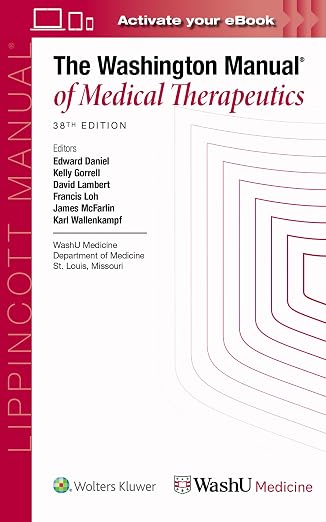
The Washington Manual of Medical Therapeutics
Washington University
38th edition · 2026A more detailed ward companion for admissions, common inpatient problems, and the transition into intern year.

Clinical equipment
Littmann Classic III Stethoscope
Littmann
Model 5620 · Black · 27-inchAn everyday bedside examination tool to consider for rotations and residency if you need to replace your current stethoscope.

Clinical equipment
The Physicians Folding Clipboard
Fellow Medical
Trifold · Letter-size paper · BlackA folding clipboard for organizing paper notes on rounds. Follow your hospital’s policies for patient information.

Scrubs
COZYFIT Women’s Scrub Set
COZYFIT
Women’s fit · Select size and color on AmazonA V-neck top and jogger set for clinical days. Check your hospital’s required color and whether it supplies scrubs.
Check current prices, editions, sizes, and seller details on Amazon.
Official resources
Common questions
When can IMGs submit the 2027 MyERAS application?
Residency applicants may begin submitting applications on September 2, 2026, at 9:00 a.m. Eastern Time. Programs may begin reviewing applications and MSPEs on September 23, 2026, at 9:00 a.m. Eastern Time. Applications submitted from September 2 through the opening moment are presented to programs with the September 23 release date.
When are 2027 ERAS Tokens available for IMGs?
ECFMG made 2027 residency Tokens available through the MyIntealth Applicant Portal on June 24, 2026. The nonrefundable Token fee is $185. An IMG uses the Token to register in MyERAS; it is not a certification fee and does not by itself establish ECFMG or Match eligibility.
Must I be ECFMG Certified before submitting ERAS?
No. ECFMG permits an IMG to obtain a Token and apply through ERAS before completing the examinations required for ECFMG Certification. Programs may impose stricter or earlier requirements, and NRMP separately requires ECFMG verification of the examination requirements by the Rank Order List deadline.
Can I change my MyERAS application after certifying and submitting it?
With limited exceptions, no. Certification and submission irreversibly lock the standardized application. Personal Information can still be updated, and personal statements can remain editable and assignable. Unsubmitted specialty-question responses may be added later before applying to that specialty, but a submitted response cannot be changed.
How many experiences can I list in the 2027 MyERAS application?
You may enter up to 10 selected experiences. Each has a 750-character context, roles, and responsibilities field. You may designate up to three as most meaningful and add a separate 300-character reflection for each. The hobbies and interests field also has a 300-character limit.
What changed in the 2027 ERAS application?
Major changes include the Publications section becoming Scholarly Work, with collections and up to three most meaningful works; all letters moving through the AAMC Letter Writer Portal; specialty-specific standard letters for certain specialties; continued specialty-question and signal pilots; and all USMLE transcript requests moving to FSMB.
How much does ERAS cost for the 2027 residency season?
AAMC charges $11 per program for applications 1 through 30 within each specialty and $30 per program beginning with application 31 in that specialty. The count resets for each specialty. IMGs also pay ECFMG's $185 Token fee, FSMB's $70 USMLE transcript fee if sending scores, the NRMP registration fee, applicable taxes, and other case-specific costs.
Should I apply on September 2 or wait until September 23?
Submitting between September 2 and the September 23 opening does not make a program see the application earlier; programs begin review on September 23 at 9:00 a.m. ET. Use the interval only after the application and assignments are genuinely ready. Avoid waiting until the final hours because payment, document, or portal problems can create preventable risk.