Key takeaways
- Pending Credential Verification is the status of the Application for ECFMG Certification; the exact bottleneck is shown in each credential case under My Cases.
- The status satisfies the application-status condition for 2027 Pathways eligibility but does not complete credentials or produce an ECFMG Certificate.
- ECFMG's published 10-day initial and 5-day returned-review windows exclude the medical school's response time; translation can add 5–10 business days.
- NRMP Match eligibility depends on timely ECFMG examination verification, while full Certification is required before residency entry and may be required earlier by individual programs.
- Applicants should contact the party controlling the exact case stage, use one focused inquiry, and never substitute EPIC, ERAS uploads, or applicant-forwarded documents for direct Certification verification.
The fast answer
MyIntealth Pending Credential Verification is not a rejection, an ECFMG Certificate, or the final status of a specific diploma or transcript. It is the status of the broader Application for ECFMG Certification while required credential work remains incomplete.
The phrase alone does not reveal who has the next action. The actual bottleneck appears in My Cases under the individual credential case. A credential may still be in ECFMG's initial review, waiting for the medical school, returned to ECFMG for final review, or marked incomplete.
For the 2027 Pathways, Pending Credential Verification is an allowed general-eligibility status. ECFMG explicitly accepts either Accepted or Pending Credential Verification for the underlying Application for ECFMG Certification. That permission does not make the credentials complete and does not permit ECFMG to issue the final certificate without them.
The most useful next step is therefore not a generic phone call. Open every credential case, record the exact status and date, compare it with the official processing window, and contact the party that actually controls that stage.
| Question | Answer |
|---|---|
| Was the Application for ECFMG Certification rejected? | No; it remains pending. |
| Can the applicant satisfy the application-status condition for a 2027 Pathway? | Yes; ECFMG allows Accepted or Pending Credential Verification. |
| Are all medical education credentials verified? | No. |
| Is the applicant ECFMG Certified? | Not from this status. |
| Does this phrase identify the exact stalled document? | No; inspect each credential case in My Cases. |
| Can ECFMG issue the certificate before required verifications are accepted? | No. |
Five status layers applicants commonly confuse
MyIntealth, the Pathways application, MyERAS, and NRMP describe different processes. Similar words such as application, verification, accepted, and complete can appear in more than one place without meaning the same thing.
A useful rule is to identify both the noun and the system. Ask: status of what—Application for ECFMG Certification, a particular credential case, the Pathways application, the ECFMG Certificate, the ERAS Status Report, or NRMP verification?
Do not tell a medical school that your 'ECFMG is pending' without naming the credential and exact case status. That wording gives the school no way to know whether a verification request has even been sent.
| Layer | What it answers | Examples | What completes it |
|---|---|---|---|
| Application for ECFMG Certification | Is the core certification application accepted or still awaiting credential work? | Accepted; Pending Credential Verification. | ECFMG application and credential review. |
| Individual credential case | Where is this diploma, transcript, or transfer-credit verification? | Sent for Verification; Pending Verification Review; CV Accepted. | Issuing school response plus ECFMG acceptance. |
| Pathways application | Are clinical and communication skills requirements satisfied? | Submitted; processing; accepted. | Correct Pathway evidence and qualifying OET result. |
| ECFMG Certificate | Has the applicant met every Certification requirement? | Not certified; issued; expiration date. | Exams, Pathway, credentials, and final quality review. |
| NRMP verification | May the IMG remain in the Match and SOAP? | Verified or not verified in R3. | Medical science, clinical skills, and communication skills requirements by deadline. |
| ERAS ECFMG Status Report | What ECFMG status information can programs see? | Certified yes/no; credentials complete/incomplete. | Updates automatically when ECFMG's record changes. |
What ECFMG is verifying
ECFMG primary-source verification is not merely checking whether an uploaded PDF looks readable. ECFMG reviews the credential against known authentic formats, communicates directly with the issuing institution, receives the institution's verification, and reviews that returned response against its standards.
For Certification, ECFMG requires the final medical diploma, final medical school transcript, and transcripts documenting transferred credits when applicable. The diploma is verified with the medical school that issued it. At the same time, ECFMG asks that school to provide the final transcript. Transfer-credit transcripts may require separate verification with the institution that issued them.
The credentials are not complete until ECFMG receives the verification directly from the issuing school and accepts it. A scan uploaded by the applicant, an email copy forwarded by the applicant, or a third-party credential evaluation cannot substitute for that direct primary-source response.
ECFMG may communicate through the MyIntealth Entity Portal, email, or a paper packet depending on the school's process. Applicants cannot infer the channel merely from how another graduate's case was handled.
| Credential | Who provides what | Common hidden issue |
|---|---|---|
| Final medical diploma | Applicant uploads an acceptable copy; issuing school verifies authenticity. | Wrong degree title, missing issue date/signature, name mismatch, or diploma not yet issued. |
| Final medical school transcript | ECFMG requests it from the medical school during diploma verification. | School returns no transcript, an unofficial record, or an untranslated document. |
| Transfer-credit transcript | Applicant documents transferred credits; issuing institution may need to verify. | Applicant reports transfer credit but omits the original institution's transcript. |
| English translation | Required in addition to the original-language document when it is not English. | Translation submitted without original, or translation fails ECFMG rules. |
| Name documentation | Applicant proves that a different credential name is or was their name. | Marriage, transliteration, order, spacing, or prior passport name is unexplained. |
The complete primary-source verification workflow
The workflow has two ECFMG reviews separated by a school-controlled verification stage. That structure explains why one advertised processing time cannot predict the total calendar time.
First, the applicant submits an acceptable credential through the Application for ECFMG Certification in MyIntealth. ECFMG reviews the file, the applicant's initial eligibility, the document format, identity alignment, and required supporting material.
Second, ECFMG sends the credential to the issuing institution. The school locates the request, confirms the credential, completes the required response, supplies the final transcript when requested, and returns the materials through the authorized channel.
Third, ECFMG reviews the response. If the school response is acceptable, the case becomes CV Accepted. If information, authorization, a signature, a seal, a required document, or another element is missing, ECFMG can mark the verification incomplete and resend it to the entity.
| Phase | Primary actor | Applicant's useful action |
|---|---|---|
| Credential submitted | Applicant | Upload the exact required document and all supporting items. |
| Initial document review | ECFMG | Monitor My Cases; respond promptly if marked incomplete. |
| Request transmitted | ECFMG | Record the Sent for Verification date and channel clues. |
| Institution verification | Issuing school | Contact the authorized office with case details; pay a school fee if ECFMG instructs. |
| Returned response review | ECFMG | Allow the current returned-verification window; watch for translation or incomplete-response notices. |
| Certificate quality review | ECFMG | Confirm every other Certification requirement also is complete. |
MyIntealth credential status dictionary
Use the exact label shown in My Cases. The official Quick Guide distinguishes the original credential review from the later review of the school's verification response.
The same Sent for Verification label can describe an electronic request made available in the Entity Portal or a packet mailed to the entity. In Review at Entity is available for an electronic case after the entity has accessed it; a paper workflow will not necessarily produce that intermediate signal.
CV Accepted is the successful endpoint for that credential. Accepted status for one credential does not prove that every other required credential, the Pathway, exams, or the final certificate is complete.
| Status | What it means | Who has the next action |
|---|---|---|
| Submitted to ECFMG | The applicant submitted a credential. | ECFMG must begin review; applicant monitors. |
| Submitted – In Review at ECFMG | ECFMG has begun reviewing the credential. | ECFMG, unless it requests more from applicant. |
| CV Incomplete | The submitted credential is not acceptable and must be resubmitted. | Applicant. |
| Resubmitted – Pending Review | A corrected credential is waiting for ECFMG review. | ECFMG. |
| Sent for Verification | ECFMG sent or made the case available to the entity. | Medical school or issuing institution. |
| In Review at Entity | The entity accessed the electronic case and began review. | Medical school or issuing institution. |
| Pending Verification Review | The entity's returned verification has reached ECFMG. | ECFMG. |
| Verification in Review at ECFMG | ECFMG began reviewing the returned response. | ECFMG. |
| Verification Incomplete | The entity's response is incomplete and must be resubmitted. | Medical school or issuing institution. |
| Incomplete – Resent for Verification | ECFMG resent the verification request to the entity. | Medical school or issuing institution. |
| CV Accepted | The entity verified the credential and ECFMG accepted that verification. | No action for this credential; check remaining requirements. |
| CV Rejected | ECFMG determined the credential cannot be accepted; reasons vary. | Follow the case notice and obtain case-specific direction from ECFMG. |
Pending Credential Verification versus CV Accepted
Pending Credential Verification is attached to the Application for ECFMG Certification. CV Accepted is attached to an individual credential case. Comparing them as if they were opposite statuses creates unnecessary confusion.
An applicant may see the broader application remain Pending Credential Verification while one credential already shows CV Accepted because another credential, transfer institution, translation, or application-level review is unfinished.
Conversely, the application status can later become Accepted, but that does not mean the applicant is ECFMG Certified. Certification still requires valid Step 1 and Step 2 CK passes, an accepted unexpired Pathway or other valid clinical-skills basis, the communication requirement, all credential requirements, and final ECFMG review.
Use a requirement matrix instead of waiting for one reassuring word. Track every document and every certification component independently.
| Portal text | Object | Safe conclusion |
|---|---|---|
| Pending Credential Verification | Application for ECFMG Certification | The core application remains pending because credential work is unresolved. |
| CV Accepted | One credential case | ECFMG accepted that credential's primary-source verification. |
| Pathway Accepted | Pathways application | The clinical and communication skills route is satisfied while unexpired. |
| ECFMG Certified: Yes | ECFMG Status Report/certificate record | All Certification requirements were met and a certificate was issued. |
| NRMP Verified | R3 Match eligibility | The required ECFMG examination components were verified for Match participation. |
Can you apply to a 2027 Pathway while credentials are pending?
Yes, if the Application for ECFMG Certification status in MyIntealth is Pending Credential Verification or Accepted and all other general eligibility rules are met. ECFMG lists both statuses explicitly.
This rule prevents the often slower school-verification stage from automatically blocking the separate Pathways application. It does not waive any credential requirement and does not mean the credential case will resolve by itself.
Submit only the Pathway for which you are eligible, satisfy its route-specific evidence, release a qualifying OET Medicine result, and monitor that application separately. For the 2027 Match, the Pathways application deadline is January 31, 2027, Eastern Time, with limited route-specific exceptions for particular supporting evidence.
Do not wait for the application status to change from Pending Credential Verification to Accepted if that delay would cause you to miss a Pathways deadline. Equally, do not interpret a Pathway acceptance as permission to ignore the credential case.
Does pending credential verification block the 2027 Match?
For NRMP participation, the governing distinction is examination verification versus full ECFMG Certification. The NRMP states that an IMG must complete ECFMG's medical science, clinical skills, and communication skills requirements by the Rank Order List Certification deadline.
For the 2027 Main Residency Match, that deadline is March 3, 2027 at 9:00 p.m. Eastern Time. In current terms, the examination package generally means valid Step 1 and Step 2 CK passes plus a valid accepted Pathway that includes the communication-skills requirement.
The NRMP also states that an IMG does not have to be fully ECFMG Certified merely to participate in the Match and SOAP. Full Certification is required before entering residency. Therefore, unresolved primary-source credentials are not automatically the same as an NRMP 'not verified' result when the required examination components are complete.
There are two major cautions. First, a sponsoring institution or residency program may impose an earlier or stricter certification deadline and must communicate eligibility requirements to applicants selected for interview. Second, waiting until after Match Day creates serious onboarding, licensing, visa, and July 1 risk even if NRMP examination verification was satisfied.
Treat March 3 as an external hard deadline for ECFMG examination verification, not a recommended target for every part of the file. The safe plan is to complete both Pathways and credential verification months earlier.
| Milestone | What must be true | Why it matters |
|---|---|---|
| Program-specific application or ranking deadline | Whatever certification status that program or institution requires. | A program can apply criteria stricter than the NRMP minimum. |
| March 3, 2027 NRMP deadline | ECFMG verifies medical science, clinical skills, and communication skills requirements. | Required to remain eligible for the Match and SOAP. |
| Before residency entry | All ECFMG Certification requirements complete and certificate obtained. | Required for IMG entry into ACGME-accredited GME. |
What residency programs can see in ERAS
The ECFMG Status Report is separate from the USMLE transcript and separate from the medical school transcript uploaded as an ERAS supporting document.
ECFMG automatically transmits its Status Report to MyERAS and updates it when new information becomes available. The report includes ECFMG Certified yes or no, certificate issue date when applicable, exams passed for Certification, the medical school and degree year, and whether medical education credentials are complete or incomplete.
For Pathways applicants, the report also indicates whether the clinical and communication skills requirements were met through a Pathway. It does not turn an incomplete credential status into a private back-office issue invisible to programs.
Applicants should answer program certification questions truthfully and precisely. 'My Pathway is accepted and my primary-source diploma verification is pending with the school' is more informative than 'ECFMG pending.' Never claim to be ECFMG Certified before the certificate has been issued.
Students, graduates, and a diploma that is not yet issued
Students and graduates do not begin from the same document position. A medical student may start the Certification process, but cannot finish it before graduation because ECFMG must verify the final medical diploma.
If the applicant is a student when submitting the Application for ECFMG Certification, transfer-credit transcripts are submitted if applicable. After graduation and receipt of the credentials, the applicant must update the application and submit the medical education credentials.
A graduate normally submits the final diploma and applicable transfer-credit transcripts with the application. If the graduate completed all requirements but the diploma has not yet been issued, ECFMG allows a specific letter from an authorized medical school official confirming graduation, degree title, and expected issuance month and year. That letter is a bridge for the application, not a permanent substitute: the diploma must be submitted as soon as it is issued.
A final-year student should build the diploma issuance and school verification calendar into Match planning. Passing exams and obtaining an accepted Pathway before graduation does not eliminate the post-graduation credential sequence.
| Applicant status | What can be submitted | What remains |
|---|---|---|
| Current medical student | Application plus transfer-credit transcripts if applicable. | Final diploma and final transcript process after graduation. |
| Graduated; diploma issued | Final diploma plus applicable transfer-credit documents. | Direct school verification and ECFMG acceptance. |
| Graduated; diploma not issued | Required authorized school letter under ECFMG instructions. | Upload final diploma immediately after issuance, then complete verification. |
How long credential verification really takes
ECFMG's published times describe the stages ECFMG controls; they do not promise a total completion date. As of June 1, 2026, ECFMG lists 10 business days for a Certification Credential Verification Request. That includes the initial credential review, initial eligibility determination, and sending the credential to the verifying entity.
The 10-day estimate explicitly excludes the time the school needs to verify the credential and excludes ECFMG's review after the response returns. ECFMG lists another 5 business days for a Returned Credential Verification Request.
If the credential supplied by the school is not in English and the school does not provide an acceptable English translation, independent translation adds 5–10 business days. ECFMG lists 10 business days for certificate issuance after the record is ready, subject to additional documentation or information.
Business days exclude weekends and may be affected by closures. Completeness, complexity, case volume, school procedures, paper delivery, local holidays, verification fees, missing authorized officials, and translation can all extend the calendar.
Do not add 10 plus 5 and promise yourself a 15-business-day certificate. The unbounded middle stage belongs to the issuing institution.
| Service stage | Standard time | What is excluded or can extend it |
|---|---|---|
| Certification Credential Verification Request | 10 business days | School response time and ECFMG review of returned verification. |
| Returned Credential Verification Request | 5 business days | Incomplete response, extra documentation, or translation. |
| Independent translation of school-provided credential | Adds 5–10 business days | Applies when an acceptable English translation is not supplied. |
| ECFMG Certificate issuance | 10 business days | Additional documentation, information, or quality review needs. |
| Certification email inquiry | 5 business days for acknowledgement/initial response | Complex issues can require longer cross-department resolution. |
Step 1: diagnose the exact bottleneck
Log in to the MyIntealth Applicant Portal and open My Cases. Do not rely only on the certification summary card. Create one row for every diploma, final transcript, and transfer-credit document.
Record the exact case label, the date it entered that status, the issuing institution, whether the school uses the Entity Portal, any message or requested action, and the last verified contact with the school.
Check whether one credential is complete while another remains open. Applicants with transferred credits may focus on the degree-granting school and overlook the original institution. Applicants may also mistake an ERAS transcript upload for the transcript needed in the Certification verification case.
The case number and status date are essential when contacting ECFMG. A message that says only 'my verification is pending' forces the reviewer to reconstruct information already available to the applicant.
| Credential | Institution | Case/status | Status date | Next actor | Next check |
|---|---|---|---|---|---|
| Final diploma | [Degree school] | Sent for Verification | [Date] | School | [School follow-up date] |
| Final transcript | [Degree school] | Pending Verification Review | [Date] | ECFMG | [Five-business-day check] |
| Transfer transcript | [Prior institution] | CV Incomplete | [Date] | Applicant | [Correction submission date] |
Step 2: fix a case still in ECFMG's initial review
Submitted to ECFMG, Submitted – In Review at ECFMG, and Resubmitted – Pending Review are ECFMG-controlled stages. Compare the status age with the live 10-business-day Certification processing window.
Before the standard window expires, monitor rather than sending repeated inquiries. Confirm that the application contains the original-language document, acceptable English translation when required, all pages, issue date, appropriate signatures, exact accepted degree type, transfer-credit documentation, and any name evidence.
If the case changes to CV Incomplete, read the notice literally and correct the requested defect. Do not upload the same file under a new name. A resubmission that does not solve the original reason simply restarts review without moving the case.
If the initial-review status exceeds the published window and no action request appears, submit one inquiry containing the MyIntealth ID, case number, credential type, submission date, exact status, and a concise request for confirmation of the missing step.
- Original-language document is present.
- Required English translation accompanies—not replaces—the original.
- Every page, reverse side, seal, issue date, and signature area is visible.
- Degree title matches the ECFMG Reference Guide for the school and year.
- Credential name matches the record or acceptable name evidence is attached.
- All transfer credits and prior institutions were disclosed and documented.
- The file was uploaded through MyIntealth, not mailed or emailed by the applicant.
Step 3: fix Sent for Verification when the school cannot find the request
Sent for Verification means the request left ECFMG or was made available to the verifying entity. It does not mean an individual dean personally read it.
Ask which office is authorized to handle international credential verification: registrar, records office, dean's office, examination section, alumni office, university central administration, or the school's MyIntealth coordinator. A former professor or departmental secretary may have no access even if willing to help.
For an electronic school, ask the authorized user to check the Credential Verification service in the MyIntealth Entity Portal, not the ERAS document-upload area and not only a personal inbox. For email, ask the official office to check spam and security quarantine. For paper, confirm the institution's mailroom and internal routing.
Share the applicant's legal name, credential name if different, MyIntealth ID, case number, credential type, and the Sent for Verification date through a secure channel. Do not send passwords, portal screenshots containing unrelated private data, or ask an unauthorized person to impersonate a school official.
If the correct authorized office confirms it cannot locate the request, contact ECFMG after the relevant processing window. Ask ECFMG to confirm the destination and whether the existing request needs to be resent. Do not direct the school to create an improvised response outside the method assigned to the case.
| Possible channel | School action | Applicant clue |
|---|---|---|
| MyIntealth Entity Portal | Authorized user opens Credential Verification cases. | Electronic cases may later show In Review at Entity. |
| Official email | Check shared inbox, spam, quarantine, and allowlisting. | ECFMG or the case can confirm electronic routing. |
| Paper packet | Check central mail, registrar, dean's office, and internal logs. | Quick Guide describes Sent for Verification as mailed for paper cases. |
Step 4: manage In Review at Entity
In Review at Entity is a useful positive signal: the school accessed an electronic verification case and began review. It is not proof that the response is complete or that it was returned.
Ask the school for a realistic completion date and whether it needs an applicant-paid verification fee, archive retrieval, local-language authorization, student number, or identity confirmation. ECFMG states that applicants are responsible for school fees connected with diploma, transcript, and transfer-credit verification; when a fee issue arises, ECFMG advises the applicant to work directly with the school.
Do not pressure a school to confirm facts it has not checked or to send the response from an unauthorized account. The integrity of the direct response matters more than a premature submission that ECFMG later marks incomplete.
Once the school says it submitted, ask for the submission date and authorized office—not a copy of confidential verification answers. Then monitor for Pending Verification Review.
- Confirm the correct authorized office owns the case.
- Ask whether a fee or applicant authorization is outstanding.
- Ask whether the final transcript was included with diploma verification.
- Ask for the return date and channel after submission.
- Do not ask the school to give the response to you for forwarding.
Step 5: manage Pending Verification Review or Verification in Review at ECFMG
These statuses mean the request is back with ECFMG. The school is no longer the first contact unless ECFMG later identifies an incomplete response.
Pending Verification Review means ECFMG received the returned verification. Verification in Review at ECFMG means the returned response is actively under review. Compare the status date with the current 5-business-day Returned Credential Verification Request window.
If the school-provided document is not English and lacks an acceptable translation, add the published 5–10-business-day translation period. The applicant's financial account may be charged after ECFMG sends it for independent translation; ECFMG says it does not notify the applicant beforehand.
Sending the school repeated requests at this stage can produce duplicate responses and confusion. Monitor My Cases and the financial account. Contact ECFMG once the applicable review and translation windows have passed or immediately if the portal requests applicant action.
| Status | First action | Escalate when |
|---|---|---|
| Pending Verification Review | Allow returned-verification processing time. | The live standard is exceeded without an update. |
| Verification in Review at ECFMG | Continue monitoring; ECFMG is reviewing. | The standard is exceeded or a case notice is unclear. |
| Verification Incomplete | School must correct the response. | Correct authorized office cannot identify the requested correction. |
| Incomplete – Resent for Verification | Confirm the school finds the resent case. | School cannot locate it or response remains stalled. |
Step 6: resolve CV Incomplete
CV Incomplete applies to the applicant-submitted credential, not the school's later verification response. ECFMG has determined that the credential itself is not acceptable in its current submission and the applicant must resubmit.
Typical categories worth checking include a missing original-language version, unacceptable or absent translation, unreadable scan, incomplete pages, incorrect document type, missing issue date or signatures, unaccepted degree title, unexplained name difference, or missing transfer-credit material. The case-specific notice controls; do not assume which defect applies.
Use the exact MyIntealth resubmission workflow. ECFMG's current Information Booklet says applicants must upload credentials through MyIntealth and that copies sent by mail, courier, or email are not accepted.
Before resubmitting, compare the file with the current Information Booklet and Reference Guide. If the notice is ambiguous and a different interpretation would change what you submit, ask ECFMG one focused question rather than guessing.
Step 7: resolve Verification Incomplete or Incomplete – Resent for Verification
Verification Incomplete is different from CV Incomplete. Here, ECFMG found the school's returned response incomplete. The institution—not the applicant—must resubmit the verification.
The incomplete element might concern an authorized official, signature, seal, required transcript, question, direct-return method, document consistency, or other case-specific standard. Applicants should not invent or alter the school's response.
When the case becomes Incomplete – Resent for Verification, ECFMG has sent another request to the entity. Contact the school's authorized credential office with the new status and date. Ask it to open the resent case, review every required item, and return the response through the assigned channel.
If the school needs clarification about its portal or verification form, it should use ECFMG's entity support path. Applicant customer service cannot turn an unauthorized or incomplete school response into an acceptable primary-source verification.
Step 8: respond to CV Rejected
CV Rejected is not a routine waiting status. The official guide says ECFMG determined that the credential cannot be accepted and that reasons vary.
Read every case message and preserve the exact wording. Do not upload modified credentials, create a second identity, purchase a third-party evaluation, or ask the school to change historical records merely to match an application.
Send ECFMG a case-specific inquiry asking what determination was made, whether any review or correction route is available, and what exact evidence is required. If the issue concerns the medical school's eligibility, degree title, graduation year, transfer-credit structure, or authenticity, generic status advice is insufficient.
A CV Rejected status can affect eligibility and deserves direct authoritative guidance. This guide cannot predict the remedy because ECFMG explicitly notes that rejection reasons differ.
Name differences that stop verification
The name on the diploma and transcripts should match the name in the ECFMG record. A legitimate prior name, married name, transliteration, or naming-order difference still must be documented when it prevents exact matching.
ECFMG says it cannot complete credential verification until acceptable name documentation is received. If the documentation is not received, the Application for ECFMG Certification can be rejected.
Examples ECFMG may accept to verify a credential name include an expired passport, birth certificate, marriage certificate or license, court name-change order, specified immigration documents, or driver's license. Documents must show the credential name. If the listed evidence cannot be provided, ECFMG may consider a specific authorized school letter.
Verifying that an old name belongs to you is different from changing the current name of record. Do not request a record change simply to erase a legitimate historical name unless that is factually and legally correct.
| Situation | Correct concept | Avoid |
|---|---|---|
| Diploma has maiden name; record has married name | Verify the diploma name with acceptable evidence. | Editing the diploma scan. |
| Transliteration differs | Provide evidence tying the exact credential spelling to the applicant. | Assuming similar spelling is automatically accepted. |
| Current legal name changed | Follow the separate biographic/name-change instructions if appropriate. | Creating a second MyIntealth identity. |
| No listed personal document exists | Ask whether the authorized school-letter option applies. | Using an informal professor letter. |
Translation problems that add time
A translation does not replace the original. ECFMG requires the original-language document plus an English translation that meets its rules when the original is not English. An original without an acceptable translation and a translation without the original are both unacceptable.
This rule applies to applicant-submitted diploma and transfer-credit documents. A second translation issue can arise after the school responds: if the credential supplied by the school is not English and the school does not include an acceptable translation, ECFMG arranges independent translation.
That school-response translation adds 5–10 business days to the current processing estimate, and ECFMG charges the applicant's financial account. The applicant is notified after the document has been sent for translation, not before.
Ask the school whether it can include an acceptable English translation, but do not direct it to use a translation that conflicts with ECFMG requirements. Check My Cases and the financial account during returned-response review.
Transfer credits: the overlooked second institution
If credits were transferred into the medical school that awarded or will award the degree, the applicant must document them in the Application for ECFMG Certification and submit the official transcript from the institution where the courses were taken.
The transfer transcript must be in the original language and accompanied by an acceptable English translation when required. A professional evaluation is not a substitute. Its name also must match the ECFMG record or be supported by name evidence.
Transfer-credit transcripts are subject to verification with the issuing institution. That creates a separate dependency: the degree-granting school can finish its part while the prior school remains outstanding.
Review the entire education history shown in the application. If My Cases includes a prior institution, add it to the tracker and locate its authorized records office early. Do not conceal or relabel transfer credit to simplify verification.
EPIC, ERAS transcripts, and enrollment verification are not substitutes
EPIC is ECFMG's portfolio and report service for physicians who need primary-source verified credentials sent to organizations worldwide. ECFMG explicitly says applicants pursuing ECFMG Certification are not required to use EPIC; they provide credentials through the Certification program.
Do not buy an EPIC Portfolio because a forum suggests that it will unstick a Certification case. If an earlier EPIC verification may be relevant to a current record, ask ECFMG how the existing information applies rather than assuming automatic transfer.
The medical school transcript displayed in MyERAS serves a residency-application document function. The final transcript requested by ECFMG during diploma verification serves the Certification primary-source verification function. Uploading one does not prove the other workflow is complete.
Enrollment verification for a student's exam eligibility or status is also distinct from final medical diploma and transcript verification after graduation. Always identify which service and case the school is handling.
| Service | Purpose | Does it automatically complete Certification credentials? |
|---|---|---|
| ECFMG Certification credential verification | Meet medical education credential requirements for the certificate. | This is the controlling process. |
| EPIC | Build a verified portfolio and send reports to other organizations. | No; EPIC is not required for Certification. |
| ERAS medical school transcript | Provide programs an application supporting document. | No. |
| Enrollment verification | Confirm current student/enrollment status for the relevant service. | No; it is not final diploma verification. |
A professional email to the medical school
Contact the authorized credential-verification office, not a mass list of faculty. Use a subject line the office can search and include only the information needed to locate the case.
Ask for confirmation of receipt, any applicant action or fee, and the expected return date. Do not demand that the school send confidential verification material to you.
If the school does not know MyIntealth, direct it to its institutional coordinator or ECFMG's services page for international medical schools. Applicants should not create an entity account for the school.
- Subject: ECFMG credential verification case [case number] — [full legal name]
- MyIntealth ID: [ID sent securely]
- Credential: [final medical diploma / transcript / transfer transcript]
- MyIntealth status: [exact status]
- Status date: [date]
- Request: Please confirm whether the authorized office received/accessed the case, whether any fee or authorization is needed from me, and the expected response date.
- Closing: Please return the verification directly through the ECFMG-assigned channel; no copy needs to be sent to me.
A focused inquiry to ECFMG
ECFMG says My Cases is the most efficient source of real-time request status and that customer service has no additional status detail beyond the portal and published times. It also asks applicants to submit only one inquiry per issue.
A useful inquiry is sent after the applicable window or when a case notice is unclear. It identifies one problem, includes the case metadata, reports what the authorized school office confirmed, and asks one answerable question.
Avoid daily duplicate emails, multiple departments, contradictory timelines, attachments ECFMG did not request, or vague requests to 'expedite.' Duplicate inquiries can fragment the record without changing who controls the current stage.
- MyIntealth ID and full name of record.
- Credential type, issuing institution, and case number.
- Exact My Cases status and the date it began.
- Published processing window already allowed.
- School office contacted, date contacted, and its factual response.
- One question: for example, confirm destination, identify required correction, or confirm whether a resend is needed.
- One inquiry per issue; retain the confirmation and response.
Match-season risk plan
Credential verification contains an external dependency with no guaranteed response time. Build a schedule around that uncertainty rather than around the fastest anecdote in an online forum.
Before ERAS submission, aim to have the diploma upload accepted and the school-verification request underway. This improves the chance that the automatically updated ECFMG Status Report shows complete credentials during program review.
Before ranking, confirm that the Pathway is accepted and Step 1 and Step 2 CK passes remain valid for ECFMG verification. Track the March 3, 2027 NRMP deadline independently from the credential case.
Before Match Day, push every unresolved credential to a named owner and documented next date. After matching, notify the program's graduate medical education office truthfully if final certificate issuance remains pending and follow its onboarding deadlines.
Leave room after CV Accepted for the rest of the record to reconcile and for ECFMG's published 10-business-day certificate issuance process. CV Accepted at the last minute is not the same as having the certificate in hand.
| Internal target | Goal | Reason |
|---|---|---|
| Months before ERAS program review | Submit acceptable diploma and resolve name/translation/transfer issues. | Initial corrections happen before seasonal volume and program review. |
| Early interview season | Verification request with the correct school office; fee paid if required. | School-controlled delay has time to resolve. |
| Well before January 31, 2027 | Pathway evidence and OET complete; credential cases actively tracked. | Protects Pathways submission and processing. |
| Well before March 3, 2027 | All ECFMG examination requirements verified; credentials near or at CV Accepted. | Protects Match eligibility and reduces onboarding risk. |
| Before program onboarding cutoff | Certificate issued and valid. | Required for entry into GME and institutional processing. |
Common mistakes that create or prolong delays
- Treating the broad Pending Credential Verification label as the exact case status.
- Waiting for Accepted before submitting an otherwise eligible 2027 Pathways application.
- Assuming Pathway acceptance means the ECFMG Certificate is issued.
- Assuming full ECFMG Certification is required for NRMP participation while overlooking the separate examination-verification rule.
- Ignoring a program's stricter certification deadline because the NRMP minimum is different.
- Contacting the school before My Cases shows that ECFMG sent the request.
- Contacting a professor instead of the authorized registrar, dean's office, or MyIntealth coordinator.
- Asking the school only to search email when its case is in the Entity Portal or paper workflow.
- Forwarding a school response yourself even though ECFMG requires it directly from the issuing institution.
- Submitting a translation without the original-language document.
- Submitting a professional credential evaluation instead of the diploma or transcript.
- Omitting transfer-credit transcripts or the prior issuing institution.
- Ignoring a maiden-name, transliteration, or naming-order discrepancy.
- Creating another MyIntealth account or altering a credential image.
- Buying EPIC as an assumed fix for an ECFMG Certification case.
- Confusing an ERAS transcript, enrollment verification, and Certification credential verification.
- Counting ECFMG's 10- and 5-business-day windows as a guaranteed total.
- Sending repeated inquiries before the published window or submitting multiple inquiries for the same issue.
- Forgetting to allow certificate-issuance time after the credentials are accepted.
Master pending-verification checklist
- I confirmed my Application for ECFMG Certification shows Pending Credential Verification, not rejected.
- I opened My Cases and recorded every individual credential case.
- I identified the diploma, final transcript, and every applicable transfer-credit transcript.
- I checked the exact accepted diploma title for my school and graduation year.
- My uploaded diploma includes the original language, issue date, signatures, and all pages.
- Every non-English document has an acceptable translation in addition to the original.
- Every credential name matches my record or has acceptable supporting evidence.
- I know whether I am still a student, a graduate awaiting diploma issuance, or a graduate with the diploma.
- I know which stage ECFMG, my school, or I control.
- I recorded the exact status date before comparing it with processing times.
- For Sent for Verification, I located the school's authorized credential office.
- The school checked the correct Entity Portal, email, or paper channel.
- I paid any school verification fee after receiving legitimate instructions.
- I did not ask the school to return primary-source verification through me.
- For returned verification, I allowed ECFMG's current review and any translation window.
- I submitted only one focused inquiry per issue when escalation became appropriate.
- I am tracking the Pathways application independently.
- I am tracking Step 1, Step 2 CK, and the NRMP March 3, 2027 verification deadline independently.
- I checked each program's own ECFMG Certification timing requirement.
- I allowed time for final certificate issuance after all components are complete.
- I will recheck the live ECFMG pages because statuses, processing times, and procedures can change.
Bottom line
MyIntealth Pending Credential Verification is a broad application status, not a diagnosis. The cure is to open the individual credential case and follow its exact stage: correct the applicant upload, help the authorized school find and return the request, or allow ECFMG to review the returned response.
The status still satisfies the Application for ECFMG Certification condition for a 2027 Pathways application. It does not prove credentials are complete, does not make the applicant ECFMG Certified, and does not remove the requirement to obtain the certificate before residency entry.
Protect the Match by tracking two parallel lines: ECFMG examination verification for the NRMP deadline and primary-source credential completion for the certificate and program onboarding. Use the official My Cases status, documented dates, current processing windows, and one accountable contact at the issuing institution.
This guide reflects official information available July 17, 2026. ECFMG can update portals, status labels, procedures, and processing times. The current MyIntealth case notice, ECFMG Information Booklet, and live ECFMG and NRMP pages control whenever they differ from a summary.
Books & equipment
Get ready for residency
Step 3 preparation, ward references, and clinical essentials selected for doctors working toward the Match and the start of residency.

Step 3
Master the Boards USMLE Step 3
Conrad Fischer
8th edition · 2026Work through management decisions alongside your Step 3 question bank and CCS practice.

Ward reference
Pocket Medicine
Marc S. Sabatine
9th edition · 2025A compact internal medicine reference for pre-round reading, clinical differentials, and reviewing the day’s cases.
Ward reference
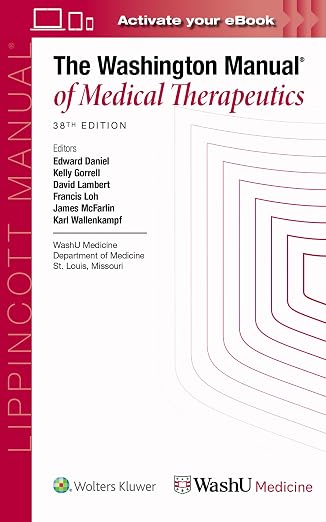
The Washington Manual of Medical Therapeutics
Washington University
38th edition · 2026A more detailed ward companion for admissions, common inpatient problems, and the transition into intern year.

Clinical equipment
Littmann Classic III Stethoscope
Littmann
Model 5620 · Black · 27-inchAn everyday bedside examination tool to consider for rotations and residency if you need to replace your current stethoscope.

Clinical equipment
The Physicians Folding Clipboard
Fellow Medical
Trifold · Letter-size paper · BlackA folding clipboard for organizing paper notes on rounds. Follow your hospital’s policies for patient information.

Scrubs
COZYFIT Women’s Scrub Set
COZYFIT
Women’s fit · Select size and color on AmazonA V-neck top and jogger set for clinical days. Check your hospital’s required color and whether it supplies scrubs.
Check current prices, editions, sizes, and seller details on Amazon.
Official resources
Common questions
What does Pending Credential Verification mean in MyIntealth?
It means the Application for ECFMG Certification remains pending while required medical education credential work is incomplete. It does not identify the exact bottleneck. Open My Cases and inspect each credential case to see whether ECFMG is reviewing the upload, the school has not responded, ECFMG is reviewing the school's response, or a correction is required.
Can I apply to an ECFMG Pathway with Pending Credential Verification?
Yes. ECFMG lists both Accepted and Pending Credential Verification as qualifying Application for ECFMG Certification statuses for general 2027 Pathways eligibility. You still must meet the selected Pathway's requirements, and the pending credentials must be completed before ECFMG can issue the certificate.
Can I participate in the Match while credential verification is pending?
The NRMP verifies that IMGs completed ECFMG's medical science, clinical skills, and communication skills requirements by the Rank Order List deadline; full ECFMG Certification is not itself required to participate. However, IMGs must complete all ECFMG Certification requirements before entering residency, and individual programs or institutions may require certification earlier.
How long does ECFMG credential verification take?
There is no single guaranteed total. As of June 1, 2026, ECFMG lists 10 business days to review a Certification credential request and send it to the verifying entity, then 5 business days to review a returned verification. Those estimates exclude the time the medical school takes to respond. An independent translation of a school-provided credential can add 5–10 business days.
What should I do if my medical school says it never received the ECFMG request?
First confirm that My Cases actually says Sent for Verification and note the date. Ask the school's authorized credential-verification office or MyIntealth coordinator to check the Entity Portal, official email inboxes and spam filters, or incoming paper mail as applicable. If the correct office still cannot locate the request after ECFMG's processing window, send one focused inquiry to ECFMG with the case number, status, date, and school contact details.
What is the difference between Pending Verification Review and Verification in Review at ECFMG?
Pending Verification Review means the school returned the verification and ECFMG received it. Verification in Review at ECFMG means ECFMG has begun reviewing that response. Neither is final; CV Accepted is the status showing that the school verified the credential and ECFMG accepted the verification.
Do I need to use EPIC to verify credentials for ECFMG Certification?
No. ECFMG explicitly says applicants pursuing ECFMG Certification provide credentials through the Certification program and are not required to use EPIC. An EPIC portfolio is a separate service and should not be purchased as an assumed fix for a Certification credential case.
Will programs see that my medical education credentials are incomplete?
For MyERAS applicants, ECFMG automatically transmits an ECFMG Status Report that includes whether the applicant is certified and whether the medical education credential status is complete or incomplete. The report updates automatically as new information becomes available.