Key takeaways
- The NRMP algorithm is applicant-proposing, so applicants should rank acceptable programs in true preference order rather than predicted likelihood of matching.
- The best way to increase the chance of a successful Match is to rank every acceptable interviewed program while removing programs that are impossible or unacceptable.
- A structured program scorecard should evaluate training quality, supervision, resident culture, career fit, logistics, IMG feasibility, and red flags before final ordering.
- Rank-list length is associated with Match success, but it mostly reflects interview yield and program fit; adding unacceptable programs is not a successful strategy.
Abstract
This article gives a scientific framework for ranking residency programs in the NRMP Match. The central conclusion is simple but often emotionally difficult: once you have interviewed, the correct ordering strategy is to rank acceptable programs by true preference, not by predicted likelihood of matching.
That conclusion follows from the structure of the NRMP algorithm. The algorithm is applicant-proposing. It first attempts to place an applicant at the applicant's most preferred ranked program. If that cannot become a tentative match, the algorithm tries the next program, and continues until the applicant is tentatively matched or the applicant's rank order list is exhausted. Therefore, a lower-ranked program is not harmed by being lower on the list unless a higher-ranked program successfully matches with the applicant, which is exactly the outcome the applicant said they preferred.
The part applicants can improve is not gaming rank order. It is the quality and completeness of the list: ranking every acceptable interviewed program, excluding programs where training would be impossible or unacceptable, verifying program codes and tracks, using supplemental rank order lists correctly for advanced programs, and applying a structured program-evaluation model before certifying.
Main conclusion
The rank list has two jobs. First, it tells the algorithm your preferences. Second, it creates the set of acceptable outcomes where you are willing and able to train. Those jobs should not be confused.
Ordering affects where you match among programs that can match with you. Length affects how many acceptable opportunities the algorithm can consider. The best strategy is therefore: remove unacceptable programs, rank all acceptable interviewed programs, and order them by true preference.
A rank list cannot make a program rank you. It cannot convert a non-interview into a match. It cannot overcome visa, licensing, contract, or eligibility barriers after Match Day. It can, however, prevent self-harm. The most common self-harm is moving a preferred program down because of fear, failing to rank an acceptable program, ranking the wrong track code, or ranking a program that would be unsafe or impossible to attend.
| Rule | Reason | Practical action |
|---|---|---|
| Rank by true preference | The applicant-proposing algorithm attempts the applicant's preferred programs first. | Do not move a program down because you think it is a reach. Put it where you truly prefer it. |
| Rank all acceptable interviewed programs | The algorithm can only consider programs on the certified rank order list. | Include every program where you would train and can meet onboarding requirements. |
| Exclude unacceptable programs | A match creates a binding commitment to train at the matched program. | Do not rank a program if you would rather go unmatched than train there. |
How the algorithm works
The NRMP algorithm can be understood as a version of deferred acceptance adapted for residency markets. Programs have quotas, applicants have preferences, programs have preferences, and the algorithm looks for a stable matching between the two sides.
A simplified version works like this. The algorithm takes an applicant and attempts to place that applicant into the first program on the applicant's rank order list. If the program ranked the applicant and has an open position, the applicant is tentatively matched. If the program is full but prefers that applicant to another tentatively matched applicant, the lower-preferred applicant is displaced and the new applicant becomes tentatively matched. The displaced applicant then tries the next program on their own list. The process continues until no further tentative match can be improved under the submitted lists.
A tentative match is not final until the algorithm is complete. At the end, tentative matches become final and binding for training. The binding nature of the result is why the acceptability filter matters as much as the preference order.
| Algorithm feature | Scientific meaning | Applicant implication |
|---|---|---|
| Applicant-proposing | The process tries to place applicants into their most preferred possible program. | Rank your favorite acceptable program first, even if it is a reach. |
| Tentative matches can be displaced | A program can replace a tentatively matched applicant if it later encounters a more preferred applicant. | Being tentatively held by a program during the algorithm does not guarantee final placement until processing ends. |
| Programs have quotas | A program can hold only as many tentative matches as it has positions. | Programs with small quotas can fill quickly, but you still should rank them where you prefer them. |
| The algorithm follows submitted lists | The algorithm does not know your private second thoughts, family constraints, or visa concerns. | Your certified list must reflect the real set of places where you can and would train. |
| Only certified lists count | Uncertified or stale lists are not used the way applicants intend. | Save changes and confirm the R3 system shows the list as certified before the deadline. |
The math
Let A be the set of applicants and P be the set of programs. Each applicant a has a preference list over acceptable programs, and each program p has a preference list over interviewed applicants plus a quota q(p). A match is stable if there is no applicant-program pair where both sides would prefer each other over their current outcome and the program has capacity or prefers that applicant to one of its current matched applicants.
For a single applicant in an applicant-proposing deferred-acceptance system, truthful ranking is the dominant strategy under the standard model. In practical language: if you prefer Program X over Program Y, ranking Y above X cannot improve your outcome. It can only make you match at Y in a scenario where X might have been possible.
The probability of matching somewhere is not improved by moving a lower-preference program higher. If you do not match at the higher-preference programs, the algorithm will still consider the lower-preference program when it reaches that rank. Therefore, 'I should rank the safe program first' is usually a misunderstanding of the mechanism.
The applicant's optimization problem is better written as: maximize expected utility among acceptable outcomes, subject to eligibility and feasibility constraints. A useful pre-ranking formula is U(program) = training quality + supervision + resident culture + career fit + logistics + personal constraints + IMG feasibility - red flags. The formula helps estimate preference; it should not replace true preference once the applicant has made a careful judgment.
| Belief | Scientific correction | What to do |
|---|---|---|
| If I rank a reach first, lower programs may not take me. | Lower programs are still considered if higher programs cannot match with you. | Rank the reach first if you truly prefer it and would attend. |
| If a program told me I am ranked highly, I should move it up. | Post-interview signals do not change your preference ordering unless they change how much you want the program. | Use communication only as information about fit, not as a reason to abandon true preference. |
| A safety program should be ranked first. | A safety program is still available to the algorithm when it reaches that line, if the program ranks you high enough. | Rank a lower-risk program above others only if you truly prefer it above those programs. |
| More ranks are always better. | More acceptable ranks are better; unacceptable ranks can create a harmful binding outcome. | Rank every acceptable interviewed program, but do not rank a program you cannot or would not attend. |
What increases match probability
Rank-list ordering and match probability are related but not the same thing. Ordering determines which program you get if multiple outcomes are possible. The number of acceptable ranks determines how many chances the algorithm can evaluate after interviews.
NRMP Charting Outcomes reports repeatedly show that applicants who match tend to have more contiguous ranks in their preferred specialty than applicants who do not match. For IMGs in the 2024 report, matched U.S. IMGs averaged 8.8 contiguous ranks compared with 2.4 among unmatched U.S. IMGs. Matched non-U.S. IMGs averaged 6.2 contiguous ranks compared with 2.5 among unmatched non-U.S. IMGs.
That evidence should be interpreted correctly. Contiguous ranks are not magic. They are a final proxy for interview yield, program fit, competitiveness, documentation, communication, and programs being willing to rank the applicant. You cannot create the benefit of twelve interviews by typing twelve random programs into the list. But after interviews are complete, you can avoid losing opportunities by ranking every acceptable program.
| Action | Effect on chance of matching | Scientific interpretation |
|---|---|---|
| Ranking a preferred reach program first | Does not reduce chance at lower ranked programs | If the reach cannot match with you, the algorithm proceeds downward. |
| Moving a safer program above a preferred program | Does not create extra safety | It can only cause you to match at the safer program when the preferred program might have worked. |
| Adding an acceptable interviewed program to the list | Can increase chance of matching somewhere | The algorithm gains one more acceptable place to try if earlier ranks fail. |
| Adding a program where you did not interview | Effectively no practical benefit | Programs generally do not rank applicants they did not interview. |
| Adding an unacceptable program | Can increase chance of a bad binding outcome | A match is not successful if you cannot safely or realistically train there. |
Build the list in two passes
A scientific rank list starts with an exclusion pass, not a prestige pass. Before asking which program is best, ask which programs are actually acceptable outcomes.
The first pass is binary: eligible or not, acceptable or not. The second pass is comparative: among acceptable programs, which would you prefer if the Match could place you there? Keeping those decisions separate prevents anxiety from contaminating the list.
Do not create the final order during an emotional post-interview high or after a frightening conversation with another applicant. Write structured notes within 24 hours of each interview, then return to those notes when building the list.
| Pass | Question | Remove or rank? | Examples |
|---|---|---|---|
| Pass 1: acceptability | Can I train here, and would I train here? | Remove if the answer is no | Visa impossible, contract unacceptable, unsafe environment, wrong track, unaffordable relocation, licensing barrier |
| Pass 2: preference | Among acceptable programs, where would I most want to train? | Rank by true preference | Training quality, supervision, culture, career fit, geography, family needs, mentorship, wellness |
Program evaluation scorecard
A scorecard is useful because it makes vague feelings comparable. It is not meant to turn a human decision into a fake exact science. It is meant to prevent the loudest factor, usually prestige, geography, or fear, from overpowering the whole decision.
The weights below are a starting model. Applicants should modify them before scoring. A fellowship-focused applicant may increase career fit. A parent may increase geography and schedule predictability. A non-U.S. IMG may make visa feasibility a non-negotiable filter rather than a weighted factor.
| Domain | Suggested weight | What to examine | High-quality signal | Red flag |
|---|---|---|---|---|
| Training quality | 25% | Patient volume, clinical breadth, procedural exposure, didactics, board preparation, progression of autonomy | Residents describe graduated autonomy with reliable supervision and broad clinical exposure | Vague answers about supervision, weak case diversity, poor board support, or service needs overwhelming education |
| Supervision and feedback culture | 20% | How residents are taught, evaluated, remediated, and protected when struggling | Program can describe feedback systems, mentorship, remediation, and psychological safety | Residents imply they hide weakness, fear retaliation, or lack access to faculty |
| Resident quality of life | 15% | Schedule, call, workload, vacation, sick leave, coverage, commuting, fatigue mitigation | Residents are honest about hard rotations but can explain support systems | Burnout is normalized without mitigation, or resident answers sound guarded |
| Career fit | 15% | Fellowship match, job placement, research, electives, mentorship, patient population, tracks | Program has a track record of helping residents reach goals similar to yours | No mentor, no relevant elective, or no recent graduate outcome aligned with your goal |
| Logistics and personal fit | 10% | Location, family, cost of living, transportation, community, language, partner needs | You can imagine functioning there on a hard month, not only on interview day | Financial or family strain would threaten performance or wellbeing |
| IMG, visa, and licensing feasibility | 10% | Visa type, ECFMG timing, training permit, state requirements, program experience with similar applicants | Program can clearly explain onboarding requirements and has supported comparable applicants | Unclear sponsorship, conflicting answers, or requirements you cannot meet by start date |
| Professional integrity and transparency | 5% | Honesty during interview day, access to residents, contract clarity, policy transparency | Program answers hard questions directly and lets applicants speak with residents | Pressure tactics, misleading promises, hidden policies, or avoidance of reasonable questions |
How applicants actually choose
The NRMP 2025 Applicant Survey helps explain what applicants value when ranking programs. The most frequently endorsed ranking considerations included interview day experience, overall goodness of fit, desired geography, quality of residents, program reputation, and work-life balance.
That list is useful because it matches how applicants actually experience programs. It also needs interpretation. Interview day experience can be informative, but it is also curated. Reputation can matter for career mobility, but it can hide poor supervision. Geography can protect wellbeing, but it can narrow opportunity. The goal is not to reject these factors. The goal is to evaluate them with evidence.
A good ranking process turns subjective impressions into testable notes. Instead of 'the residents seemed happy,' write what you observed: residents answered questions without faculty present, described realistic challenges, gave specific examples of teaching, and could name changes made after feedback.
| Common factor | Weak evidence | Stronger evidence |
|---|---|---|
| Interview day experience | Everyone was friendly on Zoom | Program gave transparent answers, residents were unscripted, schedule was organized, and communication was professional |
| Overall fit | I had a good feeling | The curriculum, patient population, mentorship, schedule, and graduate outcomes match your goals and constraints |
| Geography | I like the city | You can afford housing, commute safely, maintain support, and function during demanding rotations |
| Quality of residents | Residents seemed impressive | Residents described clinical growth, faculty access, autonomy, and realistic support during difficult rotations |
| Reputation | People online say it is prestigious | Graduates obtain the fellowships, jobs, academic roles, or community practice outcomes you are seeking |
| Work-life balance | The program says wellness matters | Coverage, sick leave, duty-hour culture, jeopardy systems, vacation, and schedule transparency are concrete |
Program quality evidence
Program evaluation should use multiple sources because each source has a different bias. Official databases may be accurate but incomplete. Program websites may be current but promotional. Resident conversations are rich but anecdotal. Online forums can reveal concerns but are often unverified and skewed toward extreme experiences.
The strongest decisions triangulate: NRMP data for specialty competitiveness, ACGME for accreditation status, Residency Explorer or FREIDA for structured program information, program websites for curriculum and policies, and direct resident conversations for day-to-day reality.
| Source | Best use | Limitation |
|---|---|---|
| NRMP Results and Data | Understand specialty competitiveness, position supply, fill rates, and applicant groups | Does not tell you whether a specific program is a good fit for you |
| NRMP Charting Outcomes | Estimate how applicant characteristics and rank-list depth relate to Match outcomes | Mostly aggregate data; not a personalized probability calculator |
| ACGME public program search | Verify accreditation and program identity | Does not fully describe resident culture or daily training environment |
| Residency Explorer | Compare source-verified program and specialty data, including program alignment and historical applicant/interview patterns | Historical data do not guarantee future interviews or outcomes |
| AMA FREIDA | Search and compare ACGME-accredited programs and program features | Some details may require account access or direct program verification |
| Program website and contract | Confirm curriculum, tracks, salary, benefits, visa language, leave, moonlighting, and requirements | May be outdated or written generally |
| Resident conversations | Assess supervision, culture, workload, teaching, support, and hidden curriculum | Small sample and may be influenced by who volunteers to speak |
IMG-specific ranking
IMG applicants should use the same core ranking rule: true preference among acceptable programs. The difference is that acceptability has more hidden constraints. A program is not acceptable if the applicant cannot meet visa, ECFMG, state training license, onboarding, or start-date requirements.
For non-U.S. IMGs, visa sponsorship should usually be a pre-ranking filter, not a low-weight scorecard item. For older graduates, clinical recency and support for nontraditional trainees matter. For applicants with attempts or other red flags, resident support and remediation culture are not cosmetic; they are training-safety variables.
IMGs should also distinguish program friendliness from program fit. A program may have many IMGs but still be a poor fit because of geography, schedule, supervision, visa type, fellowship goals, or resident wellbeing. Another program may have fewer IMGs but a clear, supportive, legally feasible pathway for your profile.
| Question | Why it matters | How to verify |
|---|---|---|
| Can the program sponsor or accept my visa pathway? | A Match does not solve an impossible immigration or institutional sponsorship issue. | Ask the coordinator or GME office; confirm visa type and timelines in writing when possible. |
| Can I be ECFMG certified by the required date? | Programs and states may need certification before onboarding or training permit issuance. | Compare program deadlines with ECFMG pathway, exam, and credential timelines. |
| Can I obtain the state training license or permit? | State medical boards differ in documentation, exam, and postgraduate-training requirements. | Check the state board and GME office requirements, especially with old YOG or attempts. |
| Has the program supported applicants with my profile? | Prior experience can reduce onboarding and cultural-transition friction. | Ask about prior residents with similar visa, IMG, YOG, or pathway characteristics. |
| Is there real support for transition to U.S. clinical workflow? | Supervision, documentation, feedback, and communication expectations may differ from prior training systems. | Ask residents how interns are onboarded, supervised, and remediated. |
| Would I still train here if it were my only match? | Ranking creates a binding commitment if matched. | If the honest answer is no, remove it from the list. |
Advanced and preliminary programs
Applicants applying to advanced PGY-2 programs must think in pairs: the advanced position and the required PGY-1 year. NRMP allows applicants who rank advanced positions on the primary rank order list to create supplemental rank order lists for preliminary PGY-1 positions.
The scientific principle is the same, but the object being ranked changes. You are not only asking, 'Which advanced program do I prefer?' You are also asking, 'Which PGY-1 combinations make this path acceptable?' A dream PGY-2 program with no feasible preliminary year may not create a complete training pathway.
Applicants should verify track type, program code, and linkage carefully. Some programs have categorical, preliminary, primary care, research, rural, physician-scientist, or other tracks with similar names but different NRMP codes. Ranking the wrong code is a preventable error.
- Categorical program: usually includes the full required training pathway beginning at PGY-1.
- Advanced program: typically begins at PGY-2 and requires a separate compatible PGY-1 year.
- Preliminary program: a one-year PGY-1 position often used before advanced specialty training.
- Supplemental rank order list: a list of PGY-1 options attached to an advanced program rank.
Couples ranking
Couples ranking is mathematically different from individual ranking because the unit of preference is a pair of outcomes. The couple ranks combinations, such as Applicant 1 at Program A and Applicant 2 at Program B. This can create many more possible rank lines and more complex constraints.
The guiding principle remains preference ordering among acceptable pairs, but couples should be especially careful about feasibility. Geography, commuting, visa needs, preliminary years, family constraints, and backup combinations need to be explicit. A pair that looks acceptable on paper may be impossible in daily life.
Couples should build their list from joint utility, not from one applicant's prestige preference alone. A stable, livable pair of programs may be better than one applicant's ideal program combined with the other's unworkable outcome.
Ranking mistakes
Most ranking mistakes come from treating the Match like a negotiation after interviews are over. It is not. Once interviews are complete, the rank order list is a preference document plus a binding-commitment document.
The algorithm does not reward flattery, fear, or attempts to read minds. It rewards accurate preferences and complete acceptable lists.
| Mistake | Why it is harmful | Better action |
|---|---|---|
| Ranking by where you think you are ranked | You can talk yourself out of a better outcome without improving odds at lower programs. | Rank by true preference among acceptable programs. |
| Deleting an acceptable program because it is not exciting | You remove a possible Match outcome. | Rank it last if you would train there, but keep it on the list. |
| Ranking an unacceptable program because matching feels better than SOAP | You may create a binding outcome that is worse than being unmatched. | Only rank programs where you can and would train. |
| Using reputation as the whole score | Prestige may not predict supervision, fit, wellbeing, or your career path. | Use reputation as one variable inside a broader scorecard. |
| Ignoring contract and onboarding details | Salary, leave, visa, licensing, start dates, and moonlighting rules can affect feasibility. | Review contract, benefits, state requirements, and GME policies before certifying. |
| Waiting until the last minute | Late entry increases risk of technical errors, incomplete certification, and panic decisions. | Enter early, save changes, certify, and re-certify after any edit. |
| Ranking the wrong code or track | The algorithm matches program codes, not what you meant. | Verify NRMP code, track name, categorical vs preliminary vs advanced status. |
A practical ranking protocol
A strong process reduces cognitive bias. Use the same workflow for every program, especially if interviews were spread across weeks or months.
The protocol below is designed for applicants who want a defensible, evidence-based list rather than a list built from panic during the final week.
| Step | Task | Output |
|---|---|---|
| 1 | Write post-interview notes within 24 hours | Fresh observations on teaching, residents, culture, logistics, and concerns |
| 2 | Collect objective data | Accreditation, program code, track, visa policy, salary, benefits, curriculum, graduate outcomes |
| 3 | Apply non-negotiable filters | Remove programs that are impossible or unacceptable |
| 4 | Score remaining programs | Comparable 1 to 5 scores across weighted domains |
| 5 | Create preference tiers | Top, middle, lower but acceptable, and remove |
| 6 | Order within tiers | Final true-preference ordering |
| 7 | Audit technical details | Correct NRMP codes, tracks, supplemental lists, saved changes, certification |
| 8 | Re-certify after any edit | R3 status confirms certified list before the deadline |
Example
Suppose an applicant interviews at six internal medicine programs. Program A is prestigious but residents describe weak feedback and poor schedule transparency. Program B is less famous but has strong clinical training, supportive residents, a visa pathway, and graduates entering the applicant's desired fellowship. Program C is in the applicant's favorite city but has unclear visa answers. Program D is community-based, supportive, and acceptable. Program E is acceptable but geographically hard. Program F has a contract or visa barrier that the applicant cannot meet.
A scientific list might remove Program F entirely. Program C stays only if the visa issue is resolved. The applicant then ranks A, B, D, and E by actual preference, not by perceived odds. If B is truly preferred over A after weighing supervision, fit, and career outcomes, B should be ranked above A even if A has the bigger name. If A is still the true preference despite its weaknesses, A can be ranked first without harming the applicant's chance at B if A cannot match with them.
This is the important psychological shift: the rank list is not a place to prove you are realistic. It is a place to state your preferences among realistic, acceptable outcomes.
Final audit
Before certifying, do one final audit with a rested mind. The audit should be boring. That is the point. You are trying to catch preventable errors, not reinvent the list under stress.
Ask: Is every ranked program one where I can train? Is every acceptable interviewed program included? Are the programs ordered by true preference? Are track names and NRMP codes correct? Are supplemental lists attached where needed? Did I save and certify? If I changed anything after certification, did I re-certify?
- Confirm the list is certified in R3.
- Check for confirmation email from NRMP.
- Verify every program code and track name.
- Verify categorical, preliminary, advanced, and supplemental list logic.
- Remove programs you would not attend.
- Keep acceptable lower-preference programs on the list.
- Do not rely on memory; compare against your interview notes and program documents.
Limitations
This article explains the general Main Residency Match strategy. It is not individualized legal, immigration, financial, or medical career advice. Applicants with visa constraints, couples lists, advanced-specialty pathways, military match obligations, ophthalmology or urology early matches, prior residency training, NRMP waiver issues, or unusual state licensing concerns should consult official sources and qualified advisors.
The matching-theory conclusion about true-preference ranking is strongest for individual applicants under the standard applicant-proposing model. Couples matching is more complex because preferences are joint outcomes. However, couples should still avoid manipulative guesswork and should rank acceptable pairs in genuine joint preference order.
Rank-list length is associated with matching, but it is not purely causal. More ranks usually mean more interviews and stronger program fit. The actionable lesson is to rank every acceptable interviewed program, not to add unacceptable programs or programs where no interview occurred.
Conclusion
The most accurate scientific advice is also the cleanest: rank acceptable programs in true preference order. Do not rank based on where you think you will match. Do not punish yourself for liking a reach program. Do not create false safety by moving a lower-preference program upward.
To increase the chance of a successful Match, focus on what the rank list can actually control. Include every acceptable interviewed program. Remove programs where you cannot or would not train. Verify codes, tracks, visas, licensing, contracts, and supplemental lists. Use a structured scorecard to clarify preference, then let the applicant-proposing algorithm do what it was designed to do.
A successful rank list is not the list that looks most strategic to strangers. It is the list that is complete, technically correct, ethically honest, and aligned with where you can become the physician you are trying to become.
Books & equipment
Get ready for residency
Step 3 preparation, ward references, and clinical essentials selected for doctors working toward the Match and the start of residency.

Step 3
Master the Boards USMLE Step 3
Conrad Fischer
8th edition · 2026Work through management decisions alongside your Step 3 question bank and CCS practice.

Ward reference
Pocket Medicine
Marc S. Sabatine
9th edition · 2025A compact internal medicine reference for pre-round reading, clinical differentials, and reviewing the day’s cases.
Ward reference
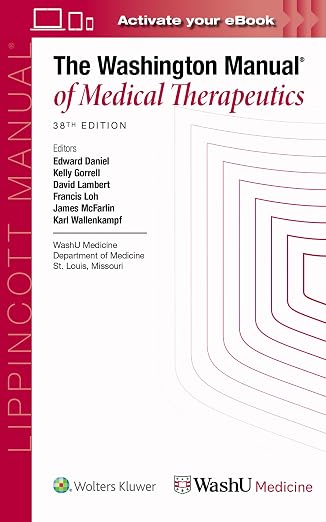
The Washington Manual of Medical Therapeutics
Washington University
38th edition · 2026A more detailed ward companion for admissions, common inpatient problems, and the transition into intern year.

Clinical equipment
Littmann Classic III Stethoscope
Littmann
Model 5620 · Black · 27-inchAn everyday bedside examination tool to consider for rotations and residency if you need to replace your current stethoscope.

Clinical equipment
The Physicians Folding Clipboard
Fellow Medical
Trifold · Letter-size paper · BlackA folding clipboard for organizing paper notes on rounds. Follow your hospital’s policies for patient information.

Scrubs
COZYFIT Women’s Scrub Set
COZYFIT
Women’s fit · Select size and color on AmazonA V-neck top and jogger set for clinical days. Check your hospital’s required color and whether it supplies scrubs.
Check current prices, editions, sizes, and seller details on Amazon.
Official resources
Common questions
Should I rank a safer program higher to increase my chance of matching?
No. In the NRMP applicant-proposing algorithm, ranking a safer acceptable program higher does not improve your chance of matching there if you would have reached it anyway. It can only cause you to match at that safer program instead of a program you truly preferred.
Does ranking a reach program first hurt me?
No, as long as the programs below it are also ranked in true preference order. If the reach program cannot match with you, the algorithm moves to your next ranked program. Ranking a reach first does not remove your chance at lower programs.
Should I rank every program where I interviewed?
Rank every program where you are able and willing to train. Do not rank programs that you would not attend, programs where you cannot meet onboarding requirements, or programs whose contract, visa, licensing, safety, or training conditions are unacceptable.
What is the most scientific way to choose between programs?
Use two steps. First, remove programs that fail non-negotiable eligibility or acceptability checks. Second, score the remaining programs on training quality, supervision, resident culture, career fit, location, visa or licensing feasibility, and personal constraints. Then rank by true preference.
Does a longer rank list increase my chance of matching?
A longer list of acceptable programs gives the algorithm more opportunities to place you, but length is mostly a proxy for interview yield and program fit. Adding unacceptable programs is not success. The goal is to rank all acceptable options, not to rank programs blindly.