Key takeaways
- Use UWorld, NBME/USMLE official materials, First Aid, Pathoma, Sketchy, and Anki as the core Step 1 stack.
- Add Bootcamp or Boards & Beyond when you need teaching, not just review.
- Add AMBOSS as a second Qbank or library companion after your core workflow is working.
The practical Step 1 stack
For most learners, Step 1 should not be a pile of ten equal resources. The practical core is one primary Qbank, official readiness checks, one organizing text, and one or two targeted content tools for weak areas.
A strong default stack is UWorld for active question learning, NBME self-assessments and official USMLE materials for readiness checks, First Aid for organization and annotation, Pathoma for pathology, Sketchy for visual micro and pharm retention, and Anki for spaced repetition. Bootcamp or Boards & Beyond can fill foundation gaps when you need teaching, not just review.
What each product is best for
- UWorld: best primary Qbank for learning from explanations and building test-style reasoning.
- NBME self-assessments and official USMLE practice: best readiness signal because the style is closest to the exam source.
- First Aid: best compact map for organizing facts, annotations, and repeated weak topics.
- Pathoma: best targeted pathology review when mechanisms are shaky.
- Sketchy: best for visual memory-heavy topics, especially microbiology and pharmacology.
- Bootcamp: best for rebuilding foundations with structured videos, quizzes, and guided review.
- Boards & Beyond: best concise concept-teaching video library for learners who want systematic review.
- AMBOSS: best second Qbank or knowledge-library companion when UWorld explanations are not enough.
- Anki: best retention system if you can keep reviews targeted and consistent.
How to choose without wasting money
If you already know the content but miss questions, buy question volume and feedback: UWorld plus NBME. If you do not understand the content, add Bootcamp or Boards & Beyond before drowning in Qbank explanations. If pathology is the reason questions collapse, add Pathoma. If you keep forgetting micro or pharm, add Sketchy and Anki.
Do not buy every popular resource at once. Pick the smallest stack that solves your actual problem, finish it, and use scores plus missed-question patterns to decide whether to add anything.
A simple 8-week structure
Weeks 1-4: UWorld blocks plus targeted content review from First Aid, Pathoma, Sketchy, Bootcamp, or Boards & Beyond. Weeks 5-6: mixed timed blocks, Anki only for missed concepts, and one NBME check. Weeks 7-8: official practice materials, remaining NBME-style review, and focused review of repeated weak systems.
The goal is not to feel like you studied everything. The goal is to prove you can answer unfamiliar integrated questions safely and consistently.
Books & equipment
Your Step 3 reading list
For doctors who have completed Step 1 and Step 2 CK: compare Step 3 review books and ward references to support your next stage of preparation.

Step 3
Master the Boards USMLE Step 3
Conrad Fischer
8th edition · 2026Work through management decisions alongside your Step 3 question bank and CCS practice.

Step 3
First Aid for the USMLE Step 3
Tao Le & Vikas Bhushan
5th edition · Published 2018An alternative review outline for Step 3. This older edition needs to be paired with current guidance and question practice.

Step 3
Crush Step 3 CCS
Mayur Movalia
1st edition · Published 2013An older case-based CCS review to supplement current software practice and up-to-date management guidance.

Step 3
USMLE Step 3 Secrets
Elsevier
2nd edition · 2022A question-and-answer review option for short study sessions alongside a current Step 3 question bank.

Ward reference
Pocket Medicine
Marc S. Sabatine
9th edition · 2025A compact internal medicine reference for pre-round reading, clinical differentials, and reviewing the day’s cases.
Ward reference
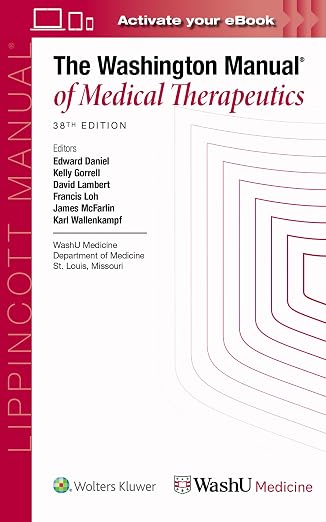
The Washington Manual of Medical Therapeutics
Washington University
38th edition · 2026A more detailed ward companion for admissions, common inpatient problems, and the transition into intern year.
Check current prices, editions, sizes, and seller details on Amazon.
Official resources
Common questions
What is the core Step 1 resource stack?
A practical core is one primary Qbank, official USMLE/NBME readiness materials, First Aid as an organizing map, and targeted tools such as Pathoma, Sketchy, Anki, Bootcamp, or Boards & Beyond based on your weaknesses.
How do I avoid using too many Step 1 resources?
Choose resources by bottleneck: foundations, question reasoning, pathology, memory, or readiness. Finish the smallest stack that solves the bottleneck before adding more.