Key takeaways
- Use UWorld, NBME/USMLE official practice, and targeted CMS-style review as the Step 2 CK core.
- Use AMBOSS as a second Qbank/library and Divine Intervention as high-yield audio review.
- Use OnlineMedEd or Boards & Beyond when clinical frameworks need rebuilding before timed blocks.
The practical Step 2 CK stack
Step 2 CK is scored, clinical, and application-sensitive. Your resource stack should train next-best-step reasoning, guideline-aware management, and stamina. The default core is UWorld Step 2 CK, NBME self-assessments, CMS or subject-style forms when available through NBME, and official USMLE practice materials.
AMBOSS is useful as a second Qbank or fast knowledge-library lookup. Divine Intervention Podcasts are useful for high-yield audio review, weak systems, ethics, risk factors, screening, and rapid review. OnlineMedEd and Boards & Beyond can help if you need structured clinical teaching before Qbank blocks make sense.
What each product is best for
- UWorld Step 2 CK: primary Qbank for clinical reasoning, answer explanations, and timed block stamina.
- NBME self-assessments: best checkpoint for exam-style readiness and score trend.
- CMS-style subject practice: useful when one clerkship area keeps dragging down performance.
- AMBOSS: best second-pass Qbank or quick library for missed concepts and management details.
- Divine Intervention Podcasts: best audio supplement for high-yield review, risk factors, ethics, and Step 2/3 overlap.
- OnlineMedEd: best for learners who need a structured clinical framework before doing large question volumes.
- Boards & Beyond: best for concise Step 2/3 clinical concept review when you need teaching without adding another Qbank.
- Anki: best for targeted retention of missed facts, not for replacing question review.
How to use the products together
Start with UWorld timed and mixed as soon as you can tolerate it. Review explanations actively: diagnosis, why the correct answer is right, why the attractive wrong answer is wrong, and what clue should have changed your plan. Use AMBOSS, OnlineMedEd, or Boards & Beyond only when an explanation exposes a true knowledge gap.
Use Divine Intervention during commute or low-energy review, but do not let passive listening replace questions. Schedule NBME checks far enough apart that your behavior can change between them.
For IMGs and older graduates
If you are far from clerkships, begin with structured teaching plus smaller topic blocks before jumping into random timed UWorld. If you are already clinically strong, move faster into mixed timed blocks and use resources only to repair repeated misses.
For residency applications, protect enough time to test before ERAS if your score needs to be part of your file. Step 2 CK timing can shape your application strategy.
Books & equipment
Your Step 3 reading list
For doctors who have completed Step 1 and Step 2 CK: compare Step 3 review books and ward references to support your next stage of preparation.

Step 3
Master the Boards USMLE Step 3
Conrad Fischer
8th edition · 2026Work through management decisions alongside your Step 3 question bank and CCS practice.

Step 3
First Aid for the USMLE Step 3
Tao Le & Vikas Bhushan
5th edition · Published 2018An alternative review outline for Step 3. This older edition needs to be paired with current guidance and question practice.

Step 3
Crush Step 3 CCS
Mayur Movalia
1st edition · Published 2013An older case-based CCS review to supplement current software practice and up-to-date management guidance.

Step 3
USMLE Step 3 Secrets
Elsevier
2nd edition · 2022A question-and-answer review option for short study sessions alongside a current Step 3 question bank.

Ward reference
Pocket Medicine
Marc S. Sabatine
9th edition · 2025A compact internal medicine reference for pre-round reading, clinical differentials, and reviewing the day’s cases.
Ward reference
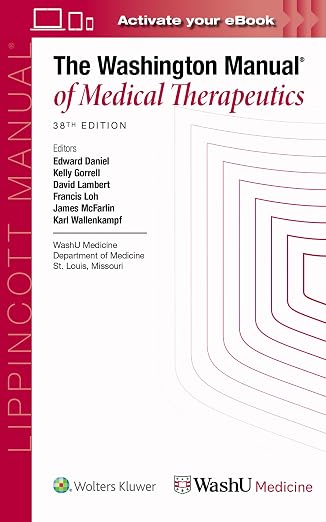
The Washington Manual of Medical Therapeutics
Washington University
38th edition · 2026A more detailed ward companion for admissions, common inpatient problems, and the transition into intern year.
Check current prices, editions, sizes, and seller details on Amazon.
Official resources
Common questions
What should Step 2 CK resources train?
They should train clinical reasoning, next-best-step decisions, timing, stamina, guideline-aware management, and the ability to learn from missed questions.
When should I add AMBOSS, Divine Intervention, or OnlineMedEd?
Add AMBOSS as a second Qbank or library, Divine for high-yield audio reinforcement, and OnlineMedEd when you need structured clinical frameworks before question-heavy study.