Key takeaways
- A Pathway-based ECFMG Certificate expires with its accepted Pathways season unless it is revalidated or made valid indefinitely; Step 2 CS-based certificates are not subject to Pathway expiration.
- Accepted 2024 and earlier Pathways generally require 2027 revalidation for the March 3, 2027 Match deadline; 2027 revalidation extends validity through December 31, 2029.
- Revalidation is available only through current Pathway 1 or Pathway 6 requirements and requires one qualifying OET Medicine administration on or after January 1, 2025.
- Permanent validation follows at least 12 months of eligible U.S. clinical training or an unrestricted U.S. license; in-training expiration before 12 months uses an ECFMG extension process.
- Pathway expiration, certificate validity, the seven-year examination rule, and Match/program deadlines are separate clocks.
The fast answer
ECFMG Certification does not have one universal expiration rule. If ECFMG issued the certificate after the applicant met clinical and communication skills requirements through an ECFMG Pathway, the certificate expires when that accepted Pathway expires—unless the applicant revalidates or makes the certificate valid indefinitely.
A certificate based on a formerly administered clinical-skills exam, such as a valid Step 2 CS pass, is not subject to Pathway expiration and is valid indefinitely. The applicant should verify the actual status in MyIntealth and on the ECFMG Status Report rather than infer it from the year the paper certificate was printed.
For the 2027 Match, applicants relying on accepted 2021, 2022, or 2023 Pathways are already expired; accepted 2024 Pathways expire December 31, 2026. They must resolve the expired or expiring Pathway before the March 3, 2027 NRMP Rank Order List deadline if they need it for Match eligibility.
A 2027 revalidation runs only through Pathway 1 or Pathway 6. It also requires a qualifying OET Medicine result from January 1, 2025 or later. An accepted 2027 revalidation extends the Pathway—and a Pathway-based certificate, if already issued—through December 31, 2029.
Revalidation is not the same as permanent validation. Revalidation buys a new fixed validity period. Permanent validation removes the scheduled expiration after qualifying U.S. training or an unrestricted U.S. license.
| How clinical/communication skills were met | Scheduled expiration? | Usual action |
|---|---|---|
| ECFMG Pathway | Yes; tied to Pathways season. | Revalidate when needed or make certificate valid indefinitely. |
| Formerly administered exam such as valid Step 2 CS | No Pathway expiration. | No Pathways revalidation. |
| Pathway-based certificate after qualifying permanent validation | No scheduled expiration. | Retain confirmation and keep status records current. |
The three clocks applicants must keep separate
Pathway expiration, ECFMG Certificate expiration, and the seven-year examination-completion rule are three related but distinct clocks. A fourth practical clock comes from the Match or a residency program's onboarding deadline.
The Pathway clock controls whether the accepted clinical and communication skills determination remains current for ECFMG Certification and Match participation. The certificate clock follows that same date when the certificate was issued based on the Pathway.
The seven-year clock asks whether the applicant completed all ECFMG examination requirements within seven years of the first examination pass. Once that condition was met, later Pathway revalidation can occur outside the seven-year period.
A Match deadline asks whether ECFMG can verify the required examination components by the NRMP Rank Order List deadline. A training program may impose its own earlier certificate deadline for ranking or onboarding.
| Clock | Question it answers | Can revalidation fix it? |
|---|---|---|
| Pathway expiration | Is the clinical/communication skills determination still current? | Yes, through an accepted current revalidation. |
| Certificate expiration | Is the Pathway-based ECFMG Certificate currently valid? | Yes, when the applicable revalidation is accepted; permanent validation is another route. |
| ECFMG seven-year examination clock | Were all exam requirements completed within seven years of the first pass? | Revalidation is not a substitute for initially meeting this clock. |
| NRMP/program deadline | Was the required status achieved by a fixed operational date? | Only if revalidation is accepted before that deadline. |
Current Pathways expiration dates
The expiration date is based on the Pathways season in which ECFMG accepted the application, not the date the applicant later receives a certificate, applies to ERAS, takes Step 3, or enters training.
For example, a physician who became ECFMG Certified in 2026 based on a 2024 Pathway does not receive a fresh multi-year period from the 2026 certificate issue date. The 2024 Pathway and the certificate still expire December 31, 2026 unless another action changes the record.
ECFMG has extended some historical expiration dates in its records. If the printed certificate shows an older date that differs from the current table, the electronic ECFMG record and official notice control. ECFMG does not issue a new paper certificate solely to display an updated expiration.
| Pathways season | Pathway expires | Status for 2027 Match planning |
|---|---|---|
| 2027 Pathways | December 31, 2029 | Current if accepted. |
| 2026 Pathways | December 31, 2028 | Current for the 2027 Match. |
| 2025 Pathways | December 31, 2027 | Current at the 2027 ROL deadline, but plan for later needs. |
| 2024 Pathways | December 31, 2026 | Expires before the 2027 ROL deadline; revalidation generally required. |
| 2023 Pathways | December 31, 2025 | Expired; revalidation generally required. |
| 2021 or 2022 Pathways | December 31, 2024 | Expired; revalidation generally required. |
What an expired Pathway prevents
An accepted, unexpired Pathway is required to participate in the NRMP Main Residency Match when the applicant relies on a Pathway to meet ECFMG's clinical and communication skills requirements. It must be unexpired at the Rank Order List Certification deadline.
An accepted, unexpired Pathway also is required for ECFMG to issue a certificate based on that Pathway. ECFMG will not issue a certificate from an expired Pathway even if Step 1, Step 2 CK, OET, and medical education credentials otherwise are complete.
An expired Pathway does not erase the historical fact that the application once was accepted. It means the acceptance is no longer valid for these current purposes. The applicant must revalidate when required unless the certificate already became valid indefinitely or a non-expiring clinical-skills basis applies.
| Purpose | Unexpired Pathway required? | Result if expired |
|---|---|---|
| NRMP Main Residency Match | Yes, for applicants relying on Pathways. | Ineligible unless accepted revalidation or another valid basis is in place by the ROL deadline. |
| Initial ECFMG Certificate issuance | Yes. | ECFMG will not issue the certificate from the expired Pathway. |
| Historical record | No; past acceptance remains part of record. | Historical acceptance alone does not satisfy current validity. |
What an expired Pathway-based certificate prevents
ECFMG states that a valid, unexpired certificate is required to enter an ACGME-accredited U.S. graduate medical education program. NRMP participation and entry into training are separate checkpoints: an IMG can meet the Match's examination-verification standard yet still need full, valid Certification before starting residency.
A valid, unexpired certificate also is required both when an IMG applies for USMLE Step 3 and on the Step 3 test days. Scheduling around the printed expiration date without checking the ECFMG record can create an avoidable eligibility problem.
Expiration is not the same as revocation or suspension. It is the end of the certificate's validity period because its underlying Pathway expired. Revalidation or permanent validation can address scheduled expiration when the applicant meets the applicable rules.
| Use | Validity point | Planning implication |
|---|---|---|
| Enter ACGME-accredited GME | Certificate must be valid and unexpired for entry. | Complete revalidation or the correct extension/validation process before onboarding. |
| Apply for Step 3 | Certificate must be valid and unexpired. | Do not submit an application against an expiring certificate without enough time. |
| Take Step 3 | Certificate must remain valid on test days. | A valid application date alone is insufficient. |
| Participate in NRMP Match | Accepted unexpired Pathway plus other exam requirements at ROL deadline. | Full certificate and Pathway validity are related but not identical Match tests. |
Who should revalidate for the 2027 Match
Start with the accepted Pathways season in MyIntealth. Applicants with a 2024 or earlier accepted Pathway need attention because that Pathway is expired or expires before the March 3, 2027 Rank Order List deadline.
Then ask whether ECFMG already made the Pathway-based certificate valid indefinitely. A physician whose record is valid indefinitely does not use Pathways Revalidation merely because the original Pathways season appears old.
Next ask whether the applicant met clinical and communication skills through a valid formerly administered exam such as Step 2 CS. Those certificates are not subject to Pathway expiration, and applicants with a valid Step 2 CS pass are not eligible to pursue a Pathway.
Finally, identify the reason revalidation is needed: 2027 Match participation, initial certificate issuance, entry into training, or Step 3. An applicant who already entered an eligible training program and whose certificate will expire before completing 12 qualifying months is directed to contact ECFMG about an extension, not use Pathways Revalidation.
| Situation | Likely action |
|---|---|
| 2021–2024 accepted Pathway; not valid indefinitely; need 2027 Match | Apply for 2027 Pathways Revalidation early. |
| 2025 accepted Pathway | No revalidation needed for the March 2027 ROL deadline; it expires December 31, 2027. |
| 2026 accepted Pathway | No 2027 revalidation; it expires December 31, 2028. |
| 2027 accepted Pathway | No revalidation; it expires December 31, 2029. |
| Certificate already valid indefinitely | No Pathways revalidation for expiration. |
| Certificate based on valid Step 2 CS or another qualifying former exam | No Pathways revalidation. |
| Already in eligible U.S. training; expiration before 12 months | Contact ECFMG for the certificate-validity extension process. |
Revalidation is limited to Pathway 1 or Pathway 6
A prior Pathway number does not determine the revalidation route. ECFMG requires the 2027 revalidation applicant to meet current Pathway 1 or Pathway 6 requirements based on present eligibility.
An applicant eligible for Pathway 1 must use Pathway 1. This covers a qualifying license or registration to practice medicine without supervision that was valid at some point on or after January 1, 2022, subject to the current disciplinary-history and related rules.
An applicant who does not qualify for Pathway 1 revalidates through Pathway 6. A prior Pathway 2, 3, 4, or 5 cannot be renewed through that same route. ECFMG explicitly says revalidation is unavailable through Pathways 2–5.
A prior Step 2 CS failure is important because current Pathway 1 excludes applicants who failed Step 2 CS; those applicants are directed to Pathway 6.
| Current fact | Revalidation route |
|---|---|
| Qualifying unsupervised license/registration on or after January 1, 2022; no Step 2 CS failure | Pathway 1. |
| No qualifying Pathway 1 license/registration | Pathway 6. |
| Prior Step 2 CS failure | Pathway 6. |
| Prior acceptance through Pathway 2, 3, 4, or 5 | Reassess current facts; revalidate through Pathway 1 or 6 only. |
Revalidation through Pathway 1
Pathway 1 is for an applicant who held a license or registration permitting unsupervised medical practice in any country or jurisdiction at some time on or after January 1, 2022. The license does not need to remain current, and the initial issue date can be earlier, but it must have been valid during the qualifying period.
A supervised, training, resident, or restricted license does not qualify. A provisional license can qualify when it permits unsupervised practice. The license or registration cannot have been subject to disciplinary action under the current eligibility rules.
The applicant reports every authority with which they were licensed or registered to practice without supervision since January 1, 2022 and provides current good-standing or professional-status documentation through one of the official methods.
ECFMG prefers that the authority send a current Certificate or Letter of Good Standing or equivalent directly. The freshness rule is generally 90 days, applied according to whether ECFMG receives the document before or after the application. Applicant-upload and license-copy alternatives can require primary-source verification and add risk.
For the 2027 cycle, the application and required licensure documentation or verification are due January 31, 2027. ECFMG cannot approve the revalidation until required authority information is received and accepted.
| Option | Method | Risk profile |
|---|---|---|
| A—preferred | Authority sends current good-standing/professional-status documentation directly to ECFMG. | Lowest avoidable verification delay when the authority cooperates. |
| B | Applicant uploads current authority-issued documentation; ECFMG primary-source verifies it. | Approval waits for authority verification. |
| C—not recommended unless needed | Applicant uploads license/registration; ECFMG seeks verification and disciplinary information. | Highest dependence on authority response; no guarantee of completion. |
Revalidation through Pathway 6
Pathway 6 requires six new, real, in-person, primary-care or general-practice outpatient encounters assessed through ECFMG's electronic Mini-CEX. The current requirements are the same for 2027 revalidation as for a regular 2027 Pathway 6 application.
The applicant needs three to six qualified physicians. Each can evaluate no more than two encounters, must hold a current full unrestricted license in the encounter jurisdiction, must have held full unrestricted licensure for at least five years, cannot be a prohibited relative, and cannot receive prohibited compensation.
Every encounter must happen after the application is submitted and after that evaluator accepts the electronic request. Prior-season Mini-CEX evaluations cannot be reused; a 2027 revalidation through Pathway 6 requires a compliant 2027 sequence.
All six evaluations must reach ECFMG by February 15, 2027. That is a receipt deadline, not a recommended date for the final encounter. Applicants need margin for evaluator acceptance, scheduling, request expiration, corrections, ECFMG review, and reporting before March 3.
Revalidation does not lower the clinical standard. All four components—medical interviewing, physical examination, professionalism/communication, and clinical reasoning/judgment—are scored across the six encounters.
| Requirement | 2027 rule |
|---|---|
| Encounters | Six new real, in-person, qualifying outpatient encounters. |
| Evaluators | Three to six qualified licensed physicians; no more than two encounters each. |
| Timing | Encounter occurs only after application submission and evaluator acceptance. |
| Prior Mini-CEX | Cannot be reused from a previous Pathways season. |
| Evaluation deadline | All six received by February 15, 2027. |
| Submission language | Electronic evaluation submitted in English through ECFMG portal. |
OET Medicine for 2027 revalidation
Every 2027 revalidation applicant must meet the communication-skills requirement through OET Medicine. Native English, English-language medical education, citizenship, prior U.S. work, and prior Pathway acceptance do not create an exemption.
The qualifying result must be from one administration on or after January 1, 2025 and contain at least 350 in Listening, 350 in Reading, 300 in Writing, and 350 in Speaking. ECFMG does not combine sub-test scores across administrations.
A satisfactory administration before January 1, 2025 is too old for 2027 revalidation and must be replaced. A qualifying 2025-or-later result already submitted to ECFMG for a previous Pathways application can update the 2027 application without being resent; ECFMG says to allow three business days after submission for that update.
A passing OET result does not by itself revalidate a Pathway. ECFMG still must accept the complete Pathway 1 or Pathway 6 revalidation application.
For Match timing, ECFMG advises testing no later than the final December 2026 date and having results received by January 31, 2027. Earlier testing preserves a full retake opportunity.
| Element | Requirement |
|---|---|
| Profession | OET Medicine. |
| Eligible administration date | On or after January 1, 2025. |
| Listening | 350 or higher. |
| Reading | 350 or higher. |
| Writing | 300 or higher. |
| Speaking | 350 or higher. |
| Superscoring | Not allowed; all four thresholds in one administration. |
| Previously submitted qualifying score | Can update the 2027 application; allow three business days. |
2027 revalidation deadlines
The combined online Application for 2027 Pathways for ECFMG Certification and Pathways Revalidation is the starting point. The regular Pathway 1 and Pathway 6 timing pages set January 31, 2027, Eastern Time as the application deadline for applicants pursuing the 2027 cycle.
Pathway 1 current documentation and any required verification must be received by January 31. Pathway 6 applicants receive until February 15 for all six completed Mini-CEX evaluations, but the application itself remains due January 31.
The NRMP deadline is March 3, 2027 at 9:00 p.m. Eastern Time. By then, ECFMG must have determined the accepted revalidation and verified the other required examination components for Match participation.
Do not plan backward using only ECFMG's five-business-day review estimate. The estimate applies to a complete application. Licensing authorities, evaluators, OET transmission, missing documents, committee review, and verification can make a case incomplete.
| Date | Requirement | Risk if missed |
|---|---|---|
| As early as possible in 2026 | Confirm old Pathways season, route, OET status, and third-party dependencies. | No retake, document, or evaluator buffer. |
| Last scheduled OET date in December 2026 | Latest ECFMG-recommended testing point for Match processing. | Later scores may not be ready in time. |
| January 31, 2027 ET | Submit application; Pathway 1 documents/verifications and OET timing requirements apply. | May not meet 2027 Match eligibility. |
| February 15, 2027 | All six Pathway 6 Mini-CEX evaluations received. | Pathway 6 cannot be completed for timely Match processing. |
| March 3, 2027 at 9:00 p.m. ET | NRMP ROL deadline and IMG ECFMG verification deadline. | Ineligible for the Main Residency Match and SOAP. |
Cost, payment, and processing time
The 2027 Pathways fee is $945. ECFMG describes Pathways fees as nonrefundable, including when it determines that an applicant is ineligible or does not receive all required documents and verifications.
When the application is started, the applicant has five days to complete and submit it. An unfinished application is deleted after that period, requiring the applicant to begin again.
The payment method is a supported card with a security code; Pathway 1's current page says credit in the Intealth financial account cannot be used for the Pathways application.
Additional costs can include OET, retesting, licensing-authority documents, primary-source verification fees, and translation. For Pathway 6, evaluators cannot be compensated by the applicant or a third party in violation of ECFMG rules.
ECFMG's current standard processing page lists five business days for a complete Pathways application. Pathway-specific pages describe an initial review and a final review, but processing is contingent on all required documentation and verification. Five days is not a promise from initial payment to acceptance.
| Item | Known rule | Planning note |
|---|---|---|
| Pathways application | $945, nonrefundable. | Confirm route before paying. |
| OET Medicine | Separate OET fee; retake costs separate. | Test early enough for a complete retake. |
| Pathway 1 authority documents | Authority and verification fees may apply. | Ask the authority before choosing a method. |
| Translation | Separate variable charge when required. | Follow ECFMG rules for who may submit the translation. |
| Pathway 6 evaluator | Prohibited compensation is not allowed. | Do not buy evaluations or use an excluded arrangement. |
What accepted 2027 revalidation changes
If the applicant is not yet ECFMG Certified, accepted 2027 revalidation keeps the clinical and communication skills requirements satisfied through December 31, 2029. It also supports Match eligibility through that date when all other Match requirements are met.
If the applicant already is ECFMG Certified, ECFMG updates the certificate expiration date through December 31, 2029. The applicant becomes eligible to enter ACGME-accredited training and apply for and take Step 3 through that date, provided all other requirements are met.
ECFMG sends an email confirmation letter. It does not print a replacement certificate with the new date. Keep the letter, maintain the email address of record, and rely on current ECFMG status verification when an institution needs confirmation.
Revalidation is not indefinite. A certificate extended through December 31, 2029 will again approach expiration unless it becomes valid indefinitely or a later policy/action applies.
| Applicant state | Updated result through December 31, 2029 |
|---|---|
| Not yet ECFMG Certified | Clinical and communication skills remain satisfied; Match eligibility can be verified if all other requirements are met. |
| Already ECFMG Certified | Certificate expiration record updates; Match, GME entry, and Step 3 uses remain available subject to all other requirements. |
| Paper certificate | No replacement certificate; ECFMG provides a confirmation letter. |
Revalidation versus permanent validation
Revalidation repeats the current Pathway 1 or Pathway 6 and OET standard to establish a new fixed expiration date. Permanent validation recognizes qualifying U.S. clinical training or unrestricted U.S. licensure and changes the ECFMG record to valid indefinitely.
A physician who has not yet entered U.S. training and whose Pathway is expiring usually cannot use future residency training as if it already happened. They must maintain a valid Pathway/certificate long enough to enter training, often through revalidation.
A physician who already completed the qualifying 12 months should not keep purchasing revalidation instead of using the permanent-validation process. A physician currently in the first 12 months whose certificate will expire before the milestone should contact ECFMG about an extension.
Valid indefinitely means the certificate no longer has a scheduled Pathway expiration. It does not remove ECFMG's authority over certification status, irregular behavior, suspension, revocation, or reverification.
| Process | Basis | Result |
|---|---|---|
| 2027 Pathways Revalidation | Meet current Pathway 1 or 6 plus current OET requirement. | Validity through December 31, 2029. |
| Permanent Validation—Training | Successfully complete at least 12 months of eligible U.S. clinical training. | Certificate valid indefinitely. |
| Permanent Validation—License | Hold an unrestricted license in a U.S. jurisdiction. | Certificate valid indefinitely. |
| Extension while in eligible training | Certificate will expire before 12 qualifying months are completed. | Case-specific validity bridge; contact ECFMG. |
Three ways a Pathway-based certificate can become valid indefinitely
ECFMG lists three qualifying bases. The first is successful completion of at least 12 months of clinical education in a U.S. GME program accredited by ACGME.
The second is successful completion of at least 12 months of clinical education in a U.S. non-standard training program associated with an ACGME-accredited program.
The third is holding an unrestricted license to practice medicine in a U.S. state, U.S. territory, or the District of Columbia.
These are alternative routes, not cumulative requirements. The applicant needs one qualifying basis and must ensure ECFMG records the permanent validation through the correct workflow.
| Route | Core requirement | Verification path |
|---|---|---|
| ACGME-accredited training | At least 12 months successfully completed. | Automatic for qualifying Intealth-sponsored J-1 physicians; form for others. |
| Associated non-standard training | At least 12 months successfully completed in an eligible associated program. | Training form and Program Director certification. |
| Unrestricted U.S. license | Current qualifying unrestricted license in a U.S. jurisdiction. | License form; ECFMG verifies directly with issuing authority. |
Permanent validation after 12 months of training
If Intealth sponsors the physician on a J-1 visa, ECFMG says no additional action is required after successful completion of at least 12 months of eligible clinical training. ECFMG makes the certificate valid indefinitely based on the J-1 sponsorship record and notifies the physician when complete.
A physician who is not sponsored by Intealth on J-1 submits the Request for Permanent Validation of ECFMG Certificate (Training). The applicant completes Section I, confirms biographic information, uses the name shown on the certificate, signs, and gives the form to the Program Director.
The Program Director completes Section II, certifies successful completion of at least 12 months in the eligible program, signs, and emails the completed form directly to ECFMG. The applicant should not substitute an employment letter, contract, pay stub, or applicant-forwarded copy for the assigned process.
ECFMG evaluates the form and, when acceptable, updates the certificate to valid indefinitely in its records. Current standard processing guidance lists five business days for a completed Valid Indefinitely Request, with longer handling if more information is needed.
- Confirm 12 qualifying months are successfully completed, not merely scheduled.
- Use the current ECFMG training form.
- Enter biographic information exactly as directed.
- Program Director—not the applicant—completes and sends the institutional section.
- Monitor the email of record for ECFMG's confirmation letter.
- Do not expect a replacement paper certificate.
Permanent validation through an unrestricted U.S. license
A physician who holds an unrestricted license to practice medicine in a U.S. state, territory, or the District of Columbia can use the license route without waiting to document 12 months of qualifying training.
The applicant completes the Request for Permanent Validation of ECFMG Certificate (License), lists every unrestricted U.S. license held, signs the form, and emails it to the ECFMG address specified in the current instructions.
ECFMG verifies licensure information directly with the issuing authority. A name on the license that differs from the ECFMG record can require supporting documentation.
A training permit, resident permit, limited license, or other restricted authorization should not be assumed to satisfy the unrestricted-license route. Use the issuing board's classification and obtain ECFMG confirmation if the license status is unclear.
- License is in a U.S. state, territory, or the District of Columbia.
- License permits unrestricted practice.
- Every unrestricted U.S. license is listed on the form.
- Name discrepancies are documented.
- ECFMG—not the applicant—confirms the license with the authority.
- Confirmation letter is retained after the record updates.
If the certificate expires during the first year of residency
A Pathway-based certificate can approach expiration before the physician completes the 12 months needed for permanent validation. ECFMG gives a specific instruction for this scenario.
If the physician already entered an eligible training program and the certificate will expire before the permanent-validation requirement is met, contact ECFMG about extending the certificate's validity. ECFMG explicitly says not to use Pathways Revalidation for that in-training extension.
This is different from a physician whose certificate expires before entering the eligible program. That physician may need Pathways Revalidation to have a valid certificate for program entry.
Do not wait for the expiration date. Coordinate with the program's GME office and ECFMG, retain written instructions, keep contact information current, and then complete permanent validation promptly after the qualifying 12 months.
| Timing of expiration | Correct starting point |
|---|---|
| Certificate expires before entering eligible training | Use Pathways Revalidation when needed to restore validity for entry. |
| Already entered eligible training; certificate expires before 12 months | Contact ECFMG for the in-training extension process; do not revalidate for this purpose. |
| Already successfully completed 12 eligible months | Use permanent validation, or await automatic J-1 processing if applicable. |
Step 3 planning with an expiring certificate
ECFMG's expiration page requires a valid, unexpired certificate both when applying for Step 3 and on the test days. The USMLE Bulletin separately lists ECFMG Certification as a Step 3 eligibility requirement for graduates of medical schools outside the United States and Canada.
A test appointment after the certificate expiration date is unsafe even if the Step 3 application was accepted earlier. The USMLE requires applicants to report eligibility changes after application and before testing.
Check the electronic ECFMG record, not only the old paper certificate. If revalidation updated the expiration, keep ECFMG's emailed confirmation letter. If permanent validation was completed, retain that confirmation as well.
Allow time for revalidation acceptance, record updates, Step 3 application processing, permit issuance, and two-day scheduling. Do not try to solve certificate expiration after travel and testing dates are fixed.
| Checkpoint | Required certificate state |
|---|---|
| Submit Step 3 application | Valid, unexpired ECFMG Certificate. |
| Application processing | Remain eligible and report status changes. |
| Day 1 of Step 3 | Valid, unexpired certificate. |
| Day 2 of Step 3 | Valid, unexpired certificate. |
How the seven-year examination rule interacts with revalidation
ECFMG requires applicants to satisfy its examination requirements within seven years. The clock begins on the exact date of the first examination pass and ends exactly seven years later.
A Pathways application must be accepted within that seven-year window to count toward completing the clinical and communication skills examination requirements. If the applicant fails to complete all examination requirements in time, the earliest passing performance becomes invalid for ECFMG Certification, and more than one pass can eventually become invalid.
Once all examination requirements were completed within seven years, that particular time-limit requirement is satisfied. The accepted Pathway still can expire for current Certification or Match purposes, but revalidation for those later purposes may occur outside the seven-year period.
Therefore, an expired Pathway does not automatically mean Step 1 or Step 2 CK expired under the seven-year rule. Conversely, revalidating an old Pathway does not retroactively cure a failure to complete the original examination package within seven years.
MyIntealth's ECFMG Certificate section can show progress and the date the examination requirement was met. Applicants remain responsible for tracking the deadline; ECFMG states it does not send advance warnings.
| Scenario | Result |
|---|---|
| First Step pass + second Step pass + accepted Pathway all within seven years | Seven-year examination-completion requirement met. |
| Pathway later expires after the exam package was completed in time | Revalidation may occur outside seven years for Match/certificate validity. |
| Pathway was not accepted before the seven-year deadline | Earliest passing exam may become invalid; revalidation alone is not the fix. |
| Applicant assumes expiration date equals seven years after first Step | Incorrect; Pathways-season expiration is a separate fixed date. |
Proof after revalidation or permanent validation
ECFMG updates its internal certification record and emails a confirmation letter. It does not mail a replacement certificate after an expiration extension or after the certificate becomes valid indefinitely.
Keep the confirmation letter in the same secure file as the original certificate. Maintain the email address of record so the notice is not lost. Do not edit the date on the certificate scan or create a composite document.
Residency programs, hospitals, and licensing authorities can obtain current certification confirmation directly through ECFMG's Certification Verification Service. The ECFMG Status Report transmitted for residency applications also reflects current certification information and certificate expiration when applicable.
When a form asks for the certificate issue date, report the original issue date unless the form explicitly asks for the updated validity date. Revalidation changes expiration; it does not create a second certificate issuance.
- Original ECFMG Certificate.
- Revalidation or permanent-validation confirmation letter.
- Current MyIntealth status.
- Current ECFMG Status Report or CVS confirmation when requested by an authorized entity.
- Original issue date kept separate from updated expiration or indefinite-validity status.
Common applicant scenarios
These scenarios assume no suspension, revocation, irregular-behavior restriction, invalid examination pass, or other case-specific issue. The MyIntealth record and ECFMG's written determination control.
When two rows seem applicable, start with whether the certificate is already valid indefinitely and whether the physician has entered eligible training. Those facts change the correct process.
| Situation | Analysis | Action |
|---|---|---|
| Accepted 2024 Pathway; never certified; applying to 2027 Match | Pathway expires December 31, 2026 and cannot support March 2027 verification. | Complete 2027 revalidation through current Pathway 1 or 6. |
| Accepted 2023 Pathway; certificate issued; no U.S. training | Pathway and certificate expired December 31, 2025. | Revalidate before using certificate for Match, GME entry, or Step 3. |
| Accepted 2025 Pathway; 2027 Match | Pathway remains valid through December 31, 2027. | No revalidation for March 2027; monitor later expiration. |
| 2024 certificate; currently PGY-1; expiration arrives before 12 months | Physician already entered eligible training. | Contact ECFMG for extension, then complete permanent validation after 12 months. |
| Completed 12 ACGME months; not Intealth-sponsored J-1 | Qualifies for training route to indefinite validity. | Applicant and Program Director complete the Training form workflow. |
| Completed 12 ACGME months; Intealth-sponsored J-1 | ECFMG says processing is automatic after successful completion. | Monitor for notice; contact ECFMG if status does not update as expected. |
| Holds unrestricted U.S. state license | May qualify through the license route. | Submit current License permanent-validation form. |
| Prior Pathway 3; now holds qualifying unsupervised home-country license | Pathways 2–5 cannot revalidate; current facts require Pathway 1. | Use Pathway 1 and current authority documentation. |
| Prior Pathway 2; no qualifying license | Cannot renew Pathway 2. | Use Pathway 6 with six new qualifying encounters. |
| Valid Step 2 CS pass | Certificate is not subject to Pathway expiration; applicant is not eligible for a Pathway. | Do not submit revalidation. |
A practical revalidation timeline
Begin by downloading the expiration table into a tracker, not by opening the paid application. Confirm the original Pathways season, certificate status, first examination pass date, OET administration date, and current licensure.
Pathway 1 applicants should contact the medical regulatory authority early enough to learn its good-standing process, fee, direct-delivery method, and turnaround. Requesting a document too early can create a 90-day freshness problem; requesting it too late can miss primary-source verification.
Pathway 6 applicants should identify three to six compliant evaluators and lawful outpatient access before paying, but they must not perform the formal encounters until after application submission and evaluator acceptance.
Every applicant should secure a qualifying OET result early, confirm ECFMG release, submit well before January 31, and monitor the online application. The objective is accepted status with weeks—not hours—before March 3.
| Phase | Action |
|---|---|
| Audit | Confirm Pathways season, certificate expiration, indefinite-validity status, seven-year date, and purpose. |
| Route | Apply Pathway 1 eligibility first; otherwise prepare Pathway 6. |
| OET | Confirm one qualifying 2025+ administration and correct result release; test early if needed. |
| Dependencies | Pathway 1: authority documents. Pathway 6: evaluators and lawful clinical settings. |
| Application | Start only when ready to submit within five days; pay $945. |
| Completion | Meet January 31 documentation rules or February 15 Mini-CEX deadline. |
| Verification | Monitor until accepted and verify NRMP status before March 3. |
| Long term | After qualifying U.S. training or licensure, complete permanent validation. |
Mistakes that cause revalidation failure
- Assuming every ECFMG Certificate is valid indefinitely.
- Using the paper certificate's issue date to calculate Pathway expiration.
- Ignoring the updated electronic expiration because no new certificate arrived.
- Treating Pathway expiration and the seven-year exam rule as the same clock.
- Waiting for March 3 to submit rather than to have an accepted, reported result.
- Trying to revalidate through the applicant's original Pathway 2, 3, 4, or 5.
- Choosing Pathway 6 despite current eligibility requiring Pathway 1.
- Using a supervised training license as if it were Pathway 1 unsupervised licensure.
- Ignoring a prior Step 2 CS failure when selecting the route.
- Using an OET administration before January 1, 2025.
- Trying to combine OET sub-test scores across different test dates.
- Assuming an English-speaking background creates an OET exemption.
- Reusing prior-season Pathway 6 Mini-CEX evaluations.
- Completing a formal Mini-CEX before application submission or evaluator acceptance.
- Paying or arranging prohibited compensation for Pathway 6 evaluations.
- Submitting stale or unverified Pathway 1 good-standing documents.
- Starting the application before being ready for the five-day submission window.
- Forgetting the $945 fee is nonrefundable.
- Using revalidation when already in eligible training and needing an in-training extension.
- Continuing to revalidate after already qualifying for permanent validation.
- Assuming 12 scheduled months equal 12 successfully completed months.
- Expecting a replacement paper certificate and missing the emailed confirmation.
- Applying for Step 3 while the certificate is valid but scheduling test days after expiration.
Master ECFMG expiration and revalidation checklist
- I confirmed how I met the clinical and communication skills requirements.
- I confirmed whether my certificate is Pathway-based or based on a former exam such as Step 2 CS.
- I found the exact accepted Pathways season in MyIntealth.
- I compared that season with ECFMG's current expiration table.
- I confirmed whether my certificate already is valid indefinitely.
- I identified why I need current validity: Match, initial certificate, GME entry, or Step 3.
- I calculated the separate seven-year examination deadline from my first passing exam.
- For the 2027 Match, I recorded March 3, 2027 at 9:00 p.m. ET.
- I determined Pathway 1 eligibility before defaulting to Pathway 6.
- I accounted for any prior Step 2 CS failure.
- My OET Medicine administration is on or after January 1, 2025.
- The same OET administration meets 350/350/300/350.
- I released the qualifying OET result correctly and verified it in the application.
- For Pathway 1, I chose an official documentation method and tracked the 90-day rule.
- For Pathway 1, all required authority documentation or verification will arrive by January 31.
- For Pathway 6, I identified three to six qualified evaluators.
- For Pathway 6, all six encounters will occur after application submission and evaluator acceptance.
- For Pathway 6, all six electronic evaluations will arrive well before February 15.
- I am ready to submit within five days of starting the application.
- I budgeted the $945 nonrefundable fee and external costs.
- I will monitor until the revalidation is accepted, not merely submitted.
- If already in training with near-term expiration, I will ask ECFMG about extension instead of revalidating.
- After 12 qualifying months or an unrestricted U.S. license, I will complete permanent validation.
- I will keep the confirmation letter because ECFMG does not issue a replacement certificate.
- I will recheck live official rules before every irreversible step.
Bottom line
ECFMG Certification can expire when it was issued based on an ECFMG Pathway. The certificate follows the Pathways season's fixed expiration date, not a new interval measured from the certificate issue date.
For the 2027 Match, accepted 2024 and earlier Pathways are expired or expiring before the March 3 deadline. Applicants who still rely on those Pathways generally must obtain accepted 2027 revalidation through current Pathway 1 or Pathway 6 requirements, including a qualifying OET Medicine result from January 1, 2025 or later.
Accepted revalidation extends validity through December 31, 2029; it does not make the certificate permanent. Permanent validation follows at least 12 months of qualifying U.S. clinical training or an unrestricted U.S. license. A physician already in eligible training whose certificate will expire before 12 months should contact ECFMG for an extension instead of using revalidation.
Track Pathway expiration, certificate validity, the seven-year examination clock, and the NRMP/program deadline separately. The current MyIntealth record, ECFMG confirmation letters, and live official pages control.
This guide reflects official information available July 17, 2026. ECFMG can update requirements, dates, fees, portals, and processes. Recheck the live expiration, Pathway, OET, and permanent-validation pages before applying.
Books & equipment
Get ready for residency
Step 3 preparation, ward references, and clinical essentials selected for doctors working toward the Match and the start of residency.

Step 3
Master the Boards USMLE Step 3
Conrad Fischer
8th edition · 2026Work through management decisions alongside your Step 3 question bank and CCS practice.

Ward reference
Pocket Medicine
Marc S. Sabatine
9th edition · 2025A compact internal medicine reference for pre-round reading, clinical differentials, and reviewing the day’s cases.
Ward reference
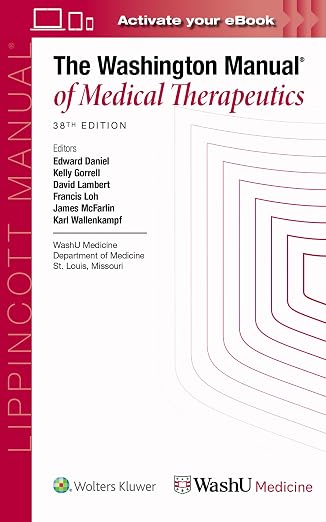
The Washington Manual of Medical Therapeutics
Washington University
38th edition · 2026A more detailed ward companion for admissions, common inpatient problems, and the transition into intern year.

Clinical equipment
Littmann Classic III Stethoscope
Littmann
Model 5620 · Black · 27-inchAn everyday bedside examination tool to consider for rotations and residency if you need to replace your current stethoscope.

Clinical equipment
The Physicians Folding Clipboard
Fellow Medical
Trifold · Letter-size paper · BlackA folding clipboard for organizing paper notes on rounds. Follow your hospital’s policies for patient information.

Scrubs
COZYFIT Women’s Scrub Set
COZYFIT
Women’s fit · Select size and color on AmazonA V-neck top and jogger set for clinical days. Check your hospital’s required color and whether it supplies scrubs.
Check current prices, editions, sizes, and seller details on Amazon.
Official resources
Common questions
Does ECFMG Certification expire?
It depends on how the clinical and communication skills requirements were met. A certificate based on an ECFMG Pathway expires when that Pathway expires unless the applicant revalidates or makes the certificate valid indefinitely. A certificate based on a formerly administered exam such as a valid Step 2 CS pass is not subject to Pathway expiration.
When does a certificate based on the 2027 Pathways expire?
An accepted 2027 Pathway expires December 31, 2029. If ECFMG issues a certificate based on that Pathway, the certificate has the same expiration date unless it becomes valid indefinitely.
Who must revalidate a Pathway for the 2027 Match?
Applicants relying on an accepted 2021, 2022, or 2023 Pathway have an expired Pathway. A 2024 Pathway expires December 31, 2026. Those applicants generally need an accepted 2027 revalidation by the March 3, 2027 NRMP Rank Order List deadline unless they already made the certificate valid indefinitely or meet the requirements through another non-expiring basis.
Can I revalidate through Pathway 2, 3, 4, or 5?
No. ECFMG states that 2027 Pathways Revalidation is completed through Pathway 1 when the applicant meets its qualifying unsupervised-licensure rules, or through Pathway 6 when Pathway 1 does not apply. Pathways 2–5 cannot be used for revalidation.
Do I need to retake OET Medicine for revalidation?
You need one qualifying OET Medicine administration on or after January 1, 2025, with at least 350 in Listening, Reading, and Speaking and 300 in Writing. A satisfactory result before January 1, 2025 must be replaced. ECFMG says an eligible satisfactory result already submitted from 2025 or later can update a 2027 application without being resent.
How much does 2027 Pathways Revalidation cost?
The 2027 Pathways fee is $945 and is nonrefundable. Pathway 1 applicants may also face licensing-authority, verification, or translation costs. Pathway 6 applicants may have lawful clinical-access costs, but evaluators cannot be compensated in violation of ECFMG rules.
How do I make a Pathway-based ECFMG Certificate valid indefinitely?
Meet one of three ECFMG routes: successfully complete at least 12 months of eligible ACGME-accredited U.S. clinical training, complete at least 12 months of an eligible non-standard program associated with an ACGME-accredited program, or hold an unrestricted physician license in a U.S. jurisdiction. Then complete the applicable validation process; qualifying Intealth-sponsored J-1 physicians are processed automatically after eligible training.
Will ECFMG send a new paper certificate after revalidation or permanent validation?
No. After accepted revalidation, ECFMG updates the expiration date in its record and emails a confirmation letter. After permanent validation, ECFMG makes the certificate valid indefinitely in its record and provides a confirmation letter. It does not issue a replacement certificate for either update.