Key takeaways
- AAMC publishes signal allocations for 29 residency specialties in 2027, including six with gold and silver tiers.
- Program participation remains optional, and the final residency roster is scheduled for August 2026.
- Signals are specialty-specific and institution-level rather than track-level.
- IMG eligibility, visa, graduation year, attempts, ECFMG timing, and licensure must be verified before preference strategy.
- Signals attached to early applications may be edited only until September 23, 2026 at 9:00 a.m. Eastern Time.
Fast answer
ERAS program signaling for IMGs in 2027 uses the same specialty allocations available to other applicant types. A signal tells one participating program that it is among the applicant's genuine preferences. It is sent with the application and is intended as one data point for interview selection.
Twenty-nine residency specialties publish signal allocations. Six—Anesthesiology, Child Neurology, Dermatology, Diagnostic Radiology, Internal Medicine, and Vascular Surgery-Integrated—use gold and silver tiers. Gold means most preferred; silver means preferred.
A signal is scarce, but eligibility comes first. Do not signal a program until its IMG, visa, graduation-year, examination-attempt, score, ECFMG, state-license, and application requirements have been verified.
As of July 18, 2026, AAMC has published the specialty allocations but not the final program-level residency participation list. AAMC says that list will be available in August 2026. MyERAS prevents applicants from signaling nonparticipating programs, but applicants should still perform a fresh participation audit before submission.
What a program signal does—and does not do
A program signal communicates interest at the time of application. It does not rank programs for the NRMP Match, create an interview entitlement, replace a personal statement, or waive eligibility criteria.
Programs are expected to use signals within holistic review, but they establish their own interview-selection processes. The same signal can be highly influential at one program and only one of many filters at another.
The signal is applicant-to-program information. It is not a public list and is not shared across institutions.
| A signal does | A signal does not |
|---|---|
| Indicate genuine program interest | Guarantee an interview |
| Travel with the submitted application | Register the applicant for NRMP |
| Display Yes, Gold, or Silver to the recipient | Reveal every other signal recipient |
| Support interview-selection decisions | Override visa or IMG eligibility rules |
| Apply at the specialty/institution program level | Select a categorical, preliminary, or other track |
| Differentiate preference within available tiers | Communicate a binding rank-order intention |
All 2027 residency signal allocations
The table below reproduces AAMC's currently published residency allocations. Verify the live page before assigning because specialty and program participation information can change.
Signal scarcity differs sharply. Five Family Medicine signals represent a narrow preferred set; 30 Orthopedic Surgery or Urology signals cover a much larger portion of many applicants' lists. An unsignaled application therefore does not have one universal meaning across specialties.
| Specialty | Signals | Structure |
|---|---|---|
| Anesthesiology | 5 gold + 10 silver | Two-tier |
| Child Neurology | 3 gold + 6 silver | Two-tier |
| Dermatology | 3 gold + 25 silver | Two-tier |
| Diagnostic Radiology | 6 gold + 9 silver | Two-tier |
| Family Medicine | 5 | Single-tier |
| General Surgery | 15 | Single-tier |
| Internal Medicine | 3 gold + 12 silver | Two-tier |
| Internal Medicine/Medical Genetics | 3 | Single-tier |
| Internal Medicine/Pediatrics | 5 | Single-tier |
| Internal Medicine/Psychiatry | 2 | Single-tier |
| Interventional Radiology-Integrated | 8 | Single-tier |
| Neurodevelopmental Disabilities | 2 | Single-tier |
| Neurological Surgery | 25 | Single-tier |
| Neurology | 8 | Single-tier |
| Orthopedic Surgery | 30 | Single-tier |
| Otolaryngology | 25 | Single-tier |
| Pathology | 5 | Single-tier |
| Pediatric Medical Genetics | 3 | Single-tier |
| Pediatrics | 5 | Single-tier |
| Pediatrics/Psychiatry/Child and Adolescent Psychiatry | 3 | Single-tier |
| Physical Medicine and Rehabilitation | 20 | Single-tier |
| Plastic Surgery-Integrated | 20 | Single-tier |
| Psychiatry | 10 | Single-tier |
| Public Health and General Preventive Medicine | 3 | Single-tier |
| Radiation Oncology | 4 | Single-tier |
| Thoracic Surgery-Integrated | 4 | Single-tier |
| Transitional Year | 12 | Single-tier |
| Urology | 30 | Single-tier |
| Vascular Surgery-Integrated | 3 gold + 12 silver | Two-tier |
How gold and silver tiers work
In a two-tier specialty, a recipient sees whether it received Gold or Silver. Gold communicates the highest preference tier; Silver communicates preference without claiming the same degree.
Programs do not see a numerical order within a tier. All three Internal Medicine gold programs see Gold; none sees whether the applicant privately calls it first, second, or third.
Do not use gold only for prestige. A gold signal is most valuable when genuine preference, eligibility, program fit, and a credible interview possibility overlap.
| Factor | Gold candidate | Silver candidate |
|---|---|---|
| Preference | Clearly among the most desired programs | Strongly preferred but below the top tier |
| Eligibility | All hard rules verified | All hard rules verified |
| Mission fit | Several specific, evidenced alignments | At least one strong alignment |
| Applicant-program fit | Credible based on profile and historical context | Reasonable or reach with a coherent case |
| Tradeoff | Worth giving up another top-tier option | Worth including in the broader preferred set |
Signals are specialty-specific and institution-level
A signal sent to an institution's Internal Medicine program does not carry to Neurology, Psychiatry, or any other specialty at that institution. Dual-specialty applicants manage separate allocations.
Within one specialty at one institution, a signal is not track-specific. It cannot be directed only to categorical, preliminary, primary care, physician-scientist, or another training selection. All applicable tracks at the program see the institution-level signal information.
Applying to more than one track at the same specialty program does not require an additional signal, and the signal does not tell the program which track is preferred.
| Application pattern | Signal result |
|---|---|
| Internal Medicine categorical + primary care at Institution A | One Internal Medicine signal to Institution A |
| Internal Medicine at A + Neurology at A | Separate specialty signal decisions |
| Diagnostic Radiology at A + Transitional Year at A | Separate Radiology and Transitional Year allocations |
| Categorical and preliminary surgery at A | Institution-level General Surgery signal; track selections remain separate |
What a program can see
A single-tier recipient sees Yes. A tiered recipient sees Gold or Silver. A program without a signal does not receive the applicant's signal portfolio.
AAMC also states that programs do not receive the applicant's other program list or total number of applications. A recipient cannot see where remaining signals went.
Only a program that is both signaled and applied to receives the signal. Assigning a signal to a saved program without submitting an application sends nothing.
| Applicant action | Recipient sees | Recipient does not see |
|---|---|---|
| Single-tier signal + application | Yes | Other recipients and unused signals |
| Gold signal + application | Gold | Order among gold programs |
| Silver signal + application | Silver | Which programs received gold |
| Application without signal | No assigned signal | Reason or remaining count |
| Signal assigned without application | Nothing | The unsent assignment |
Program participation is optional
A specialty can participate while an individual program opts out. Applicants cannot send a signal to a nonparticipating program, which protects signals from being spent on programs that did not agree to receive them.
As of July 18, the final 2027 residency program list is not yet available. AAMC's season-update page says it will be published in late August; the signaling page says August. Build a preliminary list now, then perform a final participation audit when the official roster appears.
Do not interpret nonparticipation as rejection of IMG applicants. It means the program is not using the MyERAS signal in that specialty and season. Its eligibility and interest policies still require separate research.
| Check | Question | Source |
|---|---|---|
| Participation | Can this program receive a 2027 signal? | AAMC participating-program roster / MyERAS |
| Eligibility | Will this program consider this applicant? | Program, GME, state, and visa pages |
| Preference | Is this genuinely one of the applicant's preferred programs? | Applicant's researched priorities |
The IMG eligibility gate comes before signaling
A signal cannot repair a hard eligibility mismatch. Verify every material rule before a program enters the signal pool.
Program pages can be incomplete or contradictory. Check the residency page, sponsoring institution's GME page, visa policy, state board, ERAS program record, and—when needed—obtain written clarification.
Do not use signals to test whether an explicit rule is real. If a program says no visa sponsorship and the applicant needs sponsorship, the signal has almost no strategic value unless an authoritative current exception is confirmed.
- IMG eligibility and accepted medical school status.
- ECFMG Certification timing.
- Step 1 and Step 2 CK requirements.
- Attempt limits and score policies.
- Year-of-graduation cutoff.
- U.S. clinical experience type and recency.
- Specialty-specific letter requirements.
- J-1, H-1B, permanent resident, or citizen rules.
- Step 3 requirement for H-1B or program eligibility.
- State training-license eligibility.
- Application service and program participation.
- Categorical, preliminary, advanced, or linked-year requirements.
Signal home and away-rotation programs when preferred
AAMC recommends that applicants signal their most preferred programs regardless of home or away-rotation status. The guidance explicitly aims for fair treatment of MD, DO, and IMG applicants.
A rotation may demonstrate performance and familiarity, but it does not necessarily communicate comparative preference. Faculty encouragement also does not replace the official signal.
Do not signal a rotation site automatically. Confirm that it participates, remains eligible, fits the applicant's priorities, and would be chosen over the displaced alternative.
Use all available signals deliberately
AAMC encourages applicants to use their allotted signals. Leaving a signal unused rarely communicates anything useful because programs cannot see the unused count.
Using all signals does not mean using them randomly. If the current eligible list is smaller than the allocation, research additional programs that genuinely fit rather than signaling an ineligible program.
In high-allocation specialties, the portfolio may include most or all serious applications. In low-allocation specialties, each signal demands a sharper preference decision.
| Allocation pattern | Strategic emphasis |
|---|---|
| 2–5 single-tier signals | Very narrow preference set; eligibility and genuine fit must be exceptionally clear |
| 8–15 single-tier signals | Balance preference, realistic fit, and reach without wasting scarce slots |
| 20–30 single-tier signals | Signals cover a larger portfolio; unsignaled applications may receive different treatment |
| Tiered signals | Build gold first, then silver; evaluate tier displacement explicitly |
A five-stage signal portfolio
Build the signal set from verified evidence rather than intuition. A useful sequence is Eligibility → Preference → Fit → Portfolio balance → Final displacement review.
Every signal should survive all five stages. A famous program can be a genuine preference but still fail the eligibility or fit stage. A safer program can be eligible but not preferred enough to deserve one of three gold signals.
| Stage | Action | Output |
|---|---|---|
| 1. Eligibility | Remove hard mismatches | Programs that can realistically consider the applicant |
| 2. Preference | Rank mission, training, geography, population, and career factors | Programs the applicant genuinely wants |
| 3. Fit | Compare profile with program characteristics and historical data | Credible fit range |
| 4. Balance | Avoid concentrating every signal in one unrealistic stratum or geography | Diversified signal portfolio |
| 5. Displacement | For each signal, name the best excluded alternative | Final set with explicit tradeoffs |
Build a program evidence ledger
One spreadsheet row per program prevents attractive names from outrunning verification. Save exact policy language and source dates.
Use a confidence rating for ambiguous fields. A blank visa page is not evidence of sponsorship, and a resident roster containing IMGs is not proof of current IMG or visa policy.
| Column | Purpose |
|---|---|
| Program and ACGME ID | Prevents same-name confusion |
| Specialty and tracks | Keeps signal scope clear |
| 2027 signal participation | Confirms the program can receive it |
| IMG eligibility | Records explicit policy |
| Visa | Matches applicant need |
| Graduation year | Screens hard cutoff |
| Step attempts and score rule | Screens examination fit |
| ECFMG timing | Screens certification readiness |
| USCE and letters | Screens document/experience fit |
| State license | Screens legal training eligibility |
| Mission and patient population | Supports genuine preference |
| Training features | Supports fit and explanation |
| Historical signal/interview context | Calibrates—not predicts—odds |
| Tier or no signal | Records final decision |
| Source URL and accessed date | Makes policy auditable |
| Confidence / unresolved question | Prevents assumptions from becoming facts |
Reach, realistic, and safer are not fixed labels
No official database labels programs reach, realistic, or safe for a particular IMG. These are planning categories created from incomplete information.
A program with many current IMGs can still be a poor fit because of visa, graduation year, Step attempts, specialty letters, or geographic mission. A program with fewer IMGs may be reasonable when the applicant has a strong documented connection and meets all criteria.
Use ranges and uncertainty. Never call a program safe; an eligible program can still receive far more qualified applications than available interviews.
How to use historical signal data
AAMC ERAS Statistics and Residency Explorer can show specialty- and program-level historical context, including signal and interview patterns where available. Use these sources to compare groups, not to calculate an individual probability.
Prior-cycle data reflect different applicant pools, signal allocations, program policies, and selection behavior. A gold-signal rate in one year may not reproduce in 2027.
Applicant-type filters matter. An overall signal-to-interview pattern dominated by U.S. MD applicants cannot be applied uncritically to a visa-requiring non-U.S. IMG.
- Check the data year and specialty allocation used.
- Separate gold, silver, standard, and no-signal groups.
- Use applicant type when available.
- Inspect sample size and suppressed data.
- Do not infer causation from association.
- Do not treat an interview percentage as a Match probability.
- Use data beside current eligibility and program mission.
Why signal data do not prove causation
Applicants choose where to signal, so signaled and unsignaled applications differ before programs review them. Stronger fit, geographic preference, rotations, mentoring, and applicant strategy can all influence both signal assignment and interview outcomes.
Programs also vary in how they use signals. Some may use them as a major screen; others may use them after academic review or only as a tie-breaker.
The practical conclusion is not that signals are unimportant. It is that a historical association should guide portfolio calibration without being converted into a personal guarantee.
Dual-specialty applicants
A dual applicant receives the allocation for each participating specialty and makes separate signal decisions. Programs do not see applications to the other specialty.
The shared MyERAS Experiences and much of the application still need to support a coherent professional identity. Specialty-specific personal statements and LoRs can vary; inaccurate or contradictory core information cannot.
Budget and preliminary-year needs belong in the same plan. Diagnostic Radiology, for example, may require a separate Transitional Year or preliminary portfolio with its own signal allocation and application fees.
| Question | Why it matters |
|---|---|
| Does each specialty have a complete eligible list? | Signals cannot rescue a backup specialty chosen without preparation |
| Are letters and statements correctly assigned? | Signal accuracy does not repair document mismatch |
| Are preliminary or transitional programs included? | Advanced specialties may require a separate intern year |
| Can the applicant explain either choice honestly? | Interview answers must remain coherent |
| Does the budget reset by specialty? | ERAS pricing is calculated separately for each specialty |
Preliminary, transitional, and advanced programs
An advanced-position applicant may need both an advanced specialty and a PGY-1 year. These are separate applications and can involve separate signaling specialties.
A Diagnostic Radiology signal does not signal a Transitional Year at the same institution. Transitional Year has 12 single-tier signals in 2027. Preliminary Medicine and Surgery tracks follow the signal structure of their program/specialty context rather than inheriting the advanced-program signal.
Map every required year before spending signals. A strong advanced portfolio without a viable intern-year plan is incomplete.
The September 23 edit deadline
AAMC permits signals attached to applications submitted before program opening to be updated until September 23, 2026 at 9:00 a.m. Eastern Time. After programs open, signals to applied programs cannot be edited.
A signal assigned to a saved program has not been sent. Remaining signals can be assigned to saved programs and sent with later applications during the season, excluding SOAP.
Treat the pre-opening edit period as error correction, not routine strategy. Build and audit the intended set before September 2 application submission.
| State | Before Sept. 23 at 9 a.m. ET | After opening |
|---|---|---|
| Saved, signal assigned, not applied | Editable and unsent | Can still be sent with a later application outside SOAP |
| Applied before opening with signal | Signal may be updated | Locked |
| Applied after opening with signal | Not applicable | Sent and locked |
| Withdrawn after signal sent | Do not assume restoration | Signal remains unavailable for reassignment |
| Unused signal | Available | Available for later participating program outside SOAP |
Do not expect withdrawal to restore a signal
Once a signal has been sent with an application and the applicable edit window has closed, withdrawing from the program does not create a reusable signal.
Program withdrawal also does not erase the delivered application from the program's view. Make eligibility and preference decisions before payment rather than using withdrawal as a correction plan.
If the interface displays an unexpected count, stop and use the Review Program Signals page or AAMC Support before sending more applications.
Program Signal Explanations in four specialties
For 2027, Anesthesiology, Physical Medicine and Rehabilitation, Plastic Surgery-Integrated, and Radiation Oncology use a Program Signal Explanation pilot. The field allows 300 characters.
The explanation should identify program-specific alignment. AAMC says it should not discuss ranking preferences or intentions. Removing a signal removes its explanation.
Write from verified facts. A wrong track, hospital, population, or faculty reference signals careless copying.
| Element | Purpose | Example category |
|---|---|---|
| Verified feature | Shows program research | Curriculum, clinical pathway, patient population, or research structure |
| Applicant connection | Shows why the feature matters | Prior work, career goal, geographic commitment, or service interest |
| Forward fit | Shows intended development or contribution | Skill to build or community to serve |
Weak and stronger signal explanations
Weak: “Your prestigious program is my top choice, and I would definitely rank it number one because of excellent training and location.” It uses ranking language, provides no evidence, and could fit almost any program.
Stronger: “Your longitudinal rehabilitation curriculum and adaptive-sports clinic align with my two years coordinating mobility-focused community programs. I hope to build rigorous functional assessment skills while continuing disability-access advocacy.”
The stronger version names a verified feature, connects it to documented experience, and avoids a ranking promise.
Geography belongs in preference, not assumption
Geographic preference can strengthen a signal decision when it is genuine and specific: family support, spouse employment, prior residence, community connection, or long-term career intention.
Do not assume a program values geographic ties in the same way another program does. Use Residency Explorer and the program's mission only as evidence, and avoid inventing a connection.
A geographic preference field in MyERAS and a program signal are separate data points. Keep them consistent enough to explain in an interview.
Signal plus personal statement and LoRs
A signal is strongest when the rest of the application supports it. A program-specific personal statement is not required everywhere, but any tailored statement must name the correct program and make a truthful case.
Letter assignments should satisfy the program's requirements. A gold signal cannot compensate for a missing department-chair letter, wrong specialty letter, or unassigned transcript.
Run the Assignments Checklist and signal review together before payment.
A final displacement test
For every proposed signal, name the best program that would be excluded if the slot is used. Compare those two programs directly.
Ask: Which is more preferred? Which is eligible with higher confidence? Which has stronger mission and training fit? Which uses the applicant's evidence more favorably? Which uncertainty can be resolved?
This pairwise test exposes signals assigned from habit, prestige, rotation guilt, or advisor pressure.
| Criterion | Program in slot | Best excluded alternative |
|---|---|---|
| Confirmed participation | Yes / No / Pending | Yes / No / Pending |
| Hard eligibility | Pass / Fail / Unclear | Pass / Fail / Unclear |
| Visa and license | Pass / Fail / Unclear | Pass / Fail / Unclear |
| Genuine preference | 1–5 | 1–5 |
| Mission/training fit | 1–5 with source | 1–5 with source |
| Historical context | Relevant range | Relevant range |
| Unique connection | Evidence | Evidence |
| Unresolved risk | Description | Description |
Final 48-hour signal audit
- The final August program-participation roster has been checked.
- Every signaled program appears as participating in live MyERAS.
- Each program's IMG policy was checked on the official page.
- Visa need and sponsorship match.
- Graduation year and attempt rules match.
- Step and ECFMG timing rules match.
- State training-license eligibility was considered.
- Signals are assigned to the correct specialty and institution.
- Gold and silver tiers match genuine preference.
- Track selections are correct even though signals are institution-level.
- Dual-specialty and intern-year allocations are separate.
- Every explanation names the correct program and verified feature.
- Personal statements and LoRs are assigned correctly.
- The Applied, Assigned, and Available counts reconcile.
- The best excluded alternative was compared with each borderline signal.
- A final screenshot or PDF records the intended portfolio before payment.
Common mistakes
- Signaling an ineligible program because it is prestigious.
- Assuming every program in a signaling specialty participates.
- Relying on a program-level roster before AAMC publishes it.
- Saving a signal without applying and assuming the program sees it.
- Assuming a signal targets one track within an institution.
- Using gold for aspiration without genuine preference or fit.
- Withholding a signal from a preferred rotation program because faculty know the applicant.
- Signaling a rotation site automatically despite poor fit.
- Leaving signals unused without a deliberate reason.
- Treating historical interview rates as personal probabilities.
- Ignoring applicant type, sample size, or prior allocation rules in the data.
- Using a radiology signal as though it covers Transitional Year.
- Copying a signal explanation with the wrong program feature.
- Discussing rank intentions in an explanation.
- Assuming withdrawal returns a signal.
- Waiting until September 23 to build the portfolio.
- Forgetting that program participation and IMG eligibility are separate.
- Letting signal assignments conflict with personal statements or letters.
- Paying before reconciling Applied, Assigned, and Available counts.
Master signaling checklist
- I verified my specialty's official 2027 allocation.
- I know whether the specialty is single-tier or two-tier.
- I checked the final program-level participation list when available.
- I understand MyERAS will not send signals to nonparticipants.
- I verified IMG eligibility for every candidate program.
- I verified visa, graduation year, attempts, and ECFMG timing.
- I considered state training-license eligibility.
- I ranked genuine preference before prestige.
- I used current official program and GME sources.
- I used historical data only for calibration.
- I considered applicant type and data-year limitations.
- I built gold before silver where applicable.
- I compared each borderline choice with the best excluded program.
- I signaled preferred rotation programs when appropriate.
- I did not assume faculty encouragement replaces a signal.
- I managed each specialty's allocation separately.
- I managed Transitional or preliminary needs separately.
- I know signals are institution-level, not track-level.
- I completed any 300-character explanation from verified facts.
- I avoided rank promises.
- I assigned the signal before applying.
- I understand the September 23, 9:00 a.m. ET lock.
- I do not expect withdrawal to restore a signal.
- I audited documents, tracks, and signals together.
- I saved a final program evidence ledger.
- I will recheck live AAMC and program rules before submission.
Bottom line
ERAS program signaling for IMGs in 2027 is a scarce-interest allocation, not an eligibility shortcut or interview guarantee. Start by removing programs that cannot consider the applicant.
Use the official allocation for the specialty, confirm current program participation when AAMC publishes the August roster, and separate gold, silver, single-tier, specialty, institution, and track concepts.
Build the portfolio from genuine preference, credible fit, and current evidence. Use historical signal data to calibrate decisions without converting association into prediction.
Assign signals before applying, reconcile every count, and complete edits before programs open September 23 at 9:00 a.m. Eastern Time.
This guide reflects official information available July 18, 2026. AAMC, MyERAS, specialty organizations, programs, sponsoring institutions, and state boards can update participation and policy; their current live instructions control.
Books & equipment
Get ready for residency
Step 3 preparation, ward references, and clinical essentials selected for doctors working toward the Match and the start of residency.

Step 3
Master the Boards USMLE Step 3
Conrad Fischer
8th edition · 2026Work through management decisions alongside your Step 3 question bank and CCS practice.

Ward reference
Pocket Medicine
Marc S. Sabatine
9th edition · 2025A compact internal medicine reference for pre-round reading, clinical differentials, and reviewing the day’s cases.
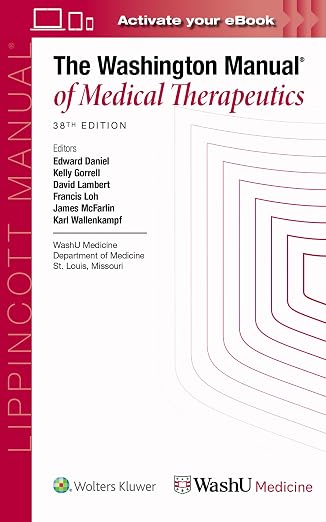
Ward reference
The Washington Manual of Medical Therapeutics
Washington University
38th edition · 2026A more detailed ward companion for admissions, common inpatient problems, and the transition into intern year.

Clinical equipment
Littmann Classic III Stethoscope
Littmann
Model 5620 · Black · 27-inchAn everyday bedside examination tool to consider for rotations and residency if you need to replace your current stethoscope.

Clinical equipment
The Physicians Folding Clipboard
Fellow Medical
Trifold · Letter-size paper · BlackA folding clipboard for organizing paper notes on rounds. Follow your hospital’s policies for patient information.

Scrubs
COZYFIT Women’s Scrub Set
COZYFIT
Women’s fit · Select size and color on AmazonA V-neck top and jogger set for clinical days. Check your hospital’s required color and whether it supplies scrubs.
Check current prices, editions, sizes, and seller details on Amazon.
Official resources
Common questions
How do ERAS program signals work for IMGs in 2027?
An IMG receives the signal allocation set by each participating specialty and assigns signals to participating programs before applying. The signal is sent with the application and indicates genuine interest. AAMC recommends signaling the programs in which the applicant is most interested, including home and away-rotation programs.
How many program signals does Internal Medicine have in 2027?
Internal Medicine has three gold and 12 silver signals. Gold means most preferred and silver means preferred. A signal goes to the institution's Internal Medicine program rather than to a particular categorical, primary care, preliminary, or other track within that specialty.
Which 2027 residency specialties use gold and silver signals?
Anesthesiology, Child Neurology, Dermatology, Diagnostic Radiology, Internal Medicine, and Vascular Surgery-Integrated use two tiers. The other 23 signaling specialties use one tier.
Should IMGs use all their ERAS program signals?
AAMC encourages applicants to use the allotted signals for the programs in which they are most interested. Before signaling, an IMG should confirm that the program participates and that the applicant meets its visa, graduation-year, attempt, score, ECFMG, licensure, and other eligibility rules.
Should I signal a program where I completed a rotation?
Signal it if it is genuinely among your preferred participating programs. AAMC recommends signaling preferred home and away-rotation programs rather than assuming the rotation replaces a signal. A rotation, faculty encouragement, or geographic connection does not guarantee that the program will infer top interest without a signal.
Can I change a signal after applying in ERAS 2027?
For an application sent before residency programs open, AAMC permits the applicant to update the signal until September 23, 2026 at 9:00 a.m. Eastern Time. After that opening time, signals to applied programs cannot be edited. Signals assigned to saved programs but not yet sent remain available for later applications outside SOAP.
Do programs know where else I sent signals?
No. A program sees only the signal attached to its application: Yes for a single-tier signal or Gold/Silver for a tiered signal. It does not see the other programs signaled, their tiers, the applicant's unused count, or total application count.
Does an ERAS program signal guarantee an interview?
No. Signals are one data point in interview selection. They cannot overcome a program's ineligibility rule and do not guarantee review or an invitation. Historical signal-to-interview data can help calibrate a portfolio, but it cannot predict an individual outcome.