Key takeaways
- ERAS 2027 replaces Publications with a structured Scholarly Work section and five qualifying output types.
- AAMC permits unlimited entries, scholarly collections, multiple presentation events, and up to three meaningful works.
- Publication status must reflect official Submitted, Accepted/In-Press, or Published evidence at certification.
- Prior-season Publications do not import, so repeat applicants must rebuild and verify the full section.
- Research activity without a qualifying output belongs in Experiences rather than an inflated Scholarly Work category.
Fast answer
The ERAS Scholarly Work section for 2027 is a complete redesign, not a renamed free-text publication list. Add each qualifying output as one of five types: peer-reviewed journal article, peer-reviewed book chapter, peer-reviewed journal abstract, oral presentation, or poster presentation.
Use the status that is officially true when you certify: Submitted, Accepted/In-Press, or Published where the type supports status. Preserve author order and verify title, venue, date, pages, PMID, and URL against primary records.
Use one entry with multiple events when the same oral presentation or poster was presented more than once. Use a scholarly collection when several distinct outputs came from one project. Do not duplicate the same work to make the record look larger.
Prior Publications do not import into ERAS 2027. Repeat applicants must rebuild the section. Applicants may enter unlimited qualifying work and select up to three entries as most meaningful.
Why the redesign matters for IMGs
International research records often span journals, conferences, languages, countries, and citation conventions unfamiliar to a U.S. program. The structured fields can make that work easier to understand—if every entry is classified and verified correctly.
The redesign also exposes inflation. A manuscript in preparation cannot hide inside “other publication.” A recurring local case presentation cannot be multiplied into national oral presentations. A single project's abstract, poster, and paper can be shown as related rather than implied to be three independent studies.
Programs may ask about methods and authorship in interviews. The safest strategy is a record that is easy to verify and whose contribution the applicant can defend without speaking for the entire team.
The five qualifying types
The application also offers None. Having no qualifying output is better than entering an activity under a false type. Research participation without a qualifying product can be described in Experiences, where the applicant's methods and contribution may still matter.
| Type | Qualifying work | Does not qualify as this type |
|---|---|---|
| Journal article, peer-reviewed | Submitted to, accepted/in press at, or published by a journal that publishes peer-reviewed articles | Draft or manuscript in preparation |
| Book chapter, peer-reviewed | Chapter that underwent formal peer review | Blog, informal handbook, course notes, or non-reviewed chapter |
| Journal abstract, peer-reviewed | Submitted to, accepted/in press at, or published by a journal that publishes peer-reviewed abstracts | Internal abstract, protocol summary, or unsubmitted draft |
| Oral presentation | Presentation to an audience after a submission and selection process | Required class, journal club, M&M, noon conference, or rotation talk |
| Poster presentation | Structured research poster selected through a qualifying process | Course poster or unselected local display |
Research experience is not the same as Scholarly Work
Experiences describes the work: question, role, methods, teamwork, contribution, and growth. Scholarly Work records the qualifying product: citation, status, authorship, event, and publication information.
A project can belong in Experiences before it produces an eligible output. Once an abstract, selected presentation, or peer-reviewed submission exists, that product may also appear in Scholarly Work without copying the same prose.
Avoid double counting language such as “three publications” when the record actually contains one paper, its abstract, and its poster from the same data. Scholarly collections can show the relationship.
| Information | Experiences | Scholarly Work |
|---|---|---|
| Research question and applicant role | Yes | Not the primary purpose |
| Methods and contribution | Yes | Only through structured citation/author fields |
| Formal title and venue | Briefly if useful | Yes |
| Author order and first-author indicator | No need to duplicate | Yes |
| PMID, pages, volume, issue, URL | No | Yes where applicable |
| Meaning and professional growth | Most Meaningful Experience if selected | Most Meaningful Scholarly Work if selected |
Publication status must be official
Status determines which MyERAS fields appear. Submitted asks for the formal submission date. Accepted/In-Press requires an official acceptance state and can include a preprint URL. Published uses the final bibliographic record.
A mentor's approval to submit is not Submitted. An invitation to revise is not Accepted. A preprint is not automatically a peer-reviewed publication. Online-first status should follow the journal's official record and the live MyERAS field definitions.
Update a status that changes before certification. Do not create a second entry when the same manuscript moves from Submitted to Accepted or Published.
| Status | Minimum evidence | Common error |
|---|---|---|
| Submitted | Journal confirmation and submission date | Listing a draft or planned submission |
| Accepted/In-Press | Official acceptance decision | Treating revise-and-resubmit as acceptance |
| Published | Publisher record with available citation details | Using acceptance date as publication date |
| Rejected or withdrawn | No current qualifying submitted status | Leaving an old Submitted entry unchanged |
Journal article example
Verify the 255-character title, journal name, full author list in order, first-author response, status, and status-dependent fields. Published articles may include date, volume, issue, pages, PMID, and URL.
Use the citation exactly as the journal or PubMed displays it, adjusted only to the MyERAS formatting instructions. Do not shorten the author list by removing collaborators, reorder names, or mark first author because you believe you contributed the most.
If an erratum, correction, or retraction affects the work, use the current authoritative record and seek AAMC guidance when the interface does not clearly represent it.
Peer-reviewed journal abstract example
A journal abstract is not simply the abstract section of a full paper. It is a discrete scholarly output submitted to, accepted by, in press at, or published by a venue that publishes peer-reviewed abstracts.
Conference abstracts sometimes appear in a journal supplement. Verify the publication name, status, authors, and citation rather than copying the conference program entry into this category by assumption.
If the same research also produced a poster and article, retain the legitimate distinct entries and group them when a collection improves clarity.
Peer-reviewed book chapter example
MyERAS asks for chapter title, book name, authors, first-author status, editors, publisher, publication year, pages, country, and URL. The work must have undergone formal evaluation before publication.
Publisher reputation alone does not prove peer review. Ask the editor or publisher about the review process when it is unclear and retain documentation.
An educational webpage, institutional manual, patient handout, or self-published guide may be valuable work but does not become a peer-reviewed book chapter.
Oral presentation boundaries
AAMC defines qualifying oral presentations through a submission and selection process. The event should represent an academic venue, not an ordinary obligation of a course or rotation.
Journal club, M&M, noon conference, classroom assignments, and local required presentations are specifically poor substitutes. They may support an Experiences entry if the teaching role was meaningful, but should not be relabeled as selected scholarship.
For a qualifying talk, verify the presentation title, author/presenter information, meeting, date, location, and available event or abstract URL.
Poster presentation boundaries
A poster should represent structured scholarly work and a qualifying selection process. Preparing a poster file does not establish presentation; the meeting event and status matter.
If the same poster was presented at several legitimate meetings, add multiple events under one work entry rather than duplicating the poster. If the content materially changed into a distinct later work, verify whether a separate entry is warranted.
Do not list a poster as both oral and poster merely because the applicant gave a two-minute explanation beside it.
Use multiple events for one presentation
The 2027 design allows multiple events for oral and poster work. This solves a common duplication problem: one academic product presented at a local research day, regional meeting, and national meeting.
Create one work and add each qualifying event with its actual meeting details. Programs can see dissemination without being asked to infer that three identical titles are separate projects.
An event must still qualify. Repeating the poster in a departmental hallway does not become another selected meeting presentation.
| Situation | Correct structure | Reason |
|---|---|---|
| Same poster at two selected meetings | One poster entry, two events | Same scholarly product |
| Poster followed by full journal article | Separate poster and article entries | Distinct output types |
| Article moves from accepted to published | Update one article entry | Status change, not new work |
| Two analyses from one dataset with distinct titles/results | Potentially separate entries | Different products; verify and group if related |
| Same talk delivered to class and conference | One qualifying conference event; omit routine class delivery | Only selected event meets definition |
Author order and first-author status
Copy author order from the submitted or published record. MyERAS can bold the applicant's name and includes a first-author indicator; both depend on accurate input.
Do not move your name forward, omit authors, or translate “co-led analysis” into first authorship. If the journal officially recognizes co-first authorship but the interface is ambiguous, follow the current AAMC instruction or ask support rather than inventing a representation.
Group or consortium authorship should follow the source citation. Preserve supporting documents for the author's exact placement.
URLs, DOI links, and PMID
Every link should resolve to the correct work. Use the MyERAS-designated fields and prefer stable authoritative locations when available.
A PMID identifies a PubMed record; it is not interchangeable with a DOI. Do not enter a PubMed Central ID, manuscript number, ISSN, or conference submission ID in the PMID field.
For submitted or accepted work without a public page, use only the URL type the interface permits. Do not create a public file that exposes confidential manuscript content merely to fill the field.
Work published in another language or country
International venue does not make scholarship less legitimate. Verify that the work meets the peer-review and type requirements and enter the official bibliographic information consistently.
Do not translate a formal title inconsistently across the CV, MyERAS, and interview. If the authoritative record provides an English title, use the source-supported form. If guidance is unclear, follow AAMC's live instructions.
Predatory or deceptive journals are a major risk. A claimed peer-review process should be real. Applicants should know the journal, review history, indexing, fees, and editorial communication for work bearing their name.
Case reports, letters, editorials, and other article labels
A journal may label content a case report, brief report, research letter, letter to the editor, commentary, or editorial. MyERAS does not provide a separate entry type for each publisher label. The applicant must determine whether the specific item and venue satisfy the peer-reviewed journal article definition.
Do not assume every item appearing on a journal website was peer reviewed. News, correspondence, invited opinion, corrections, and editorial material can follow different review processes. Check the journal's article record and editorial policy, and ask AAMC when the work does not map cleanly to an official type.
If the item does qualify as a peer-reviewed article, enter its official title, article type only where the interface permits, author order, status, and bibliographic record. If it does not, do not force it into Scholarly Work; the underlying writing or project may still be appropriate in Experiences.
| Question | Why it matters |
|---|---|
| Does the journal state this content type undergoes peer review? | Publication on a journal site alone does not prove the required review |
| Is the item a discrete scholarly contribution with an official citation? | A correction notice or news item may not represent applicant scholarship |
| Was the applicant an author on the authoritative record? | Acknowledgment is not authorship |
| Which of the five MyERAS types fits without changing the facts? | No fit is safer than a false category |
| Can the applicant explain the contribution and review process? | The entry should withstand interview and verification |
What if you have research but no qualifying output?
Select None when no work satisfies a defined Scholarly Work type. The application does not require an applicant to manufacture a citation, and an honest empty section is safer than a false submission or presentation.
Use an Experiences entry to describe meaningful research activity: the question, design, data work, quality controls, contribution, teamwork, and current project stage. Do not imply an output that does not exist.
The strategic importance of scholarship varies by specialty and program. An applicant should research those expectations while strengthening the actual record, but should not convert a future plan into a current credential.
Preprints, manuscripts in preparation, and protocols
The five categories do not create a general slot for every work product. A manuscript in preparation is not Submitted. A preprint does not by itself establish peer review or acceptance.
A registered protocol may be important scholarship, but it belongs in Scholarly Work only if it independently satisfies a defined type. Otherwise describe the research activity in Experiences.
Do not convert a conference submission under review into an accepted oral or poster presentation. Wait for the official decision and update before certification.
What happens when status changes after submission
The MyERAS application locks when it is certified and submitted. A paper accepted or published later does not automatically rewrite the Scholarly Work fields programs received.
Before certification, update the existing entry to the accurate new status. After certification, follow each program's update policy. A concise update may be appropriate when the change is material, but programs are not required to reopen or re-review an application.
Do not create an inaccurate early Published status to avoid the post-submission limitation. The status on the certified application must be true on that date.
| Event | Before certification | After certification |
|---|---|---|
| Submitted manuscript accepted | Update the same entry to Accepted/In-Press | Keep acceptance evidence; notify programs only as policy permits |
| Accepted article published | Update the same entry with final citation fields | Use a concise material update where allowed |
| Submitted manuscript rejected | Remove or correct the no-longer-true status | Do not continue claiming active Submitted status in communication |
| Conference abstract accepted | Add the qualifying presentation or abstract using official details | Share only under program update rules |
| Conference event canceled | Correct the event record before submission | Retain evidence and answer any later question accurately |
Select up to three most meaningful works
Meaningful selections are separate from the three most meaningful Experiences. Choose scholarly products that reveal contribution, intellectual growth, or a coherent research direction.
Prestige is not enough. A middle-author article can be more meaningful than a higher-impact citation if the applicant owned a substantial method, solved a difficult problem, and can discuss limitations.
Do not select three outputs from one project merely to occupy all slots unless each genuinely represents a distinct scholarly turning point.
- Can I state my contribution separately from the team's work?
- Can I explain the study question and design?
- Can I interpret the main result without exaggeration?
- Can I name a limitation and its consequence?
- Can I describe a setback or revision?
- Can my mentor or coauthor corroborate the account?
- Can I explain how the work influenced my next question or clinical thinking?
A meaningful-work reflection structure
Use Contribution → Challenge → Change. Briefly identify what the applicant owned, what intellectual or practical problem mattered, and how the work changed later thinking or behavior.
Avoid restating the title, journal, and author list. Programs already see the citation. Avoid claiming that a project “proved” a conclusion beyond its design.
Prepare a longer private interview outline with question, method, personal role, result, limitations, and next step.
Repeat applicants must rebuild the section
AAMC explicitly says prior Publications will not import into ERAS 2027. Export the old application and CV, but treat them as leads rather than authoritative current records.
A work listed as Submitted in the prior cycle may now be published, rejected, withdrawn, or unchanged. Verify every item at the source.
Use the rebuild to consolidate presentation events, create useful collections, remove nonqualifying entries, and repair citation errors.
| Step | Action | Evidence |
|---|---|---|
| Inventory | Export prior application and current CV | Personal records |
| Verify | Check title, authors, venue, status, date, and identifiers | Journal, PubMed, DOI, editor, meeting program |
| Classify | Map only qualifying output to one of five types | 2027 worksheet definition |
| Deduplicate | Merge repeated presentation events and status copies | Title and project comparison |
| Group | Create collections for truly related outputs | Shared project record |
| Reflect | Choose up to three meaningful works | Contribution and interview readiness |
| Preview | Inspect program-facing formatting | MyERAS preview |
Build a verification ledger
A spreadsheet can prevent the most consequential errors. Give every planned entry one row and link it to primary evidence.
Do not rely only on Google Scholar, an auto-generated CV, a reference manager, or a mentor's outdated bio. These can contain duplicated versions and incorrect metadata.
| Column | Purpose |
|---|---|
| ERAS type | Confirms one of five allowed categories |
| Exact title | Prevents memory-based variation |
| Author order | Preserves attribution |
| First author | Supports the yes/no response |
| Current status | Prevents stale Submitted entries |
| Status date | Supports status-dependent fields |
| Venue | Confirms peer-reviewed publication or selected event |
| Citation fields | Volume, issue, pages, year, publisher |
| PMID / DOI / URL | Provides stable verification |
| Project ID | Reveals related outputs and duplicates |
| Presentation events | Keeps repeated meetings under one work |
| Evidence file | Submission email, acceptance, program, citation |
| Interview role | Records exact personal contribution |
Preview the record programs will see
The new Scholarly Work section includes a preview. Use it to inspect citation formatting, bolded applicant name, first-author state, collection labels, event display, broken URLs, and duplicates.
Review the section as a portfolio. An unlimited entry count can create a long, noisy list that hides the most important work. Accuracy and organization matter more than raw length.
The section locks when the application is certified and submitted. A status that changes afterward cannot be assumed to rewrite the certified application.
Prepare every entry for an interview
A citation is an invitation to ask questions. For each entry, prepare a private one-page briefing that separates the study's work from the applicant's personal work.
A candidate need not claim mastery of every method used by a large team, but should understand the central design, result, limitations, and the tasks attached to their authorship. Saying “the statistician handled the model; I built the cleaned dataset and sensitivity-variable definitions” is more credible than pretending to have run an analysis the applicant cannot explain.
Review the final published work, not only an early draft. Be ready to discuss why the conclusion may not generalize and what a next study should do differently.
| Prompt | What to prepare |
|---|---|
| Question | The problem and why it mattered |
| Design | Study type, population, exposure/intervention, outcome, and comparison |
| Your contribution | Exact tasks, decisions, and deliverables |
| Result | Main finding without overstating causality |
| Limitation | At least one important source of bias or uncertainty |
| Challenge | A setback, disagreement, quality issue, or revision |
| Meaning | How the work changed a method, question, or clinical perspective |
| Next step | The most useful follow-up study or application |
Common mistakes
- Assuming old Publications will import.
- Listing a manuscript in preparation as Submitted.
- Treating revise-and-resubmit as Accepted.
- Creating a new entry when Accepted work becomes Published.
- Listing a non-peer-reviewed blog as a journal article.
- Calling any edited volume contribution a peer-reviewed book chapter.
- Using the full-paper abstract as a journal abstract entry.
- Listing journal club, M&M, noon conference, or class work as selected oral presentations.
- Creating three entries for one poster shown at three meetings.
- Using a collection for unrelated work sharing only a specialty.
- Reordering authors or mislabeling first-author status.
- Entering DOI, PMCID, ISSN, or submission ID in the PMID field.
- Leaving a rejected or withdrawn manuscript as Submitted.
- Duplicating citations from a CV without source verification.
- Selecting meaningful work based only on journal prestige.
- Claiming team methods or results as personal contribution.
- Including patient-identifying or confidential manuscript information.
- Using unlimited entries as a reason to include nonqualifying work.
- Certifying before using the program-facing preview.
Master Scholarly Work checklist
- Every entry fits one of the five official types.
- Research activity without a qualifying output is in Experiences instead.
- Each article or abstract is in a peer-reviewed venue as required.
- Each presentation involved a submission and selection process.
- Required local teaching presentations are excluded.
- Current publication status is supported by official evidence.
- Submitted dates are actual submission dates.
- Accepted status has an official decision.
- Published citations use final available details.
- Titles fit the 255-character field and match source records.
- Authors remain in the official order.
- First-author responses are accurate.
- PMIDs and URLs resolve to the correct work.
- The same work is not duplicated by status.
- One presentation uses multiple events where appropriate.
- Collections group genuinely related outputs only.
- Collection titles fit the 100-character limit.
- Prior-season records were rebuilt and reverified.
- Up to three meaningful selections reflect real contribution.
- I can explain question, method, role, result, and limitation.
- A mentor or source record can corroborate every claim.
- The program-facing preview is clean and understandable.
- I saved a verification ledger and final application copy.
Bottom line
The ERAS Scholarly Work section for 2027 rewards accurate classification and visible relationships among outputs. Use only the five defined types, verify status and authorship, and preserve primary evidence.
One project can legitimately generate several outputs, but the application should reveal that relationship through events and collections—not imply several unrelated studies.
Repeat applicants must rebuild the section because prior Publications do not import. Use the rebuild to update statuses and remove duplicates.
Select meaningful work you can defend in detail. A precise, modest record is stronger than a long list containing inflated statuses or routine presentations.
This guide reflects official information available July 18, 2026. Live AAMC, ECFMG, journal, conference, program, and institutional records control if any field or policy changes.
Books & equipment
Get ready for residency
Step 3 preparation, ward references, and clinical essentials selected for doctors working toward the Match and the start of residency.

Step 3
Master the Boards USMLE Step 3
Conrad Fischer
8th edition · 2026Work through management decisions alongside your Step 3 question bank and CCS practice.

Ward reference
Pocket Medicine
Marc S. Sabatine
9th edition · 2025A compact internal medicine reference for pre-round reading, clinical differentials, and reviewing the day’s cases.
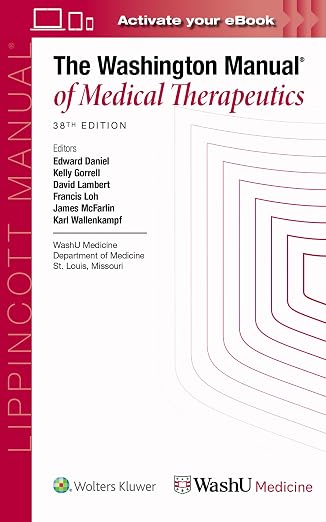
Ward reference
The Washington Manual of Medical Therapeutics
Washington University
38th edition · 2026A more detailed ward companion for admissions, common inpatient problems, and the transition into intern year.

Clinical equipment
Littmann Classic III Stethoscope
Littmann
Model 5620 · Black · 27-inchAn everyday bedside examination tool to consider for rotations and residency if you need to replace your current stethoscope.

Clinical equipment
The Physicians Folding Clipboard
Fellow Medical
Trifold · Letter-size paper · BlackA folding clipboard for organizing paper notes on rounds. Follow your hospital’s policies for patient information.

Scrubs
COZYFIT Women’s Scrub Set
COZYFIT
Women’s fit · Select size and color on AmazonA V-neck top and jogger set for clinical days. Check your hospital’s required color and whether it supplies scrubs.
Check current prices, editions, sizes, and seller details on Amazon.
Official resources
Common questions
What replaced Publications in ERAS 2027?
The redesigned Scholarly Work section replaced Publications. It supports five qualifying work types, status-dependent fields, scholarly collections, multiple events for presentations, a program-facing preview, enhanced author formatting, and up to three most meaningful scholarly works.
What types of Scholarly Work can I enter?
The official types are peer-reviewed journal article, peer-reviewed book chapter, peer-reviewed journal abstract, oral presentation, and poster presentation. MyERAS also provides a None choice. Research activity without one of these qualifying outputs can still belong in Experiences.
Is there a limit on the number of ERAS Scholarly Work entries?
AAMC states that there is no limit on the number of entries. That is not a reason to add duplicates, routine local teaching talks, manuscripts in preparation, or non-peer-reviewed content that does not meet a defined type.
Do Publications from ERAS 2026 import into Scholarly Work for 2027?
No. AAMC states that prior Publications will not import because the section changed. Repeat applicants must rebuild and verify each qualifying entry, update its current status, preserve author order, and remove duplicates.
Can I list a manuscript in preparation as submitted?
No. Submitted means the work was formally submitted to a qualifying peer-reviewed publication. A draft, planned submission, mentor review, pre-submission inquiry, or promise to submit does not establish Submitted status.
Can I list a journal club or noon conference as an oral presentation?
Generally no under AAMC's 2027 definition. Oral and poster presentations should involve a submission and selection process. Required coursework and local rotation presentations such as journal club, morbidity and mortality conference, and noon conference are excluded.
What is an ERAS scholarly collection?
It is a named tag, limited to 100 characters, that groups related saved entries from one project or line of work. A collection can show that an abstract, poster, and article are connected outputs. Deleting the collection removes the tags but not the underlying work entries.
How many most meaningful scholarly works can I select?
You may select up to three. This is separate from the three most meaningful Experiences. Choose works you can explain deeply, including your exact contribution, methods, result, limitations, setbacks, and influence on your development.