Key takeaways
- Pathway choice is mandatory by eligibility: Step 2 CS failure overrides to Pathway 6, then Pathway 1 takes priority, then school-based Pathways 2–5, with Pathway 6 as the fallback.
- Pathway 1 requires an unsupervised license or registration valid at some time on or after January 1, 2022; supervised training licenses do not qualify.
- Pathways 2–5 require graduation on or after January 1, 2024 and a school route assigned through ECFMG's official list.
- Pathway 6 requires six real in-person qualifying outpatient encounters evaluated electronically by three to six uncompensated, qualified physicians.
- Every applicant needs OET Medicine, the $945 Pathways application is nonrefundable, and an accepted 2027 Pathway expires December 31, 2029.
The fast answer
The correct 2027 ECFMG Pathway is determined by a hierarchy, not personal preference. First, an applicant with a valid passing Step 2 CS performance already has met the clinical skills requirement and is not eligible for a Pathway. An applicant who failed Step 2 CS one or more times must use Pathway 6.
For everyone else, Pathway 1 comes first. If you held a qualifying license or registration to practice medicine without supervision at any time on or after January 1, 2022, you must use Pathway 1. If you do not qualify for Pathway 1, MyIntealth evaluates your school and graduation information for Pathway 2, 3, 4, or 5. If none applies, Pathway 6 is the route.
All six routes share common requirements. You must be generally eligible, have an Application for ECFMG Certification with Accepted or Pending Credential Verification status, complete the correct $945 nonrefundable Pathways application, and meet the OET Medicine requirement. A Pathway does not replace Step 1, Step 2 CK, or primary-source medical education credentials.
For the 2027 Match, submit the Pathways application by January 31, 2027. Do not use that as a working target. Licensing authorities, medical schools, OET, and physician evaluators control steps that can take weeks or months.
| Question | If yes | If no |
|---|---|---|
| Do you have a Step 2 CS pass still valid for ECFMG Certification? | You are not eligible for or required to use a Pathway. | Continue. |
| Did you fail Step 2 CS one or more times? | Pathway 6 is mandatory. | Continue. |
| Did you hold an eligible unsupervised license/registration on or after Jan. 1, 2022? | Pathway 1 is mandatory. | Continue. |
| Does MyIntealth place your school and graduation date in Pathway 2, 3, 4, or 5? | Use the assigned school-based Pathway. | Pathway 6. |
What an ECFMG Pathway does—and does not do
A Pathway satisfies the clinical skills and communication skills examination requirements for ECFMG Certification. The specific route supplies the clinical-skills evidence; OET Medicine supplies the communication-skills evidence common to every route.
A Pathway does not satisfy the medical science requirement. Applicants still need passing Step 1 and Step 2 CK performances that remain valid for ECFMG Certification. The accepted Pathway also must fall within the seven-year period that begins on the date of the first examination requirement passed.
A Pathway does not complete credential verification. Full ECFMG Certification also requires the applicable medical diploma, final transcript, transfer-credit documents, and primary-source verification. A final-year student can therefore have an accepted Pathway before being eligible for issuance of the final certificate.
A Pathway is not an ERAS application, Match registration, visa, state training license, or residency-program approval. Those systems use ECFMG information but maintain their own rules.
For the Match, ECFMG must report that the IMG has completed the required examination components by the NRMP Rank Order List deadline. For the 2027 Match, that deadline is March 3, 2027, at 9:00 p.m. Eastern Time. Plan enough time for ECFMG to review and transmit the status.
| Requirement | Pathway role | Separate action |
|---|---|---|
| Clinical skills | Pathway 1–6 supplies the accepted route. | Complete the exact route ECFMG assigns. |
| Communication skills | Every Pathway includes OET Medicine. | Meet all four minimums in one eligible administration and release results. |
| Medical science | Not satisfied by a Pathway. | Pass Step 1 and Step 2 CK. |
| Medical education credentials | Not completed merely by Pathway acceptance. | Submit and primary-source verify required credentials. |
| ERAS | Pathway status may appear through ECFMG reporting. | Obtain a Token and submit the separate application. |
| NRMP | Accepted, unexpired Pathway contributes to ECFMG verification. | Register separately and monitor Verified status. |
General eligibility before choosing a route
Before the application evaluates a specific route, three general conditions apply. You must not already have met the clinical and communication skills requirements. You must not be barred by ECFMG from pursuing certification. You must have submitted the Application for ECFMG Certification, and its MyIntealth status must be Accepted or Pending Credential Verification.
Pending Credential Verification is an accepted general-eligibility status for beginning a Pathway. It does not mean credential verification is complete and does not guarantee that the final ECFMG Certificate can be issued.
An applicant whose ECFMG Certificate was suspended or revoked is not eligible for the Pathways. An applicant with a Step 2 CS pass still valid for certification is also ineligible because the clinical skills requirement has already been met.
Check the status in MyIntealth before starting. The Pathways application gives only five days from the moment it is begun to complete and submit; an unsubmitted application is deleted after that period.
- My Application for ECFMG Certification is Accepted or Pending Credential Verification.
- I have not already met the clinical and communication skills requirements.
- I am not barred from pursuing ECFMG Certification.
- My name, school, graduation status, and examination history are accurate in MyIntealth.
- I understand that starting the online Pathways application creates a five-day submission window.
Pathway 1: already licensed to practice without supervision
Pathway 1 is for an applicant who held a license or registration permitting unsupervised medical practice in any country or jurisdiction at any time on or after January 1, 2022. The initial issue date can be older; the license need only have remained valid for some period on or after the cutoff.
The license does not need to be current when you apply. A provisional license can qualify if it permits unsupervised practice. A supervised training, resident, or restricted license does not qualify.
The applicant must have met all country requirements for practice, including registration with the medical regulatory authority when registration is separately required. The license or registration must not have been subject to disciplinary action. The application asks for all authorities with which you were licensed or registered to practice without supervision since January 1, 2022.
Pathway 1 is mandatory when its requirements are met, even if your school appears on another Pathway list. The exception is a prior Step 2 CS failure, which sends the applicant to Pathway 6.
| License situation | Likely Pathway 1 effect | Reason |
|---|---|---|
| Full license active in 2026 | Qualifying if all other conditions are met | Permits current unsupervised practice after the cutoff. |
| Full license issued in 2017 and expired in 2022 | Can qualify | It was valid for some time on or after January 1, 2022. |
| Full license expired in 2021 | Does not meet the date rule | It was not valid on or after January 1, 2022. |
| Resident or training license requiring supervision | Does not qualify | Pathway 1 requires permission to practice without supervision. |
| Provisional license allowing unsupervised practice | Can qualify | The label is less important than the scope of practice. |
| Eligible license plus prior Step 2 CS failure | Pathway 6 instead | The Step 2 CS failure rule overrides other route eligibility. |
Pathway 1 documents: use the authority-first method
Pathway 1 is not approved from a self-reported license number. ECFMG needs current evidence of good standing or professional status and primary-source information from the authority.
Option A is ECFMG's preferred method: ask the authority to send a Certificate or Letter of Good Standing, Current Professional Status, or equivalent directly to ECFMG. You may request it before submitting the Pathways application.
Timing is exact. If ECFMG receives the authority's document before you apply, submit the Pathways application within 90 days of the document's issue date. If ECFMG receives it at or after application, the document must have been issued no more than 90 days before ECFMG receives it. Direct authority documentation is due January 31, 2027.
Option B is to upload a current document issued within 90 days. ECFMG then primary-source verifies it, and the verification itself must reach ECFMG by January 31. This can be slower.
Option C is to upload the license when the authority will neither send good-standing evidence nor provide it to you. ECFMG attempts verification and disciplinary-history collection, but explicitly does not guarantee the authority will respond. This is the highest-risk route and should be started early.
If the authority charges a verification fee, the applicant is responsible. Translation rules depend on who submitted the source document; follow the official instructions rather than independently attaching a translation to an authority-sent document.
| Option | How it works | Main timing risk |
|---|---|---|
| A — Preferred | Licensing authority sends current good-standing/professional-status evidence directly to ECFMG. | Authority processing plus the 90-day currency window. |
| B | Applicant uploads a current good-standing document; ECFMG verifies it with the authority. | The authority still must return verification by January 31. |
| C — Not recommended unless necessary | Applicant uploads the license; ECFMG tries to obtain status and discipline information. | No guarantee the authority will respond before the deadline. |
Pathway 2: a qualifying licensure OSCE at an eligible school
Pathway 2 is not for every applicant who took an OSCE. It applies when the applicant is not eligible for Pathway 1 and attends or graduated from a medical school that administers an OSCE specifically required for medical licensure by the country's medical regulatory authority for all medical students.
The school must be in a region or country not served by an accrediting agency recognized by WFME or NCFMEA; it must be accredited by the medical regulatory authority or its designated agency; and the regulatory OSCE requirement must have been established before 2020. The applicant must have successfully completed the OSCE.
The applicant's medical school graduation date must be on or after January 1, 2024. A prior Step 2 CS failure makes Pathway 6 mandatory instead.
Do not decide eligibility from the name or difficulty of your school exam. Use ECFMG's Medical Schools Eligible for 2027 Pathways list and the pathway shown in MyIntealth. If your school is absent and you believe the ECFMG record is wrong, contact ECFMG before paying.
| Condition | Required? | What is not enough |
|---|---|---|
| Not eligible for Pathway 1 | Yes | Choosing Pathway 2 because school paperwork seems easier. |
| OSCE required for licensure by the country's MRA | Yes | A school exam required only for course completion. |
| OSCE applies to all medical students | Yes | An elective or optional assessment. |
| Applicant passed the OSCE | Yes | Attendance without a successful result. |
| MRA requirement established before 2020 | Yes | A recently created local requirement. |
| Graduation on or after Jan. 1, 2024 | Yes | A recent OSCE taken by an older graduate. |
| School appears on ECFMG's Pathway 2 list | Yes in practice | Assuming accreditation alone creates eligibility. |
Pathway 2 documents depend on graduation status
For a graduate whose final diploma has been issued, the application requires a copy of the final diploma and an acceptable English translation when needed. ECFMG primary-source verifies the diploma with the medical school, unless it already holds an acceptable prior verification.
For a student—or a graduate whose final diploma has not yet been issued—the medical school must complete ECFMG's OSCE Attestation. An authorized official must send it directly to ECFMG. The applicant downloads the form after submitting the Pathways application.
The OSCE Attestation must reach ECFMG by January 31, 2027. A general dean's letter, school transcript, certificate of attendance, or narrative statement does not substitute for ECFMG's required form.
Your responsibility is operational: confirm the correct authorized office, provide the official form, record the request date, and monitor receipt. The school—not the applicant—must send the completed attestation.
- Graduate with diploma issued: upload diploma and translation if required.
- Student or diploma not issued: school sends ECFMG OSCE Attestation directly.
- Deadline: January 31, 2027.
- Prior diploma verification may be reused by ECFMG.
- A different school letter does not replace the official attestation.
Pathway 3: school accredited by a WFME-recognized agency
Pathway 3 applies when the applicant is not eligible for Pathway 1, graduates on or after January 1, 2024, and attends a school currently accredited by an agency recognized by the World Federation for Medical Education. The school must appear on ECFMG's 2027 Pathway 3 list.
A World Directory listing is not the same as Pathway 3 eligibility. The World Directory identifies schools; Pathway 3 depends on current accreditation by a WFME-recognized agency plus ECFMG's school requirements.
Recognition belongs to the accrediting agency, while accreditation belongs to the school. Do not infer that every school in a country qualifies because one agency from that country is recognized. Check the exact school entry.
If a school meets both Pathway 3 and Pathway 4 conditions, ECFMG lists it under Pathway 3 and requires eligible applicants from that school to use Pathway 3.
Pathway 4: NCFMEA comparability
Pathway 4 applies when the applicant is not eligible for Pathway 1, graduates on or after January 1, 2024, and attends a school currently accredited by an agency that has received a determination of comparability from the National Committee on Foreign Medical Education and Accreditation.
Pathway 4 is school-list driven. Do not attempt to prove comparability from a country's general education system or an old agency document. ECFMG's Medical Schools Eligible for 2027 Pathways list tells applicants which schools it has assigned to Pathway 4.
Because a school eligible for both Pathways 3 and 4 appears under Pathway 3 only, absence from the Pathway 4 portion may not mean the school is ineligible. Search the complete list and use the assigned route.
Like Pathway 3, this route requires the school's formal clinical skills attestation and does not apply to a graduation date before January 1, 2024.
Pathway 5: a joint MD degree with an LCME-accredited U.S. school
Pathway 5 is the narrowest school-based route. It applies when the applicant is not eligible for Pathway 1, graduates on or after January 1, 2024, and the international medical school grants an MD degree issued jointly with a U.S. medical school accredited by the Liaison Committee on Medical Education.
An affiliation, exchange agreement, visiting elective, twinning arrangement, or shared curriculum does not necessarily mean the degree is jointly issued. Check ECFMG's Pathway 5 school list and the degree structure.
Eligible applicants still need the school's clinical skills attestation. The joint-degree status identifies the route; it does not itself complete the clinical skills requirement.
| Pathway | School-level basis | Shared applicant rules |
|---|---|---|
| Pathway 2 | Eligible school administers a regulator-required licensure OSCE under ECFMG's detailed criteria. | No Pathway 1 eligibility, graduation on/after Jan. 1, 2024, no Step 2 CS failure, school evidence. |
| Pathway 3 | Current accreditation by a WFME-recognized agency. | No Pathway 1 eligibility, graduation on/after Jan. 1, 2024, no Step 2 CS failure, clinical skills attestation. |
| Pathway 4 | Current accreditation by an agency with NCFMEA comparability. | No Pathway 1 eligibility, graduation on/after Jan. 1, 2024, no Step 2 CS failure, clinical skills attestation. |
| Pathway 5 | Joint MD degree with an LCME-accredited U.S. medical school. | No Pathway 1 eligibility, graduation on/after Jan. 1, 2024, no Step 2 CS failure, clinical skills attestation. |
Pathways 3–5 require ECFMG's exact clinical skills attestation
An authorized school official must attest to the applicant's clinical skills. A dean's letter, MSPE, transcript, home-school OSCE result, or custom letter does not replace ECFMG's required attestation.
The submission route changes the deadline. If the school uses the MyIntealth Entity Portal, ECFMG automatically posts a request after the applicant submits. The school completes the electronic Clinical Skills Attestation through the Clinical Skills Evaluation and Attestation Portal, and ECFMG must receive it by February 15, 2027.
If the school does not use the MyIntealth Entity Portal, the applicant downloads the form after submitting. An authorized official completes it and the school sends it directly to ECFMG. That form is due January 31, 2027.
The extra time for an electronic attestation is not extra time to submit the Pathways application; the application itself remains due January 31. Confirm the school's route from the Application Summary rather than guessing.
Submission does not guarantee acceptance. The applicant should monitor status and address a rejected or incomplete attestation while time remains.
| School route | How the request is created | ECFMG receipt deadline |
|---|---|---|
| School uses MyIntealth Entity Portal | Electronic request posts automatically after application submission. | February 15, 2027 |
| School does not use MyIntealth Entity Portal | Applicant downloads form; authorized official sends it directly. | January 31, 2027 |
Pathway 6: the fallback route and the Step 2 CS failure route
Pathway 6 applies to applicants who do not meet Pathway 1, 2, 3, 4, or 5. It also is mandatory for any applicant who failed Step 2 CS one or more times, even if another route otherwise appears to fit.
It requires six distinct, real, in-person clinical encounters observed by qualified licensed physicians. For each encounter, the evaluator submits an electronic ECFMG Mini-CEX assessing Medical Interviewing Skills, Physical Examination Skills, Professionalism/Communication Skills, and Clinical Reasoning and Judgment.
Each physician may evaluate no more than two encounters, so the applicant needs between three and six evaluators. Every evaluator may submit for no more than 10 applicants in the 2027 season.
Pathway 6 is not an observership certificate and cannot be completed through simulated patients, telemedicine, paid evaluators, or retrospective forms. Every encounter must occur after the Pathway 6 application is submitted and after that evaluator has accepted the electronic request.
Pathway 6 evaluator rules
A qualified evaluator currently holds a full, unrestricted license to practice medicine without supervision in the jurisdiction where the encounter occurs and has held a full, unrestricted license for at least five years.
The physician must directly observe the interview and physical examination, listen to the applicant's presentation of history, physical, assessment, and plan, and provide an accurate electronic evaluation.
An evaluator cannot be the applicant's relative. The applicant cannot compensate the physician for the evaluation, and a third party cannot compensate the physician beyond ordinary salary or wages from the institution where the physician works and the encounter occurs.
A specialist can serve as an evaluator if qualified, but the encounter itself must be primary care or general practice in nature. The specialty title does not convert a subspecialty encounter into an acceptable general encounter.
The applicant attests that each evaluator qualifies. An inaccurate attestation can lead to rejection or an irregular-behavior finding. Verify license scope, jurisdiction, years, relationship, payment, workplace, email, and willingness before entering the physician.
| Requirement | Evidence to confirm | Disqualifying example |
|---|---|---|
| Current full, unrestricted license | Regulator record in encounter jurisdiction. | Training, restricted, inactive, or supervised-only license. |
| At least five years fully licensed | Initial full-license date and uninterrupted qualifying history as applicable. | Full license first issued fewer than five years ago. |
| Direct observation | Physician agrees to observe all required components and presentation. | Signing based on a chart review or colleague's report. |
| No prohibited relationship | Evaluator is not a relative under ECFMG's definition. | Parent, sibling, cousin, spouse, or other listed relative. |
| No payment for evaluation | No applicant or third-party evaluation fee. | Commercially purchased evaluator signature. |
| Institutional setting | Evaluator's ordinary workplace and salary relationship align with the encounter. | Evaluator paid separately by a placement company to score the applicant. |
Pathway 6 encounter rules
Every encounter must involve a real patient in person at a formal outpatient clinical setting. The patient must be a registered outpatient. Telemedicine, virtual, and standardized-patient encounters do not qualify.
Emergency department, separate dedicated urgent-care, and inpatient encounters are excluded. The encounter must be primary care or general practice in nature, not subspecialized, and permit assessment of all four Mini-CEX components.
Appropriate areas can include general internal medicine, family medicine, pediatrics, and obstetrics and gynecology when the actual encounter addresses acute or chronic illness in a primary-care setting. The applicant must be legally permitted to interview and examine the patient in that country and setting.
The patient—or parent or guardian for a pediatric patient—must give permission. The patient cannot be the applicant's relative. The encounter can occur in the patient's language, but the electronic evaluation must be submitted in English.
No encounter can be backdated. It must occur after application submission and after the evaluator accepted the electronic request. A real encounter completed one day before acceptance remains ineligible.
| Encounter | Potentially acceptable? | Controlling issue |
|---|---|---|
| General medicine outpatient visit for diabetes follow-up | Yes, if all other rules are met | Registered outpatient, general care, full skills can be observed. |
| Pediatric outpatient visit for fever | Yes, if all other rules are met | Primary-care nature and guardian permission. |
| Cardiology subspecialty follow-up | No | Encounter is subspecialized. |
| Emergency department abdominal pain | No | Emergency room encounters are excluded. |
| Dedicated urgent-care visit | No | Separate dedicated urgent-care settings are excluded. |
| Hospital inpatient encounter | No | Patient is not a registered outpatient. |
| Telemedicine follow-up | No | The encounter must be real and in person. |
| Standardized patient OSCE | No | Simulated patients are excluded. |
| Outpatient encounter completed before evaluator acceptance | No | Timing is invalid even if the clinical content otherwise fits. |
How Pathway 6 scoring works
Each evaluator scores four components on a 1–9 scale and gives a reason for each score. Scores 1–3 are anchored to an early clinical student, 4–6 to a medical school graduate, and 7–9 to a physician in practice.
After all six electronic evaluations arrive, ECFMG calculates the average for each component across the six encounters. The applicant needs an acceptable result in all four components.
ECFMG's public 2027 page describes the anchors and review process but does not publish a simple promise that one individual score or one overall number automatically guarantees acceptance. If the scoring requirements are not met, the case goes automatically to the Pathway 6 Review Committee, which considers both scores and evaluators' reasons.
Do not ask evaluators for a target number or influence their assessment. The process depends on independent, accurate observation. Prepare by practicing complete, patient-centered primary-care encounters and clear oral presentations—not by scripting a score.
- Medical Interviewing Skills.
- Physical Examination Skills.
- Professionalism/Communication Skills.
- Clinical Reasoning and Judgment.
- Six encounter scores averaged separately within each component.
- Below-requirement cases reviewed by the Pathway 6 Review Committee.
- Electronic submission only; paper or emailed forms are not accepted.
OET Medicine is required for every Pathway
Every Pathways applicant must meet OET Medicine requirements regardless of native language, citizenship, or language of medical instruction. There are no exemptions for attending an English-language school or practicing in an English-speaking country.
The minimum is 350 in Listening, Reading, and Speaking and 300 in Writing, all in one test administration. Scores cannot be combined across dates. If one sub-test falls short, all four must be retaken and all four minimums achieved together.
For the 2027 Pathways, the satisfactory administration must be on or after January 1, 2025. ECFMG recommends testing by the last scheduled date in December 2026 for the 2027 Match, but a safer plan includes time for another full administration.
Passing OET does not complete the Pathway. ECFMG must receive the result, the specific route evidence must be accepted, and the Pathways application must be approved.
Use your USMLE ID or MyIntealth ID as instructed in OET booking and follow the current result-release steps. Monitor the Pathways portal rather than assuming a passing OET dashboard means ECFMG matched the result.
| Sub-test | Minimum | Combination rule |
|---|---|---|
| Listening | 350 | Same administration |
| Reading | 350 | Same administration |
| Speaking | 350 | Same administration |
| Writing | 300 | Same administration |
The real 2027 deadline matrix
January 31 is the central deadline, but it is not the only deadline. The route and the school's portal participation can change a supporting-document date.
An application submitted on the deadline can still fail if a required authority verification, school form, OET result, or other document misses its own deadline. ECFMG must receive and accept the material; evidence that you requested it is not completion.
The Match deadline comes later, but it is not an extension for Pathways documents. ECFMG needs review time between receipt and NRMP reporting.
| Item | Deadline or recommendation | Who controls delivery |
|---|---|---|
| 2027 Pathways application | January 31, 2027, ET | Applicant |
| Pathway 1 current license/good-standing evidence and verification | January 31, 2027 | Medical regulatory authority, applicant, and ECFMG verification |
| Pathway 2 OSCE Attestation when required | January 31, 2027 | Medical school |
| Pathways 3–5 paper/email school attestation | January 31, 2027 | Medical school |
| Pathways 3–5 electronic Entity Portal attestation | February 15, 2027 | Medical school |
| Pathway 6 six electronic Mini-CEX evaluations | February 15, 2027 | Three to six physician evaluators |
| OET test date for safer Match processing | On or before last scheduled date in December 2026 | Applicant and OET |
| OET result receipt for expected Match processing | January 31, 2027 | OET transmission and ECFMG matching |
| NRMP ECFMG verification / rank-list certification | March 3, 2027, 9:00 p.m. ET | Applicant, ECFMG, and NRMP systems |
Fees, submission, and processing
The 2027 Pathways application fee is $945. It is due at submission by an accepted payment card, and ECFMG states that Intealth financial-account credit cannot be used. The fee is nonrefundable if ECFMG determines you selected an ineligible route or if required documents and verifications never arrive.
Once you begin, you have five days to submit. If the application is deleted because the five-day window expires, you can begin again, but delaying near January 31 creates obvious risk.
ECFMG advises allowing five business days after submission for a case manager to begin review, additional time for received documents to attach, and a final review after eligibility work. These are components of processing, not a promise of completion in a fixed number of days.
Pathway 1 can be slowed by regulatory verification, Pathways 2–5 by a school attestation, Pathway 6 by evaluator scheduling and submission, and every route by OET matching. Start with the task controlled by the slowest third party.
| Pathway | Likely external bottleneck | Best early action |
|---|---|---|
| 1 | Medical regulatory authority good-standing response. | Request current direct documentation before applying. |
| 2 | School's OSCE eligibility and attestation or diploma verification. | Confirm school list and authorized office. |
| 3–5 | Clinical Skills Attestation from the correct school portal route. | Identify the authorized official and explain the deadline. |
| 6 | Three to six qualified evaluators plus six qualifying patients. | Pre-screen evaluators, settings, and legal permission before submission. |
| All | OET testing, result transmission, and identity match. | Test early and monitor ECFMG receipt. |
Accepted Pathways expire
An accepted 2027 Pathway expires December 31, 2029. If ECFMG issues a certificate based on that Pathway, the certificate expires on the same date unless the Pathway is revalidated or the certificate becomes valid indefinitely.
An accepted, unexpired Pathway is required for Match participation and for ECFMG Certification when the applicant uses the Pathways route. A valid, unexpired certificate is required to enter ACGME-accredited training and to apply for and take Step 3.
A Pathway-based certificate can become valid indefinitely after at least 12 months of qualifying U.S. clinical education in an ACGME-accredited program, at least 12 months of qualifying non-standard training associated with an ACGME-accredited program, or an unrestricted U.S. jurisdiction license, followed by the applicable ECFMG validation process.
Revalidation is not a repeat of every original school-based option. A 2027 revalidation application uses Pathway 1 if eligible or Pathway 6 if not; ECFMG states that revalidation cannot occur through Pathways 2–5. OET on or after January 1, 2025 is also required for 2027 revalidation.
Do not complete a Pathway years before you need it without considering expiration. ECFMG itself advises applicants who are not entering the 2027 Match to plan timing accordingly.
| Purpose | Required status | If expired |
|---|---|---|
| NRMP Match participation | Accepted, unexpired Pathway at ROL deadline plus other requirements. | Revalidate if eligible and complete before the deadline. |
| Initial ECFMG Certification | Accepted, unexpired Pathway plus all certification requirements. | ECFMG will not issue the certificate from an expired Pathway. |
| Enter ACGME-accredited GME | Valid, unexpired ECFMG Certificate. | Resolve validity through the applicable ECFMG process. |
| Apply for and take Step 3 | Valid, unexpired ECFMG Certificate. | Revalidation or permanent validity may be required. |
The seven-year examination window is a separate clock
ECFMG requires applicants to satisfy the examination requirements for certification within seven years. The period begins on the exact date of the first examination requirement passed and ends seven years later.
Pathway acceptance must occur inside that period. Paying, submitting, passing OET, or completing Mini-CEX encounters is not enough if the application has not been accepted before the seven-year clock closes.
Once all examination requirements are satisfied within the window, the seven-year timing condition is met. Pathway expiration remains a separate issue for certification, Match participation, training entry, and Step 3.
ECFMG does not promise to warn an applicant that the seven-year window is approaching or that a passing performance has become invalid. Calculate and track it yourself, and contact ECFMG if an older passing result creates uncertainty.
- Identify the first passed examination-requirement date.
- Add exactly seven years.
- Plan for Pathway acceptance—not submission—before that date.
- Keep Step 1, Step 2 CK, and Pathway timing in one tracker.
- Track Pathway expiration separately from the seven-year requirement.
Common applicant scenarios
The examples below show how the hierarchy works. They are planning examples, not a substitute for the result of the official application and ECFMG record review.
| Applicant scenario | Likely route | Why |
|---|---|---|
| Practiced independently under a full license in 2024; school also appears under Pathway 3 | Pathway 1 | Qualifying Pathway 1 eligibility takes priority. |
| Held only a supervised residency license; graduated in 2025 from a Pathway 3 school | Pathway 3 | Supervised license does not qualify for Pathway 1; school route may apply. |
| Passed a school OSCE, graduated in 2023, never held an unsupervised license | Likely Pathway 6 | Pathways 2–5 require graduation on or after January 1, 2024. |
| Graduating in 2027 from a listed Pathway 4 school | Pathway 4 | School and graduation-date criteria can apply with attestation. |
| School appears on no Pathway 2–5 list and applicant has no qualifying license | Pathway 6 | Pathway 6 is the route when 1–5 do not apply. |
| Qualifying full license but failed Step 2 CS once | Pathway 6 | Any Step 2 CS failure makes Pathway 6 mandatory. |
| Valid Step 2 CS pass already satisfies clinical skills | No Pathway | Applicant already met the requirement and is ineligible for Pathways. |
| Accepted 2024 Pathway and wants to enter 2027 Match without permanent certificate validity | 2027 revalidation through Pathway 1 or 6 | The 2024 Pathway expired December 31, 2026; revalidation cannot use 2–5. |
Mistakes that cause wrong-Pathway or incomplete applications
The Pathways application asks questions in a hierarchy because the routes are mandatory when eligible. Answering a license or Step 2 CS question inaccurately can select the wrong route and can raise irregular-behavior concerns.
A deadline request is not a deadline receipt. Your authority, school, OET, or evaluator must deliver the correct item through the correct route, and ECFMG must be able to review it.
Do not pay a commercial service to manufacture Pathway 6 encounters or evaluator signatures. ECFMG prohibits evaluator compensation and publishes a specific warning that it will not accept evaluations connected to named organizations and persons on its Pathway 6 page.
- Choosing Pathway 6 because it seems more convenient despite Pathway 1 eligibility.
- Treating a supervised resident license as unsupervised practice.
- Failing to disclose every relevant licensing authority or disciplinary history.
- Using a stale Pathway 1 good-standing document outside the 90-day rule.
- Assuming any school OSCE qualifies for Pathway 2.
- Using a World Directory listing as proof of Pathway 3.
- Ignoring the January 1, 2024 graduation cutoff for Pathways 2–5.
- Sending a dean's letter instead of ECFMG's attestation.
- Confusing the Feb. 15 electronic school deadline with the Jan. 31 paper-form deadline.
- Completing Pathway 6 encounters before application or evaluator acceptance.
- Using inpatient, emergency, urgent-care, telemedicine, simulated, or subspecialty encounters.
- Using fewer than three evaluators or allowing one physician to score more than two encounters.
- Paying a physician or placement company for Mini-CEX evaluation.
- Combining OET scores across administrations.
- Assuming OET alone means the Pathway is accepted.
- Submitting on January 31 without time for review before NRMP verification.
- Ignoring Pathway expiration or the separate seven-year examination clock.
Final 2027 Pathway selection checklist
Complete this checklist before opening the five-day application window. Then replace every general item with the exact document, authority, school official, or evaluator responsible in your case.
- My Application for ECFMG Certification is Accepted or Pending Credential Verification.
- I have not already satisfied clinical skills with a valid Step 2 CS pass.
- I reviewed my entire Step 2 CS history; any failure sends me to Pathway 6.
- I checked whether I held any unsupervised license or registration on or after January 1, 2022.
- If Pathway 1 applies, I listed every relevant authority and requested current good-standing evidence.
- If Pathway 1 does not apply, I searched my exact school on ECFMG's 2027 eligible-school list.
- For Pathway 2, the OSCE and regulator conditions—not just an OSCE certificate—are met.
- For Pathways 2–5, my graduation date is on or after January 1, 2024.
- For Pathways 3–5, I confirmed the route assigned by ECFMG rather than choosing among them.
- My school knows whether it must use an electronic request or a paper/email form.
- I recorded the correct January 31 or February 15 school-attestation deadline.
- If Pathway 6 applies, I pre-screened three to six qualified evaluators.
- Every proposed Pathway 6 setting and encounter can meet the outpatient, primary-care, in-person, legal, consent, and timing rules.
- No Pathway 6 evaluator or third party is being paid for the evaluation.
- I will not complete an encounter until after application submission and evaluator acceptance.
- My OET administration is on or after January 1, 2025.
- My OET scores meet 350/350/350/300 in one administration.
- I followed the current result-transmission instructions and monitor ECFMG receipt.
- I know the exact seven-year examination deadline in my record.
- I understand the $945 fee is nonrefundable.
- I can submit the application within five days after starting it.
- I will submit before January 31, 2027 and leave review time before March 3.
- I know an accepted 2027 Pathway expires December 31, 2029.
- I rechecked the official route page because ECFMG requirements can change.
Bottom line
The right 2027 ECFMG Pathway is the route your facts require. A valid Step 2 CS pass means no Pathway. A prior Step 2 CS failure means Pathway 6. A qualifying unsupervised license means Pathway 1. Otherwise, MyIntealth and the official school list determine Pathway 2, 3, 4, or 5; applicants eligible for none use Pathway 6.
After identifying the route, plan around the third party: licensing authority for Pathway 1, medical school for Pathways 2–5, and three to six qualified evaluators for Pathway 6. OET Medicine applies to everyone.
This guide reflects official information available July 17, 2026. ECFMG, OET, and NRMP can update requirements or processes. The current ECFMG route page and the result shown for your record control whenever they differ from a summary.
Books & equipment
Get ready for residency
Step 3 preparation, ward references, and clinical essentials selected for doctors working toward the Match and the start of residency.

Step 3
Master the Boards USMLE Step 3
Conrad Fischer
8th edition · 2026Work through management decisions alongside your Step 3 question bank and CCS practice.

Ward reference
Pocket Medicine
Marc S. Sabatine
9th edition · 2025A compact internal medicine reference for pre-round reading, clinical differentials, and reviewing the day’s cases.
Ward reference
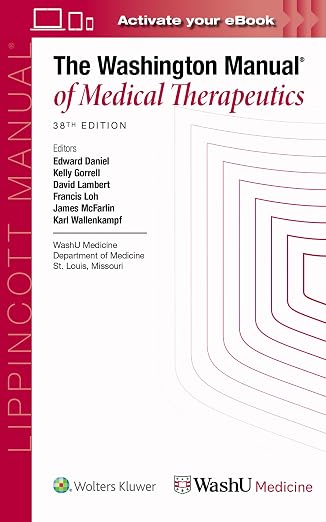
The Washington Manual of Medical Therapeutics
Washington University
38th edition · 2026A more detailed ward companion for admissions, common inpatient problems, and the transition into intern year.

Clinical equipment
Littmann Classic III Stethoscope
Littmann
Model 5620 · Black · 27-inchAn everyday bedside examination tool to consider for rotations and residency if you need to replace your current stethoscope.

Clinical equipment
The Physicians Folding Clipboard
Fellow Medical
Trifold · Letter-size paper · BlackA folding clipboard for organizing paper notes on rounds. Follow your hospital’s policies for patient information.

Scrubs
COZYFIT Women’s Scrub Set
COZYFIT
Women’s fit · Select size and color on AmazonA V-neck top and jogger set for clinical days. Check your hospital’s required color and whether it supplies scrubs.
Check current prices, editions, sizes, and seller details on Amazon.
Official resources
Common questions
Can I choose whichever 2027 ECFMG Pathway is easiest?
No. The Pathways are eligibility routes, not interchangeable options. A prior Step 2 CS failure requires Pathway 6. Otherwise, an applicant eligible for Pathway 1 must use Pathway 1. If Pathway 1 does not apply, MyIntealth uses the school and graduation information in the applicant's record to determine Pathway 2, 3, 4, or 5 eligibility; applicants who qualify for none of those use Pathway 6.
Who is eligible for ECFMG Pathway 1 in 2027?
Pathway 1 is for an applicant who held a license or registration permitting medical practice without supervision in any country or jurisdiction at any time on or after January 1, 2022, provided the other requirements are met. A supervised training, resident, or restricted license does not qualify. A provisional license can qualify if it permits unsupervised practice.
Can an older medical graduate use Pathway 2, 3, 4, or 5?
For the 2027 Pathways, Pathways 2 through 5 require a medical school graduation date on or after January 1, 2024. An older graduate who is ineligible for those routes may qualify for Pathway 1 through eligible licensure; otherwise, Pathway 6 may apply.
Does every student at a WFME-recognized school automatically qualify for Pathway 3?
No. ECFMG maintains the controlling list of Medical Schools Eligible for 2027 Pathways. The school must be currently accredited by a WFME-recognized agency, meet ECFMG's requirements, and appear on the Pathway 3 list. The applicant also must meet the January 1, 2024 graduation-date rule and obtain the required clinical skills attestation.
How many Mini-CEX encounters are required for Pathway 6?
Six distinct, real, in-person, qualifying outpatient encounters are required. Each evaluator may assess no more than two, so an applicant needs at least three and no more than six qualified physicians. All six electronic evaluations must reach ECFMG by February 15, 2027.
Does every 2027 Pathways applicant need OET Medicine?
Yes. ECFMG states there are no exceptions based on native language, citizenship, or the language of medical instruction. Applicants need at least 350 in Listening, Reading, and Speaking and 300 in Writing in one administration taken on or after January 1, 2025.
What is the 2027 ECFMG Pathways application deadline?
The 2027 Pathways application must be submitted by January 31, 2027, Eastern Time. Most supporting documents also are due that date. Important exceptions include all six Pathway 6 Mini-CEX evaluations and electronic school attestations for Pathways 3–5 through the MyIntealth Entity Portal, which are due February 15, 2027.
How long does an accepted 2027 ECFMG Pathway remain valid?
An accepted 2027 Pathway expires December 31, 2029. An ECFMG Certificate based on that Pathway expires on the same date unless the Pathway is revalidated or the certificate becomes valid indefinitely through an eligible route.