Key takeaways
- A Step 2 CS failure requires Pathway 6; otherwise, eligible recent unsupervised licensure requires Pathway 1.
- Pathway 1 uses current good-standing or professional-status evidence and primary-source verification from the medical regulatory authority.
- Pathway 6 uses six real in-person qualifying outpatient encounters evaluated by three to six qualified, uncompensated physicians.
- The ECFMG application fee is $945 for either route, both require OET Medicine, and route-specific external costs and delays differ.
- The Pathways application is due January 31, 2027; Pathway 1 evidence is due then, while all six Pathway 6 evaluations are due February 15.
The answer in one minute
Pathway 1 and Pathway 6 are not two products from which an IMG selects the cheaper or faster option. ECFMG applies an eligibility hierarchy. If you failed Step 2 CS one or more times, Pathway 6 is mandatory. If you did not fail Step 2 CS and held a qualifying unsupervised medical license or registration at any time on or after January 1, 2022, Pathway 1 is mandatory.
If neither fact applies, ECFMG next determines whether your medical school and graduation date place you in Pathway 2, 3, 4, or 5. Pathway 6 is the fallback only when none of Pathways 1–5 applies. A still-valid Step 2 CS pass means you already met the clinical skills requirement and are not eligible for any Pathway.
Pathway 1 proves clinical-skills currency through recent unsupervised licensure and current professional-status evidence. Pathway 6 proves it through six new, directly observed, real outpatient encounters scored electronically by three to six qualified physicians.
The ECFMG fee is $945 for either route. Both require OET Medicine. The meaningful difference is where the operational burden falls: a medical regulatory authority and primary-source documentation for Pathway 1, versus physician evaluators, qualifying patients, legal permission, strict encounter timing, and six electronic Mini-CEX submissions for Pathway 6.
| Issue | Pathway 1 | Pathway 6 |
|---|---|---|
| Core evidence | Recent license/registration for unsupervised practice plus good-standing verification. | Six scored, real, in-person outpatient encounters. |
| Who uses it | Eligible recently licensed applicants without a Step 2 CS failure. | Applicants ineligible for Pathways 1–5 or anyone with a Step 2 CS failure. |
| Main third party | Medical regulatory authority. | Three to six qualified physician evaluators. |
| Application fee | $945, nonrefundable. | $945, nonrefundable. |
| Route evidence deadline | January 31, 2027. | All six evaluations by February 15, 2027. |
| OET | Required. | Required. |
| Can applicant choose it? | Mandatory if eligible, except after Step 2 CS failure. | Only when ECFMG eligibility requires it. |
First decide whether you need a Pathway at all
The comparison begins one step earlier than most applicants expect. The 2027 Pathways are for IMGs who have not already met ECFMG's clinical and communication skills requirements. An applicant with a passing Step 2 CS performance that remains valid for ECFMG Certification is ineligible for a Pathway.
Every Pathways applicant also must have an Application for ECFMG Certification with an Accepted or Pending Credential Verification status in MyIntealth, must not be barred from pursuing certification, and must not already have satisfied the relevant skills requirements.
Pending Credential Verification is enough to meet this general gateway. It does not mean the credentials are verified or that a final ECFMG Certificate can be issued. Medical education credentials, Step 1, and Step 2 CK remain separate certification requirements.
Once you start the online Pathways application, you have five days to complete and submit it. An unfinished application is deleted after five days. Verify the record and collect the decision facts before opening that window.
- Valid Step 2 CS pass: no Pathway.
- One or more Step 2 CS failures: Pathway 6.
- No Step 2 CS failure plus qualifying recent unsupervised license: Pathway 1.
- No Pathway 1 eligibility: MyIntealth checks Pathways 2–5.
- No eligibility for Pathways 1–5: Pathway 6.
Pathway 1 eligibility: test the scope and the date
Pathway 1 requires a license or registration that permitted you to practice medicine without supervision in any country or jurisdiction at some time on or after January 1, 2022. The initial issue date may be earlier. A license issued in 2017 and valid into 2022 can qualify; a license that expired in 2021 cannot meet the date rule.
The license need not be active on the day you apply. The decisive question is whether it authorized unsupervised practice during the eligible period. A resident, training, or restricted license that required supervision does not qualify. A provisional license can qualify if it actually permitted unsupervised practice.
Titles vary across countries, so do not rely on the English label alone. Review the authority's scope, restrictions, and any separate registration required to practice. ECFMG requires the applicant to have met all country requirements, including MRA registration when that is an additional condition of practice.
The license or registration must not have been subject to disciplinary action. The application asks about the authorities with which you have been licensed or registered to practice without supervision since January 1, 2022. Complete and accurate disclosure is part of the application, not an optional explanation added later.
A Step 2 CS failure overrides Pathway 1. Even a currently practicing, fully licensed physician must use Pathway 6 if the physician failed Step 2 CS one or more times.
| Fact pattern | Pathway 1 result | Why |
|---|---|---|
| Full unsupervised license active now | Potentially eligible | Scope and date are within the rule. |
| Full license issued in 2016 and expired during 2022 | Potentially eligible | It was valid for some time on or after January 1, 2022. |
| Full license expired December 2021 | Not eligible on this fact | No validity during the eligible period. |
| Resident registration requiring attending supervision | Not eligible | Supervised training authority is excluded. |
| Provisional license with independent practice authority | Potentially eligible | A provisional title is acceptable when the scope is unsupervised. |
| Qualifying full license plus an old Step 2 CS failure | Pathway 6 | The Step 2 CS failure rule controls. |
| License subject to discipline | Does not meet stated Pathway 1 criteria | The qualifying license/registration must not have been subject to disciplinary action. |
Pathway 1 is mandatory when you qualify
An IMG cannot intentionally omit a qualifying license to reach Pathway 6, nor choose Pathway 6 because arranging an MRA letter seems inconvenient. ECFMG states that applicants who meet Pathway 1 requirements must apply to Pathway 1, even if they also appear eligible for another Pathway.
The mandatory order matters for graduates from schools assigned to Pathways 2–5. Recent school accreditation does not displace eligible licensure. The application asks the Pathway 1 questions first and requires details for relevant authorities when an answer is yes.
Conversely, an applicant is not automatically free to use Pathway 6 merely because Pathway 1 does not apply. The system uses information in the Intealth record to determine eligibility for Pathway 2, 3, 4, or 5. Only if those routes do not apply does it direct the applicant to Pathway 6.
If the application result conflicts with your documented facts, stop before certifying and paying. Resolve the record or eligibility question with ECFMG; submitting a knowingly ineligible route puts the nonrefundable fee and application at risk.
Pathway 1 documents: Option A is the safest route
Pathway 1 is not approved from a license image alone. ECFMG needs current evidence of good standing or current professional status, with information confirmed by the issuing medical regulatory authority.
Option A is the preferred method. Ask the authority to send a Certificate or Letter of Good Standing, Current Professional Status, or equivalent directly to ECFMG. The authority may send it before you submit the Pathways application.
The 90-day rule operates in two directions. If ECFMG receives the authority's document before you apply, you must submit the application within 90 days of the document's issue date. If ECFMG receives it at or after application, it must have been issued no more than 90 days before ECFMG receives it.
The direct authority evidence must reach ECFMG no later than January 31, 2027. If the MRA refuses email, ECFMG's FAQ says it may send the document directly by postal mail or courier to the Pathways Services address. An applicant cannot convert a direct-source requirement into an applicant-sent package.
Ask the authority what its established process is, what identifier it needs, whether it charges a fee, how it sends the response, and how long it takes. ECFMG warns that some authorities may ignore verification requests that do not follow their procedure.
- Identify every relevant licensing or registration authority.
- Request current good-standing or professional-status evidence through the authority's official process.
- Ask the authority to send it directly to ECFMG.
- Track the issue date so the 90-day currency window does not expire.
- Submit early enough to allow the document to attach and a case manager to review it.
- Confirm receipt through the application status, not merely a courier delivery notice.
Pathway 1 Options B and C: understand the verification risk
Option B allows you to upload a current Certificate or Letter of Good Standing, Current Professional Status, or equivalent that the authority provided to you. It must have been issued within 90 days of submission. ECFMG then primary-source verifies it.
The operational trap is that uploading by January 31 is not enough. ECFMG must receive the verification directly from the authority by January 31, 2027. If you use Option B late, the authority may not have time to answer.
Option C is reserved for the situation in which the MRA will not send the status document directly and will not provide one for you to upload. You may upload the license or registration, after which ECFMG attempts to obtain verification and disciplinary-history information.
ECFMG labels Option C not recommended unless Options A and B are unavailable and does not guarantee that an authority will respond. The application cannot be approved without accepted verification. This makes Option C a contingency, not a shortcut.
If the document is not in English, follow ECFMG's translation instructions exactly. When an MRA sends a non-English document without an acceptable translation, ECFMG may arrange translation and charge the Intealth financial account. ECFMG explicitly tells applicants not to submit their own translation of a document sent by the authority.
| Method | Submission chain | What must happen by Jan. 31 | Risk |
|---|---|---|---|
| Option A — preferred | MRA sends current status evidence directly. | ECFMG receives the direct document. | Lowest when requested early and through the MRA's process. |
| Option B | Applicant uploads current status evidence; ECFMG contacts MRA. | ECFMG receives and accepts primary-source verification. | Higher because upload does not complete the verification. |
| Option C | Applicant uploads license; ECFMG seeks status and discipline information. | MRA returns verification and history that ECFMG accepts. | Highest; response is not guaranteed. |
Who must use Pathway 6
Pathway 6 has two entry doors. The first is ineligibility for Pathways 1–5. This commonly includes an older graduate without qualifying recent licensure whose graduation date excludes the recent-graduate school routes. It can also include a student or graduate whose school does not satisfy Pathways 2–5 and who has no eligible license.
The second entry door is any prior Step 2 CS failure. ECFMG directs these applicants to Pathway 6 regardless of eligibility for Pathway 1 or a school-based route. A failed attempt is not erased by later licensure.
Pathway 6 is not an elective alternative for an applicant who prefers a hands-on assessment. It is the assigned route when the hierarchy reaches it. ECFMG states there are no general exceptions to Pathway eligibility merely because an applicant cannot or prefers not to complete Pathway 6.
Before paying, confirm that MyIntealth has the correct Step 2 CS history, school, graduation status, and licensure answers. Pathway 6 requires substantial coordination after submission, but the core evaluator and setting arrangements should be screened before the five-day application window begins.
Pathway 6 requires six qualifying evaluators—not six signatures
The applicant needs six distinct, real, in-person clinical encounters. A physician may evaluate at most two encounters, so the applicant needs at least three and at most six evaluators. When one physician evaluates two encounters, the applicant sends two separate electronic requests.
Each evaluator must currently hold a full, unrestricted license to practice medicine without supervision in the jurisdiction where the encounter occurs and must have held a full, unrestricted license for at least five years.
The physician must agree to directly observe the encounter, listen to the applicant's brief presentation of the history, physical, assessment, and plan, and provide an accurate electronic evaluation. License status alone is not enough if the physician will not perform every required observation.
The evaluator cannot be the applicant's relative. For this process, ECFMG's listed relatives include a spouse, child, grandchild, parent, grandparent, sibling, uncle, aunt, nephew, niece, and cousin.
The applicant cannot compensate the evaluator. A third party also cannot compensate the evaluator for the evaluation beyond ordinary salary or wages from the institution where the physician is employed and the encounter takes place.
Each physician may submit evaluations for no more than 10 applicants in the 2027 season. The system prevents a request when the evaluator has reached the limit or opted out. Pre-screening should include this practical capacity question, although final availability is determined in the portal.
| Question | Required answer | How to verify |
|---|---|---|
| Current full, unrestricted, unsupervised license in encounter jurisdiction? | Yes | Check the regulator's public record and confirm scope. |
| Held a full, unrestricted license for at least five years? | Yes | Confirm the full-license issue history. |
| Will directly observe the full encounter and presentation? | Yes | Explain duties before entering the request. |
| Related to the applicant under ECFMG's definition? | No | Ask explicitly; do not assume a distant family relationship is allowed. |
| Paid by applicant or separately by a third party for evaluating? | No | Confirm there is no evaluation fee or purchased signature. |
| Willing to use the portal and submit promptly? | Yes | Confirm email, availability, and the 15-day clock. |
Pathway 6 encounter eligibility is narrower than ordinary USCE
A useful clinical experience is not automatically a qualifying Mini-CEX. Each encounter must involve a real patient in person at a formal outpatient clinical setting, and the patient must be a registered outpatient. Telemedicine, virtual, and standardized-patient encounters are excluded.
Emergency room, separate dedicated urgent-care, and inpatient encounters are not accepted. The visit must be primary care or general practice in nature, not subspecialized, and focus on diagnosis and treatment of acute or chronic illness.
General internal medicine, family medicine, pediatrics, and obstetrics and gynecology can provide appropriate encounters when the actual visit is primary-care in nature and permits assessment of all four components. A specialist's title does not disqualify an evaluator, but a subspecialty patient encounter remains ineligible.
You must be legally permitted to interview and physically examine the patient in the country and setting. An observership that prohibits physical examination cannot be repurposed as a Mini-CEX. The patient, or a pediatric patient's parent or guardian, must grant permission, and the patient cannot be your relative.
The encounter may occur in the patient's language, but the Mini-CEX evaluation must be submitted in English. Every encounter must occur after the Pathway 6 application is submitted and after that evaluator accepts the electronic request.
| Scenario | Potentially eligible? | Reason |
|---|---|---|
| Outpatient family medicine visit for hypertension | Yes, if every other rule is met | Registered outpatient, primary-care problem, full assessment possible. |
| General pediatrics visit with guardian permission | Yes, if every other rule is met | Pediatrics can qualify when primary-care in nature. |
| Cardiology clinic follow-up | No | Subspecialized encounter. |
| Emergency department patient | No | Emergency-room encounters are excluded. |
| Separate urgent-care facility | No | Dedicated urgent-care encounters are excluded. |
| Hospital inpatient | No | The patient must be a registered outpatient. |
| Telemedicine patient | No | The assessment must be real and in person. |
| Standardized patient | No | Simulated encounters are excluded. |
| Hands-off observership encounter | No if applicant cannot examine | The applicant must interview and perform the physical examination legally. |
| Qualifying visit before evaluator accepts request | No | Incorrect timing invalidates the encounter. |
The Pathway 6 portal sequence and two 15-day clocks
The sequence is rigid. Submit the Pathway 6 application first. Then add one physician evaluator to each encounter slot, certify that the evaluator and planned encounter qualify, and send the electronic request. The evaluator logs into the Clinical Skills Evaluation and Attestation Portal and accepts before the encounter occurs.
If the evaluator does not accept within 15 days after the request, the request is automatically withdrawn. You must remove and replace the physician or re-enter the physician if participation is still expected.
After acceptance, the applicant and physician have 15 days to arrange and complete the encounter and for the physician to submit the electronic evaluation. If the evaluation is not submitted in that period, the request is automatically withdrawn.
Once a request has been accepted, the applicant generally cannot simply remove the evaluator while it remains active. Removal becomes available under the specific conditions ECFMG lists, such as rejection or automatic withdrawal. A history of requests remains in ECFMG's system.
The safest operational unit is not 'find six patients by February.' It is 'complete one accepted request, lawful encounter, and submitted evaluation within its 15-day window,' repeated six times, with buffer before February 15.
| Stage | Rule | Failure mode |
|---|---|---|
| 1. Submit application | Application precedes every encounter. | Pre-application encounters are invalid. |
| 2. Enter evaluator | One evaluator entry per encounter; two requests if physician handles two. | Wrong email or unqualified evaluator delays the slot. |
| 3. Evaluator accepts | Must accept before encounter; request auto-withdraws after 15 days without acceptance. | Encounter before acceptance is invalid. |
| 4. Conduct encounter | Must meet every patient, setting, legal, scope, and consent rule. | Ordinary USCE can still be ineligible. |
| 5. Submit evaluation | Evaluator submits electronically within 15 days after acceptance. | Late request auto-withdraws; paper/email is rejected. |
| 6. Monitor dashboard | All six must show completed and be received by Feb. 15. | Assuming the physician submitted without checking status. |
What the Mini-CEX actually evaluates
During each encounter, the applicant performs a medical interview and an appropriate physical examination. At the end, the applicant gives a brief presentation—less than five minutes—that includes findings, an appropriate differential diagnosis, and next diagnostic and treatment steps.
The physician scores four components: Medical Interviewing Skills, Physical Examination Skills, Professionalism/Communication Skills, and Clinical Reasoning and Judgment. Each is scored from 1 to 9, and the evaluator must provide a reason for every score.
The published anchors describe 1–3 as performance resembling a medical student beginning clinical experiences, 4–6 as resembling a medical school graduate, and 7–9 as resembling a physician in practice. These are performance anchors, not instructions to select a preferred number.
After all six evaluations arrive, ECFMG calculates a separate average for each component across the six encounters. When the scoring requirements are not met, the evaluations go automatically to the Pathway 6 Review Committee, which considers the scores and the reasons.
ECFMG does not publish the submitted evaluation or scores to the applicant through the dashboard, and evaluators are advised not to share them. Do not solicit a score or coach a physician's response. Practice the actual encounter skills and let each evaluator assess independently.
- Medical Interviewing Skills.
- Physical Examination Skills.
- Professionalism/Communication Skills.
- Clinical Reasoning and Judgment.
- Four separate component averages across six evaluations.
- Electronic form only; the sample PDF is not a submission form.
Pathway 1 vs Pathway 6 costs: what is fixed and what is variable
The official 2027 Pathways application fee is $945 for both Pathway 1 and Pathway 6. Payment is due at submission by an accepted credit card. ECFMG says Intealth financial-account credit cannot be used for this application.
The fee is nonrefundable. That remains true if ECFMG determines you are ineligible for the selected Pathway or if required documentation or verification never arrives. The cost of a wrong assumption is therefore not merely delay.
OET Medicine is an additional shared cost. Its price can vary by test location, delivery mode, and current OET policy, so confirm the amount in the official booking flow rather than relying on an old dollar figure. A failed sub-test requires retaking all four sub-tests for ECFMG because the four minimums must be achieved in one administration.
Pathway 1 may add an MRA good-standing fee, a verification fee, postal or courier charges, and translation charges. ECFMG makes the applicant responsible when an authority charges for verification. If an authority-sent document needs ECFMG-arranged translation, the Intealth account may be charged.
Pathway 6 does not have a legitimate evaluator fee: compensating the physician is prohibited. Applicants may still incur ordinary incidental expenses such as lawful travel to a qualifying clinic or obtaining documentation required by the institution, but those are not payments for an evaluation and are not fixed ECFMG charges.
Do not treat a commercial package price as an official Pathway 6 cost. ECFMG specifically prohibits applicant or third-party evaluator compensation outside the physician's ordinary institutional salary or wage and warns that noncompliant arrangements can lead to rejection or an irregular-behavior finding.
| Cost | Pathway 1 | Pathway 6 |
|---|---|---|
| ECFMG Pathways application | $945 | $945 |
| OET Medicine | Required; current OET booking price. | Required; current OET booking price. |
| Regulatory-authority or verification fee | Possible and applicant's responsibility. | Not normally part of route evidence. |
| Translation | Possible, depending on authority document. | Not normally required for electronic English evaluations. |
| Courier/post | Possible if MRA uses physical delivery. | Evaluations are electronic; paper/email not accepted. |
| Evaluator compensation | Not applicable. | Prohibited. |
| Travel or clinic logistics | Usually not a core requirement. | Possible lawful incidental cost; cannot be disguised evaluator payment. |
| Reapplication after incomplete season | New future-season fee. | New future-season fee. |
Timing comparison for the 2027 Match
Both applications must be submitted by January 31, 2027, Eastern Time. Pathway 1 current licensure or good-standing documentation and any required verification also must reach ECFMG by January 31.
Pathway 6 receives a narrow evidence extension: all six electronic Mini-CEX evaluations must reach ECFMG by February 15, 2027. That does not extend the application deadline, and it leaves only a short period before ECFMG must report Match eligibility.
The 2027 NRMP Rank Order List deadline is March 3, 2027, at 9:00 p.m. Eastern Time. By then, an IMG must have satisfied the examination requirements and ECFMG must be able to report eligibility. A February 15 final evaluation can still require final review or Review Committee attention.
For Pathway 1, ECFMG advises allowing five business days for a case manager to begin review, five business days for submitted documentation to attach to an existing application, and five business days for final review after the eligibility review. These are processing components, not a guaranteed total.
For Pathway 6, ECFMG similarly advises five business days for the initial and final reviews, with additional time if the Review Committee must assess the evaluations. The route with the later supporting deadline is not necessarily the safer route.
| Milestone | Official date | Safer operational target |
|---|---|---|
| OET administration | ECFMG recommends no later than the last scheduled test date in Dec. 2026. | Early enough for a complete retake. |
| Pathways application | January 31, 2027, ET. | Weeks earlier, after decision facts are ready. |
| Pathway 1 evidence/verification | January 31, 2027. | Request from MRA months earlier; monitor acceptance. |
| Pathway 6 evaluations | February 15, 2027. | Complete six portal cycles with review buffer. |
| NRMP ROL certification and ECFMG verification | March 3, 2027, 9:00 p.m. ET. | Pathway accepted well before deadline. |
OET Medicine is identical for both routes
Neither licensure nor six successful patient encounters creates an OET exemption. Every 2027 Pathways applicant must take OET Medicine regardless of native language, citizenship, country of practice, or language of medical instruction.
ECFMG requires at least 350 in Listening, Reading, and Speaking and at least 300 in Writing in one administration. Scores cannot be combined across dates. If one component misses the threshold, the applicant must retake all four and meet all minimums together.
For the 2027 Pathways, the qualifying test administration must be on or after January 1, 2025. ECFMG recommends taking OET on or before the last scheduled test date in December 2026 for Match processing, but also recommends testing earlier to preserve a retake opportunity.
Follow the current booking-identification and result-release instructions. A passing score visible in the OET account is not operational completion until ECFMG receives, matches, and accepts it in the Pathways process.
| Sub-test | Minimum score | Administration rule |
|---|---|---|
| Listening | 350 | Same eligible test date |
| Reading | 350 | Same eligible test date |
| Speaking | 350 | Same eligible test date |
| Writing | 300 | Same eligible test date |
Which route is faster?
There is no universal winner, and speed does not change eligibility. A responsive licensing authority can make Pathway 1 straightforward. A slow or nonresponsive authority can make primary-source verification the critical path.
Pathway 6 removes dependence on an MRA but adds six patient encounters, three to six physician relationships, portal acceptance, legal permission, in-person scheduling, four-domain performance, and six submissions. A single invalid setting or missed 15-day window can force a replacement cycle.
Compare dependencies, not labels. For Pathway 1, ask how long the authority actually takes to issue and send current professional-status evidence. For Pathway 6, ask whether qualified evaluators, compliant outpatient settings, eligible patient encounters, and institutional permission are genuinely available.
The fastest legitimate route is the route ECFMG requires, executed early around its slowest external dependency.
| Risk | Pathway 1 | Pathway 6 |
|---|---|---|
| Third-party delay | MRA issuance or verification. | Evaluator acceptance and submission. |
| Evidence validity | 90-day document currency plus authority source. | Evaluator, encounter, timing, and electronic-process compliance. |
| Applicant performance | Accurate disclosure and documentation. | Four clinical skills assessed in six encounters. |
| Replacement option | New current document or another permitted evidence method. | Replace eligible request only under portal rules and arrange another encounter. |
| Late-season danger | Verification not returned by Jan. 31. | Sixth evaluation or committee review too close to Match deadline. |
Scenario 1: an older graduate with an expired full license
Suppose an IMG graduated in 2012, received a full unsupervised license in 2016, and allowed it to expire in June 2022. The applicant never failed Step 2 CS.
The age of the degree does not disqualify Pathway 1. The license was valid after January 1, 2022, and it does not need to remain current. If the scope was unsupervised, the license was not subject to discipline, and the remaining requirements can be documented, Pathway 1 is the applicable route.
The applicant should not choose Pathway 6 because the license expired. The practical task is obtaining current good-standing or professional-status evidence about that historical registration from the MRA.
Scenario 2: a licensed physician with a Step 2 CS failure
Suppose an IMG has a currently active full license and years of independent practice but failed Step 2 CS once before the exam was discontinued.
Pathway 6 is mandatory. Current practice experience does not override the Step 2 CS rule. The application should direct the applicant to Pathway 6 based on the examination history.
This applicant may perform strongly in the Mini-CEX, but must still follow every prospective-process rule. Prior patients, old workplace assessments, or letters from supervisors cannot replace six encounters occurring after application and evaluator acceptance.
Scenario 3: an older graduate with only a training license
Suppose an IMG graduated in 2018 and held only a supervised resident license. The license does not satisfy Pathway 1 because its scope required supervision. The graduation date also predates the January 1, 2024 cutoff for Pathways 2–5.
If there is no Step 2 CS pass that already satisfies the requirement and the applicant meets general eligibility, Pathway 6 is likely the applicable route. MyIntealth's determination and the official rules control.
The applicant should not describe the training license as unsupervised to reach Pathway 1. The correct preparation is to build a compliant Pathway 6 evaluator and encounter plan.
Scenario 4: a recent graduate at a Pathway 3 school
Suppose a 2026 graduate has no medical license, no Step 2 CS history, and attended a school on ECFMG's Pathway 3 list.
This is not a Pathway 1 versus Pathway 6 case. Because Pathway 1 does not apply, the system checks the school record and should direct an eligible applicant to Pathway 3. Pathway 6 is not available merely because the graduate prefers physician evaluations over a school attestation.
The example shows why a two-route comparison must remain inside the full hierarchy. A correct 'not Pathway 1' answer does not always mean Pathway 6.
High-risk mistakes that cause avoidable rejection
Most route failures are not caused by a hidden clinical fact. They occur when an applicant treats an exact rule as flexible, waits for a third party until the final deadline, or assumes that uploading and requesting equal receipt and acceptance.
The application fee is nonrefundable, and false or incomplete information may have consequences beyond one season. Preserve records of requests and status, but remember that a receipt or email cannot cure an ineligible route or encounter.
- Choosing Pathway 6 despite Pathway 1 eligibility.
- Failing to disclose a qualifying authority, license, registration, or disciplinary history.
- Treating a resident or supervised training license as Pathway 1 evidence.
- Assuming an expired license cannot qualify even though it was valid after January 1, 2022.
- Uploading a Pathway 1 document on January 31 without time for primary-source verification.
- Ignoring the 90-day currency rule for good-standing evidence.
- Submitting an applicant-prepared translation for a document the MRA sent directly.
- Assuming ineligibility for Pathway 1 automatically permits Pathway 6 without checking Pathways 2–5.
- Paying or allowing a third party to pay a Pathway 6 evaluator.
- Using a physician licensed fewer than five years or outside the encounter jurisdiction.
- Completing a Mini-CEX before the evaluator accepts the electronic request.
- Using a subspecialty, emergency, urgent-care, inpatient, telemedicine, or simulated encounter.
- Using an observership setting where the applicant cannot legally examine the patient.
- Sending a paper or emailed Mini-CEX.
- Missing either 15-day Pathway 6 portal window.
- Assuming the evaluator submitted without checking the dashboard.
- Combining OET scores from multiple administrations.
- Waiting until official deadlines and leaving no ECFMG review buffer.
Pathway 1 action plan
Use this checklist only after confirming that Pathway 1 is the required route. Replace every generic item with the exact authority, document name, issue date, and status for your case.
- Confirm the license permitted practice without supervision.
- Confirm it was valid for at least some time on or after January 1, 2022.
- Confirm no Step 2 CS failure requires Pathway 6.
- Identify every relevant MRA and any separate registration authority.
- Review discipline history and answer all questions completely.
- Ask the MRA for its established good-standing reporting process.
- Prefer direct Option A submission.
- Record the document issue date and calculate the 90-day window.
- If using Option B, budget time for the authority to return verification.
- Use Option C only when A and B truly are unavailable.
- Follow ECFMG translation instructions for the exact submission chain.
- Pay any legitimate MRA or verification fee promptly.
- Submit the Pathways application before January 31, 2027.
- Monitor document attachment, verification, case review, and final review.
- Complete and release a qualifying OET Medicine result.
Pathway 6 action plan
Pre-screen the system before submission, but do not conduct any Mini-CEX encounter before submitting the application and obtaining evaluator acceptance. Build redundancy because one evaluator, clinic, or patient may become unavailable.
- Confirm MyIntealth requires Pathway 6.
- Identify three to six physicians; each may evaluate at most two encounters.
- Verify current full unrestricted license in the encounter jurisdiction.
- Verify at least five years of full unrestricted licensure.
- Confirm no prohibited family relationship or evaluator compensation.
- Confirm each physician can use the portal and submit within 15 days after acceptance.
- Verify the clinic is a formal outpatient setting and patients are registered outpatients.
- Verify the encounters will be primary care/general practice, not subspecialized.
- Confirm you are legally permitted to interview and examine patients.
- Establish a patient-permission process that protects privacy and care.
- Submit the Pathway application before January 31, 2027.
- Enter the exact evaluator name and email with permission.
- Wait for accepted status before each encounter.
- Perform interview, physical examination, and under-five-minute presentation.
- Track every evaluation to electronic completion.
- Replace withdrawn or rejected requests only through the permitted workflow.
- Complete all six well before February 15, 2027.
- Complete and release a qualifying OET Medicine result.
After acceptance: both routes have the same expiration issue
An accepted 2027 Pathway expires December 31, 2029. An ECFMG Certificate issued on the basis of that Pathway expires on the same date unless the applicant revalidates an eligible Pathway or completes a route that makes the certificate valid indefinitely.
Revalidation does not preserve the original route automatically. Under the 2027 rules, an applicant seeking revalidation uses Pathway 1 if eligible and otherwise Pathway 6; Pathways 2–5 cannot be used for revalidation.
ECFMG also applies a separate seven-year examination rule. The Pathway must be accepted within the seven-year period beginning with the first examination requirement passed. Expiration and the seven-year clock solve different problems.
Permanent validation may be available after qualifying U.S. postgraduate training or an unrestricted U.S. medical license, subject to ECFMG's current process. Track expiration before applying to the Match, entering GME, or applying for Step 3 because a lapsed certificate can affect eligibility.
Bottom line
For the 2027 ECFMG Pathways, Pathway 1 versus Pathway 6 is an eligibility decision before it is a logistics comparison. A prior Step 2 CS failure mandates Pathway 6. Otherwise, qualifying unsupervised licensure valid on or after January 1, 2022 mandates Pathway 1. If Pathway 1 does not apply, school-based Pathways 2–5 must still be checked before Pathway 6.
Pathway 1 succeeds through correct license scope, complete disclosure, a current status document, and accepted primary-source evidence. Pathway 6 succeeds through qualified unpaid evaluators, six lawful in-person general outpatient encounters, exact portal timing, independent clinical performance, and six electronic evaluations.
Both cost $945 at ECFMG, both require OET Medicine, both can fail from late third-party evidence, and both produce an accepted 2027 Pathway that expires December 31, 2029. Choose neither by preference: document the facts, follow the route MyIntealth requires, and create buffer before every official deadline.
This article reflects official information available July 17, 2026. ECFMG, OET, and NRMP may update procedures. The current official route page and the determination for your Intealth record control over any summary.
Books & equipment
Get ready for residency
Step 3 preparation, ward references, and clinical essentials selected for doctors working toward the Match and the start of residency.

Step 3
Master the Boards USMLE Step 3
Conrad Fischer
8th edition · 2026Work through management decisions alongside your Step 3 question bank and CCS practice.

Ward reference
Pocket Medicine
Marc S. Sabatine
9th edition · 2025A compact internal medicine reference for pre-round reading, clinical differentials, and reviewing the day’s cases.
Ward reference
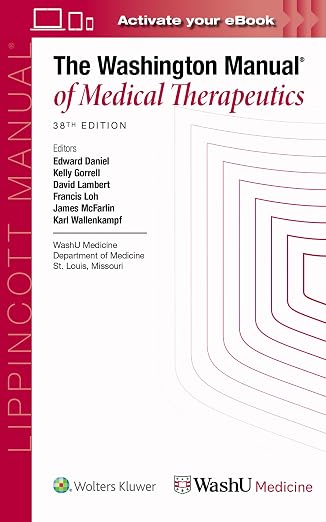
The Washington Manual of Medical Therapeutics
Washington University
38th edition · 2026A more detailed ward companion for admissions, common inpatient problems, and the transition into intern year.

Clinical equipment
Littmann Classic III Stethoscope
Littmann
Model 5620 · Black · 27-inchAn everyday bedside examination tool to consider for rotations and residency if you need to replace your current stethoscope.

Clinical equipment
The Physicians Folding Clipboard
Fellow Medical
Trifold · Letter-size paper · BlackA folding clipboard for organizing paper notes on rounds. Follow your hospital’s policies for patient information.

Scrubs
COZYFIT Women’s Scrub Set
COZYFIT
Women’s fit · Select size and color on AmazonA V-neck top and jogger set for clinical days. Check your hospital’s required color and whether it supplies scrubs.
Check current prices, editions, sizes, and seller details on Amazon.
Official resources
Common questions
Can I choose Pathway 6 instead of Pathway 1?
Usually no. If you meet Pathway 1 eligibility, ECFMG requires you to apply through Pathway 1 even if another route seems easier. A prior Step 2 CS failure is the major override: an applicant who failed Step 2 CS one or more times must use Pathway 6.
Does a residency or training license qualify for Pathway 1?
No if it permits only supervised practice. Pathway 1 requires a license or registration that allowed medical practice without supervision. A provisional license can qualify when its actual scope permits unsupervised practice.
Can an expired medical license qualify for Pathway 1 in 2027?
Yes, if it permitted unsupervised practice and was valid for any period on or after January 1, 2022, was not subject to disciplinary action, and all other requirements are met. The initial issue date may be earlier than 2022, and the license does not need to be current at application.
How many doctors do I need for Pathway 6?
You need three to six qualified physician evaluators for six distinct encounters. Each physician may evaluate no more than two encounters. Each evaluator also is limited to submitting evaluations for no more than 10 applicants during the 2027 Pathways season.
Can I pay a doctor or an agency for a Pathway 6 Mini-CEX?
No. The applicant may not compensate the evaluator, and a third party may not compensate the evaluator beyond ordinary salary or wages from the institution where the physician is employed and the encounter takes place. Purchased evaluations can lead to rejection or an irregular-behavior finding.
How much do Pathway 1 and Pathway 6 cost?
The ECFMG application fee is the same for either route: $945 for the 2027 Pathways application, and it is nonrefundable. Both routes also require OET Medicine. Pathway 1 may add regulatory-authority, verification, courier, or translation charges. Pathway 6 evaluators cannot be paid, although lawful incidental travel or scheduling costs may still arise.
When must the Pathway 6 Mini-CEX evaluations be submitted?
All six electronic evaluations must be received by ECFMG no later than February 15, 2027. The Pathway application itself remains due January 31, 2027, Eastern Time. An evaluator must accept the electronic request before the encounter occurs.
Do Pathway 1 and Pathway 6 applicants both need OET Medicine?
Yes. Every 2027 Pathways applicant needs satisfactory OET Medicine results from one administration taken on or after January 1, 2025: at least 350 in Listening, Reading, and Speaking and at least 300 in Writing.