Key takeaways
- The first 30 ERAS residency applications in each specialty cost $11 each; every application above 30 costs $30.
- Pricing resets separately for every specialty.
- A typical IMG should add $185 for the Token, $70 for the USMLE transcript, and $85 for standard NRMP registration.
- ERAS fees are nonrefundable, so participation and eligibility research should happen before payment.
- Current AAMC pages conflict on the Fee Assistance discount calculation; eligible applicants should verify MyERAS checkout and contact AAMC.
Fast answer
ERAS application fees for IMGs in 2027 use a two-tier formula per specialty. Programs 1–30 cost $11 each. Program 31 and every additional program in that same specialty cost $30 each. The count resets in each specialty.
For n applications in one specialty, the formula is $11 × n when n is 30 or fewer. Above 30, the formula is $330 + $30 × (n − 30).
A typical IMG using ERAS and the Main Residency Match should separately budget $185 for the ECFMG Token, $70 for the FSMB USMLE transcript, and $85 for standard NRMP registration. Those fixed charges total $340 before any MyERAS applications, tax, ECFMG Certification work, interviews, travel, or extra NRMP charges.
MyERAS fees are nonrefundable after delivery. Program research is therefore financial due diligence, not an optional strategy exercise.
The 2027 residency fee formula
The 31st application does not retroactively change the first 30 to $30. It adds $30 to the $330 already charged for the first 30.
The marginal cost therefore jumps from $11 for program 30 to $30 for program 31. Every program above 30 should survive a deliberate eligibility and value review.
| Applications in one specialty | Rate | Formula |
|---|---|---|
| 1–30 | $11 each | $11 × program count |
| 31 and above | $30 for each application above 30 | $330 + $30 × (program count − 30) |
Single-specialty cost table
| Programs | Calculation | Application fee |
|---|---|---|
| 10 | 10 × $11 | $110 |
| 20 | 20 × $11 | $220 |
| 30 | 30 × $11 | $330 |
| 31 | $330 + 1 × $30 | $360 |
| 32 | $330 + 2 × $30 | $390 |
| 35 | $330 + 5 × $30 | $480 |
| 40 | $330 + 10 × $30 | $630 |
| 43 | $330 + 13 × $30 | $720 |
| 50 | $330 + 20 × $30 | $930 |
| 60 | $330 + 30 × $30 | $1,230 |
| 70 | $330 + 40 × $30 | $1,530 |
| 80 | $330 + 50 × $30 | $1,830 |
| 100 | $330 + 70 × $30 | $2,430 |
Pricing resets by specialty
AAMC calculates the tier independently within each specialty. Add the result for each specialty to obtain the total.
For specialty counts n1, n2, and so on, total MyERAS fees equal f(n1) + f(n2) + …, where f(n) is the single-specialty formula.
A track is not automatically a different specialty. Use MyERAS's specialty classification, not a private label, when calculating.
| Portfolio | Calculation | MyERAS fee |
|---|---|---|
| 30 Internal Medicine + 30 Family Medicine | $330 + $330 | $660 |
| 43 Internal Medicine + 7 Diagnostic Radiology | $720 + $77 | $797 |
| 32 Internal Medicine + 32 Neurology | $390 + $390 | $780 |
| 50 Internal Medicine + 20 Pediatrics | $930 + $220 | $1,150 |
| 40 Diagnostic Radiology + 20 Transitional Year | $630 + $220 | $850 |
Do not choose a second specialty to reduce fees
The reset can make 60 programs split across two specialties cheaper than 60 within one specialty, but the applications are not interchangeable. A dual-specialty strategy needs distinct program research, letters, statements, signals, interview preparation, and a coherent explanation.
Applying to a backup specialty without credible evidence wastes the lower fee. Programs evaluate commitment, fit, and eligibility, not only whether payment was accepted.
Calculate the portfolio that follows the actual specialty plan; do not design the specialty plan around the fee formula.
Fixed application-system costs for a typical IMG
These three charges total $340. They are paid in different systems and do not substitute for one another.
An applicant using COMLEX-USA may have an additional $80 transcript charge. An applicant using ResidencyCAS or another service must calculate that service separately.
| Charge | Current amount | Paid to | Purpose |
|---|---|---|---|
| 2027 residency Token | $185 | ECFMG / MyIntealth | Register an IMG's residency application with MyERAS |
| USMLE transcript | $70 | FSMB | Authorize residency-service transcript for the 2026–2027 cycle |
| Main Residency Match standard registration | $85 | NRMP | Participate in Match and rank within included limits |
Budget examples for IMGs
These are planning subtotals, not final bills. Tax varies by billing address. They exclude Certification, Pathway, OET, exam registration, credential verification, document translation, COMLEX, ResidencyCAS, travel, interview, visa, and licensing costs.
| Application plan | MyERAS | Fixed $340 | Subtotal before tax |
|---|---|---|---|
| 20 programs in one specialty | $220 | $340 | $560 |
| 30 programs in one specialty | $330 | $340 | $670 |
| 40 programs in one specialty | $630 | $340 | $970 |
| 50 programs in one specialty | $930 | $340 | $1,270 |
| 60 programs in one specialty | $1,230 | $340 | $1,570 |
| 43 Internal Medicine + 7 Radiology | $797 | $340 | $1,137 |
| 40 Radiology + 20 Transitional Year | $850 | $340 | $1,190 |
| 32 Internal Medicine + 32 Neurology | $780 | $340 | $1,120 |
The Token is not an application fee
The $185 ECFMG Token lets an IMG register for the current MyERAS residency season. It does not purchase applications, transmit USMLE scores, register for NRMP, or establish ECFMG Certification.
One current-season Token can be used for multiple ERAS specialties and programs, including a 2027 PGY-1 and qualifying 2028 advanced position. It cannot be reused in a future season.
ECFMG warns applicants to confirm that at least one intended program uses ERAS before buying the nonrefundable Token. Some specialties or programs use ResidencyCAS or another service.
The USMLE transcript fee is separate
For the 2027 ERAS season, FSMB processes all USMLE transcript requests. The one-time 2026–2027 residency-cycle charge is $70.
MyERAS no longer collects this fee. Pay and authorize through FSMB, then initiate retrieval in MyERAS and assign the transcript to programs.
FSMB says later resends during the same cycle do not add another fee. A new score still requires the applicant to select Resend My Scores in MyERAS.
NRMP registration and rank fees
NRMP is separate from ERAS. The current Main Residency Match standard registration fee is $85 and includes up to 20 unique program codes on the primary rank order list plus up to 20 unique codes across supplemental lists combined.
Register by January 29, 2027 to avoid the $50 late fee. NRMP charges $30 for each program code ranked over 20, a $45 couples fee per partner, and additional long-list charges beginning at 100 ranks.
NRMP fees are nonrefundable. Certifying a list with extra charges does not create a refund merely because the applicant later shortens it.
| Charge | Amount | Trigger |
|---|---|---|
| Standard registration | $85 | Main Residency Match registration |
| Late registration | +$50 | After January 29 |
| Extra rank | $30 per program code | Each unique code over the included 20 |
| Couples fee | $45 per partner | Requesting/accepting couple status |
| Long list 100–150 | +$50 | 100 or more ranks |
| Long list 151–200 | +$100 | 151 or more ranks |
| Long list 201–250 | +$150 | 201 or more ranks |
| Long list 251–300 | +$200 | 251 or more ranks |
ECFMG Certification costs are not ERAS fees
An IMG may still need ECFMG account, Certification, credential, Pathway, OET, or other services. Those charges are applicant-specific and can substantially exceed the ERAS application bill.
Current ECFMG fees include $580 for the Certification application, $220 for credential verification requests covering the final diploma and final transcript, and $945 for a 2027 Pathway or Pathway revalidation application. The timing and applicability depend on the applicant's existing record.
Do not add a cost twice if it was paid in a prior stage, and do not omit a still-required service because it is outside MyERAS.
| Service | Current listed fee | Not included |
|---|---|---|
| MyIntealth account establishment | $110 | Identity, translation, or later service fees |
| Application for ECFMG Certification | $580 | Credential verification and Pathway |
| Certification credential verification | $220 | School delays or translation |
| 2027 Pathway / revalidation | $945 | OET Medicine and supporting-document expenses |
| Translation | $52 per page when ECFMG provides it | Other document preparation |
Fee Assistance eligibility is narrow
AAMC's ERAS benefit page states that eligibility requires prior approval for the AAMC Fee Assistance Program as a medical school applicant and use of the same AAMC ID. Current medical students cannot newly apply for the program solely to obtain the residency benefit.
Many IMGs never used AMCAS or received AAMC Fee Assistance before medical school and therefore will not qualify. U.S. citizen status, financial need, or IMG status alone does not create the ERAS benefit.
Eligible applicants should see “Fee Assistance: Yes” in MyERAS and the benefit should apply automatically at submission.
Important: current AAMC pages conflict on the discount
As of July 18, 2026, AAMC's dedicated ERAS Fee Assistance page says the benefit is a 60% discount on up to 50 applications. However, AAMC's 2027 fee page gives an example in which a $797 bill receives a $558 reduction and becomes $239—a reduction of approximately 70%, not 60%.
Those two official statements do not mathematically agree. This guide does not choose one silently. Eligible applicants should verify the live MyERAS checkout calculation and ask the AAMC Support Center to clarify before relying on a budget.
Take a screenshot of Fee Assistance status and the itemized checkout amount. Do not submit a charge you believe is incorrect merely because applications are time-sensitive.
| AAMC source | Published statement | Planning response |
|---|---|---|
| ERAS Fee Assistance benefit page | 60% discount on up to 50 applications | Use as a provisional benefit description |
| 2027 ERAS fee page example | $797 − $558 = $239 (about 70% reduction) | Do not reproduce without checkout verification |
| MyERAS dashboard and checkout | Applicant-specific status and actual charge | Verify before submitting |
| AAMC Support Center | Authoritative case-specific clarification | Contact when the display and published benefit conflict |
What Fee Assistance does not automatically cover
The described benefit concerns MyERAS residency applications. Do not assume it discounts the ECFMG Token, FSMB transcript, NRMP registration, ECFMG Certification, Pathway, OET, travel, licensing, or visa expenses.
The benefit is limited to up to 50 ERAS applications. Applicants should inspect how MyERAS applies it across specialties and submissions, especially when applications are purchased in separate batches.
Taxes can change the checkout total
AAMC collects tax in applicable jurisdictions based on the billing address of the payment method. Two applicants purchasing the same programs can therefore see different totals.
Use the current billing address and leave a tax buffer. Do not change an address to avoid tax.
MyERAS accepts Visa, MasterCard, American Express, and Discover. Credit-card charges appear as AAMC.
ERAS does not offer refunds
Once payment is submitted and the application is delivered, AAMC treats the service as rendered. Rejection, no interview, missed eligibility, program nonparticipation, program status change, or a late application does not produce a refund.
AAMC compares the service to mailing an application packet. It delivers the material; it does not promise consideration.
This policy makes a pre-payment eligibility audit financially important.
- Confirm the program participates in the correct 2027 application service.
- Confirm the program is open and accepting the intended track.
- Confirm the applicant meets IMG and state requirements.
- Confirm visa sponsorship matches the applicant's need.
- Confirm graduation-year and attempt limits.
- Confirm Step and ECFMG deadlines.
- Confirm required LoRs and specialty documents can be delivered.
- Confirm the program deadline has not passed.
- Confirm the program is not a duplicate under a different track selection.
- Confirm the applicant would attend an interview and rank the program if invited.
Unpaid balances can affect more than checkout
AAMC states that an unpaid ERAS balance can revoke MyERAS access and trigger notice to the Designated Dean's Office and business partners, including ECFMG. Access can remain restricted in current and future seasons until the debt is resolved.
A chargeback is not a substitute for using the official billing-dispute process. NRMP also warns that unauthorized chargebacks can create serious participation consequences.
Save receipts and contact the organization that owns the charge when a transaction appears wrong.
The 30-to-31 decision
Program 31 costs $30, almost three times the $11 marginal price of program 30. Program 32 also costs $30, and so on.
The decision should not be “Is this program worth $30?” in isolation. Ask whether it is eligible, distinct from the existing 30, genuinely acceptable, and likely to add portfolio value.
Removing one ineligible program above 30 saves $30 before tax. Removing 10 saves $300.
| Question | Keep when | Remove when |
|---|---|---|
| Eligibility | All hard criteria pass | Visa, YOG, attempts, score, ECFMG, or license rule fails |
| Participation | Correct service and open track confirmed | Wrong service, closed, or nonparticipating |
| Portfolio value | Adds credible opportunity or distinct fit | Duplicates a less costly or stronger option |
| Preference | Applicant would seriously consider training there | Applicant would not attend or rank |
| Documents | Requirements can be met | Missing required letter or document |
Signals are not a program-count recommendation
A specialty's signal allocation does not tell applicants how many total programs to apply to. Five signals do not mean five applications, and 30 signals do not mean 30 applications are sufficient for every applicant.
Signal strategy and budget strategy intersect because a signal spent on an ineligible program wastes both the signal and the nonrefundable application fee.
Build the eligible program list first, then the signal portfolio, then the final paid portfolio.
Batching applications does not change the final tier math
Applying to 30 programs today and 20 later in the same specialty still yields the 50-program total of $930 before tax. The system tracks the specialty's cumulative count.
Batching may help an applicant finish program research, but later applications can miss program review timing and deadlines. It is not a fee workaround.
For Fee Assistance applicants, separate batches also create uncertainty about how a limited application benefit is consumed. Verify the live calculation before each submission.
Do not overapply to compensate for uncertainty
More applications can increase reach only when the added programs are eligible and capable of considering the applicant. Paying for programs with explicit mismatches does not diversify risk.
Use a program evidence ledger with source-backed visa, year-of-graduation, attempt, score, USCE, letter, ECFMG, licensure, and mission fields.
If major profile information is missing—such as a pending Step 2 score—model scenarios rather than buying a large list built on assumptions.
A zero-based residency budget
Give every dollar a purpose before application day. Start with unavoidable fixed charges, then program fees, then tax, interview reserve, and onboarding reserve.
Do not fund optional editing or low-value programs by eliminating the emergency reserve. Residency application timing can create urgent travel, document, or relocation expenses.
| Line | Planned | Actual | Evidence |
|---|---|---|---|
| ECFMG Token | $185 if needed | MyIntealth receipt | |
| FSMB USMLE transcript | $70 if used | FSMB receipt | |
| MyERAS programs | Use formula by specialty | Program ledger | |
| Tax | Billing-address estimate | Checkout | |
| NRMP standard | $85 | R3 receipt | |
| NRMP extras | Scenario amount | Rank plan | |
| Other application service | Applicant-specific | Service fee page | |
| Certification remaining | Applicant-specific | MyIntealth cases | |
| Interview reserve | Applicant-specific | Interview scenario | |
| Onboarding/relocation reserve | Applicant-specific | State/program plan | |
| Emergency buffer | 10–20% planning buffer | Cash-flow plan |
Common mistakes
- Multiplying all 31 applications by $30.
- Forgetting that the first 30 remain $11 each.
- Failing to reset the count by specialty.
- Treating a track as a separate specialty without checking MyERAS.
- Assuming the $185 Token includes applications.
- Assuming MyERAS collects the 2027 USMLE transcript fee.
- Forgetting separate NRMP registration.
- Registering after January 29 and paying the late fee.
- Assuming Fee Assistance is open to any financially constrained IMG.
- Using a different AAMC ID from a prior Fee Assistance approval.
- Budgeting from the conflicting AAMC discount example without checkout verification.
- Ignoring tax.
- Applying to a nonparticipating or wrong-service program.
- Paying before checking visa, graduation year, attempts, and state license.
- Expecting a refund after rejection or nonconsideration.
- Using batching as though it resets the fee tier.
- Overapplying to ineligible programs to feel safer.
- Forgetting advanced-specialty preliminary or Transitional Year costs.
- Ignoring post-interview rank and onboarding expenses.
- Disputing a charge through a chargeback before using official support.
Master 2027 fee checklist
- I counted programs separately by specialty.
- I used $11 for the first 30 in each specialty.
- I used $30 only for applications above 30 in that specialty.
- I calculated dual-specialty totals as the sum of separate formulas.
- I added the $185 IMG Token if needed.
- I added the $70 FSMB USMLE transcript if used.
- I added $85 for standard NRMP registration.
- I modeled late, couples, and extra-rank NRMP fees if applicable.
- I added tax based on the real billing address.
- I separated ECFMG Certification and Pathway costs.
- I confirmed whether another application service is required.
- I verified Fee Assistance eligibility using the same AAMC ID.
- I checked Fee Assistance: Yes in MyERAS if eligible.
- I verified the actual discount because AAMC pages conflict.
- Every paid program uses the correct application service.
- Every paid program is open and participating.
- Every paid program passes IMG and visa eligibility checks.
- Every paid program passes graduation-year and attempt checks.
- Required letters and documents can be delivered.
- Signals and paid applications are coordinated.
- I reviewed every $30 marginal application above 30.
- I understand batching does not reset the tier.
- I understand ERAS fees are nonrefundable.
- I reserved money for interviews, licensing, visa, and relocation.
- I saved receipts and the final itemized checkout.
Bottom line
The 2027 ERAS residency formula is simple: $11 each for programs 1–30 in a specialty, then $30 for every additional program in that specialty. The count resets for each specialty.
A typical IMG should add at least $340 in separate core charges for the $185 Token, $70 USMLE transcript, and $85 standard NRMP registration, plus tax and applicant-specific costs.
Fee Assistance eligibility is narrow, and AAMC's current pages conflict on the exact discount calculation. Eligible applicants should verify the MyERAS dashboard, itemized checkout, and AAMC guidance before paying.
Because applications are nonrefundable, the best budget control is an evidence-based program list that excludes wrong-service, nonparticipating, ineligible, and unwanted programs before checkout.
This guide reflects official information available July 18, 2026. AAMC, ECFMG, FSMB, NRMP, application services, programs, tax authorities, and state boards can update fees and policies; their current live pages and checkout amounts control.
Books & equipment
Get ready for residency
Step 3 preparation, ward references, and clinical essentials selected for doctors working toward the Match and the start of residency.

Step 3
Master the Boards USMLE Step 3
Conrad Fischer
8th edition · 2026Work through management decisions alongside your Step 3 question bank and CCS practice.

Ward reference
Pocket Medicine
Marc S. Sabatine
9th edition · 2025A compact internal medicine reference for pre-round reading, clinical differentials, and reviewing the day’s cases.
Ward reference
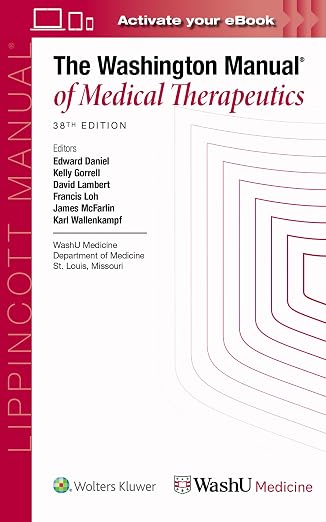
The Washington Manual of Medical Therapeutics
Washington University
38th edition · 2026A more detailed ward companion for admissions, common inpatient problems, and the transition into intern year.

Clinical equipment
Littmann Classic III Stethoscope
Littmann
Model 5620 · Black · 27-inchAn everyday bedside examination tool to consider for rotations and residency if you need to replace your current stethoscope.

Clinical equipment
The Physicians Folding Clipboard
Fellow Medical
Trifold · Letter-size paper · BlackA folding clipboard for organizing paper notes on rounds. Follow your hospital’s policies for patient information.

Scrubs
COZYFIT Women’s Scrub Set
COZYFIT
Women’s fit · Select size and color on AmazonA V-neck top and jogger set for clinical days. Check your hospital’s required color and whether it supplies scrubs.
Check current prices, editions, sizes, and seller details on Amazon.
Official resources
Common questions
How much does ERAS cost per program in 2027?
For residency applications, the first 30 programs in each specialty cost $11 per program. Applications 31 and higher in that same specialty cost $30 each. The pricing count resets for every additional specialty.
How much do 50 ERAS residency applications cost in 2027?
If all 50 are in one specialty, the AAMC application fee is $930: 30 × $11 = $330, plus 20 × $30 = $600. This excludes the $185 ECFMG Token for IMGs, $70 FSMB USMLE transcript fee, $85 NRMP standard registration, tax, and other applicant-specific costs.
Does the $30 ERAS rate apply to all applications after I reach 31?
It applies only to applications above 30 within that specialty. The first 30 remain $11 each. AAMC's official example calculates 32 Internal Medicine programs as 30 × $11 plus 2 × $30, not 32 × $30.
Do ERAS application counts reset when applying to two specialties?
Yes. Pricing resets by specialty. For example, 30 Internal Medicine and 30 Neurology programs cost 60 × $11 = $660 in MyERAS application fees, while 60 programs in Internal Medicine alone cost $1,230. Applicants should never choose specialties merely to manipulate fees; each requires a coherent, eligible application.
How much is the 2027 ECFMG ERAS Token?
The IMG residency Token costs $185 and is nonrefundable. It is purchased through MyIntealth and is separate from MyERAS program fees, the FSMB USMLE transcript, and NRMP registration.
How much is the USMLE transcript for ERAS 2027?
FSMB charges a one-time $70 fee for the 2026–2027 residency application cycle. The fee covers the ERAS residency-service transcript and later resends within the cycle. It is paid to FSMB, not through MyERAS.
Are ERAS fees refundable if a program rejects me?
No. AAMC does not offer refunds after an application is delivered, including when a program does not participate, changes status, or will not consider the applicant. Verify program participation, eligibility, deadline, visa, and application service before paying.
Can IMGs receive the AAMC ERAS Fee Assistance discount?
Only applicants previously approved for AAMC Fee Assistance as medical school applicants are eligible for the ERAS benefit, and they must use the same AAMC ID. This usually excludes physicians who did not apply to medical school through AAMC. Current AAMC pages conflict on the exact discount example, so eligible applicants should verify Fee Assistance: Yes and the checkout amount in MyERAS before paying.