Key takeaways
- USMLE questions should be approached by reading the lead-in first, identifying the task, and extracting discriminating clues.
- The best answer is the option that most directly answers the lead-in for that patient at that moment, not merely a true statement.
- Timed success depends on predicting before reading options, eliminating distractors, guessing when needed, and protecting the clock.
- Question review should classify the error type and produce one reusable rule that changes future performance.
Abstract
USMLE questions are not written to reward recognition of isolated facts alone. They test whether an examinee can identify the clinical or scientific task, sort relevant from irrelevant data, apply a principle, and select the one best answer among plausible alternatives.
The highest-yield approach is a repeatable sequence: read the lead-in, classify the task, read the vignette for discriminating clues, predict the answer, compare options, eliminate distractors, choose the one best answer, and move on. This article explains why that method works and how to adapt it to Step 1, Step 2 CK, and Step 3-style items.
Official USMLE guidance supports the core of this method: read carefully, understand what is being asked, try to generate an answer before looking for it in the options, eliminate clearly incorrect choices, select the most correct remaining option, and guess rather than leaving a question blank.
The core rule
Every USMLE item has two layers. The surface layer is the story: age, symptoms, labs, imaging, medications, social context, or basic science setup. The hidden layer is the task: what the question is actually asking you to decide.
Most wrong answers happen when the test taker solves the story but not the task. For example, the vignette may describe pneumonia, but the lead-in may ask for the virulence factor, the acid-base disturbance, the next best diagnostic step, the public health intervention, or the most appropriate communication response. Same story, different answer.
Your first job is therefore not to diagnose. Your first job is to identify the task.
| Step | Action | Purpose |
|---|---|---|
| 1 | Read the lead-in first | Identify the task before you decide which details matter |
| 2 | Classify the task | Diagnosis, mechanism, next step, treatment, complication, prevention, ethics, statistics, or interpretation |
| 3 | Read the stem for discriminators | Look for clues that separate similar answer choices |
| 4 | Predict the answer | Protect yourself from anchoring on attractive distractors |
| 5 | Compare options | Choose the option most directly supported by the task and clues |
| 6 | Commit or mark | Avoid losing time to low-yield rumination |
Question anatomy
A USMLE question is an engineered object. Once you see its parts, the exam becomes less mysterious.
The stem gives the clinical or scientific scenario. The lead-in is the actual question. The answer options include one best answer and several distractors. The distractors are not random; they often represent common mistakes, partially correct statements, wrong timing, wrong patient, wrong mechanism, or the right diagnosis with the wrong management step.
The official USMLE Step 2 CK format page describes patient scenarios as either vignette format or chart/tabular format, and notes that single items and sequential item sets can use those formats. It also describes abstract-format questions, which require interpreting a research summary before answering questions about patient care, statistics, pharmacology, diagnostic testing, or related topics.
| Question part | What it contains | How to use it | Common trap |
|---|---|---|---|
| Lead-in | The exact task | Read first and turn it into a task label | Solving for diagnosis when the question asks mechanism or management |
| Opening sentence | Age, sex, setting, timing, chief concern | Build the first illness-script frame | Overweighting age or sex before seeing the discriminating clue |
| History | Symptoms, duration, exposures, medications, risk factors | Separate core syndrome from noise | Anchoring on a familiar symptom while ignoring timing |
| Vitals | Stability, fever, shock, respiratory status | Decide urgency and next-step logic | Choosing outpatient workup for an unstable patient |
| Physical exam | Localizing signs, severity, complications | Confirm or disconfirm leading diagnosis | Ignoring a single sign that changes the diagnosis |
| Labs and imaging | Objective discriminators | Use patterns, not isolated numbers | Memorizing normal ranges without interpreting the pattern |
| Answer options | One best answer plus plausible distractors | Compare against your prediction and the lead-in | Choosing a true statement that does not answer the question |
Lead-in first
For most USMLE items, read the lead-in before the full vignette. The lead-in tells you what you are hunting for. If the question asks for the next best step, you read the stem differently than if it asks for pathophysiology. If it asks for the most likely diagnosis, you read differently than if it asks for a risk factor or prevention strategy.
This does not mean you should ignore the stem. It means you should read the stem with a purpose. Good test taking is not faster because it is rushed. It is faster because it is selective.
There are exceptions. In long chart/tabular questions, you may need to scan section headings before the lead-in makes sense. In biostatistics or abstract questions, you may preview the question and answer format before reading the full abstract. But the principle stays the same: identify the task before collecting details.
| Lead-in asks... | Your reading priority | Likely answer type |
|---|---|---|
| Most likely diagnosis | Syndrome pattern, risk factors, time course, exam and lab discriminators | Disease or condition |
| Most likely mechanism | Pathophysiology, molecular target, physiology, immune response, drug mechanism | Process, receptor, enzyme, gene, mediator, anatomic structure |
| Next best step in diagnosis | Stability, pretest probability, first-line test, contraindications | Test, imaging, procedure, observation, referral |
| Next best step in management | Acuity, pregnancy status, contraindications, guidelines, what has already been tried | Treatment, stabilization, counseling, follow-up |
| Most likely complication | Natural history and timing after disease or treatment | Adverse outcome |
| Most appropriate response | Patient concern, autonomy, empathy, safety, confidentiality, capacity | Communication statement |
Clinical reasoning
USMLE clinical questions reward illness-script reasoning. An illness script is the pattern of who gets the disease, how it presents, what findings are expected, what findings are not expected, and what to do next.
The practical formula is: syndrome + patient context + time course + discriminating clue + task. If you can state those five elements, you can usually avoid the most attractive distractor.
For example, do not stop at 'chest pain.' Build the script: older patient, exertional substernal chest pressure, relief with rest, normal troponin, asks for next best test. That is a different question from pleuritic chest pain in a young patient, tearing chest pain with pulse differential, or chest pain after cocaine use.
| Element | Question to ask yourself | Example |
|---|---|---|
| Syndrome | What cluster of findings is present? | Fever, cough, pleuritic pain, focal lung findings |
| Patient context | Who is this patient? | Age, pregnancy, immune status, occupation, travel, medications |
| Time course | How fast did this happen? | Sudden, acute, subacute, chronic, relapsing |
| Discriminating clue | Which detail separates the top two choices? | Recent surgery, murmur, rash, eosinophilia, exposure, lab pattern |
| Task | What does the lead-in want? | Diagnosis, mechanism, test, treatment, counseling, prevention |
The one best answer
USMLE items are often single-best-answer questions. That matters because more than one option may be partially true. Your job is not to find a true sentence. Your job is to find the option that best answers the specific lead-in for that patient at that moment.
The best answer usually has three properties: it fits the task, it explains the discriminating clue, and it is appropriate for the patient's acuity and context. Distractors often fail only one of those properties, which is why they feel tempting.
When two options are close, return to the lead-in. If the question asks for diagnosis, avoid choosing management. If it asks for next step, avoid choosing the final diagnosis. If it asks for mechanism, avoid choosing an associated finding.
| Distractor type | What it looks like | How to beat it |
|---|---|---|
| True but wrong task | A correct fact that does not answer the lead-in | Restate the lead-in before selecting |
| Right disease, wrong step | Treatment when the patient needs stabilization or diagnosis first | Ask what must happen now |
| Right step, wrong patient | Guideline answer that ignores pregnancy, age, instability, allergy, or contraindication | Check patient context before committing |
| Classic but incomplete | The diagnosis that fits most clues but misses the discriminator | Identify the one clue the writer added to separate choices |
| Late answer too early | Definitive therapy before initial evaluation | Follow the sequence: stabilize, diagnose, treat, prevent |
| Emotional distractor | An option that feels active, aggressive, or reassuring | Choose based on evidence and ethics, not emotional intensity |
Question types
Different USMLE formats require different micro-strategies. The core algorithm stays the same, but the reading path changes.
For single vignettes, lead-in first is usually best. For chart/tabular items, use the table headings to navigate rather than reading every row equally. For sequential item sets, answer in order and do not assume you can return to a prior item after proceeding. For abstracts, identify the research question, population, exposure/intervention, comparator, outcome, and statistic before looking for the answer.
| Format | Officially described features | Best approach |
|---|---|---|
| Single patient-centered vignette | One question with four or more response options and one best answer | Lead-in first, read for discriminators, predict, compare options |
| Chart/tabular patient scenario | Patient information in list form with clearly marked sections | Read lead-in, scan section headings, extract only relevant data, avoid over-reading |
| Sequential item set | One vignette with two or three consecutive questions testing different points | Answer in order; commit before proceeding because prior answers may not be changeable |
| Scientific abstract | Research summary with multiple questions about care, statistics, pharmacology, diagnostics, or interpretation | Identify PICO, study design, outcome measure, and statistic before answering |
| Audio, image, video, ECG, pathology, or imaging item | Question depends on interpretation of associated media | Use the stem to predict what the media should show, then confirm or revise |
Next best step logic
Next-best-step questions are hard because they test sequence, not just knowledge. A treatment can be correct for the disease but wrong for the moment. A diagnostic test can be useful eventually but wrong before stabilization.
Use the sequence: safety first, stabilize unstable patients, diagnose when diagnosis changes management, treat when diagnosis is clear or delay is dangerous, prevent recurrence when the acute issue is resolved, and communicate ethically throughout.
When you are stuck, ask what would harm the patient if delayed. In emergency medicine and inpatient scenarios, instability often beats diagnostic completeness. In outpatient prevention scenarios, guideline timing and risk stratification often matter more than rare diagnoses.
| Priority | Question to ask | Examples |
|---|---|---|
| 1. Immediate danger | Is the patient unstable or unsafe right now? | Airway compromise, shock, suicidal intent, sepsis, ectopic pregnancy, stroke window |
| 2. Stabilization | What must be done before definitive diagnosis? | ABC support, fluids, oxygen, glucose, empiric antibiotics when indicated |
| 3. Diagnostic confirmation | Will the test change management? | Imaging, labs, cultures, biopsy, screening test, confirmatory test |
| 4. Definitive treatment | Is the diagnosis clear enough to treat? | Medication, procedure, surgery, counseling, behavioral intervention |
| 5. Prevention and follow-up | What reduces recurrence or future risk? | Vaccination, screening, prophylaxis, lifestyle, monitoring |
Mechanism questions
Step 1 and many Step 2 CK questions ask for mechanism. These questions often hide a basic science principle inside a clinical story. The mistake is to treat them like diagnosis questions and stop too early.
After identifying the diagnosis, ask what level of explanation the lead-in wants: molecular, cellular, physiologic, pharmacologic, microbiologic, immunologic, genetic, or anatomic. Then choose the option at that level.
Mechanism questions reward vertical reasoning: clinical finding down to pathophysiology, or mechanism up to clinical consequence.
- If the lead-in asks 'most likely cause,' decide whether it wants etiology, mechanism, or risk factor.
- If it asks drug mechanism, identify the drug class before reading options.
- If it asks physiology, draw the direction of change before looking at answer choices.
- If it asks genetics, identify inheritance pattern, mutation type, or protein function before comparing options.
Communication and ethics
Communication questions are not personality tests. They test patient-centered principles: acknowledge emotion, ask before advising, respect autonomy, assess safety, protect confidentiality, use interpreters, avoid judgment, and give information honestly.
The most common wrong answers are too controlling, too dismissive, too vague, or too quick to reassure. Strong answers usually start by recognizing the patient's concern and inviting more information before giving advice, unless there is immediate danger.
For ethics questions, identify the governing principle: capacity, informed consent, refusal, confidentiality, surrogate decision-making, child or elder safety, public health reporting, or impaired clinician responsibilities.
| Pattern | Usually stronger | Usually weaker |
|---|---|---|
| Emotion | Acknowledge and explore | Dismiss, minimize, or immediately reassure |
| Autonomy | Explain options and respect informed refusal | Coerce or threaten |
| Language barrier | Use a professional interpreter | Use a family member for convenience |
| Confidentiality | Protect privacy unless safety or reporting laws require action | Share information casually with family or employer |
| Medical error | Disclose honestly and follow institutional policy | Hide, blame, or speculate beyond known facts |
Biostatistics and abstracts
Biostatistics questions often feel different because they are less narrative. The solution is to translate the question into structure before calculating.
For a classic biostatistics item, identify the study design, exposure/intervention, outcome, comparison group, and statistic. For an abstract, read the title and objective, identify the patient population, intervention or exposure, comparator, outcome, and then read the specific question.
Do not begin by reading every number. First decide which number type you need: risk, odds, rate, sensitivity, specificity, predictive value, confidence interval, p value, or number needed to treat.
| Step | Action | Why it helps |
|---|---|---|
| 1 | Identify the study design | Different designs answer different causal or association questions |
| 2 | Find population, intervention/exposure, comparator, outcome | Prevents mixing up groups |
| 3 | Read the lead-in | Determines whether you need interpretation or calculation |
| 4 | Select the statistic | Avoids using the wrong formula |
| 5 | Interpret clinically | The answer may ask what the result means, not just the arithmetic |
Timing strategy
A good USMLE method must survive timed blocks. The best approach is not to spend equal time on every question. It is to protect accuracy on solvable questions while preventing one difficult item from damaging the whole block.
Use a three-pass mindset. First pass: answer questions you can solve with reasonable confidence. Mark questions that need a second look. Second pass: return to marked questions with a defined decision rule. Final pass: make sure every item has an answer because unanswered questions count as wrong.
Your goal is not to feel certain. It is to choose the best-supported option within the time available.
| Situation | Action | Reason |
|---|---|---|
| You know the task and the answer | Select and move on | Do not spend extra time trying to feel perfect |
| You are between two options | Use the discriminator, choose, mark if needed | Second-pass review may help if you later remember a rule |
| You do not understand the stem | Eliminate impossible options, guess, mark, move on | Time is better spent on questions you can solve |
| You are doing a calculation | Write the formula structure before plugging numbers | Prevents arithmetic from replacing reasoning |
| You have less than a minute per remaining question | Answer every item, no blanks | Unanswered questions are counted wrong |
Changing answers
Changing answers is not inherently bad. Changing answers without evidence is bad. The right rule is not 'never change.' The right rule is 'change only when new reasoning defeats old reasoning.'
Valid reasons to change include discovering that you misread the lead-in, missed a key word such as except or initial, overlooked instability, confused units, selected the wrong mechanism level, or remembered a specific rule that clearly favors another option.
Invalid reasons include panic, a vague feeling that the option looks too obvious, or the belief that answer choices must be evenly distributed.
- Change if you can state the reason in one sentence.
- Do not change if the only reason is discomfort.
- Do not change to make the answer pattern look random.
- Do not reopen every marked question if the original reasoning was solid.
Reviewing questions
Question review is where scores improve. Doing more questions without changing your reasoning can simply automate the same mistakes.
The best review asks: why did I choose my answer, why is the correct answer better, what clue should have changed my mind, and what rule will I use next time? The output should be short, specific, and reusable.
Avoid writing a textbook in your notes. If you missed nephrotic syndrome because you did not know membranous nephropathy associations, write the association. If you missed it because you ignored edema and proteinuria, write the pattern-recognition rule.
| Miss type | What happened | Fix |
|---|---|---|
| Knowledge gap | You did not know the fact, mechanism, guideline, or association | Make a concise card or note with the missing rule |
| Task misread | You answered diagnosis when asked for management, mechanism, or prevention | Practice lead-in-first reading |
| Discriminator missed | You knew the topic but ignored the clue separating two choices | Write the differentiating feature |
| Sequence error | You chose a later step before stabilization or diagnosis | Review next-best-step hierarchy |
| Distractor trap | You chose a true statement that was not the best answer | Write why the distractor was tempting and why it lost |
| Time-pressure error | You rushed, guessed late, or over-spent early | Use timed blocks and mark earlier |
| Careless reading | You missed age, pregnancy, negative wording, units, or timing | Underline or mentally tag only high-risk qualifiers |
Practice method
The best way to get better at USMLE questions is to practice the method under the same constraints as the exam. Untimed tutor mode can teach content, but timed mixed blocks teach decision-making.
A reasonable progression is: learn enough content to attempt questions, do topic blocks when building a system, move to mixed timed blocks as soon as possible, review misses by error type, and use official practice materials to calibrate exam-style readiness.
If you are early, accuracy matters less than learning the reasoning structure. If you are late, timing, mixed blocks, endurance, and official practice performance matter more.
| Phase | Primary goal | Best question mode |
|---|---|---|
| Foundation building | Learn disease scripts and mechanisms | System-based blocks with careful review |
| Transition phase | Apply knowledge across topics | Mixed blocks with moderate timing |
| Dedicated study | Build speed, stamina, and exam decisions | Timed mixed blocks plus official practice materials |
| Final weeks | Reduce avoidable errors and calibrate readiness | Timed blocks, NBME/USMLE-style practice, targeted review |
Step-specific adjustments
The same answering method works across Step 1, Step 2 CK, and Step 3, but the dominant task changes.
Step 1 leans more heavily on mechanisms, foundational science, pathology, physiology, pharmacology, microbiology, immunology, genetics, biostatistics, and social sciences. Step 2 CK leans more heavily on diagnosis, next best step, management, prevention, patient safety, ethics, and clinical interpretation. Step 3 adds more emphasis on independent practice, management over time, prognosis, and applied clinical decision-making.
Do not change your whole method by exam. Change what you expect the lead-in to ask.
| Exam | Common task emphasis | Strategy adjustment |
|---|---|---|
| Step 1 | Mechanism, foundational science, pathophysiology, drug mechanism, microbiology, immunology | After diagnosing, ask what basic science level the question wants |
| Step 2 CK | Diagnosis, next best diagnostic test, next best management, prevention, ethics, patient safety | Prioritize stability, sequence, contraindications, and guideline logic |
| Step 3 | Applied management, prognosis, safety, longitudinal care, independent practice | Think like the responsible physician managing risk over time |
Common mistakes
Most USMLE mistakes are predictable. That is good news because predictable mistakes can be trained away.
When reviewing, do not simply write 'I was dumb' or 'I forgot.' Those labels do not improve performance. Name the error precisely.
| Mistake | Why it lowers accuracy | Correction |
|---|---|---|
| Reading the whole stem before knowing the task | You collect details without knowing which details matter | Read the lead-in first |
| Choosing the diagnosis when asked for management | You solve the wrong problem | Label the task before reading options |
| Overvaluing rare diagnoses | You ignore common patterns and discriminators | Start with common, then let clues justify rare |
| Ignoring stability | You choose diagnostic elegance over safety | Check vitals before next-step decisions |
| Reading answer choices too early | You anchor on a distractor | Predict before comparing choices |
| Over-reviewing marked questions | You change answers from anxiety | Change only with a concrete reason |
| Reviewing explanations passively | You recognize the answer but do not change your rule | Write the rule that would have made you answer correctly |
The 20-second reset
When a question feels impossible, do not panic-read faster. Reset.
Use a 20-second rescue sequence: read the lead-in again, identify the task, identify the most abnormal or discriminating clue, eliminate two options, choose the option that best answers the lead-in, mark if needed, and move on. This is not perfect, but it prevents one question from becoming three missed questions through time loss.
- What is the task?
- Who is the patient?
- Is the patient stable?
- What clue is most specific?
- Which options are impossible?
- Which remaining option best answers the exact lead-in?
Final method
Here is the method in its cleanest form: lead-in, task, discriminators, prediction, comparison, commitment, review.
During practice, say the task to yourself before reading options. During review, classify the miss. During timed blocks, protect the clock. During final preparation, use official practice materials and the interactive testing experience so the software, formats, and timing are familiar before test day.
The examinees who improve the most are not always the ones who read the most explanations. They are the ones who turn every missed question into a better future decision.
| Moment | What to do | What to avoid |
|---|---|---|
| Before reading | Read the lead-in and identify the task | Drifting through the stem without a purpose |
| During reading | Search for discriminating clues | Highlighting everything |
| Before options | Predict the answer or answer category | Letting options create your first hypothesis |
| During options | Eliminate, compare, and choose the one best answer | Choosing a true but irrelevant statement |
| After answering | Move on unless there is a concrete reason to revisit | Reopening questions because of anxiety |
| During review | Classify the miss and write the reusable rule | Copying long explanations without changing your process |
Books & equipment
Your Step 3 reading list
For doctors who have completed Step 1 and Step 2 CK: compare Step 3 review books and ward references to support your next stage of preparation.

Step 3
Master the Boards USMLE Step 3
Conrad Fischer
8th edition · 2026Work through management decisions alongside your Step 3 question bank and CCS practice.

Step 3
First Aid for the USMLE Step 3
Tao Le & Vikas Bhushan
5th edition · Published 2018An alternative review outline for Step 3. This older edition needs to be paired with current guidance and question practice.

Step 3
Crush Step 3 CCS
Mayur Movalia
1st edition · Published 2013An older case-based CCS review to supplement current software practice and up-to-date management guidance.

Step 3
USMLE Step 3 Secrets
Elsevier
2nd edition · 2022A question-and-answer review option for short study sessions alongside a current Step 3 question bank.

Ward reference
Pocket Medicine
Marc S. Sabatine
9th edition · 2025A compact internal medicine reference for pre-round reading, clinical differentials, and reviewing the day’s cases.
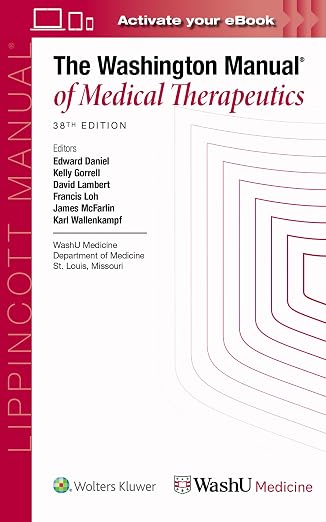
Ward reference
The Washington Manual of Medical Therapeutics
Washington University
38th edition · 2026A more detailed ward companion for admissions, common inpatient problems, and the transition into intern year.
Check current prices, editions, sizes, and seller details on Amazon.
Official resources
Common questions
Should I read the answer choices first on USMLE questions?
Usually no. Read the lead-in first so you know the task, then read the stem for discriminating clues. Looking at answer choices too early can anchor you to a distractor. Use choices early only for specific formats such as long tables, calculations, or when the lead-in is vague.
What is the best first step for answering a USMLE vignette?
Start with the lead-in. Decide whether the question is asking for diagnosis, mechanism, risk factor, next best step, management, complication, communication, statistics, or interpretation. The task determines which clues matter.
How do I stop changing correct answers?
Change an answer only when you find a concrete reason: you misread the lead-in, missed a key clue, made a factual error, or recognized a stronger diagnosis. Do not change from anxiety alone.
What should I do when I am between two answer choices?
Ask which option is more specifically supported by the vignette and which option explains the most discriminating clue. USMLE questions often include partially correct distractors, but the task is to choose the one best answer.
How should I review missed USMLE questions?
Classify each miss as a knowledge gap, reasoning error, task misread, distractor trap, time-pressure error, or careless reading error. Then write the rule that would have changed your answer, not a long summary of the whole topic.