Key takeaways
- The strongest internal medicine residency application is staged: eligibility first, interview selection second, ranking and team trust third.
- NRMP internal medicine IMG data show that contiguous ranks and interview yield separate matched from unmatched applicants more strongly than scores alone.
- Step 2 CK, adult-medicine clinical evidence, specialty-specific letters, clinical reasoning, teamwork, and interview maturity all matter.
- For the 2027 ERAS season, internal medicine uses 3 gold and 12 silver signals, so applicants should signal only programs where eligibility and fit are real.
Abstract
The ideal internal medicine residency application is a clinical-readiness file. It should show that the applicant is eligible to train, academically ready, clinically current, serious about internal medicine, observed by credible supervisors, and able to reason through complex adult patients in a team-based environment.
Internal medicine is the largest IMG pathway in the Match, but size should not be confused with low selectivity. In the 2026 Main Residency Match, categorical internal medicine offered 11,194 PGY-1 positions and filled 10,657. Primary care internal medicine offered 438 positions and filled 421. Together, categorical and primary internal medicine matched 1,091 U.S. IMGs and 3,553 non-U.S. IMGs.
The strongest public predictor is not one document. In the 2024 NRMP IMG internal medicine summary, matched U.S. IMGs had a mean of 9.1 contiguous internal medicine ranks compared with 2.1 among unmatched U.S. IMGs. Matched non-U.S. IMGs had a mean of 6.1 contiguous ranks compared with 2.5 among unmatched non-U.S. IMGs. That rank-list gap reflects the whole application funnel: eligibility, targeting, interview yield, interview performance, and final ranking.
Research limits
No public dataset can perfectly define the ideal internal medicine applicant. A true model would need applicant-level data on Step attempts, Step 2 CK or COMLEX Level 2, clerkship grades, MSPE content, subinternship performance, letters, U.S. clinical experience, visa status, program signals, interviews, rank-list order, and Match outcome.
This article triangulates the best public evidence: NRMP outcomes, NRMP program director survey behavior, AAMC ERAS signaling rules, ECFMG requirements for IMGs, and ACGME Internal Medicine Milestones. The Milestones are not an admissions rubric, but they clarify the clinical behaviors internal medicine training is designed to develop.
The result is a practical profile, not a guarantee. It describes what the strongest internal medicine application should prove and how an applicant can audit the file before ERAS submission.
- Outcome evidence: contiguous ranks, Step scores, research, work, volunteer, and graduate-degree averages from NRMP IMG data.
- Program behavior: interview-selection and ranking factors from the NRMP Program Director Survey.
- Specialty behavior: history, physical examination, clinical reasoning, inpatient management, outpatient management, digital health, patient safety, quality improvement, and teamwork from ACGME Internal Medicine Milestones.
- IMG constraints: ECFMG timing, visa policy, graduation year, attempts, state training license rules, and recent U.S. clinical evidence.
What the data says
The 2024 NRMP IMG internal medicine data show the same pattern seen across many specialties: applicants who matched had far deeper contiguous rank lists. For U.S. IMGs, the matched-minus-unmatched difference was 7.0 contiguous ranks. For non-U.S. IMGs, it was 3.6 contiguous ranks.
Step 2 CK also separated matched from unmatched applicants. Matched U.S. IMGs averaged 238 compared with 226 among unmatched U.S. IMGs. Matched non-U.S. IMGs averaged 248 compared with 242 among unmatched non-U.S. IMGs. For IMGs, that makes Step 2 CK an important screening and reassurance signal, especially when U.S. internal medicine clinical evidence is limited.
Research and publication counts should be interpreted carefully. Matched U.S. IMGs had fewer research experiences and fewer abstracts, presentations, and publications on average than unmatched U.S. IMGs. Matched non-U.S. IMGs had similar research counts and higher publication counts than unmatched non-U.S. IMGs. The practical conclusion is that scholarship helps most when it supports the clinical story and does not replace patient-care readiness.
| Measure | Matched U.S. IMGs | Unmatched U.S. IMGs | Matched non-U.S. IMGs | Unmatched non-U.S. IMGs | Practical interpretation |
|---|---|---|---|---|---|
| Mean contiguous ranks | 9.1 | 2.1 | 6.1 | 2.5 | Interview yield and rank-list depth are the clearest public outcome signals. |
| Mean Step 2 CK | 238 | 226 | 248 | 242 | A strong Step 2 CK is especially useful for IMGs and applicants with thin U.S. clinical evidence. |
| Mean research experiences | 1.9 | 2.5 | 2.6 | 2.7 | Research is not a universal substitute for clinical readiness. |
| Mean abstracts, presentations, publications | 3.6 | 4.7 | 7.0 | 5.8 | Scholarship is strongest when it connects to medicine, quality, outcomes, equity, or fellowship goals. |
| Mean work experiences | 3.3 | 5.1 | 3.8 | 4.3 | Raw count matters less than relevance, recency, supervision, and interviewable impact. |
| Mean volunteer experiences | 3.4 | 3.5 | 2.7 | 2.7 | Service should show sustained commitment to patients, communities, teaching, access, or health equity. |
Program director view
Internal medicine program directors evaluate applications in stages. Before interviews, they need to know whether the applicant is eligible, academically safe, clinically credible, and likely to fit the program's mission. After interviews, they are deciding whether the applicant can be trusted with sick adult patients, handoffs, cross-cover, documentation, follow-up, and interdisciplinary care.
In the 2024 NRMP Program Director Survey, internal medicine had 147 responding programs, a 13.1 percent response rate. The narrative summary also notes that internal medicine was among the specialties with the highest mean number of applications received and among the specialties with the highest mean number of interview invitations, applicants interviewed, and applicants ranked.
In the all-specialty summary, major interview-selection considerations included Step 1 pass, the MSPE or dean's letter, and specialty-specific letters. For ranking, interpersonal skills, interview interactions, and feedback from current residents were among the leading considerations. For internal medicine, those ranking factors matter because the work is team-dense, high-volume, and clinically unforgiving.
| Stage | Reviewer question | Strongest applicant evidence | Common weak signal |
|---|---|---|---|
| Eligibility screen | Can this applicant train here? | ECFMG and visa timeline, exam completion, graduation year, attempts policy, state license compatibility, and program-specific requirements | Applying despite a hard visa, certification, attempt, or graduation-year mismatch |
| Interview selection | Is this applicant worth one of our medicine interview slots? | Medicine letter, Step 2 or COMLEX trajectory, strong MSPE narrative, inpatient or outpatient medicine evidence, clear program fit, and recent supervised work | Generic application with no adult medicine examples, no recent clinical evidence, and no specialty-specific letter |
| Interview day | Can we trust this person on wards, nights, clinic, and handoffs? | Clinical reasoning, humility, organization, teamwork, professionalism, patient-safety awareness, and response to feedback | Scripted answers, poor listening, weak examples, defensive red-flag explanations, or no understanding of residency workload |
| Ranking | Would our residents and faculty want to train with this applicant? | Strong faculty and resident feedback, believable mission fit, reliability, curiosity, and team presence | Good metrics but lukewarm interpersonal or teamwork impression |
The ideal profile
The strongest internal medicine application is coherent. It makes the same argument through scores, letters, experiences, personal statement, signals, and interviews: this applicant is ready to enter supervised adult medicine training and grow into a safe, thoughtful internist.
The ideal applicant does not need a perfect file. The applicant does need visible internal medicine commitment, reliable academic readiness, recent clinical evidence, strong observed behavior, and a program list where eligibility and fit are real.
| Application layer | Ideal evidence | Why it matters |
|---|---|---|
| Eligibility | Meets every program filter for visa, ECFMG timing, graduation year, exam attempts, Step 1, Step 2 CK or COMLEX Level 2, and state training license | A strong applicant who fails a hard filter may never receive full review. |
| Academic readiness | Step 1 passed, Step 2 CK or COMLEX Level 2 handled on a realistic timeline, no unexplained failures, and evidence of improvement if needed | Programs need confidence that the applicant can manage medicine residency academics, call, clinical documentation, and board preparation. |
| Internal medicine clinical exposure | Recent supervised experience in inpatient wards, ICU, ambulatory medicine, subspecialty clinics, emergency care, geriatrics, hospital medicine, or primary care | Internal medicine requires adult history, physical examination, differential diagnosis, management planning, follow-up, handoffs, and patient counseling. |
| Letters | At least one strong internal medicine letter from a physician who directly observed clinical behavior; additional letters add ward, ICU, clinic, subspecialty, research, or advocacy evidence | Specialty-specific letters were among the major program director interview-selection considerations in the NRMP survey. |
| Personal statement | A focused adult-medicine story connecting patient care, clinical reasoning, service, and future training goals | The statement should make internal medicine feel deliberate rather than a generic default. |
| ERAS experiences | Selected experiences show patient care, research, quality improvement, teaching, leadership, service, community health, or health systems work | Interviewers need concrete examples, not a crowded CV. |
| Program targeting | Gold and silver signals go to programs where the applicant meets filters and can explain mission, curriculum, patient population, geography, track, or career fit | Internal medicine uses 3 gold and 12 silver signals, so interest strategy should be intentional. |
| Interview performance | Organized, reflective, team-oriented answers with honest growth examples and adult-medicine specificity | Rank decisions depend heavily on whether faculty and residents trust the applicant as an intern. |
Internal medicine fit
An internal medicine application should not sound like a generic hospital essay. Internal medicine has its own work: diagnostic reasoning, inpatient management, outpatient continuity, chronic disease, transitions of care, consultation, prevention, geriatrics, health systems, quality improvement, and care of patients with multiple comorbidities.
The best applicants can show fit through real examples. A strong example might involve refining a differential diagnosis, reconciling medications, presenting a complex patient on rounds, counseling a patient with diabetes or heart failure, following up abnormal results, using an interpreter, improving a discharge plan, or learning from a patient-safety issue.
For IMGs, prior adult-medicine work can be powerful when translated carefully. International training, community clinics, inpatient wards, resource-limited practice, language skills, public health work, research, and health equity service can all support an internal medicine story when connected to observed behavior and U.S. readiness.
- Best fit signals: inpatient medicine, subinternship, ICU, ambulatory clinic, hospital medicine, primary care, geriatrics, emergency medicine, subspecialty clinics, quality improvement, outcomes research, and underserved care.
- Weaker fit signals: a statement that could be submitted unchanged to family medicine, pediatrics, surgery, neurology, or psychiatry.
- Strong interview examples: clinical reasoning, handoffs, uncertainty, feedback, teamwork, patient safety, health equity, interpreter use, chronic disease counseling, and systems improvement.
- Strong program-fit reasons: ward structure, continuity clinic, ICU exposure, fellowship match, primary care pathway, research track, safety-net mission, global or immigrant health, community setting, and geography.
Scores and timing
For IMGs, Step 2 CK remains one of the most important numeric signals because Step 1 is pass/fail for many current applicants. A strong Step 2 CK can reassure reviewers, especially when the applicant's U.S. internal medicine clinical evidence is limited.
The 2024 internal medicine IMG data do not suggest that scores alone decide outcomes. Matched and unmatched applicants overlap. The more useful strategy is to combine a credible Step 2 CK or COMLEX Level 2 profile with recent medicine clinical evidence, strong observed letters, and targeted signals.
Applicants with an attempt, low score, delayed Step 2, or older graduation year should not rely on a statement alone to repair the file. Repair evidence should be concrete: recent supervised clinical work, improved performance, updated knowledge, strong observed letters, and a program list built around realistic filters.
- Strongest academic signal: Step 1 pass plus Step 2 CK completed, especially for IMGs.
- Good repair evidence: score improvement, recent clinical performance, strong medicine letter, and concise explanation of any attempt or delay.
- Higher risk: Step attempts, low Step 2 CK, no Step 2 CK at review, old graduation year, or unclear ECFMG timing.
- Do not let scores become the whole story. Internal medicine still needs clinical reasoning, reliability, teamwork, documentation, and patient-safety judgment.
Clinical evidence
Internal medicine clinical evidence should show that the applicant can think and work like a supervised intern. This does not mean every experience must be a U.S. subinternship, but the application should include enough adult-medicine exposure that the specialty feels earned.
For IMGs, U.S. internal medicine clinical experience is especially helpful because it shows familiarity with U.S. workflow, documentation, handoffs, interdisciplinary teams, discharge planning, result follow-up, patient privacy norms, and attending or resident expectations. If a hands-on medicine rotation is not possible, an observership, outpatient clinic, hospital medicine shadowing, research role with clinical contact, or adjacent primary-care experience can still help if described honestly.
The key is specificity. A reviewer should understand what setting you were in, what patients you saw or observed, who supervised you, what skills improved, and what feedback you received.
| Experience type | Strong description | Weak description |
|---|---|---|
| Inpatient wards | Shows prerounding, presentations, differential diagnosis, medication reconciliation, discharge planning, handoffs, and team communication | Listed as internal medicine rotation with no role, patient population, or learning |
| ICU or step-down exposure | Supports acuity awareness, sepsis, respiratory failure, shock, goals of care, consults, and escalation thresholds | Presented as critical care interest without describing observed skills or supervision |
| Ambulatory clinic | Shows chronic disease management, preventive care, follow-up, results review, counseling, and continuity | Used as a title only without patient-care tasks or learning |
| Subspecialty clinic | Connects to medicine reasoning, longitudinal disease, consult thinking, and future fellowship or hospitalist goals | Subspecialty name-dropping without core medicine relevance |
| Research or quality improvement | Links to outcomes, readmissions, patient safety, guideline implementation, equity, or systems improvement | Unrelated scholarship used to compensate for thin clinical evidence |
| Community or volunteer work | Shows service to adults with chronic disease, screening, education, access barriers, language needs, or care navigation | Generic volunteering that does not connect to adult medicine or patient outcomes |
Letters
The single most important internal medicine letter is the one that proves observed adult-medicine behavior. A generic letter from a famous writer is weaker than a specific letter from an internist who watched the applicant present patients, reason through problems, receive feedback, document clearly, and behave professionally.
The strongest internal medicine letter describes clinical reasoning, organization, patient communication, reliability, teamwork, response to feedback, work ethic, and readiness for the inpatient and outpatient responsibilities of internship.
For IMGs, a U.S. internal medicine letter is ideal when available, but a strong U.S. family medicine, emergency medicine, neurology, geriatrics, ICU, or subspecialty letter can still help if it documents adult patient care, communication, reliability, and readiness. Applicants should also verify whether any target programs request a Department of Medicine or chair letter.
- Ideal letter set: one or two internal medicine letters plus additional physician letters that add ward, ICU, clinic, subspecialty, research, or advocacy evidence.
- Best letter writers: attendings who directly observed patient care and can compare the applicant to similar learners.
- Weak letter pattern: famous writer, vague praise, no direct observation, no adult-medicine relevance, or only a character endorsement.
- Applicant task: give each writer a CV, personal statement draft, ERAS experiences, career goals, and reminders of specific patient-care behaviors they observed.
Statement and experiences
The ideal internal medicine personal statement is not a list of diseases, fellowship ambitions, or childhood motivations. It is a concise fit argument supported by one or two concrete adult-medicine examples. A reviewer should finish it understanding why internal medicine, why now, and what kind of internist the applicant is becoming.
ERAS experiences should reinforce the same story. The strongest experiences are specific, recent, and interviewable: inpatient medicine, ambulatory care, research, quality improvement, teaching, leadership, community service, health equity, or systems work.
The risk is sounding broad but not clinically prepared. Internal medicine is wonderfully broad, but the application must still show judgment, organization, reliability, patient ownership, teamwork, and a patient-safety mindset.
- Strong statement thesis: my clinical path, adult patient-care experiences, and recent preparation point toward rigorous, patient-centered internal medicine.
- Strong ERAS pattern: internal medicine clinical exposure, service to adult patients, quality improvement, teaching, leadership, and scholarship that supports future goals.
- Weak statement pattern: generic love of complexity, vague fellowship ambition, no patient-care example, no current medicine evidence.
- Weak experience pattern: too many unrelated entries, inflated roles, unclear supervision, unexplained gaps, and no recent adult-medicine activity.
Signals and list
Internal medicine uses 3 gold signals and 12 silver signals for the 2027 ERAS application season. The gold signals are the highest-intent messages and should go only where eligibility, fit, and interest are all real. Silver signals are not throwaways; they should still be targeted.
The best signal test is simple: would this program believe that you know them and fit them? If the answer is no, the signal is probably being spent on hope rather than evidence.
IMGs should also treat every signal as an eligibility check. A program can like the applicant and still be unable to interview or rank them if visa, ECFMG, Step 3, graduation year, attempts, or state training license rules do not work.
- Use gold signals for your strongest realistic fits, not just the most prestigious names.
- Use silver signals where eligibility is real and the fit is specific enough to explain in one sentence.
- Signal only after checking visa, ECFMG, graduation year, attempts, Step timing, Step 3 if H-1B is needed, and state rules.
- Fit reasons can include safety-net mission, continuity clinic, ICU exposure, fellowship advising, primary care pathway, research track, community hospital setting, immigrant health, or geography.
- For each program, write one sentence: I am applying here because. If it is vague, rethink the application.
Interviews
The internal medicine interview is not just a personality check. It is where programs test whether the applicant can communicate clearly, reason through clinical uncertainty, accept feedback, work with residents and nurses, and handle the responsibility of becoming an intern.
The ideal interview performance is specific, reflective, and clinically grounded. Answers should include real examples of adult patients, feedback, uncertainty, patient safety, teamwork, cross-cultural communication, and growth.
Applicants should prepare deeply, but answers should not feel memorized. Internal medicine interviews often reward applicants who can think out loud in an organized way and connect their background to the program's actual training environment.
- Prepare examples for: why internal medicine, feedback, mistake or growth, difficult patient interaction, clinical uncertainty, handoff or teamwork, patient safety, equity, and program fit.
- Use internal medicine language accurately: differential diagnosis, illness scripts, problem representation, medication reconciliation, discharge planning, continuity, guideline-based care, social determinants, and systems improvement.
- Avoid scripted answers that ignore the question.
- Avoid presenting internal medicine only as a route to fellowship. Fellowship goals can be appropriate, but programs still need to hear commitment to core medicine training.
Red flags
A red flag does not always end an internal medicine application. The question is whether the applicant can show insight, repair, and recent evidence that the problem is contained.
The worst repair strategy is to turn the personal statement into a defense memo. The better strategy is brief context plus stronger evidence: recent internal medicine experience, a specific letter, improved exam performance, service, and a targeted program list.
| Red flag | Why it worries programs | Best repair evidence |
|---|---|---|
| USMLE attempt or low Step 2 CK | Board risk and academic support needs | Later improvement, strong clinical letters, focused list, concise explanation, and no defensiveness |
| Older graduation year | Concern about clinical recency and adaptation to current U.S. internal medicine practice | Recent USCE, observership or externship, clinical employment, updated knowledge, and strong preceptor feedback |
| No U.S. internal medicine clinical experience | Concern about U.S. workflow, documentation, handoffs, discharge planning, and team expectations | Medicine observership, outpatient clinic exposure, hospital medicine experience, primary care work, simulation practice, or adjacent adult-care experience |
| Generic specialty story | Concern that internal medicine is a default choice rather than a deliberate one | Medicine letter, adult patient-care examples, quality improvement, service, and program-specific fit |
| Visa mismatch | Program may be unable or unwilling to sponsor | Apply only where policy is compatible; verify J-1, H-1B, ECFMG, Step 3, and institutional rules |
| Research-heavy but clinically thin application | Concern that the applicant is not ready for patient care | Recent clinical exposure, communication examples, patient-safety awareness, and clinically relevant research framing |
IMG checklist
IMG internal medicine applicants should make the file easy to review. A program should not have to guess whether the applicant is ECFMG-ready, visa-compatible, clinically current, or genuinely prepared for adult medicine.
Use this checklist before submission. If several items are weak, either repair the file before applying or build a more conservative and better-targeted list.
- ECFMG pathway, Step 1, Step 2 CK, OET if required, credentials, and certification timeline are realistic.
- Visa status is clear, and the program list excludes programs that cannot support your situation.
- Step 2 CK is available before review when possible, especially if the rest of the file needs a strong comparable academic signal.
- At least one letter is internal medicine-specific or strongly adult-medicine relevant.
- Clinical experience is described honestly, including hands-on, observership, volunteer, paid clinical work, research with patient contact, or simulation-supported preparation.
- The personal statement includes real adult patient care, diagnostic reasoning, continuity, service, quality improvement, or reflection rather than only a broad love of medicine.
- ERAS experiences are selected for evidence, not volume.
- Each gold and silver signal has a written reason connected to eligibility and fit.
- Interview answers include examples of feedback, teamwork, safety, uncertainty, handoffs, adult-medicine communication, and adaptation to U.S. expectations.
- Red flags are acknowledged briefly and paired with stronger recent evidence.
Bottom line
The ideal internal medicine residency application is not just a high-score file. It is a trustworthy clinical-readiness file. It proves eligibility, academic readiness, adult-medicine commitment, clinical reasoning, team reliability, strong observed behavior, and program fit.
The strongest internal medicine applicant answers four questions quickly: Can we review this applicant? Can this applicant handle residency? Does this applicant truly understand adult medicine? Would our residents and faculty trust this person on the team?
Build the application around those questions. Scores help, but the winning internal medicine application is the one where the numbers, letters, clinical experiences, statement, signals, and interview all tell the same credible story.
Books & equipment
A reading shelf for intern year
Internal medicine references for learning from admissions, rounds, and call. Check your program’s library access before buying a copy.

Ward reference
Pocket Medicine
Marc S. Sabatine
9th edition · 2025A compact internal medicine reference for pre-round reading, clinical differentials, and reviewing the day’s cases.
Ward reference
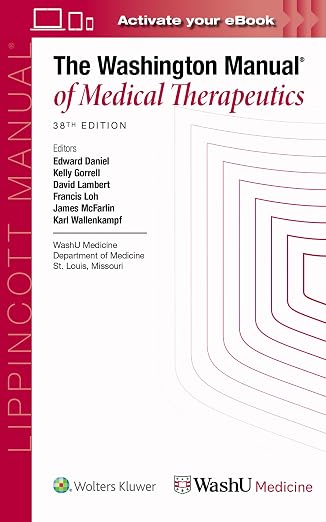
The Washington Manual of Medical Therapeutics
Washington University
38th edition · 2026A more detailed ward companion for admissions, common inpatient problems, and the transition into intern year.

Ward reference
The Sanford Guide to Antimicrobial Therapy
Sanford Guide
56th edition · 2026 · Pocket formatA pocket antimicrobial reference for ward reading. Use your hospital’s current guidance and local antibiogram in practice.

Critical care
Marino’s The ICU Book
Paul L. Marino
5th edition · Print + eBook with updatesBuild your understanding of critical care before an ICU rotation, with reading on ventilation, shock, and acid–base problems.

Clinical equipment
The Physicians Folding Clipboard
Fellow Medical
Trifold · Letter-size paper · BlackA folding clipboard for organizing paper notes on rounds. Follow your hospital’s policies for patient information.

Clinical equipment
Littmann Classic III Stethoscope
Littmann
Model 5620 · Black · 27-inchAn everyday bedside examination tool to consider for rotations and residency if you need to replace your current stethoscope.
Check current prices, editions, sizes, and seller details on Amazon.
Official resources
Common questions
What does the ideal internal medicine residency application look like?
The ideal internal medicine application is eligibility-clean, academically credible, clinically current, and easy to trust. It has Step 1 passed, Step 2 CK or COMLEX Level 2 handled on a realistic timeline, strong observed clinical letters, meaningful inpatient and outpatient medicine exposure, a focused personal statement, smart use of the 3 gold and 12 silver internal medicine signals, and interview answers that show clinical reasoning, teamwork, humility, and patient-safety judgment.
What do internal medicine program directors look for?
Program directors need evidence that the applicant is eligible, academically safe, clinically ready, and serious about internal medicine. Before interviews, Step performance, MSPE content, specialty-specific letters, clinical experience, and eligibility filters matter. After interviews, interpersonal skills, interview interactions, resident feedback, professionalism, and team trust become central.
How important is Step 2 CK for internal medicine?
Step 2 CK is very important for many internal medicine applicants, especially IMGs, because it remains one of the clearest numeric academic signals. In the 2024 NRMP IMG internal medicine summary, matched U.S. IMGs averaged Step 2 CK 238 and matched non-U.S. IMGs averaged 248. Scores help, but they do not replace recent clinical evidence, strong letters, interview performance, and program fit.
How many program signals does internal medicine use?
For the 2027 ERAS application season, AAMC lists internal medicine with 3 gold signals and 12 silver signals. Gold signals should go to the programs where fit and interest are strongest. Silver signals should still be targeted, eligibility-compatible, and defensible.
What is the biggest public predictor for IMG internal medicine applicants?
The clearest public signal is contiguous rank-list depth. In the 2024 NRMP IMG internal medicine summary, matched U.S. IMGs averaged 9.1 contiguous internal medicine ranks compared with 2.1 among unmatched U.S. IMGs. Matched non-U.S. IMGs averaged 6.1 contiguous ranks compared with 2.5 among unmatched non-U.S. IMGs.