Key takeaways
- Real help exists for IMGs, but it is scattered across state programs, nonprofit bridge centers, immigration pathways, loan repayment programs, and state medical boards.
- Minnesota has one of the clearest state IMG assistance models, including career guidance, clinical preparation, primary care residency support, and BRIIDGE residency preparation.
- Immigration support is usually service-based: ECFMG J-1 sponsorship, Conrad 30 waivers, H-1B employer sponsorship, and physician National Interest Waivers.
- Most direct financial aid before residency is limited; bigger financial incentives usually appear after licensure through underserved-service jobs and loan repayment.
- Emerging state licensure pathways may help some experienced foreign-trained physicians, but they are narrow, state-specific, and must be verified directly with state medical boards.
Yes, help exists, but it is scattered
There is real help for IMGs trying to practice medicine in the United States. The problem is that it does not live in one place and it does not always look like a scholarship. It may be a state IMG program, a nonprofit bridge center, a clinical preparation grant, a residency-preparation program, a visa waiver, a loan repayment pathway, an underserved-service job, or an emerging state licensure pathway.
The most important thing to understand is timing. Some help is useful before residency, some during residency, and some only after you are licensed or close to independent practice. If you confuse those stages, you can waste months chasing the wrong support.
This guide is a practical map. Use it to identify which type of help fits your current stage, then verify eligibility directly with the official program, state health department, state medical board, immigration counsel, or residency program.
The best help by category
The table below separates different kinds of help. A state IMG program is not the same as an immigration waiver. A loan repayment program is not the same as ERAS fee help. A bridge center can be valuable even if it never pays a USMLE fee.
For IMGs, the highest-value support is usually the help that removes a real barrier: clinical recency, navigation, state eligibility, English-language professional confidence, residency preparation, visa sponsorship, or the cost of practicing in an underserved area after training. Direct links to the programs and pathway resources named in the table are included below it.
| # | Type of help | Best examples | Best for | What it can provide | Reality check |
|---|---|---|---|---|---|
| 1 | State-sponsored IMG assistance | Minnesota IMG Program | Immigrant IMGs living in a state with a formal program | Career guidance, clinical readiness, clinical preparation, residency preparation, residency-position support, and state workforce navigation | Eligibility is narrow. Minnesota's strongest programs are tied to Minnesota residence, immigrant status, primary care workforce goals, and underserved service. |
| 2 | IMG residency preparation | Minnesota BRIIDGE | ECFMG-certified or near-ready IMGs who need structured preparation before applying or reapplying | A competitive residency preparatory program with inpatient, outpatient, community, classroom, and OSCE components | Not open to everyone. For 2026, Minnesota lists requirements including permanent U.S. residence status, Minnesota residency, ECFMG Certification, and USMLE Step limits. |
| 3 | Clinical preparation grants | Minnesota IMG Clinical Preparation Grant | IMGs who need recent clinical preparation or experience before residency | Grant-funded clinical preparation through eligible Minnesota clinical education programs | Programs may not always be open for applications. The grant may support institutions, not direct cash payments to individual IMGs. |
| 4 | Career navigation and support | Welcome Back Initiative, International Institute of Minnesota, Upwardly Global | Immigrant and refugee health professionals who need help understanding U.S. pathways | Career counseling, pathway planning, credential navigation, job-search support, and connection to local resources | Usually not a replacement for USMLE, ECFMG, ERAS, or residency. The value is navigation and structure. |
| 5 | J-1 physician sponsorship for training | ECFMG Exchange Visitor Sponsorship Program | Non-U.S. IMG residents and fellows using J-1 status for ACGME training | Official J-1 physician sponsorship for graduate medical education | J-1 physicians are generally subject to the two-year home-country physical presence requirement unless they obtain a waiver. |
| 6 | State health department J-1 waiver sponsorship | Conrad 30 Waiver Program | J-1 physicians finishing residency or fellowship who want to remain in the U.S. and serve shortage areas | A pathway to waive the two-year home residence requirement through state health department sponsorship and underserved service | This is after training, not before residency. It usually requires a qualifying full-time job, H-1B transition, and a three-year service commitment. |
| 7 | Physician green-card pathway tied to underserved service | Physician National Interest Waiver | Physicians who will work full-time in qualifying shortage areas or VA facilities | A potential employment-based immigration path without the usual labor certification requirement | This is complex immigration law. It still requires licensure, qualifying work, public-interest support, documentation, and usually five years of aggregate service before permanent residence is completed. |
| 8 | Loan repayment after licensure | NHSC Loan Repayment, HRSA Loan Repayment Programs | Licensed physicians serving at approved shortage-area sites | Repayment support for qualifying educational loans after service at approved sites | This does not usually pay for USMLE or ERAS before residency. Citizenship, site, specialty, loan type, and service rules matter. |
| 9 | Underserved job search and service-site matching | HRSA Health Workforce Connector | Residents, fellows, and physicians searching for shortage-area employers | Searchable jobs and sites in HPSA, critical shortage, FQHC, NHSC, and underserved settings | A job posting is not automatic visa sponsorship or loan repayment. Verify sponsor status, HPSA score, visa policy, and contract terms. |
| 10 | Emerging alternative state licensure pathways | State medical boards and state legislatures | Experienced foreign-trained physicians who may qualify under new supervised-practice or provisional-license laws | Potential state-specific pathways to supervised practice or licensure outside the traditional repeat-residency model | Highly state-specific and changing fast. Verify directly with the state medical board. Do not assume an online article applies to your state or profile. |
| 11 | Residency program visa sponsorship | J-1 and H-1B policies at individual residency programs | Non-U.S. IMGs applying through ERAS | The ability to train legally in the U.S. through program-supported visa pathways | IMG-friendly is not the same as visa-friendly. H-1B often requires Step 3 and institutional willingness; many programs only sponsor J-1. |
| 12 | Local immigrant professional aid | City workforce centers, refugee agencies, workforce boards, community colleges, immigrant professional nonprofits | IMGs who need English, resume, interview, credential, or job-transition help while preparing for exams | Career coaching, bridge employment, networking, English support, and local grants | Quality varies. Prioritize programs with experience serving internationally trained health professionals. |
Minnesota is the model to study
If an IMG asks whether state-sponsored help exists, Minnesota is the clearest example. The Minnesota Department of Health says the International Medical Graduate Assistance Program was established to address barriers to practice and help immigrant IMGs integrate into the Minnesota health care delivery system, especially to increase access to primary care in rural and underserved areas.
Minnesota's public pages list four major grant-program lanes: Career Guidance and Support, Clinical Preparation, Primary Care Residency, and Residency Preparation through BRIIDGE. That is unusually concrete compared with most states.
The Career Guidance and Support page says the program serves as an entry point for Minnesota IMGs to participate in navigation and support programming for testing, residency applications, or other health-care career opportunities that use their medical background. The Clinical Preparation page describes grant-funded preparation for Minnesota IMGs needing additional clinical preparation or experience to qualify for residency.
- Best fit: immigrant IMGs living in Minnesota or planning a Minnesota workforce pathway.
- Strongest value: structured pathway support instead of vague advising.
- Important limitation: many pieces are grant-funded, competitive, location-specific, and may open or close by cycle.
- Service orientation: Minnesota ties clinical preparation to future primary care service in rural or underserved Minnesota communities.
- How to use it: read every MDH page, join the contact list if available, contact the current grantee when appropriate, and check eligibility before building a plan around it.
Immigration help is usually service-based
For non-U.S. citizen IMGs, immigration help is often the difference between a realistic pathway and a dead end. But most immigration help for physicians is not a grant. It is sponsorship, waiver support, or a service-based immigration pathway.
ECFMG's Exchange Visitor Sponsorship Program is central for physicians training in J-1 status. After training, the Conrad 30 waiver is one of the most important state-sponsored physician immigration tools. USCIS says the Conrad 30 program allows J-1 foreign medical graduates to apply for a waiver of the two-year foreign residence requirement after the J-1 exchange visitor program and is designed to address doctor shortages in medically underserved areas.
The Physician National Interest Waiver is another major pathway, but it is not a simple shortcut. USCIS describes it as a route for qualifying physicians who agree to work full time in shortage areas or VA facilities and whose work is determined by a federal agency or state public health department to be in the public interest.
- J-1 for residency or fellowship: usually ECFMG-sponsored and tied to training.
- H-1B for residency or employment: depends on employer sponsorship, Step 3, licensing timing, and institutional policy.
- Conrad 30 waiver: usually after residency or fellowship, with state health department sponsorship and a three-year underserved-service contract.
- Physician NIW: potentially useful after or during qualifying service, but requires careful legal and documentation strategy.
- Do not rely on general internet advice. Immigration strategy should be reviewed with the program, employer, and a qualified immigration attorney.
Financial help after training
Direct pre-residency financial aid for IMGs is limited. There is no single national fund that reliably pays for every IMG's USMLE, OET, ECFMG, ERAS, travel, and observership costs. The more common financial support appears later, when physicians serve in shortage areas.
NHSC and state loan repayment programs can matter for IMG physicians who have qualifying educational loans, eligible immigration or citizenship status, and jobs at approved sites. These are not usually pre-residency aid. They are workforce incentives tied to service.
The HRSA Health Workforce Connector is useful because it helps physicians search for shortage-area jobs and approved sites. For IMGs on visas, the job search must also include questions about J-1 waiver history, H-1B sponsorship, green-card support, HPSA score, state licensure timing, and contract terms.
- Before residency: look for state IMG grants, nonprofit bridge programs, local immigrant professional grants, exam-prep scholarships, and low-cost clinical preparation.
- During residency: ask about institutional education funds, conference funds, licensing-fee support, Step 3 reimbursement, visa support, and moonlighting rules.
- After residency: research NHSC, state loan repayment, employer loan repayment, J-1 waiver jobs, HPSA scores, and underserved-service incentives.
- For non-U.S. loans: many U.S. loan repayment programs may not repay foreign debt. Verify loan eligibility before choosing a job based on loan repayment.
Emerging state licensure pathways
Some states are creating alternative pathways for experienced internationally trained physicians. This is one of the most important trends for IMGs, but also one of the most dangerous to oversimplify.
These pathways are not the same as matching into residency. They may require ECFMG Certification, USMLE passage, years of foreign practice, English proficiency, an offer from an approved healthcare facility, supervised practice, restricted licensure, underserved-area service, and later board review. The rules can change quickly and vary state by state.
If you are an experienced foreign-trained physician, do not rely on a social media summary. Use the Federation of State Medical Boards directory to find the state board, then read the statute, regulations, application forms, FAQs, and board meeting updates for that state.
- Best fit: experienced physicians with substantial practice abroad, strong documentation, ECFMG or USMLE progress, and willingness to work under supervision where allowed.
- Not a universal shortcut: many applicants will still need residency for board eligibility, hospital credentialing, fellowship, mobility, and full independent practice.
- High-risk detail: a license in one state may not transfer easily to another state.
- Action step: verify directly with the state medical board before spending money on lawyers, recruiters, or application packages.
How to build your own aid map
Because support is so fragmented, the best approach is to build a personal aid map by state and stage. Do not start by asking whether there is money. Start by asking what barrier you need removed.
An IMG who needs visa sponsorship has a different aid map from a permanent resident who needs clinical recency. An older graduate needs different help from a current student. A refugee physician needs different support from a J-1 resident finishing fellowship.
- Column 1: stage: pre-USMLE, ECFMG, pre-ERAS, unmatched, resident/fellow, attending, alternative licensure.
- Column 2: barrier: money, clinical recency, visa, English, USCE, exams, licensure, job search, supervised practice, loan repayment.
- Column 3: state: current residence, target state, medical board, health department, workforce office, Conrad 30 page.
- Column 4: support: IMG program, Welcome Back center, immigrant professional nonprofit, clinical prep program, loan repayment, employer sponsorship.
- Column 5: eligibility: immigration status, residency in state, ECFMG status, USMLE attempts, Step 3, specialty, service commitment.
- Column 6: source: official link, contact person, deadline, date verified, next action.
Questions to ask before applying
Good programs welcome specific questions. The goal is not to ask them to solve your entire career by email. The goal is to find out whether you are eligible and whether the program solves your actual barrier.
Use short, factual questions and save the long story for an advising call if they offer one.
- Do you serve IMGs specifically, or internationally trained health professionals more broadly?
- Do you require U.S. citizenship, permanent residence, refugee/asylee status, state residency, or work authorization?
- Do you provide direct funding, or do you provide services through a grantee or partner organization?
- Can this program help with USMLE, OET, ECFMG, clinical preparation, observerships, ERAS, interviews, or alternative careers?
- Do you have deadlines, waitlists, cohorts, or rolling enrollment?
- Can participation be documented for a CV or residency application?
- Is there a service commitment, geographic requirement, or specialty requirement?
- If visa-related, who is the sponsor and what immigration status or waiver category is involved?
Bottom line
Yes, there is help for IMGs trying to practice medicine in the United States. But the help is a patchwork, not a single pipeline. The strongest verified categories are state IMG programs, bridge and career-navigation centers, J-1 and waiver pathways, underserved-service immigration options, loan repayment after licensure, and emerging state licensure routes.
The best strategy is to match the help to your barrier. If you need clinical recency, search state IMG clinical preparation and free-clinic pathways. If you need immigration support after training, study Conrad 30 and physician NIW early. If you need career navigation, start with Welcome Back or immigrant professional organizations. If you need money, look for state grants and service-linked repayment instead of assuming there is a national IMG scholarship.
Books & equipment
Get ready for residency
Step 3 preparation, ward references, and clinical essentials selected for doctors working toward the Match and the start of residency.

Step 3
Master the Boards USMLE Step 3
Conrad Fischer
8th edition · 2026Work through management decisions alongside your Step 3 question bank and CCS practice.

Ward reference
Pocket Medicine
Marc S. Sabatine
9th edition · 2025A compact internal medicine reference for pre-round reading, clinical differentials, and reviewing the day’s cases.
Ward reference
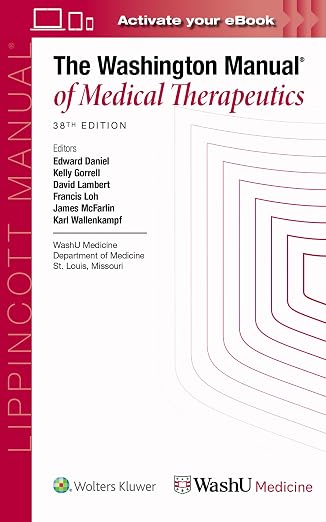
The Washington Manual of Medical Therapeutics
Washington University
38th edition · 2026A more detailed ward companion for admissions, common inpatient problems, and the transition into intern year.

Clinical equipment
Littmann Classic III Stethoscope
Littmann
Model 5620 · Black · 27-inchAn everyday bedside examination tool to consider for rotations and residency if you need to replace your current stethoscope.

Clinical equipment
The Physicians Folding Clipboard
Fellow Medical
Trifold · Letter-size paper · BlackA folding clipboard for organizing paper notes on rounds. Follow your hospital’s policies for patient information.

Scrubs
COZYFIT Women’s Scrub Set
COZYFIT
Women’s fit · Select size and color on AmazonA V-neck top and jogger set for clinical days. Check your hospital’s required color and whether it supplies scrubs.
Check current prices, editions, sizes, and seller details on Amazon.
Official resources
Common questions
Is there financial aid for IMGs trying to practice medicine in the U.S.?
Yes, but it is limited and fragmented. Most direct pre-residency help comes from state IMG programs, nonprofit bridge programs, local grants, or career-navigation programs. Federal money is more often loan repayment or service incentives after a physician is licensed and working in an underserved area.
Are there state-sponsored IMG programs?
Yes. Minnesota has one of the clearest state-sponsored IMG Assistance Programs, including career guidance, clinical preparation, primary care residency support, and the BRIIDGE residency preparation program. Other states may have workforce, licensure, or immigrant professional programs, but eligibility and funding vary widely.
Can immigration programs help IMGs?
Yes, but they are usually tied to training or service. ECFMG sponsors J-1 physicians for graduate medical education. Conrad 30 waivers can help J-1 physicians remain in the U.S. after training by serving in shortage areas. Physician National Interest Waivers may support permanent-residence pathways for qualifying physicians who commit to underserved clinical service.
Can an IMG practice medicine in the U.S. without repeating residency?
In most cases, IMGs still need ECFMG Certification, USMLE exams, graduate medical training, and state licensure. Some states are creating alternative licensure or supervised-practice pathways for experienced foreign-trained physicians, but these are state-specific, narrow, and must be verified with the state medical board.
What is the best first step if I need help?
Start by identifying your current legal status, state of residence, ECFMG status, USMLE progress, graduation year, clinical recency, visa need, and target specialty. Then search for state IMG programs, Welcome Back centers, immigrant professional organizations, and state health department workforce programs in your state.