Key takeaways
- The verified U.S. public/university IMG bridge landscape is small: UCLA, Minnesota's IMG program and BRIIDGE pathway, and Welcome Back Initiative centers.
- Residency bridges, workforce re-entry centers, state licensure pathways, and private observership vendors are different tools and should not be mixed together.
- Eligibility is narrow: geography, immigration/work status, ECFMG/USMLE progress, language ability, service commitments, and profession served matter.
- Bridge programs do not replace ECFMG Certification, ERAS, NRMP, state licensure, visas, clinical readiness, or a strong application.
Start with the hard truth
The United States does not have one national IMG bridge program. It has a small number of serious public or university-backed pathways, a larger Welcome Back career-navigation network for internationally trained health professionals, and many private companies using similar language to sell observerships, rotations, consulting, or application coaching.
That distinction matters. A real bridge program should tell you who runs it, who funds it, who is eligible, what services are included, what outcomes it tracks, and what it does not promise. If a program cannot answer those questions, it may still be useful, but it should not be treated as a public bridge pathway.
As of June 24, 2026, the verifiable U.S. public/university-backed IMG bridge landscape is concentrated in three buckets: UCLA's university-based IMG pathway, Minnesota's state-backed IMG Assistance Program and BRIIDGE pathway, and the Welcome Back Initiative centers that help internationally trained health professionals navigate credentials, careers, and re-entry.
- A residency bridge program helps an IMG become more ready for residency through exam structure, clinical readiness, mentorship, observership, interview preparation, or application support.
- A workforce bridge program helps an internationally trained physician or health professional re-enter U.S. health care through credential guidance, employment planning, English support, job readiness, licensing navigation, or alternative career pathways.
- A state licensing pathway is not the same thing as a bridge program. Some states are changing licensure rules for internationally trained physicians, but a law or license category is different from a staffed program that provides preparation, case management, or clinical training.
- A private rotation company is not a public bridge program just because it uses IMG-friendly language.
The complete public list
This is the strongest way to read the list: first look at programs built specifically for IMGs, then look at Welcome Back centers that serve internationally trained health professionals and may include physicians. The second group is important, but it is not always a residency-preparation program.
A program can be excellent and still not be the right next step. Your decision should depend on geography, immigration and work status, medical degree documentation, USMLE progress, English level, specialty goal, service commitment, and whether you need residency support or career stability.
- UCLA IMG Program, California: A university-based pathway housed in UCLA Family Medicine. Best fit for selected bilingual English-Spanish IMGs with a clear family medicine and underserved-care mission. Applicants should confirm current application status, language expectations, California focus, and what parts of USMLE preparation or observership are active in the current cycle.
- Minnesota International Medical Graduate Assistance Program, Minnesota: A state-backed IMG workforce program created to reduce barriers for immigrant IMGs and increase primary care access in rural and underserved Minnesota communities. It includes grants and services around career guidance, clinical preparation, primary care residency support, and residency preparation.
- Minnesota BRIIDGE Residency Preparation Program, Minnesota: A University of Minnesota and Minnesota Department of Health partnership. For the 2026 posted cycle, eligibility included being an immigrant now permanently residing in the United States as a U.S. citizen or permanent resident, not having entered on a J1 or similar non-immigrant visa after acceptance into U.S. residency or fellowship, holding an MD degree or international equivalent, having at least two years of documented Minnesota residency by the deadline, and having ECFMG Certification with passing USMLE Step 1 and Step 2 CK within three attempts.
- Minnesota IMG Clinical Preparation Grant Program, Minnesota: A state grant program for existing Minnesota clinical medical education programs that can provide clinical preparation for Minnesota immigrant IMGs who need additional clinical preparation or experience to qualify for residency. It is not an open individual application at all times; check the grant cycle and partner programs.
- Welcome Back Initiative national network: A national network for internationally trained health professionals. It is not a single residency program. Its model includes assessment, educational case management, credential and licensing support, education referrals, employment and volunteer exploration, English and U.S. health system support, peer networking, and alternative career planning.
- San Francisco Welcome Back Center, California: The pilot Welcome Back site, launched through Community Health Works in partnership with City College of San Francisco and San Francisco State University. It is historically important and remains the lead site for the initiative, but direct one-on-one services were closed in 2014 because of inadequate funding.
- Boston Welcome Back Center, Massachusetts: Listed by the Welcome Back Initiative as hosted by Bunker Hill Community College. Treat it as a local career and credential-navigation center for internationally trained health professionals; confirm current services, intake, professions served, and geography before relying on it.
- Rhode Island Welcome Back Center, Rhode Island: Listed by the Welcome Back Initiative in Providence. Confirm current intake, professions served, service area, and whether physician-specific or residency-related guidance is available.
- Colorado Welcome Back, Colorado: Listed by the Welcome Back Initiative as hosted by Spring Institute for Intercultural Learning in Denver. Its likely value is workforce navigation, credential support, and career planning for internationally trained health professionals; verify current services directly.
- NYC Welcome Back Center at LaGuardia Community College, New York: A CUNY-affiliated center currently described by LaGuardia as an information and resource center for internationally trained nurses. It offers free orientation, counseling, career support, and licensure guidance to eligible New York residents authorized to work in the United States, with some programs requiring New York City residency. For physicians, it is more useful as a model and possible referral point than as a dedicated IMG-to-residency program.
- New Mainers Resource Center, Maine: A statewide program serving skilled immigrants, refugees, asylum seekers, and internationally trained professionals in Maine. It provides advising, case management, licensing and credentialing support, job readiness workshops, employer connections, and professional licensing guides, including physician-related guidance. It is career-navigation support, not a guaranteed residency pathway.
- Puget Sound Welcome Back Center at Highline College, Washington: A public college-hosted center that supports internationally educated professionals entering the job market in their field of study and preparing to practice their profession in Washington state. For IMGs, confirm whether services are physician-specific or broader workforce counseling.
- Suburban Maryland Welcome Back Center, Maryland: A Montgomery County government program for internationally trained health professionals living or working in Maryland. Posted eligibility includes an international medical degree, qualifying nursing education, or behavioral health degree, an English placement requirement, a commitment to work in Maryland health care for two years after licensure, and current Montgomery County residency for program participation.
- Northwest Washington Welcome Back Center at Edmonds College, Washington: Listed by the Welcome Back Initiative as hosted by Edmonds Community College. Confirm current name, intake, service area, and professions served directly because institution names and program pages have changed over time.
- Philadelphia Welcome Back Center, Pennsylvania: Listed by the Welcome Back Initiative as hosted by The Welcoming Center. It is a workforce-navigation model for internationally trained health professionals, not a medical school or residency program; verify current intake and physician-specific services.
- Syracuse Welcome Back Center at Le Moyne College, New York: Listed by the Welcome Back Initiative as hosted by Le Moyne College. Confirm current services and whether physicians are actively served before making it part of a residency plan.
How each model helps
The right program depends on the kind of bridge you need. An IMG who is ECFMG Certified, living in Minnesota, and close to a residency application needs a very different program from an internationally trained physician who recently immigrated, needs income, and is trying to understand U.S. credential rules.
Do not ask only whether a program is IMG-friendly. Ask what kind of transition it is built to support.
- UCLA-style mission bridge: best for applicants whose clinical identity matches the mission. The value is not only exam preparation; it is alignment with family medicine, bilingual care, underserved communities, and a credible university environment.
- Minnesota-style state workforce bridge: best for eligible immigrant IMGs in one state who can meet narrow residency, immigration, exam, and service-commitment rules. The value is policy alignment, clinical preparation, and workforce planning around primary care shortages.
- BRIIDGE-style residency readiness bridge: best for advanced applicants who already meet high thresholds and need a structured runway into residency. The value is clinical exposure, classroom/community components, readiness assessment, and a competitive cohort.
- Welcome Back-style career bridge: best for internationally trained professionals who need a pathway plan, credential navigation, English support, job readiness, licensing guidance, or an alternative health care role while residency remains uncertain or long-term.
- Closed or historical bridge: still useful as a model, but not useful for direct applicant services. The San Francisco center matters historically, but applicants should not assume direct one-on-one services are currently available.
Eligibility patterns
The mistake many IMGs make is treating bridge programs like general help desks. Most serious programs are narrower than that. They are built around a workforce shortage, a state population, a language need, a target specialty, a funding rule, or a local service area.
Before you email, build a one-page readiness snapshot: current state, immigration and work status, ECFMG status, Step 1 and Step 2 CK status, OET or English documentation if relevant, year of graduation, clinical recency, target specialty, U.S. clinical experience, and whether you are open to alternative health care roles.
- Geography: Minnesota programs focus on Minnesota immigrant IMGs; Welcome Back centers generally serve people living in the center's geographic area; Maryland's center lists Montgomery County residency for participation.
- Immigration and work status: Some programs require U.S. work authorization, permanent residence, citizenship, or specific immigration categories. Minnesota BRIIDGE posts a U.S. citizen or permanent resident requirement for its 2026 cycle.
- Medical degree: Residency-oriented programs typically require an MD degree or international equivalent; career-navigation programs may serve broader health professionals such as nurses, physicians, pharmacists, dentists, psychologists, social workers, midwives, laboratory professionals, and others.
- USMLE and ECFMG: Advanced residency-readiness programs may require ECFMG Certification and passing USMLE exams. Career-navigation centers may help before that point, but they do not replace ECFMG requirements.
- English and communication: Welcome Back centers often assess English needs. Maryland posts an English placement requirement. UCLA's model is mission-linked to bilingual English-Spanish physician workforce needs.
- Service commitment: Minnesota clinical preparation materials and Maryland's center both connect support to future service in local health care needs. Read the commitment language carefully before applying.
- Current cycle: Public programs depend on funding. Application windows, cohorts, and services can close or reopen. Always verify the current cycle before planning around a program.
Program-by-program action plan
Use this section as the practical application map. The goal is not to send a desperate email to every program. The goal is to match your situation to the program type that can actually help.
For each program, your first message should be short, specific, and complete: who you are, where you live, what medical degree you hold, your ECFMG/USMLE status, your work authorization status if relevant, your target profession, and the exact service you are asking about.
- UCLA IMG Program: Apply only if your profile fits the mission. Lead with bilingual ability, family medicine interest, service to underserved communities, California relevance, and current exam status. Ask whether the current cycle is open and what components are active.
- Minnesota IMG Program: Start with the state program page and identify which track applies: career guidance, clinical preparation, primary care residency support, or BRIIDGE. If you are not a Minnesota resident, do not treat this as a national program.
- Minnesota BRIIDGE: Do not apply casually. Check every posted eligibility line, especially Minnesota residency duration, citizenship/permanent residence, ECFMG Certification, USMLE attempt limits, timeline, OSCE/simulation dates, and what happens if you also apply for residency in the same cycle.
- Minnesota Clinical Preparation: This is grant-funded through eligible clinical medical education programs, so individual IMGs should look for partner opportunities and current grant cycle details rather than assuming there is always a direct application.
- Welcome Back centers: Contact the closest center only after confirming service area and professions served. Ask whether they serve physicians specifically, whether services include IMG residency guidance or only alternative career navigation, and whether there are fees.
- NYC Welcome Back at LaGuardia: Because the current page is nurse-focused, IMGs should ask for referral guidance rather than assume physician residency services. It may still be useful for health-sector career planning if you meet residency and work authorization requirements.
- Maryland Welcome Back: Review the posted eligibility and service commitment first. If you have an international medical degree and live in Montgomery County, ask about the application process, English placement, training partners, board preparation, mentoring, and alternative health career support.
- Highline/Puget Sound: Useful if you are in Washington and need professional re-entry counseling. Ask whether physician licensing or IMG-specific pathways are included in current services.
- New Mainers Resource Center: Useful for Maine-based skilled immigrants and internationally trained professionals who need licensing, credentialing, job readiness, employer connections, and professional pathway planning.
- Boston, Rhode Island, Colorado, Northwest Washington, Philadelphia, and Syracuse Welcome Back sites: Use the national directory as your starting point, then verify the current host, intake process, service area, and physician-specific support directly.
What not to confuse with a bridge
The IMG market is noisy because desperate applicants are easy to sell to. A strong applicant has to be precise with language. A bridge program, a clinical rotation, a residency application consultant, a state license, and an alternative career program are different tools.
None of the tools are automatically bad. The problem starts when you pay for one thing believing it is another.
- A paid observership or externship is clinical exposure, not automatically a bridge program.
- A coaching package is advising, not a university or state pathway.
- A state IMG licensure law may create an alternative supervised practice route, but it is not the same as a program that prepares you for residency or provides case management.
- A public career center can help with stability and employment, but it may not improve your residency competitiveness unless you turn the experience into real skills, documents, references, and a clearer application story.
- A research job, scribe role, medical assistant role, care coordinator role, public health role, or clinical research coordinator role can help your career, but it is not a bridge program by itself.
- A program that advertises guaranteed Match success should be treated with extreme skepticism.
How to choose the right bridge
A bridge program is worth your time when it reduces a real bottleneck. If your bottleneck is ECFMG, choose exam and certification structure. If your bottleneck is clinical recency, choose clinical readiness. If your bottleneck is income and U.S. workplace fluency, choose workforce navigation. If your bottleneck is mission fit, choose a mission-driven university pathway.
The best IMG strategy is rarely one program. It is a sequence: stabilize your life, protect your immigration and work status, finish ECFMG requirements, build credible U.S. clinical or health-system exposure, get honest feedback, and apply only when your materials tell a coherent story.
- If you are early: use Welcome Back-style services, English for health professionals, credential evaluation, employment counseling, and a realistic ECFMG plan.
- If you are ECFMG Certified: look for residency-readiness programs, supervised clinical exposure, observerships, mock interviews, current letters, and specialty-specific application strategy.
- If you are geographically eligible for Minnesota: study Minnesota's official IMG pages first because the program has unusually concrete state infrastructure.
- If you are bilingual English-Spanish and family-medicine oriented in California: investigate UCLA carefully and confirm current status.
- If you are not geographically eligible for any public bridge: build your own bridge from pieces: ECFMG plan, local health care employment, targeted USCE, strong documentation practice, research or QI work, mock interviews, and a realistic program list.
Questions to ask before applying
Before you spend months waiting on a program, ask direct questions. Good programs will not be offended by precise questions; they are usually relieved when an applicant understands the difference between eligibility, services, and outcomes.
Keep the answers in a document with dates. Public programs can change, and your plan should be based on the current cycle, not a screenshot from an old forum post.
- Are you currently accepting applicants or participants?
- Do you serve physicians specifically, or only other health professions this cycle?
- What geography do you serve, and do I need to prove residency in a city, county, or state?
- What immigration or work authorization status is required?
- Do you require ECFMG Certification, USMLE Step 1, USMLE Step 2 CK, OET, or a specific number of exam attempts?
- Is there an English placement or language requirement?
- Is there a service commitment after licensure, residency, or employment?
- Do you provide clinical exposure, simulation, OSCE practice, shadowing, observership, mentoring, or only counseling?
- Do you help with ERAS, personal statements, interviews, letters, or program lists?
- What outcomes do you track: Match rate, licensure, employment, exams, income, or completion?
- Are there fees, deposits, tuition, materials costs, or outside program costs?
- If I am not eligible, what local program or public resource should I contact next?
The bottom line
The best IMG bridging programs are not magic doors. They are scaffolding: structure, credibility, coaching, assessment, and access to people who understand the distance between being a physician somewhere else and becoming clinically useful in the U.S. system.
If you qualify for UCLA or Minnesota, take them seriously. If you qualify for a Welcome Back center, use it to build stability, understand credentials, and stop trying to navigate the system alone. If you do not qualify for any public bridge, do not wait passively. Build a bridge out of verifiable pieces: ECFMG progress, clinical skill practice, U.S. health care work, documentation, communication, mentorship, and a brutally honest Match strategy.
The strongest IMG applicants are not the ones who collect the most program names. They are the ones who can explain what they did, why it mattered, what they learned, and how it proves they are ready for supervised U.S. clinical training.
Books & equipment
Get ready for residency
Step 3 preparation, ward references, and clinical essentials selected for doctors working toward the Match and the start of residency.

Step 3
Master the Boards USMLE Step 3
Conrad Fischer
8th edition · 2026Work through management decisions alongside your Step 3 question bank and CCS practice.

Ward reference
Pocket Medicine
Marc S. Sabatine
9th edition · 2025A compact internal medicine reference for pre-round reading, clinical differentials, and reviewing the day’s cases.
Ward reference
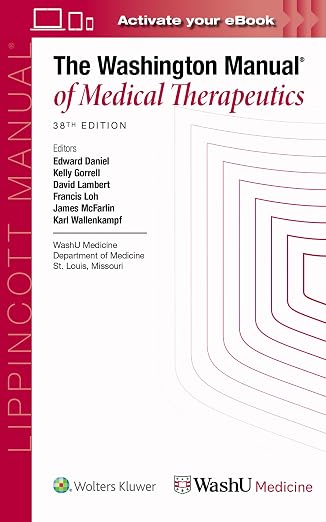
The Washington Manual of Medical Therapeutics
Washington University
38th edition · 2026A more detailed ward companion for admissions, common inpatient problems, and the transition into intern year.

Clinical equipment
Littmann Classic III Stethoscope
Littmann
Model 5620 · Black · 27-inchAn everyday bedside examination tool to consider for rotations and residency if you need to replace your current stethoscope.

Clinical equipment
The Physicians Folding Clipboard
Fellow Medical
Trifold · Letter-size paper · BlackA folding clipboard for organizing paper notes on rounds. Follow your hospital’s policies for patient information.

Scrubs
COZYFIT Women’s Scrub Set
COZYFIT
Women’s fit · Select size and color on AmazonA V-neck top and jogger set for clinical days. Check your hospital’s required color and whether it supplies scrubs.
Check current prices, editions, sizes, and seller details on Amazon.
Official resources
Common questions
Do IMG bridging programs guarantee residency or a medical license?
No. A bridge program can provide advising, clinical readiness, exam structure, career navigation, or local workforce support, but residency, ECFMG Certification, state licensure, visas, and Match outcomes remain separate requirements.
What programs are included in this guide?
This guide includes the public or university-backed U.S. IMG bridge pathways that could be verified as of June 24, 2026: the UCLA IMG Program, Minnesota's state IMG program and BRIIDGE pathway, and the Welcome Back Initiative centers that serve internationally trained health professionals.
Why are private rotation companies and paid coaching packages excluded?
The user-facing promise here is public and university-backed programs. Private observership marketplaces, Match coaching services, paid USCE companies, and visa/job agencies may be useful to some applicants, but they are not state or university bridge programs.
Should an IMG apply to a bridge program before passing USMLE exams?
It depends on the program. Some career-navigation centers can help early. More residency-focused pathways may require ECFMG Certification, Step 1, Step 2 CK, state residency, work authorization, language ability, or a service commitment.