Key takeaways
- The UCLA IMG Program is a mission-driven pathway, not a generic IMG service.
- Applicants should verify language, geography, specialty, and eligibility directly.
- The model shows how clinical preparation can connect to underserved-care goals.
- IMGs should use accurate ERAS language, prepare mission evidence, and ask direct questions about current components and outcomes.
Understand the mission before the application
The UCLA IMG Program is often discussed because it is a university-based pathway connected to a specific service mission. It is not a generic paid rotation marketplace. The value of the model is that preparation, language access, underserved care, and family medicine goals are meant to point in the same direction.
That mission matters. A program like this is not only asking whether you want residency. It is asking whether your background, language skills, geography, specialty interest, and future practice goals align with the patients the program exists to serve.
Before applying, read the current UCLA page as the source of truth. Then ask yourself a harder question: if someone removed the UCLA name from the page, would the mission still describe the kind of physician you are trying to become?
What makes the UCLA model different
Most IMG services sell one piece of the journey: a rotation, a course, a document review, a mock interview, or coaching. A mission-driven university model is different because it is designed around a workforce problem.
For the UCLA model, the commonly discussed themes are family medicine, bilingual communication, Hispanic and underserved communities, and preparation for U.S. residency expectations. The exact structure and eligibility should always be confirmed directly because university programs can change cohorts, funding, curricula, and application windows.
This is the right way to think about the program: not as a prestige shortcut, but as a structured answer to a public need. If your application story does not connect to that need, the program may not be the right fit even if your CV is strong.
Verify eligibility this cycle
University-based programs can change cohorts, funding, and requirements. Confirm current status, deadlines, language expectations, target specialty, geographic expectations, service commitments, required exam milestones, interview format, fees, and whether the opportunity is open to new applicants.
Do not rely on old forum posts. Older descriptions of IMG pathways may mention exam requirements, rotations, or documents that no longer exist or no longer apply. Always privilege the live program page and direct email confirmation.
A strong inquiry email is brief: I am an IMG interested in the current UCLA IMG Program. Could you confirm whether applications are open, current eligibility requirements, expected USMLE or ECFMG status, language requirements, and any service or geographic expectations?
Check whether your story fits the mission
Mission fit is not decoration. It should be visible in your choices. If you say you care about underserved care, where have you shown it? If you say bilingual care matters, how have you used language access responsibly? If you say family medicine is your goal, what experiences support broad, continuous, community-based care?
Applicants sometimes make the mistake of forcing a mission story because a program is attractive. That usually sounds thin. A stronger approach is to identify real examples: community clinic exposure, patient education, interpretation-adjacent work within appropriate boundaries, preventive care projects, chronic disease follow-up, public health work, or service to immigrant communities.
Your answer does not need to be perfect. It needs to be true, specific, and connected to what you plan to do next.
Do not confuse university affiliation with automatic clinical access
A university-based bridge program can offer credibility, structure, mentorship, and a clearer educational framework. That does not mean every participant automatically receives hands-on clinical authority, a guaranteed letter, or a residency interview.
IMGs should ask careful questions about what the program actually includes: classroom preparation, clinical observation, simulation, OSCE-style assessment, mentorship, ERAS guidance, interview preparation, community health work, or other components. If clinical exposure is included, clarify the role, supervision, documentation rules, and whether the experience can be described as observership, externship, volunteer work, or another category.
Use accurate language in ERAS. Overstating a role can damage trust more than a modest experience honestly described.
How to prepare before applying
Prepare as if the application is an interview for your future professional identity. A mission-driven program will not be impressed by vague enthusiasm if your documents do not show readiness.
Build a clean physician CV, a one-page mission statement, a list of exam milestones, a summary of U.S. clinical exposure, documentation of volunteer or community work, and two to three examples of feedback you have implemented. If your English-Spanish clinical communication is part of your application, practice explaining how you maintain boundaries, accuracy, humility, and patient safety.
If you have a gap, attempt, immigration delay, or career transition, write a short accountable explanation. The explanation should not dominate your application. It should show that you understand the concern and have taken concrete steps since.
Use the model to search elsewhere
If UCLA is not a fit, look for similar mission-driven pathways through family medicine departments, community health centers, state workforce programs, immigrant health organizations, Welcome Back Centers, public health schools, and language-access initiatives.
Search by mission, not only by program title. Try phrases such as bilingual physician workforce, internationally trained physicians, immigrant health professionals, underserved primary care pipeline, Latino health workforce, family medicine IMG program, and physician re-entry.
The closest alternative may not be called an IMG program. It may be a workforce initiative, a clinical preparation grant, a Welcome Back Center, a state health department program, or a university community-health partnership.
Translate the mission into ERAS and interviews
If you participate in a mission-driven program, track examples of service, communication, patient advocacy, and clinical growth. These can support family medicine and community-oriented applications.
Your ERAS description should be specific and careful. Name the setting, your supervised role, the skills practiced, the population served, and what changed in your readiness. Avoid saying you treated patients independently if the role was observation or supervised preparation.
In interviews, the strongest mission answer usually connects three points: the patient population you care about, the clinical skills you have built, and the kind of resident you want to become. The mission is strong enough without exaggerating your role.
Questions to ask before committing
A strong program will not be offended by informed questions. You are making a major time and career decision, so clarify the details before you commit.
- Is the program currently accepting applicants?
- Who is eligible by immigration status, residence, language background, specialty goal, and exam progress?
- What components are included: USMLE support, clinical observation, simulation, mentorship, ERAS advising, or interview preparation?
- Is there any cost, stipend, scholarship, or service commitment?
- How are participants evaluated and supported if they struggle?
- What outcomes does the program track?
- How should participants accurately describe the experience in ERAS and interviews?
The bottom line
The UCLA IMG Program is valuable because it shows what a bridge pathway can look like when it is connected to a university, a specialty mission, and a community need. That is much more meaningful than a generic promise to improve an IMG application.
For the right applicant, a mission-driven pathway can sharpen clinical readiness and make the residency story more coherent. For the wrong applicant, it can be a distraction. The goal is not to chase every program with a famous name. The goal is to find the program whose mission you can honestly serve.
Books & equipment
Get ready for residency
Step 3 preparation, ward references, and clinical essentials selected for doctors working toward the Match and the start of residency.

Step 3
Master the Boards USMLE Step 3
Conrad Fischer
8th edition · 2026Work through management decisions alongside your Step 3 question bank and CCS practice.

Ward reference
Pocket Medicine
Marc S. Sabatine
9th edition · 2025A compact internal medicine reference for pre-round reading, clinical differentials, and reviewing the day’s cases.
Ward reference
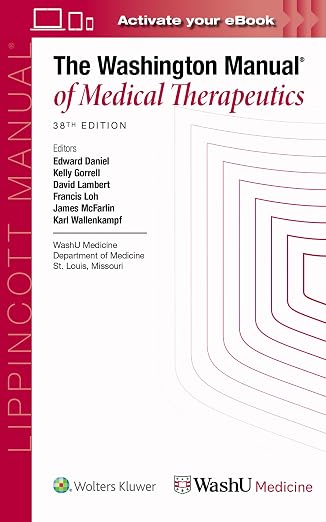
The Washington Manual of Medical Therapeutics
Washington University
38th edition · 2026A more detailed ward companion for admissions, common inpatient problems, and the transition into intern year.

Clinical equipment
Littmann Classic III Stethoscope
Littmann
Model 5620 · Black · 27-inchAn everyday bedside examination tool to consider for rotations and residency if you need to replace your current stethoscope.

Clinical equipment
The Physicians Folding Clipboard
Fellow Medical
Trifold · Letter-size paper · BlackA folding clipboard for organizing paper notes on rounds. Follow your hospital’s policies for patient information.

Scrubs
COZYFIT Women’s Scrub Set
COZYFIT
Women’s fit · Select size and color on AmazonA V-neck top and jogger set for clinical days. Check your hospital’s required color and whether it supplies scrubs.
Check current prices, editions, sizes, and seller details on Amazon.
Official resources
Common questions
Is the UCLA IMG Program for all IMGs?
No. It is mission- and eligibility-specific. Confirm current requirements and program status directly with UCLA.
What makes mission-driven programs different?
They are built around a service need, such as underserved care or language access. Applicants need real alignment with that mission.
Does a mission-driven IMG program guarantee residency?
No. A strong university bridge program can support preparation and credibility, but applicants still need to meet ECFMG, USMLE, ERAS, Match, visa, and program-specific requirements.