Key takeaways
- Welcome Back is a career re-entry and navigation network, not a residency program or ECFMG substitute.
- Its strongest IMG use case is stability: credentials, English, employment, licensing guidance, and alternative health care pathways.
- Services vary by center, so applicants must confirm geography, professions served, fees, and physician-specific support.
- IMGs should run a two-track plan: residency requirements on one track, U.S. workforce integration on the other.
Understand what Welcome Back is
The Welcome Back Initiative is best understood as a re-entry network, not a Match product. Its mission is to connect internationally trained health workers already living in the United States with the need for linguistically and culturally competent health services, especially in underserved communities.
For IMGs, that mission can be powerful. Many physicians arrive in the United States with real medical training but no clear way to translate that training into a U.S. career. Welcome Back-style services can help organize the next steps: credentials, English, employment, education, licensing, and alternative pathways.
- It is not a residency program.
- It is not ECFMG Certification.
- It is not a guarantee of licensure or employment.
- It is a local support model for internationally trained health professionals.
- Its value is navigation, planning, referrals, and momentum.
Know the service model
Welcome Back centers generally start by assessing the participant's education, professional history, English level, goals, barriers, and local options. Then an educational case manager or advisor helps develop a career pathway plan.
That pathway may point toward professional licensing, additional coursework, English for health professionals, community college or university programs, volunteer opportunities, job readiness, health-sector employment, or an alternative career that uses medical knowledge without requiring U.S. physician licensure.
- Initial screening and assessment.
- Educational case management and counseling.
- Credential and licensing navigation.
- Referrals to education, English, or professional programs.
- Job and volunteer opportunity exploration.
- Alternative health career planning.
- Peer networking and workshops when available.
Use it without abandoning residency
For many IMGs, the emotional fear is that seeking an alternative health care role means giving up on residency. That is not the right framing. Career stability can protect the residency plan by giving you income, U.S. workplace fluency, references, and a more organized life while exams and applications continue.
The key is to run two tracks honestly. Track one is residency: ECFMG, USMLE, USCE, letters, ERAS, interviews, and program strategy. Track two is U.S. health care workforce integration: resume, credentials, English, local employers, licensing alternatives, and transferable skills.
Check the centers carefully
The national directory lists centers in multiple states, but local pages differ. Some centers have broad language for internationally trained health professionals. Some current pages are narrower. Some are hosted by public colleges, county government, or workforce organizations. Some historical sites may not provide direct services now.
Do not assume that every Welcome Back center offers IMG-to-residency advising. Ask directly whether they serve physicians, whether they help with medical licensing or alternative careers, whether services are free, and what geography they cover.
- NYC at LaGuardia currently describes services for internationally trained nurses and eligible New York residents authorized to work in the United States.
- Puget Sound at Highline College supports internationally educated professionals entering the Washington job market.
- Suburban Maryland lists international medical degree holders among eligible groups and posts a Montgomery County residency requirement.
- New Mainers Resource Center supports skilled immigrants and internationally trained professionals in Maine, including credentialing and licensing support.
- San Francisco is historically important as the pilot site, but direct one-on-one services closed in 2014 according to its site.
Prepare before contacting a center
A good first message is short and complete. The advisor needs to know whether you are in their service area and what kind of help you need. Do not send a life story. Send a readiness snapshot.
Attach documents only if requested. Many centers have intake forms and privacy rules. Start with the basics and ask for the correct application or orientation step.
- Current city, county, and state.
- Immigration and work authorization status if relevant to eligibility.
- Medical degree country and graduation year.
- ECFMG status and USMLE/OET status if residency remains the goal.
- Prior clinical work and current U.S. work experience.
- Target: residency, alternative health care employment, professional licensing, English support, or credential guidance.
- Specific question: Am I eligible for services, and do you serve internationally trained physicians this cycle?
Turn support into progress
The value of a career-navigation program depends on what you do after each meeting. Leave every interaction with a next action: credential evaluation, resume revision, English class, job application, volunteer inquiry, licensing research, ECFMG task, or informational interview.
Keep a progress tracker. IMGs often lose months because the process feels too big. A tracker makes the path visible and gives you evidence of momentum.
- Documents requested.
- Credentials evaluated.
- Licensing rules reviewed.
- Resume versions completed.
- Jobs or volunteer roles contacted.
- Education programs researched.
- ECFMG or USMLE tasks completed.
- People met through networking or mentoring.
Describe outcomes accurately
If Welcome Back helped you find a role, prepare a resume, understand licensing, or explore an alternative pathway, describe that outcome plainly. Do not imply clinical training if the service was career navigation. Do not imply physician licensure if the role did not require it.
The value is honest momentum. Residency programs can respect an applicant who stayed active, learned the U.S. system, built communication skills, and used a difficult transition year productively.
Books & equipment
Get ready for residency
Step 3 preparation, ward references, and clinical essentials selected for doctors working toward the Match and the start of residency.

Step 3
Master the Boards USMLE Step 3
Conrad Fischer
8th edition · 2026Work through management decisions alongside your Step 3 question bank and CCS practice.

Ward reference
Pocket Medicine
Marc S. Sabatine
9th edition · 2025A compact internal medicine reference for pre-round reading, clinical differentials, and reviewing the day’s cases.
Ward reference
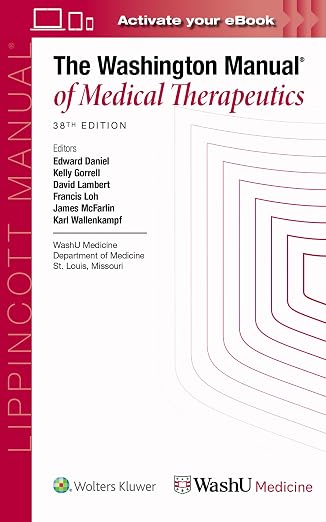
The Washington Manual of Medical Therapeutics
Washington University
38th edition · 2026A more detailed ward companion for admissions, common inpatient problems, and the transition into intern year.

Clinical equipment
Littmann Classic III Stethoscope
Littmann
Model 5620 · Black · 27-inchAn everyday bedside examination tool to consider for rotations and residency if you need to replace your current stethoscope.

Clinical equipment
The Physicians Folding Clipboard
Fellow Medical
Trifold · Letter-size paper · BlackA folding clipboard for organizing paper notes on rounds. Follow your hospital’s policies for patient information.

Scrubs
COZYFIT Women’s Scrub Set
COZYFIT
Women’s fit · Select size and color on AmazonA V-neck top and jogger set for clinical days. Check your hospital’s required color and whether it supplies scrubs.
Check current prices, editions, sizes, and seller details on Amazon.
Official resources
Common questions
Is Welcome Back a residency program?
No. Welcome Back is a career-navigation and re-entry network for internationally trained health professionals. It may help with credentials, licensing guidance, education referrals, job readiness, English support, and alternative career pathways, but it does not replace ECFMG, ERAS, NRMP, state licensure, or residency training.
Who should look into it?
IMGs who need local guidance, career coaching, credential navigation, U.S. health care orientation, employment support, or alternative health care pathways while the residency plan continues separately.
Does every Welcome Back center serve physicians?
Not always in the same way. Some centers serve a broad range of internationally trained health professionals, while some current pages are nurse-focused or locally specific. Always confirm the current professions served, service area, fees, and whether physician-specific guidance is available.