Key takeaways
- ECFMG automatically transmits and updates the IMG-only Status Report and includes it in the residency Token fee.
- Programs can see Certification, credential, exam-pass, school, Pathway, explanatory-note, and certificate-expiration information when applicable.
- The report generally does not include numerical current USMLE scores; those require the separate official FSMB/MyERAS transcript workflow.
- An automatic Status Report update does not guarantee a residency program will automatically re-review an application.
- Applicants should troubleshoot the upstream MyIntealth case, follow program-specific rules, and protect enough time for Certification and onboarding.
Fast answer
The ECFMG Status Report for ERAS is the standardized, IMG-only document through which ECFMG tells residency programs what its official record says about an applicant's Certification-related status. ECFMG transmits it automatically, updates it automatically as new information becomes available, and includes the service in the residency Token fee.
It can show ECFMG Certified: Yes or No, the certificate issue date, examinations passed for Certification, medical school and degree year, whether medical education credentials are complete or incomplete, explanatory notes, Pathway completion information, and—when Certification was obtained through a Pathway—the certificate expiration date.
It is not a score transcript, a diploma, an MSPE, a medical school transcript, or proof that a program has decided the applicant is eligible. Numerical USMLE results and complete attempt history belong in the separate official USMLE transcript. Program screening decisions remain with each program and institution.
The most important operational distinction is simple: an ECFMG Status Report update is automatic; a new USMLE score is not. Applicants who receive a later Step score must follow the current FSMB and MyERAS transcript workflow and use the MyERAS resend function when required.
One application, several records
Applicants often describe an ERAS file as though it were one PDF. Programs actually review a collection of records created and controlled by different organizations. Understanding who owns each record prevents the two most common errors: trying to upload something that is automatic and assuming an automatic update changes a separate document.
| Record | Primary owner | What it establishes | Update behavior |
|---|---|---|---|
| MyERAS application | Applicant / AAMC system | Experiences, education, scholarly work, geographic and other application fields | Locked in important respects after certify and submit |
| ECFMG Status Report | ECFMG | Official Certification-related status for an IMG | Transmitted and updated automatically |
| USMLE transcript | FSMB / USMLE workflow with MyERAS delivery | Official examination scores and attempt history | Applicant must retrieve, assign, and resend later scores as applicable |
| Medical school transcript | School or applicant submission through ECFMG ERAS Support Services | Courses, clerkships, duration, and grades | New or corrected document must be processed |
| MSPE | Medical school | School's performance evaluation | New or corrected document must be processed |
| Letters of recommendation | Letter authors through the AAMC Letter Writer Portal | Narrative assessments | Each letter is separately uploaded and assigned |
| NRMP eligibility verification | ECFMG and NRMP | Whether IMG examination requirements are verified for Match participation | Separate from the ERAS Status Report workflow |
What the ECFMG Status Report contains
ECFMG publishes a specific field list. Read the list literally. A program can use these fields to verify an applicant's claims and apply its eligibility policy, but the report is not a complete narrative of every pending task in MyIntealth.
The report includes both a Certification result and selected components underlying that result. That is why a not-yet-certified applicant may still have useful positive information reported—for example, examinations passed, an accepted Pathway, or complete credentials.
| Official field | What a program can learn | What not to infer |
|---|---|---|
| MyIntealth ID and USMLE ID | The identifiers connecting the ECFMG and examination records | An ID does not prove Certification or a passing score |
| Applicant name and birth date | Identity matching information | A mismatch should not be ignored or explained casually |
| ECFMG Certified: Yes or No | Whether ECFMG's record currently shows Certification | No does not reveal the exact missing requirement |
| Certificate issue date | When the certificate was issued, if applicable | Issue date alone does not establish current validity when an expiration applies |
| Examinations passed for Certification | Which required examinations were passed and the month/year | Not the current numerical USMLE score transcript |
| Medical school and degree year | School of graduation and reported year | Not the applicant's full academic record |
| Medical Education Credential Status | Complete or incomplete in ECFMG's Certification record | Incomplete does not specify whether the school, applicant, or ECFMG is the current actor |
| Explanatory notes | Additional official context when applicable | Absence of a note is not a general endorsement of the application |
| Pathway information | Whether the clinical and communication skills requirements were met through a Pathway | Not an OET subscore report or full Pathway case log |
| Certificate expiration | Expiration date for Pathway-based Certification | A displayed certificate is not necessarily valid through the residency start date |
| CSA valid-through date, if applicable | Historical clinical-skills information for relevant applicants | Not generally relevant to a new 2027 Pathway applicant |
What programs do not get from this report
A useful way to understand the report is to identify what must arrive elsewhere. The Status Report does not replace the records a program uses to judge examination performance, academic performance, clinical performance, letters, experiences, or program fit.
ECFMG expressly says current USMLE scores can be reported only through the official USMLE transcript, subject to narrow historical-examination exceptions. The report may show that a Certification examination was passed and when, but a pass record is different from the score report used for program screening.
- No current numerical Step 1 or Step 2 CK score.
- No complete current USMLE attempt history in place of the official transcript.
- No medical school course list, clerkship grades, or full academic transcript.
- No MSPE narrative or comparative school assessment.
- No letters of recommendation.
- No OET Medicine subscore sheet.
- No Mini-CEX encounter-level ratings or evaluator comments.
- No visa sponsorship decision.
- No state training-license determination.
- No program-specific decision that the applicant satisfies its selection criteria.
- No guarantee that an application was reviewed, re-reviewed, interviewed, or ranked.
Status Report versus USMLE transcript
This distinction deserves its own checklist because it changes applicant behavior. The Status Report asks, in part, whether ECFMG recognizes examinations as passed for Certification. The USMLE transcript communicates the official examination history that programs use for detailed score review.
For the 2027 season, FSMB processes ERAS USMLE transcript requests. Applicants pay and authorize the release in the FSMB USMLE Portal, initiate retrieval in MyERAS using the correct USMLE ID, get the scores, assign the transcript, and apply. When a later result is released, the applicant uses MyERAS to resend scores to programs previously designated to receive the transcript.
| Question | ECFMG Status Report | Official USMLE transcript |
|---|---|---|
| Who needs it? | IMG residency applicants | Applicants whose programs require or consider USMLE history |
| Shows ECFMG Certified Yes/No? | Yes | No |
| Shows credential complete/incomplete? | Yes | No |
| Shows Pathway and certificate expiration? | Yes, when applicable | No |
| Shows numerical current USMLE scores? | Generally no | Yes, where scores are reportable |
| Shows complete Step attempt history? | No | Yes |
| Applicant manually assigns it? | No; automatically assigned to applied programs | Yes |
| Later information updates automatically? | Yes, as ECFMG receives new information | Applicant action is required to resend new scores |
| Separate fee? | Included in ECFMG Token fee | Transcript fee applies through the current FSMB process |
Automatic does not mean instantaneous
ECFMG's promise of automatic updates answers who must initiate transmission. It does not promise that the underlying Certification task, school verification, Pathway review, certificate issuance, system synchronization, or program re-review occurs instantly.
A visible Status Report is the downstream expression of ECFMG's record. If a diploma verification has not returned, an OET result has not matched, a Pathway application is incomplete, or a certificate is still in quality review, there may be no new status available to transmit.
ECFMG's current processing-times page separates several service stages. As of July 2026 it lists standard time targets, but explicitly warns that completeness, complexity, request volume, and closures can change an individual timeline. Use those targets for planning, not as a guaranteed delivery date.
| Stage | Who may control it | Applicant's useful action |
|---|---|---|
| Credential submitted and reviewed for dispatch | Applicant and ECFMG | Confirm correct document, translation, and case status |
| Primary-source verification at the medical school | Medical school | Contact the authorized school office with the request details |
| Returned verification review | ECFMG | Monitor My Cases and answer any document request |
| OET result release and identity matching | Applicant, OET, and ECFMG | Release results correctly and verify the MyIntealth ID |
| Pathway evidence and review | Applicant, licensing authority or evaluators, and ECFMG | Complete every required item and check the live Pathway case |
| Certificate quality assurance and issuance | ECFMG | Allow current published processing time after all requirements are complete |
| Report synchronization to MyERAS | ECFMG / ERAS systems | Check the document status before sending inquiries |
| Program notices and re-review | Program | Follow the program's update policy; do not assume an automatic re-screen |
How the report is assigned in MyERAS
An IMG does not select programs one by one for the ECFMG Status Report. The MyERAS applicant guide states that it is automatically assigned to every program to which an IMG residency applicant applies. The Additional Documents area therefore may show “No Available Action” for this record.
That message is normal for an automatically managed document. It does not mean the report is defective. It means the applicant is not expected to upload, unassign, or manually resend it.
Do not generalize that rule to other documents. Personal statements and LoRs are assigned according to program strategy. The official USMLE transcript must be assigned. The Status Report follows the IMG application automatically.
| What you see | Likely meaning | What to do |
|---|---|---|
| ECFMG Status Report: No Available Action | Applicant assignment controls are intentionally unavailable | Confirm the document is present; do not try to upload a duplicate |
| Status Report uploaded / available | The current report reached MyERAS | Verify other required documents separately |
| USMLE transcript not retrieved | The separate score workflow is incomplete | Use the FSMB authorization and MyERAS retrieval steps |
| LoR uploaded but unassigned | The letter exists but is not attached to all intended programs | Make the program-specific assignment |
| MSPE or transcript not uploaded | A separate school/application document is unavailable | Follow ECFMG ERAS document-submission instructions |
How “ECFMG Certified: No” is interpreted
A No is a present-tense record, not a prediction. It can describe a current student waiting to graduate, a graduate whose diploma is still being verified, an applicant with a pending Pathway, an applicant awaiting a required examination result, or a person who is not currently eligible for Certification.
Programs cannot infer the exact missing component from the word No alone. But they may combine it with the other report fields, the USMLE transcript, degree year, applicant communication, and their own eligibility rules.
Applicants should not assume every program treats No the same way. ECFMG permits an IMG with the required IDs to buy a Token and apply before completing Certification examinations, but programs may require Certification at application, interview, ranking, appointment, or another stated date.
| Report pattern | Possible situation | Strategic issue |
|---|---|---|
| Certified No; credentials incomplete; student | Final diploma cannot yet be issued and verified | Confirm the program accepts current international students and model post-graduation timing |
| Certified No; credentials incomplete; graduate | Diploma verification still pending | Resolve the school or ECFMG bottleneck early |
| Certified No; credentials complete; Pathway pending | Clinical/communication requirement is unfinished or under review | Complete OET and Pathway evidence before hard deadlines |
| Certified No; Pathway accepted; exam incomplete | A Step requirement may remain | Check score-release timing and program screening rule |
| Certified No; exam and Pathway requirements complete | Credential or certificate issuance stage may remain | Review My Cases and allow the published processing interval |
| Certified Yes; expiration before training | Pathway-based certificate may lapse before start | Complete revalidation, Step 3/permanent validation, license, or approved extension route as applicable |
Medical Education Credential Status: complete versus incomplete
This field is one of the report's most consequential and most frequently misunderstood entries. ECFMG Certification requires acceptable medical education credentials that are verified directly with the issuing medical school. The ERAS field compresses that multistage process into complete or incomplete.
Incomplete does not identify the current owner of the delay. The applicant may not have submitted the final diploma, ECFMG may be reviewing it, the school may not have returned verification, a translation may be missing, the school response may be unacceptable, or a returned verification may still be under review.
The right troubleshooting source is the MyIntealth case, not speculation based on the ERAS label. ECFMG says the My Cases tab reflects the real-time status of individual requests and that customer service does not have hidden case details beyond the portal and published processing information.
- Confirm whether ECFMG has the final medical diploma and final transcript required for Certification.
- Confirm whether the credential was accepted for dispatch to the school.
- Identify the exact medical school office authorized to answer the verification request.
- Ask the school whether it received the request and whether it responded through the required channel.
- Check whether the response included every requested item, seal, signature, or translation.
- Watch My Cases for a returned-verification review or request for more information.
- Avoid uploading an ERAS transcript and assuming it completes Certification verification; the two workflows are separate.
- Escalate only after the relevant published interval has passed or a specific case problem appears.
The Pathway information programs can see
Applicants who meet ECFMG's clinical and communication skills requirements through a Pathway have that fact reported on the Status Report. When a Standard ECFMG Certificate is issued based on a Pathway, the report lists the certificate expiration date.
The field matters twice. Before Certification, an accepted Pathway can show progress even if another requirement remains. After Certification, the expiration date lets a program assess whether the certificate is expected to remain valid through the applicant's training start.
The Status Report is not the place to troubleshoot a pending Pathway. Use the dedicated Pathways application to determine whether ECFMG is waiting for OET results, a license/good-standing document, school attestation, OSCE evidence, Mini-CEX evaluations, or another item.
| Visible state | Reasonable reading | Next check |
|---|---|---|
| No accepted Pathway reported | Do not assume the requirement is complete | Open the 2027 Pathways application and inspect every requirement |
| Pathway requirement met | ECFMG recognizes the clinical and communication skills component | Confirm Step exams and credential verification separately |
| Certified through Pathway with future expiration | Certificate is currently valid but time-limited | Compare expiration with Match, contract, license, visa, and start dates |
| Expired certificate | The applicant does not hold a currently valid Pathway-based certificate | Determine the correct revalidation or permanent-validation route |
Certificate issue date and expiration date
Programs may care about both dates for different reasons. The issue date shows when ECFMG completed Certification. The expiration date, when present, shows the last date of current Pathway-based validity unless the applicant completes an approved action that extends or makes the certificate valid indefinitely.
A report showing Certified: Yes is not enough if the certificate will expire before residency entry. ECFMG requires valid, unexpired Certification for an IMG to enter ACGME-accredited graduate medical education. Institutions, visa sponsors, and state licensing authorities can have additional documentation timelines.
Applicants should compare the expiration date with every downstream milestone rather than only Match Day: contract processing, training-license application, visa documentation, hospital credentialing, orientation, and the official residency start.
| Milestone | Question to answer | If the answer is no |
|---|---|---|
| Program's ECFMG deadline | Will Certification be valid on the program's required date? | Ask whether the stated rule permits pending revalidation |
| NRMP Rank Order List deadline | Can ECFMG verify all examination requirements by the deadline? | Fix missing Step or Pathway requirements immediately |
| State training-license review | Will the board accept the current certificate and timing? | Follow the board's written rule |
| Visa sponsorship | Will required ECFMG documentation be valid when sponsorship is processed? | Follow the sponsor's current instructions |
| Orientation and employment | Will the certificate remain valid through onboarding? | Complete the appropriate validation route before the institutional cutoff |
| Residency start | Will the applicant hold valid, unexpired Certification? | Do not assume a Match result waives the requirement |
The report can update after applications are submitted
Submitting MyERAS before ECFMG Certification does not freeze the Status Report at its submission-day state. ECFMG says the report updates as new information becomes available. That allows a student, graduate, or pending Pathway applicant to reach a later milestone during the season.
The operational value is significant: the applicant does not need to purchase another Token, upload a certificate scan, or manually assign a replacement Status Report. Programs receive the official ECFMG-managed record.
The strategic limit is equally important: automatic document availability is not automatic human attention. Programs may run screens on the first day of access, review files in batches, lock interview decisions, or accept updates only through a specified channel. ECFMG cannot compel a program to revisit an application.
| New event | Status Report behavior | Applicant response |
|---|---|---|
| ECFMG Certification issued | Certified field and issue date can update automatically | Verify the report; notify selected programs only if permitted and useful |
| Credential status becomes complete | Credential field can update automatically | Continue tracking remaining Certification requirements |
| Pathway accepted | Pathway completion can be reported | Verify Step exams and credential completion |
| Certificate expiration or validity changes | Current validity information can update | Ensure programs and onboarding teams see the controlling official state |
| New Step 2 CK score released | Pass information may eventually affect Certification fields, but score is not delivered here | Use MyERAS Resend My Scores for the official transcript |
| New LoR uploaded | No effect | Assign the LoR to the intended programs |
| Corrected MSPE or school transcript | No substitution through the Status Report | Process the corrected ERAS document through the proper channel |
Applying before Certification: what the report changes
ECFMG states that an IMG with MyIntealth and USMLE IDs may obtain a Token and apply before completing the examinations required for Certification. The Status Report makes that possible without forcing the applicant to self-report Certification status as an unsupported claim: programs receive ECFMG's current record and subsequent updates.
This is permission to use ERAS, not a promise of program eligibility. A program may require Certification before it reviews, interviews, ranks, or appoints an IMG. A sponsoring institution may use an even earlier operational cutoff to allow enough time for licensing and visa processing.
Before submitting with Certified: No, identify which requirement remains, its realistic completion date, and the program's exact policy. An unfinished but scheduled Step 2 CK is strategically different from a diploma verification that has not reached the medical school.
Program policy still controls application review
Programs use the Status Report as evidence, but the report does not create one national screening rule. Applicants should research the program, sponsoring institution, GME eligibility, visa, and state-board pages independently.
The exact wording matters. “Must be ECFMG Certified at application” is different from “must be certified before ranking,” “preferred at interview,” or “required before appointment.” A generic statement that IMGs must be certified may require a concise written clarification of the relevant date.
Capture the page URL, access date, and exact language in a program tracker. Policies can change, and a saved record is more reliable than memory.
| Policy wording | Status Report implication | Application decision |
|---|---|---|
| Certification required when application is reviewed | Certified No may fail the initial screen | Wait or exclude unless the program confirms an exception |
| Certification required before interview | A timely automatic update may preserve eligibility | Model the issue date conservatively |
| Certification required before rank deadline | Later update may be acceptable | Finish well before the program's internal list meeting |
| Certification required before start | Application can be considered while pending | Still model diploma, issuance, license, and visa timing |
| Certification preferred | Certified Yes may improve file completeness | Apply based on total fit; do not mislabel preference as a ban |
| No date stated | Ambiguous | Ask one precise, date-based question |
A concise program-update message
If a material Status Report change occurs after program access, a short update can be appropriate. The message should identify the application, state the exact new official status and date, express continued interest, and stop. Do not attach an unofficial certificate scan unless the program requests it.
A useful template is: “Subject: ERAS update—ECFMG Certification issued, AAMC ID [ID]. Dear [Program], I am writing to share that ECFMG issued my certificate on [date], and my ECFMG Status Report in MyERAS has updated automatically. I remain very interested in [program] because [one specific fit sentence]. Thank you for considering this update. Sincerely, [name].”
For credential completion or Pathway acceptance, replace the Certification sentence with the exact official milestone. Do not say “ECFMG Certified” when only the Pathway was accepted, and do not ask the program to infer a Step score from the Status Report.
- Follow a program's update portal or email instructions.
- Send only after the official record changes.
- Use the same name and AAMC ID shown in the application.
- State one material milestone and its date.
- Add at most one program-specific interest sentence.
- Do not send repeated “still pending” messages.
- Do not attach sensitive identity documents without a requested secure channel.
- Do not imply that an automatic update guarantees interview reconsideration.
Troubleshooting: the Status Report did not appear
First confirm that the applicant requested the correct 2027 residency Token through MyIntealth and registered that Token with the correct MyERAS account. The Token is the bridge that identifies ECFMG as the IMG's Designated Dean's Office for the season.
Next distinguish a missing document from an unchanged document. If the report exists but still shows Certified: No, the issue may be the upstream ECFMG record. If it is absent from MyERAS, the issue may involve Token registration, account identity, transmission, or display.
Use the organization that controls the suspected layer. ECFMG ERAS Support Services handles the IMG Status Report and designated-office documents. The AAMC Support Center handles the MyERAS interface. FSMB handles the 2027 USMLE transcript request and payment layer. Sending the same vague message to all three slows diagnosis.
| Observation | Check | Best owner |
|---|---|---|
| No Status Report in Additional Documents | Correct-season Token registered to correct MyERAS account | ECFMG ERAS Support Services, then AAMC if display-specific |
| Report exists but identity is wrong | Name, birth date, MyIntealth ID, and USMLE ID records | ECFMG for its record; AAMC for MyERAS profile fields |
| Report still says Certified No | Certification, Pathway, credential, and issuance cases in MyIntealth | ECFMG |
| Credential still says incomplete | Exact primary-source verification stage | ECFMG and medical school as indicated by the case |
| New score missing | FSMB payment/authorization and MyERAS retrieval/resend | FSMB or AAMC based on the failing step |
| Program says it cannot see the report | Application was paid/delivered and program assignment status | AAMC / ECFMG ERAS Support Services with screenshots and identifiers |
Evidence to collect before contacting support
A support request should let the recipient identify the account, document, season, expected event, and current display without exposing unnecessary sensitive information. Capture evidence before the page changes.
Never send a password, one-time code, full identity document, or payment card details by ordinary email. Use the organization's secure case or upload channel when documents are requested.
- Full name exactly as displayed in the account.
- MyIntealth ID and AAMC ID; provide the USMLE ID only where relevant.
- ERAS 2027 residency season and Token registration date.
- Exact document label and visible status.
- Date the underlying ECFMG milestone changed.
- Relevant MyIntealth case number.
- Screenshot showing the status, with unrelated personal data redacted where possible.
- Steps already attempted and their dates.
- Browser and device only if the issue appears to be a MyERAS display problem.
- One precise requested outcome, such as confirmation of transmission or correction of a mismatch.
When a new Step score arrives
Do not wait for the ECFMG Status Report to function as a score-delivery service. The official USMLE transcript is the controlling score record. The 2027 workflow begins in the FSMB USMLE Portal, where the applicant pays and authorizes the request, then continues in MyERAS with score retrieval and assignment.
MyERAS can display Scores Retrieved, Processing, Data Mismatch, or No Score Available. A mismatch calls for exact comparison of first name, last name, USMLE ID, and date of birth. No Score Available can reflect a score that is not yet reported, missing FSMB authorization/payment, an exam not yet taken, or another examination-history condition.
Once a new score posts after the initial transcript was sent, use Resend My Scores in MyERAS for programs that should receive the update. Verify the request-status report rather than assuming a Certification-field change transmitted the numerical result.
| Step | Confirmation |
|---|---|
| FSMB authorization | Correct ERAS season, identity, payment, and release completed |
| MyERAS retrieval | Correct USMLE ID entered and Get Scores completed |
| Transcript assignment | Transcript assigned to each intended program |
| Later score | Resend My Scores used after the result became available |
| Delivery status | Request report checked for the affected programs |
| Program communication | Concise score update sent only if program policy permits and strategic value exists |
Repeat applicants and document reuse
A prior-season Status Report does not replace participation in the current ERAS season. A residency Token is valid for one season, and an applicant needs a new Token to register for ERAS 2027.
ECFMG offers reuse of certain prior-season documents—such as stored MSPEs, medical school transcripts, photographs, and eligible LoRs—through defined processes. The current Status Report remains an ECFMG-generated document tied to the applicant's current record, not a PDF the applicant should carry forward manually.
Repeat applicants should review every imported document for currency. A current Status Report does not correct an outdated MSPE, old photograph, obsolete LoR, or unchanged personal statement.
Privacy, accuracy, and discrepancy risks
The Status Report contains identifiers and birth date along with high-stakes professional information. Applicants should access it through official systems and avoid circulating screenshots publicly or sending it through unsecured channels.
More importantly, the report gives programs an authoritative comparison point. A MyERAS statement claiming current Certification when the report says No creates an avoidable discrepancy. A claimed degree year, school, or exam status that conflicts with official records can trigger questions even when the original error was accidental.
Correct identity or biographic problems through the controlling organization before relying on an explanation to programs. Keep copies of submitted change requests and case numbers.
- Use the exact legal and account name required by each system.
- Keep one MyIntealth account, one AAMC account, and the correct USMLE ID association.
- Do not describe Pathway acceptance as full Certification.
- Do not describe credential submission as completed primary-source verification.
- Do not convert a passed exam into a numerical score claim not supported by the transcript.
- Do not obscure a certificate expiration date.
- Correct the official source record instead of uploading an unofficial substitute.
- Document any unavoidable timing discrepancy in concise, factual language.
What an IMG should verify before September 23
Programs gain access to 2027 MyERAS applications on September 23, 2026 at 9:00 a.m. Eastern Time. ECFMG recommends having MSPE and medical school transcript material submitted early enough for processing, with a September 11 target on its application-process page.
The Status Report is only one element of file readiness. Use the final pre-access review to test every controlled handoff: ECFMG report, USMLE transcript, MSPE, school transcript, LoRs, photo, personal statement assignments, signals, supplemental specialty items, and program payment.
- The correct 2027 Token is registered to the correct MyERAS account.
- The ECFMG Status Report is visible in Additional Documents.
- Name, date of birth, medical school, and degree year are accurate.
- The Certified field matches the real current state.
- Credential status matches the MyIntealth record or an active case is being resolved.
- Pathway and expiration information are correct when applicable.
- FSMB USMLE authorization, retrieval, and transcript assignments are complete.
- Every program's ECFMG and Step timing rule is recorded.
- MSPE and medical school transcript are available.
- Every intended LoR and personal statement is correctly assigned.
- New scores will be resent through the proper workflow.
- A concise material-update plan exists for programs that allow updates.
Decision tree when the report is not what you expected
| Question | If yes | If no |
|---|---|---|
| Is the Status Report visible in MyERAS? | Inspect the exact fields | Verify current-season Token registration and contact the correct support owner |
| Does it show the wrong identity or school data? | Open a source-record correction case | Continue to Certification fields |
| Does Certified show No? | Inspect exams, Pathway, credentials, graduation, and issuance separately | Check issue and expiration dates |
| Does credential status show incomplete? | Open My Cases and identify the precise verification stage | Check Pathway and exams |
| Is Pathway information missing or wrong? | Inspect the Pathways application and supporting evidence | Check Certification issuance stage |
| Is the certificate expired or expiring before start? | Begin the correct validation route immediately | Confirm downstream licensure and visa requirements |
| Is only a new Step score missing? | Use the FSMB/MyERAS transcript resend workflow | Do not manufacture an update problem where none exists |
Common mistakes
- Uploading a certificate image because the Status Report is automatic.
- Trying to assign the Status Report manually to selected programs.
- Assuming “No Available Action” means the document is broken.
- Treating the Status Report as a numerical USMLE score transcript.
- Failing to resend a later Step score through MyERAS.
- Assuming Certified: No tells a program exactly what remains.
- Assuming credential incomplete always means the medical school is at fault.
- Confusing the ERAS medical school transcript with Certification credential verification.
- Calling an accepted Pathway full ECFMG Certification.
- Ignoring the expiration date on Pathway-based Certification.
- Expecting automatic document updates to force automatic program re-review.
- Sending repeated program emails for nonmaterial changes.
- Waiting until a program deadline to investigate an upstream school-verification delay.
- Using an old-season Token or expecting a prior Status Report to transfer manually.
- Sending sensitive identity material through ordinary email.
- Relying on screenshots instead of correcting the controlling official record.
Master Status Report checklist
- I understand that the report is ECFMG-generated and IMG-only.
- I registered the correct 2027 residency Token with the correct MyERAS account.
- I can see the report in Additional Documents.
- I know it is automatically assigned to programs I apply to.
- I will not try to upload or manually resend it.
- My name, date of birth, MyIntealth ID, and USMLE ID are correct.
- My medical school and degree year are accurate.
- I know whether the report currently says ECFMG Certified: Yes or No.
- I know the exact unfinished component if it says No.
- My Medical Education Credential Status is understood and supported by a current MyIntealth case.
- I checked Pathway information separately in the Pathways application.
- I checked the certificate issue and expiration dates.
- I compared expiration with licensing, visa, onboarding, and residency-start dates.
- I requested and assigned the separate official USMLE transcript.
- I will use Resend My Scores for a later result.
- I checked each program's own Certification timing rule.
- I understand that automatic updates do not guarantee program re-review.
- I will notify programs only after a material official change and only as policy permits.
- I saved case numbers and evidence for any mismatch.
- I will recheck live ECFMG, AAMC, FSMB, NRMP, program, and state rules.
Bottom line
The ECFMG Status Report for ERAS is the authoritative, automatically managed summary of an IMG's Certification-related record. It tells programs whether the applicant is certified, identifies selected examinations passed, reports school and credential status, reflects Pathway completion, and lists Pathway-based certificate expiration when applicable.
Applicants do not upload, assign, or manually refresh it. ECFMG transmits it, assigns it through the IMG ERAS workflow, and updates it as new official information becomes available.
The report does not carry current numerical USMLE scores or replace the official USMLE transcript. For ERAS 2027, complete the FSMB authorization and MyERAS retrieval process, assign the transcript, and resend later scores when needed.
Use the Status Report as a verification layer, not a strategy by itself. The safest application combines an accurate official report with program-specific eligibility research, early credential and Pathway completion, correct score delivery, and enough time for Certification, licensing, visa, and onboarding.
This guide reflects official information available July 18, 2026. Live ECFMG, AAMC, FSMB, USMLE, NRMP, program, institution, and state-board instructions control if any policy, fee, field, or date changes.
Books & equipment
Get ready for residency
Step 3 preparation, ward references, and clinical essentials selected for doctors working toward the Match and the start of residency.

Step 3
Master the Boards USMLE Step 3
Conrad Fischer
8th edition · 2026Work through management decisions alongside your Step 3 question bank and CCS practice.

Ward reference
Pocket Medicine
Marc S. Sabatine
9th edition · 2025A compact internal medicine reference for pre-round reading, clinical differentials, and reviewing the day’s cases.
Ward reference
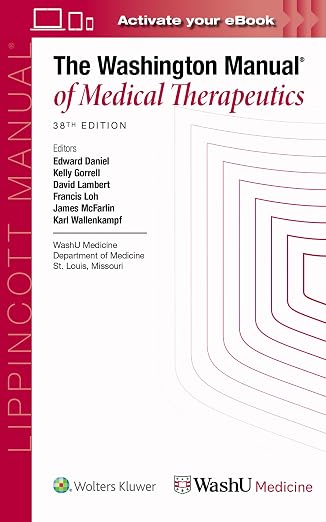
The Washington Manual of Medical Therapeutics
Washington University
38th edition · 2026A more detailed ward companion for admissions, common inpatient problems, and the transition into intern year.

Clinical equipment
Littmann Classic III Stethoscope
Littmann
Model 5620 · Black · 27-inchAn everyday bedside examination tool to consider for rotations and residency if you need to replace your current stethoscope.

Clinical equipment
The Physicians Folding Clipboard
Fellow Medical
Trifold · Letter-size paper · BlackA folding clipboard for organizing paper notes on rounds. Follow your hospital’s policies for patient information.

Scrubs
COZYFIT Women’s Scrub Set
COZYFIT
Women’s fit · Select size and color on AmazonA V-neck top and jogger set for clinical days. Check your hospital’s required color and whether it supplies scrubs.
Check current prices, editions, sizes, and seller details on Amazon.
Official resources
Common questions
What is the ECFMG Status Report in ERAS?
The ECFMG Status Report is an IMG-only supporting document that ECFMG automatically transmits to MyERAS. It confirms the applicant's ECFMG Certification status and reports specified identity, examination, medical school, credential, Pathway, and certificate-expiration information. It is not the same document as the official USMLE transcript.
Do I have to upload or assign my ECFMG Status Report?
No. ECFMG states that it transmits the report automatically, updates it automatically as new information becomes available, and includes the service in the ERAS Token fee. The MyERAS user guide also states that the report is automatically assigned to every program to which an IMG residency applicant applies.
Does the ECFMG Status Report show USMLE scores?
It generally shows the month and year examinations required for Certification were passed, not numerical USMLE scores. Current USMLE scores and the complete USMLE attempt history are delivered through the separate official USMLE transcript. ECFMG identifies limited legacy-examination exceptions, including certain old ECFMG, FMGEMS, VQE, NBME Part, and FLEX results.
Will my ECFMG Status Report update after I become certified?
Yes. ECFMG says the report updates automatically as new information becomes available. A later certificate can therefore change the report from ECFMG Certified: No to Yes and add the issue date and, when applicable, expiration date. Automatic transmission does not guarantee that every program will immediately reopen or re-review the application.
Does an ECFMG Status Report update send a new Step 2 CK score?
No. The ECFMG Status Report and official USMLE transcript are separate. For ERAS 2027, applicants authorize and pay for the USMLE transcript through FSMB, retrieve it in MyERAS, and must use the MyERAS resend workflow when a new score becomes available for programs that previously received the transcript.
What does Medical Education Credential Status incomplete mean?
It means ECFMG's record does not yet show the applicant's required medical education credentials as complete. It is not a diagnosis of the exact problem. A diploma may still need to be submitted, sent for primary-source verification, returned by the medical school, translated, accepted, or reviewed. The applicant should inspect the relevant MyIntealth case rather than infer the missing step from ERAS alone.
Does the Status Report show my ECFMG Pathway?
ECFMG states that meeting the clinical and communication skills requirements through a Pathway is reported on the Status Report. If Certification is based on a Pathway, the report also lists the certificate's expiration date. The report should not be treated as a substitute for checking the detailed Pathway application and evidence status in MyIntealth.
Should I email programs when my ECFMG Status Report updates?
Only when the update is material, the program permits updates, and the message adds useful context. A concise note can be appropriate after Certification, credential completion, or another stated eligibility milestone. Follow each program's communication policy, avoid repeated status emails, and never claim a status before it appears in the official record.