Key takeaways
- Career coaching can help IMGs build income, U.S. workplace fluency, and professional momentum.
- Clarify whether the service supports residency, employment, or both.
- Keep a medical CV and U.S.-style employment resume as separate documents.
- Use public or nonprofit bridge supports when possible, and keep residency tasks scheduled if the Match remains the goal.
Use coaching to keep momentum, not to replace the residency plan
IMGs can spend years between exams, immigration constraints, USCE, ECFMG steps, applications, and Match cycles. During that time, many physicians feel professionally frozen: too trained to feel new, but not yet licensed to practice independently in the United States.
Good career coaching can turn that waiting period into structured progress. It can help with U.S.-style resumes, employer communication, transferable skills, job search strategy, interview practice, and realistic bridge roles in health care or adjacent fields.
Stability can make your residency plan stronger because you are not trying to solve every life problem during ERAS season. The key is to keep the roles separate. Career coaching helps you function in the U.S. workforce. Residency preparation helps you become a credible resident applicant.
Separate three goals before choosing a program
Know whether you want residency support, bridge employment, or alternative career exploration. A coach can help with more than one, but the documents, language, timeline, and success metrics differ.
This distinction prevents disappointment. A workforce coach may be excellent at helping you land a clinical research coordinator job, care coordination role, public health position, medical assistant role, or health-tech job. That same coach may not know how to evaluate program signaling, specialty competitiveness, ECFMG timing, letters of recommendation, or the Match.
- Residency: ECFMG, USMLE, USCE, letters, ERAS, interviews.
- Bridge employment: resume, work authorization, local employers, transferable skills.
- Alternative career: public health, research, care coordination, health tech, education, administration.
Build two documents, not one confusing hybrid
Your medical CV can be detailed and academic. Your employment resume should be shorter, role-specific, and written for U.S. hiring managers.
This is where many IMGs struggle. A residency CV rewards clinical chronology, research, publications, medical school, rotations, observerships, and academic detail. A U.S. employment resume rewards relevance, outcomes, keywords, transferable skills, and readability for non-physician hiring teams.
Do not use language that implies a U.S. license or clinical authority you do not have. If you were a physician abroad, say that clearly. If you are not licensed in the United States, do not write as if you can independently diagnose, prescribe, or treat patients in a U.S. role.
Translate physician experience into U.S. employer language
Many internationally trained physicians undersell themselves because they describe everything in licensing terms. Employers may not understand foreign hospital titles, residency-equivalent training, or the scope of practice in another country.
Translate the work into skills: patient education, care coordination, triage communication, chart review, quality improvement, team leadership, research literacy, data collection, chronic disease follow-up, infection control, community outreach, medical terminology, and cross-cultural communication.
Use numbers where they are honest: clinic volume, team size, project duration, patient education sessions, languages used, quality metrics, or documentation load. The goal is not to inflate. It is to make the value legible.
Know which bridge roles help and which roles drain you
The best bridge role depends on your timeline. A job that is perfect for financial stability may not produce useful residency evidence. A volunteer role that is great for clinical mission may not pay bills. Be honest about what you need in the next six months.
Useful bridge roles for IMGs may include clinical research coordinator, research assistant, care coordinator, patient navigator, health educator, medical assistant where legally appropriate, scribe, public health worker, quality improvement assistant, community health worker, medical interpreter if certified and qualified, and health-tech or medical education roles.
A role is more valuable when it gives you U.S. workplace references, exposure to patient care systems, communication practice, and a schedule that still allows exam or ERAS work. A role is risky when it consumes all study time, creates scope-of-practice confusion, or pushes you away from the physician pathway without a deliberate decision.
Use Welcome Back Centers and public programs as anchors
The Welcome Back Initiative is important because it is a national network focused on internationally trained health professionals. Its centers are not all identical, but the model commonly includes orientation, case management, educational guidance, career support, and referrals.
For IMGs, this type of support can be more grounded than random online advice because it starts from the reality of internationally trained professionals, credential gaps, local systems, and state-specific workforce opportunities.
Check the current center directory and services directly. Some centers are hosted by community colleges or public agencies, and services may vary by location, funding, profession, and local partnerships.
Keep residency work on the calendar
If residency remains the goal, schedule weekly time for clinical skills, exam review, program research, and interview practice. Work and coaching should support the plan, not silently replace it.
A simple weekly structure works better than vague ambition. Reserve time for one ECFMG or USMLE task, one clinical skill task, one application task, and one professional relationship task. That might mean completing a credential step, practicing oral presentations, updating an ERAS experience, and asking for feedback from a supervisor.
If your job schedule makes this impossible for months at a time, admit it early and redesign the plan. Many IMGs do not fail because they lack motivation. They fail because the calendar is pretending that a full-time job, family pressure, exam study, USCE, and applications can all fit without tradeoffs.
Ask programs sharper questions
A good coaching or bridge program should be able to explain exactly whom it serves and what it helps participants produce. Be cautious with vague promises like we help IMGs match, especially if the service is actually employment coaching.
Ask about eligibility, costs, funding, outcomes, coach background, employer partners, health care experience, resume support, interview practice, licensing guidance, referrals, and whether they have worked with physicians specifically. Ask what they do not do. That answer is often the most revealing.
Also ask how they handle scope-of-practice language. Programs serving internationally trained physicians should understand the difference between honoring prior physician experience and avoiding misleading U.S. licensure claims.
- Do you work specifically with internationally trained physicians or all professionals?
- Is the goal employment, residency readiness, licensing navigation, or career change?
- What documents will I leave with?
- Do you help with U.S.-style resumes and interview practice?
- Do you have health care employer or university partners?
- Are services free, grant-funded, low-cost, or paid?
- What outcomes do you track and over what time period?
Use coaching material in ERAS carefully
A bridge job or coaching program can still strengthen ERAS, but only if you extract the right evidence. Residency programs are not looking for a list of every job you took. They are looking for readiness, judgment, communication, service, reliability, and growth.
If your bridge role included patient navigation, research coordination, health education, community work, or quality improvement, describe what you learned about U.S. health systems and teamwork. If it gave you feedback from U.S. supervisors, keep that feedback. If it strengthened your specialty choice, write down why.
Use the same caution as with USCE: be accurate about your role. Employment in a health care setting is not automatically clinical experience, and career coaching is not a rotation. The strength comes from honest reflection, not inflated labels.
A practical 30-day plan
In week one, choose the goal: employment now, residency support, or alternative exploration. In week two, build the right document: CV for residency, resume for employment, or both. In week three, contact two public or nonprofit supports such as a Welcome Back Center, state workforce program, community college, or immigrant professional organization. In week four, run a mock employment interview and a mock residency interview so you can hear the difference.
At the end of the month, you should know whether coaching is producing concrete outputs. If you only have encouragement and no documents, contacts, interviews, applications, or clearer plan, the support is not strong enough.
The bottom line
Career coaching is not a consolation prize for IMGs. Used well, it can restore professional momentum, create income, build U.S. workplace fluency, and give you stronger language for your story.
The danger is drift. If residency remains the goal, keep the physician pathway visible every week. Let coaching stabilize the life around the application, not quietly replace the application itself.
Books & equipment
Get ready for residency
Step 3 preparation, ward references, and clinical essentials selected for doctors working toward the Match and the start of residency.

Step 3
Master the Boards USMLE Step 3
Conrad Fischer
8th edition · 2026Work through management decisions alongside your Step 3 question bank and CCS practice.

Ward reference
Pocket Medicine
Marc S. Sabatine
9th edition · 2025A compact internal medicine reference for pre-round reading, clinical differentials, and reviewing the day’s cases.
Ward reference
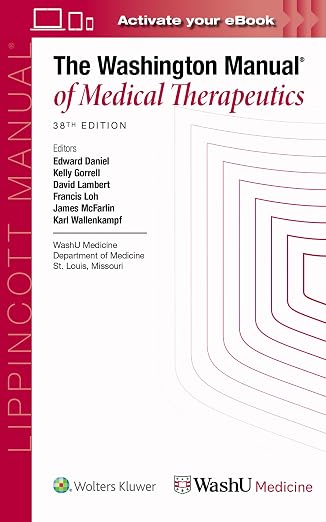
The Washington Manual of Medical Therapeutics
Washington University
38th edition · 2026A more detailed ward companion for admissions, common inpatient problems, and the transition into intern year.

Clinical equipment
Littmann Classic III Stethoscope
Littmann
Model 5620 · Black · 27-inchAn everyday bedside examination tool to consider for rotations and residency if you need to replace your current stethoscope.

Clinical equipment
The Physicians Folding Clipboard
Fellow Medical
Trifold · Letter-size paper · BlackA folding clipboard for organizing paper notes on rounds. Follow your hospital’s policies for patient information.

Scrubs
COZYFIT Women’s Scrub Set
COZYFIT
Women’s fit · Select size and color on AmazonA V-neck top and jogger set for clinical days. Check your hospital’s required color and whether it supplies scrubs.
Check current prices, editions, sizes, and seller details on Amazon.
Official resources
Common questions
Is career coaching useful if I still want residency?
Yes, if it supports local employment, communication, resume strategy, and stability while residency preparation continues separately.
What should I ask a coaching program?
Ask whom they serve, what outcomes they track, whether they know internationally trained physicians, and whether they support resumes, interviews, employers, or credentials.
Can career coaching replace USCE or residency advising?
No. Career coaching can support employment and professional communication, but residency still requires ECFMG, exam planning, clinical credibility, letters, ERAS strategy, and interview preparation.