Key takeaways
- A strong IMG personal statement has one thesis: specialty fit, clinical growth, and readiness now.
- It should not repeat the CV or rely only on biography.
- Concrete clinical examples and plain language build credibility.
- IMG context should be framed as evidence of adaptability and preparation, not as an apology.
Choose one thesis
Many IMG personal statements fail because they try to include every meaningful life event: childhood dream, medical school, immigration, family sacrifice, exams, gaps, observerships, research, and specialty choice. The result is a crowded essay with no argument.
Choose one thesis instead: why this specialty, why you are ready for U.S. residency now, and what evidence supports that readiness. Once the thesis is clear, every paragraph should support it.
A useful thesis sounds like this: My path through international training, community-based patient care, and recent U.S. clinical preparation has led me toward family medicine because I want broad, relationship-centered training for underserved patients.
Use a clinical example with a lesson
One concrete example is usually stronger than several vague claims. The case does not need to be dramatic. It should show how you think, communicate, or grew toward the specialty.
The best examples are small but revealing: a chronic disease follow-up that taught continuity, a difficult family conversation that taught humility, a resource-limited setting that shaped diagnostic discipline, an outpatient experience that clarified family medicine, or a hospital team moment that confirmed internal medicine.
Keep patient details de-identified. The point is not the rare diagnosis. The point is the professional lesson you carried forward.
- Set context briefly.
- Name the challenge.
- Explain your role or observation.
- Reflect on what changed.
- Connect the lesson to residency.
Write IMG context with confidence
International background can show adaptability, language skills, patient diversity, resourcefulness, and commitment. It can also explain why U.S. training is the right next step. Do not spend the essay apologizing for being an IMG or nontraditional applicant.
The tone matters. Weak IMG framing sounds defensive: Although I am an IMG, I hope to prove myself. Strong IMG framing sounds grounded: My international training taught me to communicate across systems, adapt to limited resources, and stay attentive to the social context of illness. My recent U.S. preparation has helped me translate those strengths into team-based care.
That shift is powerful. You are not asking the program to ignore your path. You are explaining how the path has prepared you.
Do not repeat the CV
The personal statement should not summarize every rotation, job, publication, and volunteer experience. ERAS already has places for experiences and documents. The statement should interpret the pattern behind them.
Instead of listing three observerships, explain what changed across them. Did your oral presentations become more concise? Did you understand U.S. outpatient follow-up better? Did feedback change how you think about patient education? Did one specialty feel more natural than others?
Programs are not only reading for what you did. They are reading for whether you understand what it means.
Handle gaps, attempts, and hardships carefully
A personal statement can address a gap, attempt, or hardship if it is central to your story and if the explanation strengthens current readiness. It should not become a long defense.
Use a brief accountable structure: name the context, avoid blame, explain what changed, and return to the residency case. If the issue is better handled in another part of the application or an interview answer, do not force it into the statement.
A hardship paragraph should earn its space. It should help the reader understand resilience, maturity, service, or growth. If it only asks for sympathy, revise it.
Show specialty fit through daily work
Specialty fit is stronger when it is tied to the actual work of the field. For internal medicine, show diagnostic reasoning, complexity, inpatient teamwork, longitudinal disease management, or subspecialty curiosity. For family medicine, show breadth, prevention, continuity, community context, and comfort with undifferentiated problems.
For pediatrics, show family-centered communication, development, advocacy, and patience. For psychiatry, show listening, continuity, narrative, safety, and respect for complexity. For surgery, show preparation, procedural discipline, decisiveness, and team reliability.
Avoid a personal statement that could apply to every specialty. If the essay says only that you love helping people and enjoy science, it is not specific enough.
Use plain language
Strong personal statements are usually clearer than applicants expect. They do not need grand openings, dramatic metaphors, or abstract claims about medicine. They need honest, specific, readable prose.
Cut phrases that sound impressive but prove little: lifelong dream, unique journey, passion for medicine, strong work ethic, fascinated by the human body, and medicine is both art and science. These phrases are not wrong, but they are so common that they stop carrying meaning.
Replace them with evidence: what you saw, what you did, what you learned, and why it matters for residency.
A practical structure that works
Paragraph one: a clinical moment or concise origin of specialty interest. Paragraph two: the experience that shaped your specialty fit. Paragraph three: U.S. preparation, growth, and readiness. Paragraph four: what you will bring to residency and what kind of training environment fits your goals.
This is not the only structure, but it prevents the two most common problems: too much biography and not enough residency readiness.
For program-specific personal statements, adjust only the final paragraph when appropriate. Do not rewrite the whole essay for every program unless you have a clear reason.
Revise for proof
After the first draft, highlight every sentence that proves something about specialty fit, clinical growth, or readiness. Then highlight every sentence that only sounds nice. The second group is where you cut.
Ask whether each paragraph helps a program believe you are ready for this specialty now. If a paragraph only explains why medicine matters to you, it may belong in a premedical essay, not a residency personal statement.
Read the final draft out loud. If it sounds like a speech you would never say in an interview, simplify it. Your personal statement and interview voice should feel like the same person.
Books & equipment
Get ready for residency
Step 3 preparation, ward references, and clinical essentials selected for doctors working toward the Match and the start of residency.

Step 3
Master the Boards USMLE Step 3
Conrad Fischer
8th edition · 2026Work through management decisions alongside your Step 3 question bank and CCS practice.

Ward reference
Pocket Medicine
Marc S. Sabatine
9th edition · 2025A compact internal medicine reference for pre-round reading, clinical differentials, and reviewing the day’s cases.
Ward reference
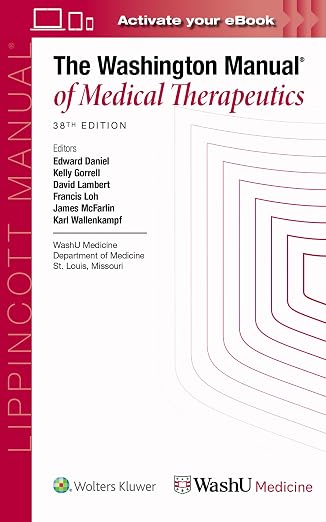
The Washington Manual of Medical Therapeutics
Washington University
38th edition · 2026A more detailed ward companion for admissions, common inpatient problems, and the transition into intern year.

Clinical equipment
Littmann Classic III Stethoscope
Littmann
Model 5620 · Black · 27-inchAn everyday bedside examination tool to consider for rotations and residency if you need to replace your current stethoscope.

Clinical equipment
The Physicians Folding Clipboard
Fellow Medical
Trifold · Letter-size paper · BlackA folding clipboard for organizing paper notes on rounds. Follow your hospital’s policies for patient information.

Scrubs
COZYFIT Women’s Scrub Set
COZYFIT
Women’s fit · Select size and color on AmazonA V-neck top and jogger set for clinical days. Check your hospital’s required color and whether it supplies scrubs.
Check current prices, editions, sizes, and seller details on Amazon.
Official resources
Common questions
What should the statement focus on?
Why the specialty fits, what clinical experiences shaped readiness, and what you will bring to residency now.
Should I mention hardships or gaps?
Only if they clarify growth or current readiness. Keep the focus on the residency case you are making.
Should an IMG personal statement explain the whole immigration or career story?
No. Include only the context that helps the program understand specialty fit, growth, and readiness. The statement is not a full autobiography.