Key takeaways
- Older graduates need recent evidence of clinical readiness.
- Program research should include graduation-year preferences and eligibility filters.
- Recent letters, USCE, clinical work, and interview answers should show readiness now.
- The graduation-year story should be factual, brief, and connected to current preparation.
Understand the concern
Graduation year raises questions about knowledge freshness, clinical speed, documentation habits, exam readiness, and adaptation to supervised training. Your application should answer those concerns directly.
Do not hope reviewers overlook the timeline. Show readiness now. The more years since graduation, the more important recent evidence becomes.
This does not mean older graduates are doomed. It means the application has to be built with more discipline. A strong old-graduate application does not ask for sympathy. It proves current readiness.
Create recent clinical proof
The strongest repair is current activity connected to residency: USCE, patient-facing employment, research with clinical mentorship, teaching, quality improvement, Step 3, or simulation. Choose activities that produce supervisors, outputs, and stories.
Recent proof should answer a practical question: can this applicant still learn quickly, communicate safely, accept feedback, work in a team, and handle clinical reasoning under supervision?
If your recent activity is not clinical, translate it carefully. Teaching may show communication and leadership. Research may show discipline and mentorship. Public health may show systems thinking. But if the file lacks patient-facing evidence, add some form of clinical exposure if possible.
- USCE or observership with feedback.
- Clinic role where legally allowed.
- Research output with a mentor.
- Step 3 if useful and realistic.
- Simulation and note practice.
- Patient-facing work that demonstrates communication and reliability.
- Recent letters from people who observed current performance.
Explain the gap with facts
The explanation should be factual, not apologetic. Name the reason for the time away only as much as needed, then move to what you did and why residency is the clear next step now.
Weak explanation: I graduated many years ago because life was difficult, but I still have passion and hope someone gives me a chance. Stronger explanation: After graduation, I worked in clinical and public health roles while navigating immigration and exam requirements. Over the past year, I completed recent U.S. clinical exposure, refreshed my documentation and presentation skills, and confirmed that internal medicine residency is the next step.
The stronger answer does not hide the timeline. It organizes it.
Target programs carefully
Some programs have firm or soft graduation-year preferences. Research before paying application fees. Look for IMG history, mission fit, visa fit, specialty fit, and openness to nontraditional paths.
Do not rely only on broad program lists. Check program websites, eligibility language, recent resident backgrounds when available, fellowship or career outcomes, visa policy, and whether the program's mission aligns with your story.
A realistic list is not a list of only safe programs. It is a balanced list where each application has a reason.
Use letters to prove current performance
Older graduates need letters that speak to current readiness. A famous old letter from years ago may be less useful than a recent letter from someone who watched you present, communicate, prepare, and improve.
When seeking letters, give the writer evidence: CV, dates, role, feedback you implemented, patient-care themes, specialty goals, and the exact concern you hope the application addresses. Do not script the letter, but help the writer remember specifics.
A strong letter for an older graduate should make the reader less worried about the timeline.
Build a personal statement around readiness now
Your personal statement should not spend three paragraphs explaining the past. It should connect the past to the present. The central question is not why did time pass. The central question is why are you ready for residency now?
Use one paragraph for context if needed, then shift to recent clinical preparation, specialty fit, and what you bring to training. Older graduates often have maturity, work history, communication experience, and resilience. Those strengths should be connected to the demands of residency.
Avoid sounding like you want residency to validate the years you already spent. Focus on the physician you are prepared to become.
Prepare the graduation-year interview answer
Practice a calm answer about graduation year before interviews. The answer should be short enough that the interview can move forward and strong enough that the concern is addressed.
A useful structure is: acknowledge the timeline, explain the major reason in one sentence, name recent preparation, and connect to readiness. Do not over-explain unless the interviewer asks for detail.
Example: I graduated in [year], and my path since then included immigration, clinical work abroad, and later preparation for U.S. training. Over the past year, I focused on recent U.S. clinical exposure, documentation practice, and feedback-based learning. That recent work is why I feel ready to enter supervised residency now.
Avoid common old-graduate mistakes
Common mistakes include applying too broadly without filters, relying on old letters, ignoring recent clinical exposure, writing a defensive personal statement, over-explaining hardships, under-practicing interviews, and assuming Step 3 alone fixes the file.
Step 3 can help in some cases, but it does not replace recent clinical evidence or strong communication. Research can help in some cases, but it does not automatically prove patient-care readiness. USCE can help, but only if it produces feedback, letters, and honest application language.
Every repair should answer the same question: what concern does this reduce?
A six-month repair plan
Month one: audit the application, identify filters, update CV, and choose target specialty. Month two: begin recent clinical exposure, patient-facing work, simulation, or research with mentorship. Month three: ask for feedback and track evidence. Month four: finalize Step 3 if useful and realistic, request letters if earned, and build the program list. Month five: revise ERAS experiences and personal statement around readiness now. Month six: practice interviews, especially timeline questions.
This is only a model, but it shows the principle: do not let the months pass without visible proof.
Books & equipment
Get ready for residency
Step 3 preparation, ward references, and clinical essentials selected for doctors working toward the Match and the start of residency.

Step 3
Master the Boards USMLE Step 3
Conrad Fischer
8th edition · 2026Work through management decisions alongside your Step 3 question bank and CCS practice.

Ward reference
Pocket Medicine
Marc S. Sabatine
9th edition · 2025A compact internal medicine reference for pre-round reading, clinical differentials, and reviewing the day’s cases.
Ward reference
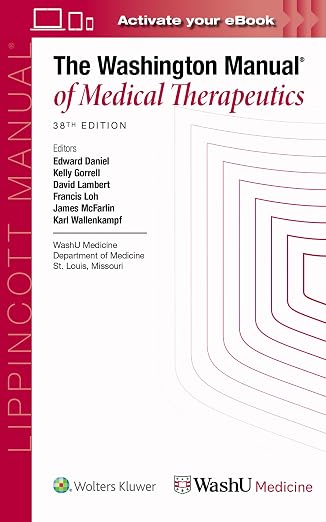
The Washington Manual of Medical Therapeutics
Washington University
38th edition · 2026A more detailed ward companion for admissions, common inpatient problems, and the transition into intern year.

Clinical equipment
Littmann Classic III Stethoscope
Littmann
Model 5620 · Black · 27-inchAn everyday bedside examination tool to consider for rotations and residency if you need to replace your current stethoscope.

Clinical equipment
The Physicians Folding Clipboard
Fellow Medical
Trifold · Letter-size paper · BlackA folding clipboard for organizing paper notes on rounds. Follow your hospital’s policies for patient information.

Scrubs
COZYFIT Women’s Scrub Set
COZYFIT
Women’s fit · Select size and color on AmazonA V-neck top and jogger set for clinical days. Check your hospital’s required color and whether it supplies scrubs.
Check current prices, editions, sizes, and seller details on Amazon.
Official resources
Common questions
Can old graduates match?
Some do, but they need recent clinical evidence, realistic targeting, and a clear explanation of the time since graduation.
What counts as recent evidence?
Recent USCE, patient-facing work, research, teaching, Step exams, supervised clinical roles, or structured clinical skills practice can help when documented clearly.
Should older graduates apologize for their timeline?
No. They should explain the timeline factually, show what they have done recently, and make the case for readiness now.