Key takeaways
- Emergency medicine is a real IMG pathway, especially for U.S. IMGs, with 319 U.S. citizen IMG and 93 non-U.S. citizen IMG PGY-1 matches in 2026.
- IMG-friendly does not always mean visa-friendly, so J-1, H-1B, ECFMG, Step 3, and state licensing details must be verified before applying.
- Emergency medicine has specialty-specific filters, including SLOEs and a platform transition toward ResidencyCAS.
- The best EM list combines eligibility, SLOE strength, emergency department exposure, clinical readiness, mission fit, and a specific reason for each program.
Start with the right definition
IMG-friendly emergency medicine does not mean easy, low-standard, or guaranteed. It means a program has signals that international graduates are realistically reviewed, interviewed, trained, supported, or historically represented.
Emergency medicine is not only a score-and-list specialty. Programs are trying to decide whether you can handle undifferentiated patients, communicate under pressure, work with nurses and consultants, take feedback, recognize sick from not sick, and keep functioning when the department is crowded.
This article is a research shortlist, not a final application list. Program directors change, visa policies change, application platforms change, and public websites may lag behind the current application season. Before applying, verify every program in the current application platform, the official program site, ACGME, FREIDA, NRMP, and direct program communication when necessary.
What the national data says
Emergency medicine is one of the more important specialties for U.S. IMGs, but it is not equally open for every IMG profile. In the 2026 Main Residency Match, NRMP reported 3,198 PGY-1 emergency medicine positions. Of those, 3,058 filled and 140 were unfilled, for a 95.6% fill rate.
The IMG opportunity is real. In 2026, emergency medicine matched 319 U.S. citizen IMGs and 93 non-U.S. citizen IMGs into PGY-1 positions. NRMP also listed emergency medicine as a top-five matched specialty for U.S. citizen IMGs. For non-U.S. IMGs, however, emergency medicine did not appear in the top-five list, which is a useful warning about visa and screening difficulty.
The specialty has also rebounded from the 2023 emergency medicine Match disruption. NRMP reported that emergency medicine filled 81.8% of positions in 2023, then climbed back to about 95.5% in 2024 and 95.6% in 2026. That rebound matters because applicants should not assume every program remains easy to access just because emergency medicine had unfilled positions several years ago.
| Metric | 2026 NRMP value | What it means for IMGs |
|---|---|---|
| PGY-1 emergency medicine positions | 3,198 | The specialty is large enough to build a serious IMG strategy, especially for U.S. IMGs. |
| Filled PGY-1 positions | 3,058 | Emergency medicine rebounded substantially after the 2023 Match disruption. |
| Unfilled PGY-1 positions | 140 | There is still more volatility than in fully filled specialties, but unfilled positions do not remove program-level filters. |
| U.S. citizen IMG PGY-1 matches | 319 | Emergency medicine is a meaningful U.S. IMG pathway when the application shows real EM readiness. |
| Non-U.S. citizen IMG PGY-1 matches | 93 | Visa-needing applicants have opportunity, but the path is narrower and needs careful visa verification. |
| Combined IMG PGY-1 matches | 412 | The specialty deserves serious research, but generic applications and weak EM evidence are still risky. |
The emergency medicine application is different
Emergency medicine has its own application language. The biggest difference is the Standardized Letter of Evaluation, usually called a SLOE. A strong EM-facing evaluation can matter more than a generic letter from another specialty because it tells programs how you function in an emergency department.
Application platform details also require extra care. CORD recommended that emergency medicine programs transition to ResidencyCAS for the 2025-2026 application cycle, and its SLOE page discusses ResidencyCAS workflow. Some public program pages still show ERAS IDs or older ERAS language. That means an IMG should verify the current platform for every program instead of assuming the process from another specialty.
For IMGs, this matters a lot. If you have no EM rotation, no SLOE, no emergency department story, and no evidence of calm team-based care, your application can look like emergency medicine is a late backup. The strongest applicants solve that before applying.
- SLOE: an emergency medicine evaluation that helps programs compare applicants in an EM context.
- eSLOE: usually written by EM faculty at a site with an EM residency program.
- Non-residency SLOE: useful when you rotate with EM faculty at a site without an EM residency.
- Off-service SLOE: sometimes relevant for ICU, anesthesia, surgery, or internal medicine, but it does not fully replace EM evidence.
- Platform check: verify whether the program uses ResidencyCAS, ERAS, or another current process for the cycle in which you apply.
How this top 20 was built
I weighted programs by practical IMG value rather than prestige alone. For an IMG, a famous emergency medicine program is useful only if the application can realistically survive screening and the applicant can explain the fit.
The ranking considers six signals: visible IMG pathway or likely IMG review, visa or eligibility transparency, safety-net or diverse patient exposure, emergency medicine training breadth, application-story value, and whether the program gives an IMG a believable reason to apply beyond location.
Programs marked verify are not weak recommendations. They are reminders that public pages often do not show the full current policy. For emergency medicine in particular, verify the application platform, SLOE expectations, visa policy, rotation requirements, and current program identifiers.
- IMG signal: current residents, alumni, published policy, ECFMG language, visa language, or known history of training international graduates.
- Visa signal: J-1, H-1B, both, no sponsorship, or unclear from public pages.
- Clinical value: trauma, pediatric EM, ultrasound, EMS, toxicology, critical care, resuscitation, social EM, addiction, psychiatric emergencies, and procedural volume.
- Application value: whether your background gives you a credible reason to apply beyond the program being IMG-friendly.
- Risk control: filters such as SLOE availability, graduation year, exam attempts, Step 2 CK, ECFMG timing, visa, application platform, and U.S. clinical experience.
Top 20 comparison table
Use this table as a starting point for deeper research, not as a final apply list. The visa and platform notes are intentionally conservative. If a public page is not explicit, verify in the current application platform and with the program before spending money.
For emergency medicine, the best IMG fit is often a program where your story matches the department: safety-net care, immigrant communities, trauma, EMS, ultrasound, critical care, pediatrics, addiction, psychiatric emergencies, or social emergency medicine.
| # | Program | Location | Best IMG fit | Visa/platform note | Why it is valuable |
|---|---|---|---|---|---|
| 1 | Maimonides Medical Center | Brooklyn, NY | IMGs with strong EM exposure, Brooklyn or immigrant-health fit, and comfort with very high ED volume | Official page shows ERAS language and 18 PGY-1 residents per year; verify current platform and visa policy | Large Brooklyn ED, more than 120,000 annual patients, more than 33,000 pediatric patients, Level 1 adult trauma, Brooklyn's only pediatric trauma center, international EM rotation, and a diverse immigrant community. |
| 2 | SBH Health System / St. Barnabas Hospital | Bronx, NY | IMGs seeking Bronx safety-net EM, social emergency medicine, EMS, toxicology, and four-year training | Official page says apply through ResidencyCAS; verify visa policy | ACGME-accredited four-year program with social EM, EMS/disaster, ultrasound, critical care/resuscitation, toxicology, and a long Bronx service mission. |
| 3 | SUNY Downstate / Kings County | Brooklyn, NY | Strong IMGs with county-hospital, trauma, ultrasound, global EM, and Brooklyn community fit | Verify current platform and visa policy | Kings County is a classic urban EM training environment with level-one trauma, procedural exposure, ultrasound, EM/IM, international division opportunities, and a highly diverse Brooklyn patient population. |
| 4 | NYC Health + Hospitals/Lincoln | Bronx, NY | IMGs with South Bronx, public hospital, trauma, language access, and safety-net service evidence | Verify current platform and visa policy | A high-yield research target because Lincoln's South Bronx public-hospital setting can strongly fit applicants with immigrant health, Spanish-language, trauma, and underserved-care experience. |
| 5 | Jacobi / Montefiore Emergency Medicine | Bronx, NY | Clinically strong IMGs seeking historic Bronx EM, trauma, burn, poison, hyperbaric, EMS, and academic exposure | Verify current platform and visa policy | Jacobi is historically important in New York emergency medicine and offers a powerful fit story for applicants drawn to Bronx public-sector emergency care and high-acuity training. |
| 6 | Cook County Emergency Medicine | Chicago, IL | IMGs with safety-net, high-acuity, public hospital, autonomy, and service-to-the-underserved evidence | Verify current platform and visa policy | Nationally known county EM training, explicit safety-net mission, large alumni network, high autonomy, and Chicago patient diversity make it a strong but selective IMG research target. |
| 7 | Detroit Receiving Hospital / Wayne State | Detroit, MI | IMGs with urban safety-net, trauma, burn, critical care, and health-disparities experience | Official site describes holistic selection; verify platform and visa policy | One of the country's historic EM programs, based at a Level 1 trauma and burn center, with multiple Detroit training sites and strong language around diversity, service, and community impact. |
| 8 | Brookdale University Hospital | Brooklyn, NY | IMGs with East Brooklyn, safety-net, trauma, and high-need community care fit | Verify current platform, accreditation, and visa policy carefully | A practical Brooklyn research target because East Brooklyn emergency care can fit applicants with service, language, community health, and urban clinical readiness. |
| 9 | Wyckoff Heights Medical Center | Brooklyn, NY | IMGs with Bushwick, immigrant health, Spanish-language, or community emergency medicine experience | Verify current platform, accreditation, and visa policy carefully | Bushwick and Ridgewood patient communities can create a strong fit story for IMGs who understand multilingual, immigrant, and safety-net emergency care. |
| 10 | Richmond University Medical Center | Staten Island, NY | IMGs seeking NYC-area community emergency medicine outside the Manhattan and Brooklyn applicant crush | Verify current platform and visa policy | A useful NYC-area research target for applicants with community EM, Staten Island, immigrant health, or New York metro fit. |
| 11 | St. Joseph's University Medical Center | Paterson, NJ | IMGs with urban New Jersey, Spanish-speaking, trauma, pediatric, or safety-net experience | Verify current platform and visa policy | Paterson's diverse patient population and regional emergency care needs can make a clear application story for IMGs with service and language evidence. |
| 12 | Newark Beth Israel Medical Center / RWJBarnabas | Newark, NJ | IMGs with Newark, urban community, pediatric, cardiac, or safety-net interests | Verify current platform and visa policy | Newark and North Jersey patient diversity make this a worthwhile research target for applicants who can connect their background to urban emergency care. |
| 13 | University Hospital Newark / Rutgers NJMS | Newark, NJ | Strong IMGs seeking Level I trauma, academic-public emergency medicine, and urban health equity | Verify current platform and visa policy | A more competitive academic public-hospital target, valuable for applicants with strong metrics, EM evidence, research, and a specific Newark or trauma story. |
| 14 | HCA Florida Kendall Hospital | Miami, FL | IMGs researching South Florida EM with trauma, burn, simulation, ultrasound, and multilingual patient exposure | Official page lists ERAS and NRMP identifiers; verify current platform and visa policy | Level I trauma, burn center, high ED volume, FIU affiliation, ultrasound, simulation, and South Florida's international physician ecosystem make this a high-yield research target. |
| 15 | HCA Florida Brandon Hospital | Brandon, FL | IMGs interested in Florida community-academic EM, pediatrics, trauma, EMS, ultrasound, and international EM faculty interests | Official page lists ERAS and NRMP identifiers; verify current platform and visa policy | Three-year program with USF Morsani sponsorship, trauma and pediatric partnerships, busy emergency departments, and faculty breadth in ultrasound, EMS, administration, addiction, and international EM. |
| 16 | HCA Florida Orange Park Hospital | Orange Park, FL | IMGs seeking Northeast Florida community EM with high volume, Level II trauma, and regional catchment exposure | Official page lists ERAS and NRMP identifiers; verify current platform and visa policy | Community EM setting with a six-county catchment area, Level II trauma, STEMI, stroke, research grants, and early exposure to hospital leadership and administrative work. |
| 17 | HCA Florida Aventura Hospital | Aventura, FL | IMGs researching South Florida community EM in a multilingual metro market | Verify current platform, accreditation, rotations, outcomes, and visa policy carefully | South Florida can be attractive for IMGs, but applicants should verify current program details, supervision, patient volume, board outcomes, and sponsorship before ranking. |
| 18 | University of Illinois Chicago | Chicago, IL | U.S. IMGs and permanent residents with urban underserved, academic, ultrasound, EMS, or public-health fit | Verify current platform and visa policy | Chicago academic EM can fit applicants who bring service, research, health equity, and a specific reason for training in a large urban safety-net ecosystem. |
| 19 | University of Arkansas for Medical Sciences | Little Rock, AR | IMGs open to Southern academic EM, regional referral care, and less saturated geography | Verify current platform and visa policy | A practical target for applicants willing to look beyond coastal clusters and connect their story to regional emergency care, trauma, and underserved patients. |
| 20 | UTRGV School of Medicine | Rio Grande Valley, TX | IMGs with Spanish-language skills, border health interest, and underserved emergency care commitment | Verify current platform and visa policy | Border-region emergency medicine can be a strong fit for applicants who can show real commitment to bilingual, underserved, community-based, and acute-care work. |
Compare by applicant type
The same emergency medicine program can be excellent for one IMG and unrealistic for another. Your strongest strategy is to sort programs by hard filters first, then by SLOE strength, clinical fit, and career value.
Use this comparison table before you turn the top 20 into an application list. It helps prevent the classic IMG mistake: applying to programs that could never review the file or that require EM evidence the applicant does not yet have.
| Applicant type | Best targets | Main risk | How to adjust the list |
|---|---|---|---|
| U.S. IMG or permanent resident | Programs where visa is not limiting and your EM story, SLOE, and clinical readiness are strong | Assuming EM's IMG numbers make every program realistic | Prioritize EM rotations, SLOE quality, Step 2 CK, recent U.S. clinical work, geography, and programs where your emergency care story is specific. |
| Non-U.S. IMG needing J-1 | Programs with explicit J-1 support or current platform policy confirming J-1 consideration | Applying to programs that train U.S. IMGs but cannot sponsor visas | Sort by visa first. Remove no-sponsorship programs unless you have separate work authorization. |
| Non-U.S. IMG needing H-1B | Programs with explicit H-1B language and realistic Step 3/state licensing timing | Missing Step 3, training license, or hospital sponsorship requirements | Verify H-1B early, including Step 3 timing, ECFMG timing, state license rules, and whether H-1B is actually used for residents. |
| Older graduate | Programs with flexible graduation-year language, recent clinical proof, and strong emergency department exposure | Silent screening by year of graduation or stale clinical experience | Make recent supervised care, current letters, EM rotation performance, clinical employment, simulation, or ED work impossible to miss. |
| Applicant without a strong SLOE | Programs that accept alternative EM evidence, but only after you build a credible explanation | Looking like emergency medicine is a backup specialty | Try to obtain an EM rotation or SLOE-equivalent evaluation. If impossible, use ICU, urgent care, EMS, ultrasound, research, and ED-facing letters carefully. |
| Applicant with attempts or lower Step 2 CK | Programs where the rest of the file is unusually strong and all hard filters still work | Assuming EM will overlook metrics because some positions have gone unfilled historically | Use excellent EM evaluations, recent U.S. clinical improvement, resilience stories, QI, service, and interview preparation to reduce concern. |
Hard filters before you apply
Emergency medicine applications can become expensive because applicants try to compensate for uncertainty by applying broadly. The better approach is to remove programs that cannot review you before you submit.
Check every filter in the current application platform and on the official program website. If a policy is unclear and the program is important to your list, email the coordinator with one short factual question. Do not ask them to evaluate your full profile by email.
| Filter | Why it matters | What to verify |
|---|---|---|
| Application platform | Emergency medicine is in a platform transition period, and public pages may not all match the current cycle. | ResidencyCAS, ERAS, program-specific process, deadline, identifiers, and where SLOEs are submitted. |
| SLOE | EM programs use SLOEs to judge how applicants function in an emergency department. | Number and type of SLOEs expected, whether one must be residency-based, and acceptable alternatives. |
| Visa | A program can be IMG-friendly for U.S. IMGs but impossible for visa-needing applicants. | J-1, H-1B, both, no sponsorship, or only applicants with existing U.S. work authorization. |
| ECFMG timing | Some programs need certification by interview, rank, contract signing, or start date. | Whether ECFMG Certification is required before interview, rank list, onboarding, or PGY-1 start. |
| USMLE attempts | Emergency medicine screening can still be strict despite recent specialty volatility. | Hard cutoff, preferred first-attempt pass, maximum attempts, or case-by-case review. |
| Step 2 CK | Step 2 CK remains important, especially for IMGs without a strong U.S. EM rotation. | Whether Step 2 CK is required before interview, before ranking, or before start. |
| Step 3 | Step 3 can matter for H-1B sponsorship and state training license timing. | Whether Step 3 must be passed before rank list, contract, visa filing, or residency start. |
| Graduation year | Older graduates may be screened unless recent clinical proof is strong. | Hard cutoff, preferred range, or flexibility with recent emergency-facing experience. |
| Emergency medicine exposure | Programs need evidence that the specialty choice is real. | EM rotation, ED observership, urgent care, EMS, ICU, ultrasound, toxicology, simulation, or mentor letter. |
| Accreditation and identifiers | Hospital names, sponsoring institutions, platforms, and codes can change. | ACGME status, NRMP code, application-platform ID, categorical positions, and participating sites. |
What makes an emergency medicine IMG application strong
Emergency medicine programs are not only asking whether you can pass exams. They are asking whether you can function safely in uncertainty, communicate clearly during chaos, work well with nurses and consultants, and keep learning after hard shifts.
Your application should make your EM commitment obvious. Strong EM-facing evaluations, a credible SLOE, patient examples, urgent care or ED exposure, ICU or EMS experience, ultrasound interest, service with vulnerable populations, and clear career direction help reviewers trust the file.
The strongest IMG emergency medicine stories connect your prior clinical experience, your U.S. readiness, the program's patient population, and your future plan. A reviewer should understand why you are applying to that department, not just to emergency medicine.
- Use patient-care examples that show triage thinking, reassessment, escalation, teamwork, and disposition planning.
- Show that your U.S. clinical experience improved your presentations, documentation, handoffs, consultant calls, and patient communication.
- If your prior background is internal medicine, surgery, ICU, pediatrics, anesthesia, family medicine, or EMS, explain the bridge to emergency medicine clearly.
- If you want ultrasound, EMS, toxicology, critical care, pediatric EM, social EM, addiction, or global EM, show evidence instead of only naming the interest.
- Explain older graduation years, attempts, or gaps directly and professionally, then point to recent performance and current readiness.
- Use geography carefully. Family ties, community ties, language skills, public-service history, or work with similar patients are stronger than simply wanting New York, Florida, Chicago, New Jersey, or Texas.
Build a smarter final list
Do not copy this top 20 into ResidencyCAS, ERAS, or any application platform and stop. Use it as a scaffold, then build your own spreadsheet with evidence. A strong IMG emergency medicine list usually includes reach, realistic, and safer programs, with the exact number depending on visa need, scores, attempts, graduation year, SLOEs, U.S. clinical experience, and budget.
For each program, write one sentence: I am applying here because. If the sentence is only because it accepts IMGs, the program belongs lower on your list. If the sentence includes patients, ED model, trauma or ultrasound exposure, geography, mission, and your evidence, the program is a better target.
Emergency medicine rewards proof under pressure. A county trauma department, a community ED with high volume, a program with strong EMS, and a program with social emergency medicine are not interchangeable. Your list should reflect the emergency physician you are trying to become.
- Spreadsheet columns: program name, ACGME ID, application platform, platform ID, NRMP code, state, length, visa, graduation year, attempts, Step 2 CK expectations, Step 3 requirement, ECFMG timing, SLOE requirements, EM rotation options, resident IMG signal, mission fit, and source link.
- Color code hard exclusions separately from weak fit. A no-visa program is different from a program where you simply lack a strong reason.
- Recheck all policies before certifying your rank list, not just before submitting the application.
- Keep a short interview-season note for every program so you can explain the fit quickly, specifically, and without sounding generic.
Bottom line
The best IMG-friendly emergency medicine programs are not just the programs with IMG residents. They are the programs where your eligibility, visa reality, SLOE situation, emergency department exposure, clinical readiness, geography, mission, and future plan point in the same direction.
Emergency medicine gives IMGs real opportunity, especially U.S. IMGs, but it rewards specificity. Start with this top 20, verify the hard filters, add programs that fit your actual profile, and spend your application dollars where your story is strongest.
Books & equipment
Prepare for emergency medicine
References and practical examination tools for learning on emergency department rotations.
Ward reference
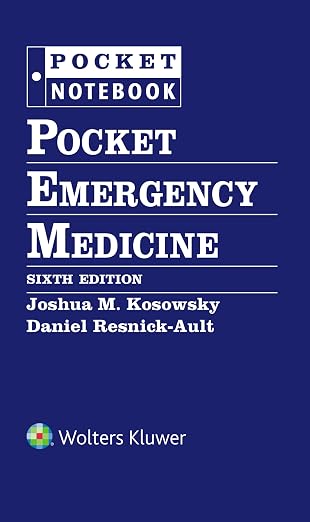
Pocket Emergency Medicine
Joshua Kosowsky & Daniel Resnick-Ault
6th edition · 2026A concise companion for learning the approach to common emergency department presentations.

Ward reference
The Sanford Guide to Antimicrobial Therapy
Sanford Guide
56th edition · 2026 · Pocket formatA pocket antimicrobial reference for ward reading. Use your hospital’s current guidance and local antibiogram in practice.

Critical care
Marino’s The ICU Book
Paul L. Marino
5th edition · Print + eBook with updatesBuild your understanding of critical care before an ICU rotation, with reading on ventilation, shock, and acid–base problems.

Clinical equipment
Littmann Classic III Stethoscope
Littmann
Model 5620 · Black · 27-inchAn everyday bedside examination tool to consider for rotations and residency if you need to replace your current stethoscope.

Clinical equipment
CAVN Medical Penlights
CAVN
2-pack · Black and whiteA small addition to your coat pocket for bedside examinations, with a pupil gauge on the barrel.

Clinical equipment
ADC Taylor Reflex Hammer
ADC
Taylor style · RedA compact examination tool for reflex testing when your clinical service expects you to carry your own equipment.
Check current prices, editions, sizes, and seller details on Amazon.
Official resources
Common questions
Are these the only IMG-friendly emergency medicine programs?
No. This is a high-yield research shortlist, not a complete list and not a match guarantee. Use it to identify strong anchors, then add programs that match your visa status, graduation year, exam history, emergency medicine exposure, SLOE situation, geography, and mission fit.
Is emergency medicine IMG-friendly?
Emergency medicine is a real IMG pathway, especially for U.S. IMGs. In the 2026 Main Residency Match, NRMP reported 319 U.S. citizen IMG and 93 non-U.S. citizen IMG PGY-1 emergency medicine matches. That is meaningful opportunity, but program-level screening, SLOEs, visa policy, and application-platform details still matter.
Does IMG-friendly emergency medicine mean visa-friendly?
No. IMG-friendly and visa-friendly are different filters. Some emergency medicine programs train many U.S. IMGs or permanent residents but may not sponsor visas. Non-U.S. citizen IMGs should verify J-1 and H-1B policy in the current application platform, on the official program website, and by direct program communication when necessary.
What makes an IMG emergency medicine application competitive?
A strong IMG emergency medicine application usually shows recent clinical readiness, emergency department exposure, at least one strong EM-facing evaluation when possible, excellent communication, clear teamwork, procedural maturity, resilience under pressure, and a specific reason for choosing emergency medicine.