Key takeaways
- Ophthalmology is not broadly IMG-friendly; in the public 2025 AUPO/SF Match report, only 11 matched applicants were listed as international.
- Ophthalmology uses the AUPO/SF Match ecosystem, not the NRMP Main Residency Match for the core ophthalmology position.
- Programs now include PGY-1 through integrated or joint structures, so IMGs must verify visa and internship details carefully.
- Signals are central: the public 2025 report described seven signals, with most applicants using all seven.
- A competitive IMG ophthalmology application usually needs research, ophthalmology letters, mentor advocacy, recent specialty exposure, and a very specific program list.
Start with the right definition
IMG-friendly ophthalmology does not mean easy, broadly accessible, or safe. Ophthalmology is small, early, signal-heavy, research-conscious, and extremely selective. For this article, IMG-friendly means a program may be worth serious research for an exceptional IMG because of mission fit, diverse clinical exposure, public or regional service, research infrastructure, mentor access, or a believable fit story.
Ophthalmology also has a different match ecosystem. It does not behave like internal medicine or family medicine. AUPO sponsors the Ophthalmology Residency Matching Program, and SF Match processes the match. Applicants should verify the current Central Application Service, SF Match, and program-specific rules each cycle.
Use this guide as a research framework, not a copy-paste list. Program directors change, visa policies change, signal rules change, and official program pages can lag behind current match-cycle instructions. Before applying, verify every program in SF Match, CAS, the ACGME public database, the official website, and direct program communication when necessary.
What the national data says
The public 2025 AUPO/SF Match general report shows why ophthalmology requires unusual realism. A total of 123 programs participated: 56 integrated programs and 67 joint programs. Together, they offered 525 positions, and only one joint-program position remained unfilled.
The applicant side was crowded. In 2025, 912 applicants applied to programs, 812 submitted a rank list, 524 matched, and 288 applicants who submitted a rank list did not match. Using the rank-list denominator, the overall match rate was 65%.
The international numbers were much smaller. The report states that 470 matched applicants were U.S. seniors, 43 were U.S. graduates, and 11 were internationals. In the report's individual-category match-rate discussion, international seniors had 0 matches, while international graduates matched 11 out of 52, or 21%.
| Metric | 2025 public report value | What it means for IMGs |
|---|---|---|
| Participating programs | 123 | The specialty is small enough that every application and signal needs to be intentional. |
| Integrated programs | 56 | Integrated programs include PGY-1 in the ophthalmology training structure. |
| Joint programs | 67 | Joint programs include an associated PGY-1 structure, but applicants must verify the exact internship relationship. |
| Positions offered | 525 | Ophthalmology is much smaller than broad IMG-heavy specialties. |
| Positions filled | 524 | The match filled almost completely. |
| Applicants who applied to programs | 912 | Application volume is high relative to the number of positions. |
| Applicants who submitted a rank list | 812 | The report calculates the overall matched percentage using this denominator. |
| Matched applicants | 524 | About 65% of applicants who submitted a rank list matched. |
| International matched applicants | 11 | International applicants matched, but they were only about 2% of matched applicants. |
| Applicant category | Matched / submitted rank list | Match rate | IMG strategy note |
|---|---|---|---|
| U.S. allopathic seniors | 450 / 624 | 72% | The match is dominated by U.S. senior applicants with home-school advising and ophthalmology networks. |
| U.S. allopathic graduates | 39 / 65 | 60% | Graduates can match, but the application needs current momentum. |
| International seniors | 0 matched | 0% | International seniors should treat ophthalmology as an extreme-reach pathway unless the file is exceptional. |
| International graduates | 11 / 52 | 21% | International graduates can match, but the odds demand a research-heavy, mentor-supported strategy. |
PGY-1 structure matters
Ophthalmology used to be discussed mainly as a PGY-2 specialty, but the training requirement now includes a PGY-1 year. AUPO's SF Match page notes that ACGME mandated a four-year training requirement for ophthalmology residents to include internship.
In practice, programs are described as integrated or joint. An integrated program generally builds the PGY-1 year into the ophthalmology residency. A joint program has an associated internship relationship. For IMGs, the difference matters because the PGY-1 year can affect visa sponsorship, start-date timing, hospital onboarding, and training fit.
Do not assume that a program's hospital-wide visa policy automatically solves the ophthalmology PGY-1 year. Verify the exact program structure, sponsoring institution, visa sponsorship, ECFMG deadline, and onboarding timeline before applying or ranking.
| Structure | What it usually means | Main IMG risk | What to verify |
|---|---|---|---|
| Integrated ophthalmology | PGY-1 is built into the ophthalmology residency structure | Assuming integrated automatically means visa-friendly | Visa policy, ECFMG timing, PGY-1 rotations, and whether the sponsoring institution covers all four years. |
| Joint ophthalmology | Ophthalmology position is linked to a PGY-1 internship structure | Missing a detail about the linked internship or hospital onboarding | The exact internship site, visa sponsorship, payroll institution, and whether extra applications are required. |
| Research-year pathway | A year before applying or reapplying to build ophthalmology evidence | Assuming research output alone compensates for weak clinical fit | Mentor advocacy, publications, clinical exposure, letters, and whether the research year creates program-level credibility. |
Signals and interviews
Ophthalmology is signal-heavy. In the public 2025 report, applicants could use seven signals. Of 912 applicants who applied to programs, 900 used signals, and 875 used all seven. Among applicants who submitted a rank list, 808 used all seven signals.
Signals were associated with interview attention, but they were not the whole match. The report states that 90% of applicants who used all seven signals received at least one interview invitation from a signaled program. It also reports that 338 of 524 matched applicants, or 65%, matched at a signaled program.
Applications were also broad. Matched applicants submitted an average of 82 applications and received an average of 10 interviews. Unmatched applicants submitted an average of 84 applications but received only 3 interviews on average. For IMGs, interview conversion is the key bottleneck.
| Metric | 2025 value | IMG meaning |
|---|---|---|
| Signals available | 7 | Signals must be used carefully; every signal should have a clear fit argument. |
| Applicants who applied to programs | 912 | The application pool is large relative to positions. |
| Applicants who used signals | 900 | Nearly everyone signals, so no-signal applications need another strong reason to be noticed. |
| Applicants who used all 7 signals | 875 | Using all signals is the norm. |
| All-7-signal applicants with at least one signaled interview | 90% | Signals help with interview attention but do not guarantee a match. |
| Matched applicants who matched at a signaled program | 338 / 524, or 65% | Signals are a core part of rank-list strategy. |
| Mean applications, matched applicants | 82 | Even matched applicants apply broadly. |
| Mean interviews, matched applicants | 10 | Interview count matters more than raw application count. |
| Mean interviews, unmatched applicants | 3 | The main IMG problem is often converting applications into interviews. |
How this top 20 was built
This is not a prestige ranking. It is an IMG strategy ranking in a specialty where most programs are reach programs. A famous eye institute is useful only if your application has enough ophthalmology evidence to be taken seriously.
I weighted six signals: public or diverse patient exposure, regional need, academic infrastructure, research-year usefulness, PGY-1 structure relevance, and whether an exceptional IMG could write a specific program-fit argument. Public visa language is often incomplete, so the table uses conservative wording.
Some programs below may be direct SF Match targets. Some may be better research-year targets. Some may be valuable because their patient population or regional mission fits your story. The point is not to copy the table into CAS. The point is to understand what serious ophthalmology targeting looks like.
- IMG signal: realistic review possibility, diverse training environment, public mission, or enough mentor infrastructure to make a research-year route plausible.
- Training signal: cataract surgery, retina, glaucoma, cornea, pediatrics, oculoplastics, uveitis, neuro-ophthalmology, trauma, emergency eye care, and continuity clinic.
- Application signal: whether your background gives you a credible reason to apply beyond the program being known.
- Mentor signal: whether a faculty advocate, research mentor, or departmental relationship could make the application less cold.
- Risk control: visa status, ECFMG timing, graduation year, Step attempts, USMLE Step 2 CK, ophthalmology letters, research, signals, and PGY-1 structure.
Top 20 comparison table
Use this table as a starting point for deeper research, not as a final apply list. For ophthalmology, the best IMG target is usually a program where research, mentors, geography, visa status, PGY-1 structure, signal use, and patient-care story all make sense together.
The table is intentionally honest. Many entries are reach or research-year targets. In ophthalmology, that is not pessimism. It is the responsible interpretation of a match in which only 11 matched applicants were listed as international in the public 2025 report.
| # | Program | Location | Best IMG fit | Role in list | Why it is valuable |
|---|---|---|---|---|---|
| 1 | SUNY Downstate Health Sciences University | Brooklyn, NY | IMGs with urban safety-net interest, diverse patient exposure, and strong ophthalmology commitment | High-yield urban mission target | Brooklyn training can support a strong story around high-volume eye disease, underserved care, trauma, language access, and public-facing ophthalmology. |
| 2 | Rutgers New Jersey Medical School | Newark, NJ | IMGs with New Jersey ties, urban academic fit, ophthalmology research, and service orientation | High-yield mission-fit target | Rutgers NJMS offers an urban academic environment where applicants can connect ophthalmology to diverse patients, public care, and regional need. |
| 3 | University of Illinois Chicago | Chicago, IL | Strong IMGs with Chicago ties, public health interests, research, and comprehensive ophthalmology goals | Reach or urban academic target | UIC gives applicants a public academic ophthalmology environment with diverse patients and a strong city-based fit story. |
| 4 | Temple University Hospital | Philadelphia, PA | IMGs with urban medicine, underserved care, and Philadelphia fit | Mission-fit target | Temple can fit applicants who connect eye care to urban communities, access barriers, clinical grit, and practical comprehensive ophthalmology training. |
| 5 | MedStar Georgetown University Hospital | Washington, DC | Strong IMGs with DC fit, academic ophthalmology evidence, and service or policy interests | Reach or metropolitan target | MedStar Georgetown offers a major metropolitan training environment where applicants need a specific fit story and strong ophthalmology proof. |
| 6 | LSU Health New Orleans | New Orleans, LA | IMGs with Gulf South, public hospital, trauma, diabetes eye disease, or regional-service fit | Regional mission target | LSU New Orleans can support an application story around regional eye care, complex disease, service, and diverse patient populations. |
| 7 | University of Arkansas for Medical Sciences | Little Rock, AR | IMGs open to regional academic ophthalmology and less saturated geography | Regional academic target | UAMS offers a public academic setting where applicants can explain fit with regional referral care and broad comprehensive ophthalmology. |
| 8 | University of Mississippi Medical Center | Jackson, MS | IMGs with Southern regional fit, service orientation, and interest in broad clinical ophthalmology | Regional mission target | UMMC gives applicants a state academic medical center environment with regional need and a clearly described residency structure. |
| 9 | University of Kansas Medical Center | Kansas City, KS | IMGs with Midwest fit, academic goals, and broad ophthalmology exposure | Regional academic target | Kansas offers a Midwest academic option where applicants can build a specific story around regional referral care and comprehensive training. |
| 10 | Saint Louis University | St. Louis, MO | IMGs with Midwest urban fit, service interests, and ophthalmology-specific evidence | Regional mission target | SLU can fit applicants who connect ophthalmology to urban service, Catholic mission-oriented care, and regional training in St. Louis. |
| 11 | Texas Tech University Health Sciences Center | Lubbock, TX | IMGs with West Texas fit, regional eye care interest, and practical clinical readiness | Regional target | Texas Tech can be valuable for applicants who can explain fit with regional ophthalmology, access gaps, and broad community-facing training. |
| 12 | University of Nebraska Medical Center | Omaha, NE | IMGs with Midwest ties, academic ophthalmology interest, and strong clinical preparation | Regional academic target | Nebraska offers a state academic environment and regional referral role that can strengthen a geographically balanced list. |
| 13 | Loma Linda University Health | Loma Linda, CA | IMGs with mission, service, whole-person care, and Southern California fit | Mission-fit target | Loma Linda's mission-oriented environment can support a specific application story around service, prevention, outreach, and patient-centered eye care. |
| 14 | University of Arizona Tucson | Tucson, AZ | IMGs with Southwest, border health, underserved care, or Spanish-language strengths | Regional mission target | Arizona can fit applicants who connect ophthalmology to Southwest communities, access barriers, diabetes eye disease, and regional referral care. |
| 15 | Henry Ford Hospital | Detroit, MI | Strong IMGs with Detroit ties, health-system fit, research, and complex-care interests | Reach or urban health-system target | Henry Ford offers a large health-system environment where applicants can connect ophthalmology to urban care, specialty breadth, and high-volume disease. |
| 16 | Penn State Health | Hershey, PA | Strong IMGs with Pennsylvania or regional fit, research, and academic ophthalmology goals | Regional academic target | Penn State offers an academic health-system environment outside the most saturated coastal markets, useful for applicants with specific regional fit. |
| 17 | Indiana University | Indianapolis, IN | Strong IMGs with Midwest ties, academic ophthalmology evidence, and broad subspecialty interests | Reach or regional academic target | Indiana can be valuable for applicants who want a large academic system, Midwest geography, and broad ophthalmology subspecialty exposure. |
| 18 | University of Wisconsin | Madison, WI | Strong IMGs with research, Midwest fit, and academic ophthalmology interests | Reach or regional research target | Wisconsin gives applicants a strong academic eye department and research environment in a less saturated geography than the coasts. |
| 19 | University of Minnesota | Minneapolis, MN | Strong IMGs with Midwest ties, research interests, and comprehensive ophthalmology goals | Reach or regional academic target | Minnesota offers academic ophthalmology breadth and a large regional catchment, useful for applicants with a strong, specific fit story. |
| 20 | Tulane University | New Orleans, LA | IMGs with Gulf South fit, service orientation, and urban ophthalmology interests | Regional mission target | Tulane can fit applicants who connect ophthalmology to New Orleans, regional eye disease burden, service, and diverse patient care. |
Compare by applicant type
The same ophthalmology program can be a thoughtful signal for one IMG and a wasted application for another. Start with hard filters: visa, ECFMG timing, graduation year, attempts, Step 2 CK, ophthalmology letters, research output, PGY-1 structure, and whether your application has a real connection to the program.
Ophthalmology is competitive enough that applying before the file is ready can be costly. Some IMGs should apply directly. Many should first build ophthalmology evidence through a U.S. research year, observership, retina or glaucoma research, global eye-health work, or mentor-supported projects.
| Applicant type | Best targets | Main risk | How to adjust the list |
|---|---|---|---|
| U.S. IMG or permanent resident | Programs where visa is not limiting and the ophthalmology record is unusually strong | Assuming no visa need makes ophthalmology broadly realistic | Prioritize programs where letters, research, geography, and signal strategy create a clear interview reason. |
| Non-U.S. IMG needing J-1 | Programs with current confirmation that the ophthalmology structure and PGY-1 year can support J-1 | Applying to programs where the ophthalmology side is interested but the PGY-1 or GME office cannot support the visa | Sort by visa and PGY-1 structure first, then by ophthalmology fit. |
| Non-U.S. IMG needing H-1B | Programs with explicit H-1B language and realistic Step 3, ECFMG, and state licensing timing | Assuming H-1B sponsorship is possible because another department at the institution sponsors it | Verify H-1B early and do not signal programs where the four-year structure cannot support the timeline. |
| IMG with ophthalmology residency or practice abroad | Programs where prior clinical work can be reframed as readiness to train in the U.S. | Sounding overqualified clinically but underprepared for the U.S. resident role | Use humility, recent U.S. mentorship, and specialty letters to show readiness to restart within U.S. GME. |
| IMG without ophthalmology research | Programs only after building ophthalmology evidence; consider a research year first | Applying with a generic surgical or internal medicine application | Build publications, presentations, letters, and mentor advocacy before spending signals. |
| Repeat applicant | Programs where the reapplication story is visibly stronger than the prior cycle | Repeating the same application with more programs but no new proof | Use the report's repeat-applicant data as a warning: reapply only with a repaired file, better letters, and stronger signal logic. |
Signal strategy
Ophthalmology signals are too important to use casually. In the 2025 public report, nearly all applicants who applied used signals, and most used all seven. For IMGs, signals should not be a wish list of famous departments. They should be a focused argument for why the program should read the application deeply.
A good signal target should pass four tests. First, the program can realistically consider your visa and ECFMG timeline. Second, the integrated or joint PGY-1 structure works for you. Third, your ophthalmology evidence matches the program's patients, geography, or strengths. Fourth, a mentor would understand why you signaled the program.
A signal backed by a research mentor, regional tie, public health story, language skill, service background, or specific subspecialty interest is stronger than a prestige-only signal.
| Signal decision | Best use | Avoid | IMG-specific note |
|---|---|---|---|
| Highest-priority signals | Programs where visa, PGY-1 structure, geography, mentors, and ophthalmology interests overlap | Using all signals on famous programs with no connection to the file | If a mentor would not understand the signal, rethink it. |
| Research-backed signals | Programs where you worked, published, presented, or built a real faculty relationship | Counting a casual email as a true connection | For IMGs, a real research relationship can make a signal more credible. |
| Mission-fit signals | Programs where your background matches underserved eye care, global ophthalmology, language access, or regional need | Using mission language without proof | The fit should be visible in your CV, letters, and personal statement. |
| No-signal applications | Programs where another connection is strong enough to justify the application | Assuming no-signal applications receive the same attention in ophthalmology | Use sparingly unless you have mentor contact, geography, or unusually strong fit. |
Hard filters before you apply
Ophthalmology applicants need to check filters before paying for applications or spending signals. This is especially important for non-U.S. citizen IMGs because the four-year structure can involve both ophthalmology and PGY-1 institutional rules.
The highest-risk mistake is applying before the file looks like ophthalmology. If the application reads like a generic high-score surgical application, it may be screened before anyone notices the applicant's broader strengths.
| Filter | What to verify | Why it matters |
|---|---|---|
| Match system | Current SF Match and CAS requirements, deadlines, fees, documents, and signal rules | Ophthalmology does not follow the standard NRMP Main Residency Match workflow. |
| Program structure | Integrated versus joint PGY-1 and the exact internship site | The PGY-1 year can affect visa, onboarding, curriculum, and start-date timing. |
| Visa sponsorship | J-1, H-1B, both, neither, or institution-specific exceptions | IMG-friendly and visa-friendly are not the same thing. |
| Step 3 timing | Whether H-1B consideration requires Step 3 before ranking, contract, or start date | Late Step 3 can eliminate otherwise strong non-U.S. IMG applicants. |
| Graduation year | Maximum years since graduation and whether research or clinical work offsets time | Older graduates need current ophthalmology evidence. |
| USMLE attempts | Whether failed attempts are automatic screens | Attempts are difficult to overcome in a small competitive specialty. |
| Ophthalmology letters | Whether ophthalmology faculty letters are required or strongly expected | Generic medicine or surgery letters rarely carry enough specialty-specific weight. |
| Research expectations | Publications, presentations, research year, mentor advocacy, and project quality | Many competitive IMG ophthalmology applications are built through research and mentorship. |
What makes an ophthalmology IMG application strong
A strong IMG ophthalmology application shows more than interest in a competitive procedural specialty. It shows visual reasoning, patient-centered communication, manual discipline, comfort with chronic disease, curiosity about optics and imaging, and sustained commitment to eye care.
Scores matter, but they are not enough. The application should show that ophthalmologists have seen your work, trusted your follow-through, and can explain why you are ready for U.S. ophthalmology training.
For many IMGs, the strongest move is a deliberate ophthalmology research year with real output. The goal is not only to add publications. It is to build mentorship, earn letters, understand the specialty, and make the application credible.
- USMLE: Step 2 CK should be strong for the applicant's context, and any attempts need a clear repair story.
- Research: retina, glaucoma, cornea, uveitis, pediatrics, neuro-ophthalmology, imaging, outcomes, AI, global ophthalmology, or public health work can all help.
- Letters: ophthalmology letters from faculty who know your work are essential whenever possible.
- Clinical exposure: U.S. ophthalmology observerships, clinics, research meetings, wet lab, imaging, or service involvement can help.
- Fit story: connect your background to eye disease burden, diabetes, trauma, language access, global ophthalmology, underserved care, or regional need.
- Signal plan: have seven program-specific reasons, not seven prestige wishes.
Build a smarter final list
A smart IMG ophthalmology list has layers. Separate direct application targets from research-year targets, mentor-linked programs, mission-fit programs, and extreme reaches. Then mark every program by integrated or joint PGY-1 structure and visa risk.
For every program, write one sentence before applying: 'This program should interview me because...' If the sentence is generic, the program probably does not deserve a signal.
Ophthalmology rewards specificity. A retina-heavy applicant should know why a program's retina exposure matters. A public-health applicant should know the patient population. A global ophthalmology applicant should show local U.S. readiness, not only global interest.
- Mark each program as direct target, research-year target, mentor-linked target, mission-fit target, or extreme reach.
- Verify integrated versus joint PGY-1 structure before finalizing the list.
- Sort by visa and ECFMG timing before sorting by reputation.
- Use signals only where eligibility, program structure, mentor logic, geography, and ophthalmology fit overlap.
- Ask an ophthalmology mentor to review the final list before submission.
- Keep program-specific notes so interview answers sound specific rather than recycled.
Bottom line
Ophthalmology is possible for IMGs, but the public 2025 AUPO/SF Match data demand realism: 525 positions, 524 filled, 812 rank lists, 524 matched applicants, and only 11 matched applicants in the International category.
The best IMG ophthalmology applicants build proof before they apply. They use research, mentorship, ophthalmology letters, U.S. exposure, signals, geography, mission fit, and PGY-1 structure with discipline. Use the top 20 above as a research map, then turn it into a precise SF Match strategy based on your actual ophthalmology evidence and mentor feedback.
Books & equipment
Get ready for residency
Step 3 preparation, ward references, and clinical essentials selected for doctors working toward the Match and the start of residency.

Step 3
Master the Boards USMLE Step 3
Conrad Fischer
8th edition · 2026Work through management decisions alongside your Step 3 question bank and CCS practice.

Ward reference
Pocket Medicine
Marc S. Sabatine
9th edition · 2025A compact internal medicine reference for pre-round reading, clinical differentials, and reviewing the day’s cases.
Ward reference
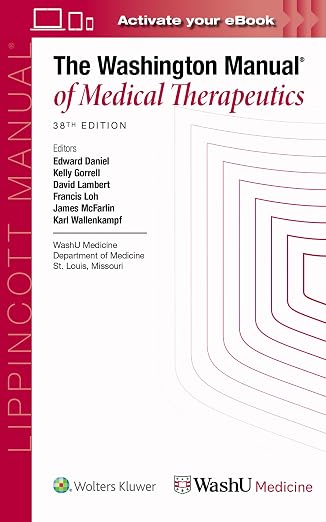
The Washington Manual of Medical Therapeutics
Washington University
38th edition · 2026A more detailed ward companion for admissions, common inpatient problems, and the transition into intern year.

Clinical equipment
Littmann Classic III Stethoscope
Littmann
Model 5620 · Black · 27-inchAn everyday bedside examination tool to consider for rotations and residency if you need to replace your current stethoscope.

Clinical equipment
The Physicians Folding Clipboard
Fellow Medical
Trifold · Letter-size paper · BlackA folding clipboard for organizing paper notes on rounds. Follow your hospital’s policies for patient information.

Scrubs
COZYFIT Women’s Scrub Set
COZYFIT
Women’s fit · Select size and color on AmazonA V-neck top and jogger set for clinical days. Check your hospital’s required color and whether it supplies scrubs.
Check current prices, editions, sizes, and seller details on Amazon.
Official resources
Common questions
Is ophthalmology IMG-friendly?
Ophthalmology is not broadly IMG-friendly. It is one of the most competitive residency pathways in the United States. In the public 2025 AUPO/SF Match report, 123 ophthalmology programs offered 525 positions, 524 filled, and only 11 matched applicants were listed in the International category. Strong IMGs can match, but the application usually needs exceptional ophthalmology-specific evidence.
Are these the only IMG-friendly ophthalmology programs?
No. This is a research shortlist, not a complete list and not a match guarantee. In ophthalmology, IMG-friendly mostly means a program is worth researching because of mission fit, diverse patient exposure, academic infrastructure, public or regional need, mentor access, or a plausible research-year pathway. Verify every program in SF Match, CAS, the ACGME database, the official program page, and direct communication when necessary.
Does ophthalmology use NRMP or SF Match?
Ophthalmology residency uses the SF Match process sponsored by AUPO, not the NRMP Main Residency Match for the core ophthalmology position. Ophthalmology now includes a PGY-1 year through integrated or joint structures, so applicants must understand how each program handles the internship year.
What makes an IMG ophthalmology application competitive?
A competitive IMG ophthalmology application usually has excellent clinical performance, strong USMLE performance, ophthalmology letters, U.S. ophthalmology exposure when possible, research productivity, clear commitment to eye care, technical humility, strong communication, and a thoughtful seven-signal strategy.