Key takeaways
- Pathology is one of the clearest IMG pathways, with 50 U.S. IMG and 170 non-U.S. IMG PGY-1 matches in the 2026 NRMP Match.
- Pathology still filled 634 of 636 PGY-1 positions in 2026, so IMG-friendly does not mean easy.
- Visa policy, ECFMG timing, Step 3, graduation year, pathology letters, and pathology exposure must be verified before applying.
- The best pathology list combines eligibility, AP/CP fit, diagnostic exposure, research, strong letters, mission fit, and a specific reason for each program.
Start with the right definition
IMG-friendly pathology does not mean easy, low-standard, or guaranteed. It means a program has signals that international graduates are realistically reviewed, interviewed, trained, supported, or historically represented.
Pathology is different from many clinical specialties because the strongest application is often built around diagnostic thinking, laboratory systems, research, patient-safety work, and a mature explanation for why the applicant wants a microscope, gross room, transfusion service, molecular lab, autopsy service, or consultative diagnostic career.
This article is a research shortlist, not a final application list. Program directors change, visa policies change, graduation-year filters change, and ERAS pages can be more current than public websites. Before applying, verify every program in ERAS, FREIDA, the ACGME public database, the official website, and direct program communication when necessary.
What the national data says
Pathology is one of the clearest IMG pathways in the Match, especially for non-U.S. citizen IMGs. In the 2026 Main Residency Match, NRMP reported 636 PGY-1 pathology positions. Of those, 634 filled and 2 were unfilled, for a 99.7% fill rate.
The IMG numbers are substantial. In 2026, pathology matched 50 U.S. citizen IMGs and 170 non-U.S. citizen IMGs into PGY-1 positions. Non-U.S. citizen IMGs filled 26.7% of pathology positions, a much larger share than many competitive specialties.
The caution is that pathology still fills almost completely. A high IMG share does not mean weak screening. It means many programs are willing to train international graduates when the application shows pathology commitment, diagnostic maturity, research or laboratory exposure, strong letters, and realistic visa fit.
| Metric | 2026 NRMP value | What it means for IMGs |
|---|---|---|
| PGY-1 pathology positions | 636 | Pathology is smaller than internal medicine or family medicine, so every application should be targeted. |
| Filled PGY-1 positions | 634 | Pathology filled almost completely; applicants should not treat it as an easy fallback. |
| Unfilled PGY-1 positions | 2 | SOAP opportunity is limited compared with specialties that leave many more positions open. |
| U.S. citizen IMG PGY-1 matches | 50 | U.S. IMGs match in pathology, but the group is smaller than the non-U.S. IMG pathway. |
| Non-U.S. citizen IMG PGY-1 matches | 170 | Pathology is one of the strongest non-U.S. IMG pathways by specialty share. |
| Combined IMG PGY-1 matches | 220 | The opportunity is real, but the best applications are pathology-specific rather than generic. |
The pathology application is different
Pathology applicants need to answer a question that many other specialties do not ask as directly: why are you choosing a largely diagnostic, laboratory-based specialty instead of direct patient-facing medicine? A strong IMG answer is specific. It connects diagnostic reasoning, systems thinking, patient safety, research, lab medicine, and a clear career direction.
Most applicants apply to combined anatomic and clinical pathology programs, often called AP/CP. Some applicants pursue AP-only or CP-only pathways, but an IMG should understand the consequences before applying because track choice affects training length, fellowship options, job market positioning, and how programs interpret the application.
Letters also matter differently. A strong pathology letter from a pathologist who has seen your diagnostic curiosity, grossing or sign-out exposure, research habits, presentation skills, or lab professionalism can be more valuable than a generic clinical letter that only says you are pleasant and hardworking.
- AP/CP: the most common broad pathway, useful for applicants who want flexibility across surgical pathology, cytopathology, hematopathology, transfusion medicine, molecular, microbiology, chemistry, and more.
- AP-only: may fit applicants with strong surgical pathology, autopsy, forensic, neuropathology, or academic anatomic pathology goals.
- CP-only: may fit applicants with strong laboratory medicine, transfusion medicine, microbiology, chemistry, informatics, or molecular diagnostics goals.
- Pathology exposure: observerships, electives, research, autopsy exposure, tumor boards, lab quality projects, informatics, and case presentations all help make the specialty choice believable.
- Fellowship thinking: programs often want to know whether your interests are realistic, even if they do not expect you to have chosen a final fellowship on day one.
How this top 20 was built
I weighted programs by practical IMG value rather than prestige alone. For an IMG, a famous pathology department is useful only if the application can realistically survive screening and the applicant can explain the fit.
The ranking considers six signals: visible IMG pathway or likely IMG review, visa or eligibility transparency, AP/CP training breadth, research and fellowship value, geographic strategy, and whether the program gives an IMG a believable application story beyond location.
Some programs in this list are reach programs. Some are more realistic research targets. The point is not to copy the list into ERAS. The point is to learn how to build a pathology list from evidence.
- IMG signal: current residents, alumni, published policy, ECFMG language, visa language, or known history of training international graduates.
- Visa signal: J-1, H-1B, both, no sponsorship, or unclear from public pages.
- Training value: AP/CP breadth, surgical pathology volume, autopsy, cytopathology, hematopathology, transfusion medicine, microbiology, molecular, informatics, and fellowship placement.
- Application value: whether your background gives you a credible reason to apply beyond the program being IMG-friendly.
- Risk control: filters such as graduation year, attempts, Step 2 CK, Step 3 for H-1B, ECFMG timing, pathology letters, pathology exposure, and research.
Top 20 comparison table
Use this table as a starting point for deeper research, not as a final apply list. The visa column is intentionally conservative. If a public page does not clearly state sponsorship policy, verify in ERAS and with the program before spending an application fee.
For pathology, the best IMG fit is often the program where your diagnostic story matches the department: surgical pathology, hematopathology, transfusion medicine, microbiology, molecular diagnostics, informatics, autopsy, forensic interests, global health, or underserved academic medicine.
| # | Program | Location | Best IMG fit | Visa note | Why it is valuable |
|---|---|---|---|---|---|
| 1 | University of Alabama at Birmingham | Birmingham, AL | Strong IMGs with research, AP/CP commitment, and academic pathology goals | Verify current policy | Large academic pathology department with broad AP/CP training value, subspecialty depth, and a strong fit for applicants who can show research, diagnostic maturity, and serious pathology commitment. |
| 2 | Cleveland Clinic | Cleveland, OH | Very strong IMGs with exceptional pathology exposure, research, and fellowship-oriented goals | Verify current policy | A reach for many applicants, but valuable because of high-volume subspecialty pathology, complex consult material, laboratory depth, and national career value. |
| 3 | SUNY Downstate Health Sciences University | Brooklyn, NY | IMGs with Brooklyn, public hospital, immigrant health, and academic pathology fit | Verify current policy | Brooklyn academic-public training can give applicants a strong story around diverse patients, safety-net medicine, diagnostic equity, and AP/CP exposure in a high-need urban setting. |
| 4 | Rutgers New Jersey Medical School | Newark, NJ | Strong IMGs seeking Newark academic pathology, laboratory medicine, and urban health equity | Verify current policy | Newark academic-public training can fit applicants with research, service, lab medicine interests, and a specific reason to work with diverse New Jersey patient communities. |
| 5 | Temple University Hospital | Philadelphia, PA | IMGs with urban academic medicine, AP/CP, and Philadelphia patient-community fit | Verify current policy | Philadelphia academic pathology can support a strong application story around underserved care, diagnostic service, transfusion medicine, surgical pathology, and research. |
| 6 | University at Buffalo | Buffalo, NY | IMGs seeking SUNY academic pathology in a less saturated geography than New York City | Verify current policy | Buffalo offers academic AP/CP training value, regional affordability, and a useful geographic strategy for applicants who want New York state without only applying to NYC programs. |
| 7 | University of Illinois Chicago | Chicago, IL | IMGs with urban underserved, academic, lab medicine, and research interests | Verify current policy | UIC can fit applicants who connect pathology to safety-net care, Chicago patient diversity, academic medicine, and a broad AP/CP training environment. |
| 8 | Loyola University Medical Center | Maywood, IL | IMGs seeking Chicagoland academic-community pathology with broad AP/CP exposure | Verify current policy | A useful Midwest research target for applicants who want academic pathology near Chicago with a different fit profile from downtown programs. |
| 9 | Rush University Medical Center | Chicago, IL | Strong IMGs with Chicago ties, research evidence, and academic pathology goals | Verify current policy | More competitive, but valuable for applicants with a focused pathology story, strong letters, research, and a clear reason for training in Chicago. |
| 10 | University of Arkansas for Medical Sciences | Little Rock, AR | IMGs open to Southern academic pathology, regional referral care, and less saturated geography | Verify current policy | A practical research target for applicants willing to look beyond coastal clusters and connect their experience to regional pathology, laboratory medicine, and underserved patients. |
| 11 | University of Oklahoma Health Sciences Center | Oklahoma City, OK | IMGs seeking academic AP/CP training with regional patient-care relevance | Verify current policy | Oklahoma City can be attractive for applicants who want a balanced academic program, regional case mix, and a less crowded application geography. |
| 12 | LSU Health Shreveport | Shreveport, LA | IMGs seeking Southern academic AP/CP training with community and referral exposure | Verify current policy | A strong research target for applicants who can explain fit with Louisiana, regional medicine, laboratory service, and broad AP/CP training. |
| 13 | University of Kentucky | Lexington, KY | IMGs interested in academic pathology, regional referral medicine, and fellowship preparation | Verify current policy | Kentucky can fit applicants who want academic pathology outside the most saturated markets and can connect their goals to regional diagnostic service. |
| 14 | University of New Mexico | Albuquerque, NM | IMGs with underserved, Native health, Hispanic health, forensic, or regional pathology interests | Verify current policy | New Mexico offers a distinctive patient population and regional mission, useful for applicants who can connect pathology to public service and diagnostic access. |
| 15 | UTRGV School of Medicine | Rio Grande Valley, TX | IMGs with Spanish-language skills, border health interest, and community pathology goals | Verify current policy | Border-region pathology can be a strong fit for applicants who can show real commitment to bilingual, underserved, community-based diagnostic medicine. |
| 16 | Penn State Health | Hershey, PA | IMGs seeking academic pathology in a regional health-system environment | Verify current policy | A practical Mid-Atlantic target for applicants who want academic AP/CP training, pathology research, and a less saturated geography than Philadelphia or New York. |
| 17 | UTHealth Houston | Houston, TX | IMGs with Texas ties, large-city academic pathology interest, and lab medicine goals | Verify current policy | Houston's medical ecosystem creates strong training and career value for applicants who can show fit with complex urban medicine, laboratory systems, and AP/CP breadth. |
| 18 | University of Nebraska Medical Center | Omaha, NE | IMGs seeking Midwest academic pathology with regional referral exposure | Verify current policy | A useful Midwest research target for applicants building a geographically balanced list and looking for academic training outside the highest-density IMG markets. |
| 19 | Wake Forest University School of Medicine | Winston-Salem, NC | Strong IMGs with academic pathology, research, and fellowship-oriented goals | Verify current policy | A competitive but valuable Southeast academic target for applicants with strong diagnostic, research, and subspecialty interests. |
| 20 | Allegheny Health Network | Pittsburgh, PA | IMGs seeking community-academic pathology in a major health-system environment | Verify current policy | A practical Pennsylvania research target for applicants who want AP/CP exposure, health-system pathology, and a program outside the most saturated coastal markets. |
Compare by applicant type
The same pathology program can be excellent for one IMG and unrealistic for another. Your strongest strategy is to sort programs by hard filters first, then by pathology evidence, letters, research, track fit, and fellowship direction.
Use this comparison table before you turn the top 20 into an ERAS list. It helps prevent the classic IMG mistake: applying to programs where the visa, graduation year, letter expectations, or specialty story does not work.
| Applicant type | Best targets | Main risk | How to adjust the list |
|---|---|---|---|
| U.S. IMG or permanent resident | Programs where visa is not limiting and your pathology story, letters, and research are strong | Assuming pathology's IMG numbers make every program realistic | Prioritize pathology letters, observerships or electives, research, Step 2 CK strength, geography, and programs where your diagnostic story is specific. |
| Non-U.S. IMG needing J-1 | Programs with explicit J-1 support or current ERAS policy confirming J-1 consideration | Applying to programs that train IMGs but cannot sponsor the needed visa | Sort by J-1 first. Remove no-sponsorship programs unless you have separate work authorization. |
| Non-U.S. IMG needing H-1B | Programs with explicit H-1B language and realistic Step 3/state licensing timing | Missing Step 3, training license, or hospital sponsorship requirements | Verify H-1B early, including Step 3 timing, ECFMG timing, state license rules, and whether H-1B is actually used for residents. |
| Older graduate | Programs with flexible graduation-year language, recent diagnostic exposure, and strong recent letters | Looking clinically stale or disconnected from pathology | Make current pathology work, research, observerships, lab employment, publications, or diagnostic conferences impossible to miss. |
| Applicant changing from another specialty | Programs where the bridge to pathology is convincing and supported by evidence | Sounding like pathology is a backup after not matching elsewhere | Explain the transition through diagnostic reasoning, lab medicine, research, autopsy, quality, transfusion medicine, or pathology mentorship. |
| Applicant with limited pathology exposure | Programs only after you add pathology evidence or can explain a credible bridge | Generic interest without proof | Build exposure through observerships, electives, research, tumor boards, case reports, lab QI, virtual pathology education, or a pathologist mentor letter. |
Hard filters before you apply
Pathology applications can become expensive because many IMG applicants apply broadly to compensate for uncertainty. The better approach is to remove programs that cannot review you before you submit.
Check every filter in ERAS and on the official program website. If a policy is unclear and the program is important to your list, email the coordinator with one short factual question. Do not ask them to evaluate your full profile by email.
| Filter | Why it matters | What to verify |
|---|---|---|
| Visa | A program can have many IMGs and still be impossible for a visa-needing applicant. | J-1, H-1B, both, no sponsorship, or only applicants with existing U.S. work authorization. |
| ECFMG timing | Some programs need certification by application, interview, rank, contract signing, or start date. | Whether ECFMG Certification is required before interview, rank list, onboarding, or PGY-1 start. |
| USMLE attempts | Pathology is IMG-accessible, but programs may still screen attempts strictly. | Hard cutoff, preferred first-attempt pass, maximum attempts, or case-by-case review. |
| Step 2 CK | Step 2 CK can help reassure programs when Step 1 is pass/fail or older. | Whether Step 2 CK is required before interview, before ranking, or before start. |
| Step 3 | Step 3 can matter for H-1B sponsorship and state training license timing. | Whether Step 3 must be passed before rank list, contract, visa filing, or residency start. |
| Graduation year | Older graduates may be screened unless recent pathology proof is strong. | Hard cutoff, preferred range, or flexibility with recent diagnostic or laboratory evidence. |
| Pathology letters | A pathologist's letter can validate that your specialty choice is real. | Number of pathology letters expected, whether U.S. pathology letters matter, and upload timing. |
| Pathology exposure | Programs need evidence that you understand the work. | Observership, elective, research, grossing exposure, sign-out, autopsy, tumor board, lab QI, or mentor letter. |
| Track fit | AP/CP, AP-only, and CP-only choices affect how programs interpret your goals. | Which tracks are offered, how many positions exist, and whether your application supports that track. |
| Fellowship and outcomes | Pathology career planning often depends on fellowship direction. | Board pass rates, fellowship placement, job placement, subspecialty depth, and resident scholarly output. |
What makes a pathology IMG application strong
Pathology programs are not only asking whether you can pass exams. They are asking whether you understand the specialty, whether you can think diagnostically, whether you communicate clearly with clinicians, whether you work carefully with specimens and data, and whether you will thrive in a lab-centered training environment.
Your application should make your pathology commitment obvious. Strong pathology letters, diagnostic examples, pathology research, case reports, quality improvement, tumor boards, autopsy exposure, laboratory work, informatics, or molecular interests all help reviewers trust the file.
The strongest IMG pathology stories connect your prior training, your diagnostic interests, your U.S. readiness, the program's training strengths, and your future plan. A reviewer should understand why you are applying to that department, not just to pathology.
- Use examples that show diagnostic reasoning, attention to detail, clinicopathologic correlation, and communication with clinical teams.
- Show that your U.S. clinical or pathology experience improved your presentations, documentation, differential diagnosis, and professional communication.
- If your prior background is internal medicine, surgery, oncology, hematology, microbiology, lab work, or research, explain the bridge to pathology clearly.
- If you want hematopathology, cytopathology, molecular, transfusion medicine, microbiology, forensic pathology, dermatopathology, GI, breast, or informatics, show evidence instead of only naming the interest.
- Explain older graduation years, attempts, or gaps directly and professionally, then point to recent pathology performance and current readiness.
- Use geography carefully. Family ties, community ties, language skills, research mentors, public-service history, or work with similar patient populations are stronger than simply wanting a big city.
Build a smarter final list
Do not copy this top 20 into ERAS and stop. Use it as a scaffold, then build your own spreadsheet with evidence. A strong IMG pathology list usually includes reach, realistic, and safer programs, with the exact number depending on visa need, scores, attempts, graduation year, pathology exposure, research, letters, and budget.
For each program, write one sentence: I am applying here because. If the sentence is only because it accepts IMGs, the program belongs lower on your list. If the sentence includes AP/CP training, case mix, lab medicine, fellowship direction, research, geography, mission, and your evidence, the program is a better target.
Pathology rewards specificity. A program with strong hematopathology, a program with forensic pathology exposure, a program with deep transfusion medicine, and a program with molecular diagnostics strength are not interchangeable. Your list should reflect the pathologist you are trying to become.
- Spreadsheet columns: program name, ACGME ID, ERAS ID, NRMP code, state, AP/CP or track options, visa, graduation year, attempts, Step 2 CK expectations, Step 3 requirement, ECFMG timing, pathology letters, pathology exposure, research, fellowship placement, resident IMG signal, mission fit, and source link.
- Color code hard exclusions separately from weak fit. A no-visa program is different from a program where you simply lack a strong reason.
- Recheck all policies before certifying your rank list, not just before submitting ERAS.
- Keep a short interview-season note for every program so you can explain the fit quickly, specifically, and without sounding generic.
Bottom line
The best IMG-friendly pathology programs are not just the programs with IMG residents. They are the programs where your eligibility, visa reality, pathology exposure, letters, research, track fit, geography, mission, and future plan point in the same direction.
Pathology gives IMGs real opportunity, especially non-U.S. IMGs, but it rewards proof of commitment. Start with this top 20, verify the hard filters, add programs that fit your actual profile, and spend your application dollars where your diagnostic story is strongest.
Books & equipment
Get ready for residency
Step 3 preparation, ward references, and clinical essentials selected for doctors working toward the Match and the start of residency.

Step 3
Master the Boards USMLE Step 3
Conrad Fischer
8th edition · 2026Work through management decisions alongside your Step 3 question bank and CCS practice.

Ward reference
Pocket Medicine
Marc S. Sabatine
9th edition · 2025A compact internal medicine reference for pre-round reading, clinical differentials, and reviewing the day’s cases.
Ward reference
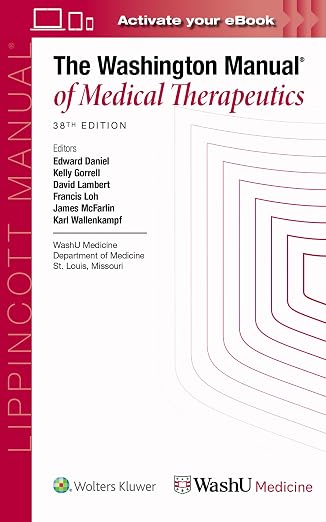
The Washington Manual of Medical Therapeutics
Washington University
38th edition · 2026A more detailed ward companion for admissions, common inpatient problems, and the transition into intern year.

Clinical equipment
Littmann Classic III Stethoscope
Littmann
Model 5620 · Black · 27-inchAn everyday bedside examination tool to consider for rotations and residency if you need to replace your current stethoscope.

Clinical equipment
The Physicians Folding Clipboard
Fellow Medical
Trifold · Letter-size paper · BlackA folding clipboard for organizing paper notes on rounds. Follow your hospital’s policies for patient information.

Scrubs
COZYFIT Women’s Scrub Set
COZYFIT
Women’s fit · Select size and color on AmazonA V-neck top and jogger set for clinical days. Check your hospital’s required color and whether it supplies scrubs.
Check current prices, editions, sizes, and seller details on Amazon.
Official resources
Common questions
Are these the only IMG-friendly pathology programs?
No. This is a high-yield research shortlist, not a complete list and not a match guarantee. Use it to identify strong anchors, then add programs that match your visa status, graduation year, exam history, pathology exposure, research, letters, geography, and career goals.
Is pathology IMG-friendly?
Pathology is one of the clearest IMG pathways by national Match data. In the 2026 Main Residency Match, NRMP reported 50 U.S. citizen IMG and 170 non-U.S. citizen IMG PGY-1 pathology matches. That is meaningful opportunity, but pathology still expects a coherent specialty story, credible lab or diagnostic exposure, and careful visa and eligibility verification.
Does IMG-friendly pathology mean visa-friendly?
No. IMG-friendly and visa-friendly are different filters. Some programs have many international graduates but may sponsor only J-1, may require Step 3 for H-1B, or may have institution-specific visa rules. Non-U.S. citizen IMGs should verify J-1 and H-1B policy in ERAS, on the official program website, and with the program when necessary.
What makes an IMG pathology application competitive?
A strong IMG pathology application usually shows real commitment to diagnostic medicine, pathology exposure in the U.S. or abroad, strong letters from pathologists when possible, research or quality work, clear AP/CP or subspecialty interests, communication skills, and a realistic explanation for choosing pathology.