Key takeaways
- The standardized MyERAS application locks after certification; only Personal Information remains editable.
- Personal statements and supporting documents have separate post-submission update rules.
- New USMLE scores can be resent without unlocking the application.
- Applied-program signals lock when residency programs open on September 23, 2026.
- Material errors in locked fields require a concise, documented correction to affected programs.
Fast answer
What can you change after submitting ERAS 2027? The standardized MyERAS application itself is locked, except for Personal Information. Education, experiences, geographic preferences, licenses, scholarly work, biographical responses, and other core fields cannot be edited after certification. AAMC says there are no exceptions.
The lock does not freeze the entire residency process. Personal statements can be edited and reassigned; supporting documents can become available later; LoRs can be uploaded and assigned subject to their restrictions; new USMLE scores can be resent; Personal Information can be updated; and additional programs can be added before their deadlines.
Some specialty questions can be completed after core certification but must be submitted before applying to that specialty's programs. Signals to applied September-cycle residency programs can be changed only before programs open on September 23, 2026, at 9 a.m. Eastern.
Think of MyERAS as layers: a locked standardized application, an editable Personal Information layer, separately managed documents, and continuing program actions.
The post-submission matrix
| Item | After core submission | Important limit |
|---|---|---|
| Personal Information | Editable | Must select Save |
| Biographical Information | Locked | No exceptions |
| Education | Locked | No exceptions |
| Experiences | Locked | No exceptions |
| Geographic / setting preferences | Locked | No exceptions |
| Licenses & Certifications section | Locked | Separate Personal Information items may differ |
| Scholarly Work | Locked | Cannot add later work to core section |
| Personal statements | Editable / assignable | Program may not review update |
| LoRs | Later upload / assignment possible | Confirmed entries and applied assignments restrict changes |
| Photo | Replaceable through owner workflow | Applied assignment cannot be undone |
| MSPE / school transcript | Can arrive or be replaced | School/ECFMG source rules |
| USMLE transcript | New scores can be resent | Does not unlock application |
| Specialty questions | Conditional later completion | Must submit before applying in that specialty |
| Applied-program signals | Editable before opening cutoff | Locked after September 23 at 9 a.m. ET |
| New program applications | Allowed | Program deadlines, eligibility, and fees control |
What certification actually does
Certification and submission is one irreversible action. The applicant acknowledges the certification statement and enters the AAMC account password.
The lock ensures every program receives the same standardized application. You cannot create a corrected core version for later programs in the same season.
All required asterisked fields must be completed and saved. A section that looks filled out but was not saved can block certification or preserve an unintended state.
You cannot apply to any program before certification. Certification itself is not a program application and does not pay program fees.
Locked core application fields
A later promotion, publication acceptance, new rotation, or volunteer activity does not reopen these sections.
Do not enter future activity as completed merely because the field will later lock. Certification requires complete and accurate information as of submission.
| Section | Locked examples |
|---|---|
| Biographical | Languages, military information, hometowns, geographic and setting preferences |
| Education | Schools, degrees, dates, postgraduate training, interruptions, honors |
| Experience | Selected experiences, descriptions, most meaningful reflections, impactful experience |
| Licenses & Certifications | State licenses, board certification, DEA, legal and malpractice questions |
| Scholarly Work | Works, collections, statuses, authors, events, meaningful selections |
Personal Information remains editable
AAMC says Personal Information should remain current throughout the season. Changes made after applying become available to programs after you select Save Personal Information.
An edit in the interface without a final Save is not a delivered update. Reopen the section and verify the saved value.
| Category | Examples |
|---|---|
| AAMC account | Name, gender, email, birth date |
| Basic contact | Preferred name and phone numbers |
| Addresses | Current mailing and permanent address |
| Work authorization | Current authorization selections |
| Match | Individual/couple intentions and matching services |
| Identification | USMLE ID and applicable other IDs |
| Life support | ACLS, PALS, BLS status and expiration |
| Honor societies | Applicable society status |
Birth date visibility can change, but prior viewing cannot
Applicants may choose whether to release the birth date to programs. Unchecking the release box and saving can redact it after application.
AAMC cautions that programs may already have seen the birth date. A later redaction changes future display, not history.
AAMC account information is shared across AAMC services, so an account-level identity edit can have effects beyond MyERAS. Make legal identity changes carefully.
Work authorization updates
Work authorization sits inside Personal Information and can be updated after certification. Use the current legal status, not an anticipated approval represented as complete.
A saved update becomes available to programs, but it does not guarantee that a reviewer will revisit the file. When a material authorization change affects eligibility, follow each program's communication instructions.
Program and visa requirements remain independent of MyERAS editability.
Personal statements are separate from the core lock
AAMC permits personal statements to be edited at any point in the season, even after they are assigned to programs that received an application.
Programs see an updated status with the date of the new version, but AAMC does not guarantee they will view or reread it.
A personal statement can also be reassigned during the season unless the program is closed. Only one statement can be assigned to each program at a time.
| Action | Allowed? | Risk |
|---|---|---|
| Correct typo in assigned statement | Yes | Reviewer may have read old version |
| Replace content in assigned statement | Yes | Update may not be reviewed |
| Assign different statement | Yes if program open | Program may not revisit |
| Assign to closed program | No | Assignment control unavailable |
| Use statement to rewrite locked experience | Technically separate, strategically poor | Creates contradiction |
A statement edit does not repair the core application
Do not turn the personal statement into an errata sheet for minor mistakes. It has a different purpose and may already have been read.
For a material locked-field error, preserve a concise correction that identifies the wrong entry, correct fact, and supporting source. Communicate only through the program's accepted route.
Any updated statement must remain the applicant's own work. AAMC permits AI for brainstorming, proofreading, or editing, but the final passage must represent the applicant's work and actual experience.
Letters of recommendation after submission
LoRs are documents outside the locked standardized application. A letter author can upload later through the AAMC Letter Writer Portal, and the applicant can assign available letters to programs.
Confirmation is a key boundary. Once a LoR entry is confirmed for upload, its identifying entry cannot be edited or deleted. Create a new correct entry rather than trying to reuse the wrong Letter ID.
After a letter is assigned to a program and the application is sent, it cannot be unassigned. A later letter does not automatically replace one of the four already delivered.
Late documents are possible, not guaranteed to be reviewed
An application can be submitted before every supporting document is available, depending on program requirements. Documents may arrive later through their authorized workflows.
Program deadlines and review policies control whether a late LoR, MSPE, transcript, or photo is considered. MyERAS delivery is not proof of program review.
Do not delay an otherwise ready core application solely because a document is processing without checking the program's explicit completeness rule.
Updating a photo, MSPE, or medical school transcript
An applicant should never directly edit a school-issued source document. Request correction from its owner.
Replacement processing has its own timeline. Verify the new version became available rather than assuming the upload instantly changed what programs see.
| Document | Update owner | Post-application effect |
|---|---|---|
| IMG photo | Applicant submits new version through MyIntealth; ECFMG transmits | Processed version replaces prior photo |
| MSPE | Medical school / authorized ECFMG route | Corrected or modified source replaces prior document |
| Medical school transcript | Medical school / authorized ECFMG route | Processed source replaces prior document |
New USMLE scores
A new Step result does not require or permit changing a locked self-entered field. It is sent through the official USMLE transcript workflow.
After a new result is available, use Resend My Scores in MyERAS Additional Documents. For 2027, FSMB fulfills USMLE transcript requests.
Review the request status and the most recent score-transfer information. Programs may have deadlines or policies about updated scores.
Specialty questions after core certification
For 2027, Anesthesiology, Neurological Surgery, and Plastic Surgery–Integrated have specialty-specific questions.
If an applicant certifies the core application before answering, the remaining specialty questions can still be completed later. They must be submitted before applying to programs in that specialty.
Once a specialty's responses are submitted, they cannot be changed. Programs in other specialties do not receive them.
This is a separate controlled workflow, not an exception that unlocks core application fields.
Program signal changes have a hard cutoff
A signal assigned to an applied September-cycle residency program can be updated before September 23, 2026, at 9 a.m. Eastern, when programs open.
After that moment, signals attached to applied programs cannot be edited. Applicants may still assign unused signals to saved programs and apply later in the season, excluding SOAP.
Signals cannot be recovered by withdrawing an application after the cutoff.
Applying to more programs after submission
Certification enables program applications; it does not restrict the applicant to the first paid batch. More programs can be added while they remain open and their deadlines permit.
Every later program receives the same locked core application plus the documents, statement, scores, and signals assigned under current rules.
Application fees are cumulative by specialty and nonrefundable. A later batch does not reset the fee tier.
Before paying, confirm participation, deadline, visa, graduation-year, exam-attempt, document, state, and track requirements.
Withdrawing from a program does not rewrite history
MyERAS permits withdrawal from an applied program, but withdrawal does not refund the application fee, return a signal, or erase a document that was already delivered.
Do not withdraw merely to try to resubmit a corrected core application; the core version remains the one certified for the season.
Use withdrawal when you genuinely no longer seek consideration or when a program instructs it for an eligibility reason.
Error triage after certification
| Error class | Example | Response |
|---|---|---|
| Editable Personal Information | New address or work authorization | Correct and Save immediately |
| Editable document | Typo in personal statement | Correct; understand old version may have been read |
| Source-document error | Wrong grade on school transcript | Ask school for authorized correction |
| Locked minor error | Punctuation or harmless typo | Document internally; avoid disruptive mass email |
| Locked material error | Wrong date, role, score claim, omission, or eligibility fact | Preserve evidence and notify affected programs per policy |
| Technical display concern | Saved value not appearing | Capture evidence and contact responsible support |
How to disclose a material locked-field correction
A material correction should be factual, short, and specific. State the submitted field, the incorrect value, the correct value, and the source that supports it.
Do not invent a portal workaround, create a conflicting personal statement, or ask a recommender to conceal the error.
Follow each program's communication instructions. MyERAS Message Center does not let applicants initiate messages to programs, so the permitted route may be a program email or application contact form.
Keep a log of programs contacted, time, address, correction, and response. If the issue implicates identity, certification, or a source document, also contact the organization that owns that record.
A correction template
Subject: ERAS application factual correction — [AAMC ID] — [Name]
“I am writing to correct one factual error in my submitted MyERAS application. In [section/entry], I entered [incorrect value]. The correct information is [correct value]. [One sentence of necessary context]. I apologize for the error and am providing this correction so your review reflects accurate information.”
Use the template only for a real material correction and adapt it to the program's stated policy. Do not attach sensitive records unless requested through a secure channel.
Pre-certification audit
The MyERAS application has no built-in spell or grammar check. A PDF review catches truncation, ordering, blank sections, and formatting that form-by-form review can miss.
- Export and read the View/Print MyERAS Application PDF.
- Compare identity fields with passport and MyIntealth.
- Check every school, degree, date, and graduation year.
- Check postgraduate training and interruptions.
- Verify every experience's dates, location, role, and description.
- Verify geographic and setting preferences.
- Verify licenses, certification, legal, and malpractice answers.
- Open every Scholarly Work entry and citation.
- Confirm submitted and pending statuses are accurate.
- Check all character-limited fields for truncation.
- Run spelling and grammar review outside MyERAS.
- Check that every section was saved.
- Review specialty questions separately.
- Confirm work authorization is current.
- Confirm USMLE ID and contact information.
- Have one trusted reviewer check facts, not rewrite your identity.
- Reopen the PDF after final edits.
- Certify only when the PDF is the version you accept.
Common mistakes
- Believing AAMC support can unlock a core field.
- Confusing certification with applying to programs.
- Assuming all program materials freeze at certification.
- Editing Personal Information without selecting Save.
- Assuming a saved update forces a program to reread the file.
- Treating a personal statement update as a core correction.
- Changing an assigned statement without checking the new assignment.
- Creating a contradictory statement to hide an error.
- Expecting to edit or delete a confirmed LoR entry.
- Expecting to unassign a delivered LoR.
- Assuming a late document will be reviewed.
- Personally editing an MSPE or school transcript.
- Entering a new Step score into a locked narrative instead of resending the transcript.
- Missing the September 23 signal cutoff.
- Assuming withdrawal returns a signal or fee.
- Submitting a new program application without auditing assignments.
- Mass-emailing programs about a harmless typo.
- Failing to disclose a material factual error.
- Sending sensitive evidence through an insecure channel.
- Certifying before reviewing the application PDF.
Final post-submission checklist
- My current email, phone, and addresses are saved.
- Work authorization is current.
- Match and couples information is current.
- Birth-date release reflects my choice.
- Every personal statement is assigned to the intended program.
- Updated statements show the expected version date.
- LoRs are available and assigned within program limits.
- Photo assignments are complete.
- MSPE and medical school transcript are available.
- USMLE transcript requests show the expected status.
- New scores were resent when available.
- Specialty questions were submitted before specialty applications.
- Signals were audited before the program-opening cutoff.
- Every later application uses the correct statement and documents.
- Every program remains open and I meet its eligibility rules.
- Any material locked error has a documented correction plan.
- I retain receipts, confirmations, and communication logs.
- I monitor MyERAS Message Center and personal email.
Bottom line
After ERAS 2027 certification, the standardized application is locked except Personal Information. There are no unlock exceptions.
Personal statements, LoRs, school documents, photos, official score updates, specialty questions, signals before their cutoff, and later program applications live in separate workflows with different restrictions.
Correct editable information immediately and save. For a material error in a locked field, preserve evidence and give affected programs a concise factual correction through their approved communication route.
This guide reflects official information available July 18, 2026. The live MyERAS interface, current AAMC and ECFMG guides, document-owner rules, and each program's deadlines and communication policy control.
Books & equipment
Get ready for residency
Step 3 preparation, ward references, and clinical essentials selected for doctors working toward the Match and the start of residency.

Step 3
Master the Boards USMLE Step 3
Conrad Fischer
8th edition · 2026Work through management decisions alongside your Step 3 question bank and CCS practice.

Ward reference
Pocket Medicine
Marc S. Sabatine
9th edition · 2025A compact internal medicine reference for pre-round reading, clinical differentials, and reviewing the day’s cases.
Ward reference
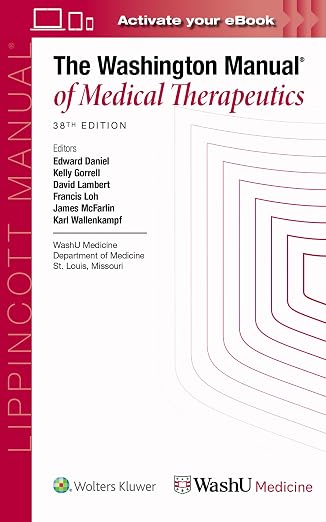
The Washington Manual of Medical Therapeutics
Washington University
38th edition · 2026A more detailed ward companion for admissions, common inpatient problems, and the transition into intern year.

Clinical equipment
Littmann Classic III Stethoscope
Littmann
Model 5620 · Black · 27-inchAn everyday bedside examination tool to consider for rotations and residency if you need to replace your current stethoscope.

Clinical equipment
The Physicians Folding Clipboard
Fellow Medical
Trifold · Letter-size paper · BlackA folding clipboard for organizing paper notes on rounds. Follow your hospital’s policies for patient information.

Scrubs
COZYFIT Women’s Scrub Set
COZYFIT
Women’s fit · Select size and color on AmazonA V-neck top and jogger set for clinical days. Check your hospital’s required color and whether it supplies scrubs.
Check current prices, editions, sizes, and seller details on Amazon.
Official resources
Common questions
Can I edit my ERAS application after submitting it in 2027?
The standardized MyERAS application is irrevocably locked after certification and submission. AAMC says there are no exceptions outside the editable Personal Information section. Separate documents, assignments, later score resends, specialty-question workflows, and program actions follow their own rules.
What Personal Information can I update after ERAS submission?
Personal Information is intended to remain current and includes AAMC account/contact information, preferred contact details, mailing and permanent addresses, work authorization, Match information, identification numbers, and listed certifications or societies as applicable. Save Personal Information so updates become available to applied programs.
Can I edit my ERAS personal statement after applying?
Yes. AAMC says personal statements can be edited throughout the season, including after assignment and application. Programs see an updated status and date, but AAMC does not guarantee that they will view or review the new version. Assignment changes are also allowed unless the program is closed.
Can I add an ERAS letter of recommendation after submitting?
Yes. The application lock does not prevent later LoR upload or assignment. However, a confirmed LoR entry cannot be edited or deleted, and a letter assigned to a program after application cannot be unassigned. Programs are not required to review a late document after their deadline.
Can I update USMLE scores after submitting ERAS?
Yes. Once a new score becomes available, use the MyERAS USMLE Transcript action to resend scores to programs according to the current FSMB workflow. Updating scores does not unlock or change the self-entered application fields.
Can I change ERAS program signals after applying?
For an applied September-cycle residency program, a signal can be updated only before programs open on September 23, 2026, at 9 a.m. Eastern. After that time, signals to applied programs are locked. Remaining signals may still be assigned to saved programs before later applications, excluding SOAP.
What should I do if I find an error after certifying MyERAS?
Classify the error first. Correct editable Personal Information immediately and save. For a document owned by a school or author, request an authorized replacement. A locked application field cannot be changed; preserve evidence, obtain official guidance, and disclose a material error to affected programs using their stated communication policy.
Can AAMC unlock my ERAS application after submission?
No. AAMC describes certification as a one-time, irreversible action and says no changes to locked fields are permitted after submission, with no exceptions. Support can clarify technical behavior but cannot convert a locked core field into an editable one.